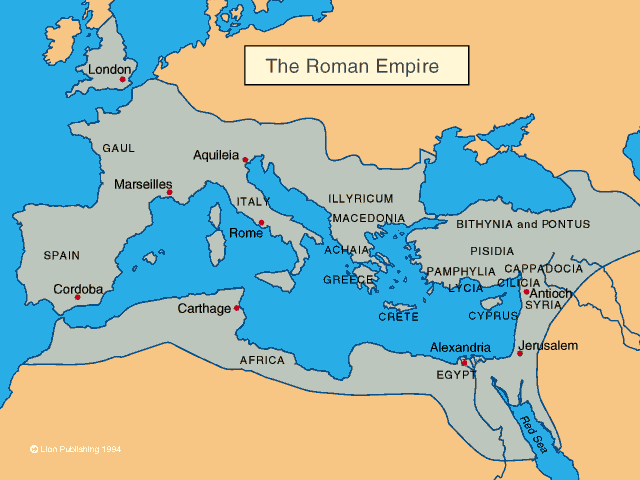
The Roman Empire emerged from the Roman Republic when Julius Caesar and Augustus Caesar transformed it from a republic into a monarchy. Rome reached its zenith in the 2nd century, then fortunes slowly declined with many revivals and restorations along the way. The reasons for the decline of the Empire are still debated today, and are multiple.
The Roman Empire was an ancient empire centered around the Mediterranean Sea, commonly dated from accession of the Emperor Augustus in 27 BC through the abdication of the last emperor in 476 AD. It was the successor state to the Roman Republic, and constituted the final period of classical antiquity.
The 500-year-old Roman Republic, which preceded it, had been weakened through several civil wars. Several events are commonly proposed to mark the transition from Republic to Empire, including Julius Caesar's appointment as perpetual dictator (44 BC), and the Battle of Actium (2 September 31 BC), though the Roman Senate's granting to Octavian the honorific Augustus is most common (16 January 27 BC).
The first two centuries of the empire were characterized by the Pax Romana, which was a period of unprecedented peace and prosperity. Though Roman expansion was mostly accomplished under the republic, it continued under the emperors. Notably, parts of northern Europe were conquered in the 1st century AD, while Roman dominion in Europe, Africa and especially Asia was strengthened during this time. Numerous uprisings were successfully put down, notably those in Britain and Judea, though the latter uprising triggered the suicide of the unpopular Emperor Nero and a brief civil war.
The empire would reach its greatest territorial extent under the emperor Trajan in 117 AD, though most of his gains were given up under his successor. In the view of Dio Cassius, a contemporary observer, the accession of the Emperor Commodus in 180 AD marked the descent "from a kingdom of gold to one of rust and iron" - a famous comment which has led some historians, notably Edward Gibbon, to take Commodus' reign as the beginning of the decline of the Roman Empire. A succession of unsuccessful emperors followed, and then a period of civil wars and social unrest during the Crisis of the Third Century.
In the late 3rd century, the emperor Diocletian stabilized the empire and established the practice of dividing authority between four co-emperors (known as the tetrarchy). Disorder began again soon after his reign, but order was resorted by Constantine, who was the first emperor to convert to Christianity and who established the new capital of the eastern empire, Constantinople. During the following decades the empire was often divided along an East/West (Constantinople/Rome) axis.Theodosius I was the last emperor to rule over east and west, and died in 395 AD after making Christianity the official religion of the empire.
Beginning in the late 4th century, the empire began to disintegrate as barbarians from the north overwhelmed Roman control. The crumbling Western Roman Empire ended in 476 when Romulus Augustus was forced to abdicate to the Germanic warlord Odoacer.
The empire in the east (known today as the Byzantine Empire but referred to in its own day as simply the "Roman Empire") continued in various formed until 1453 with the death of Constantine XI and the capture of Constantinople by Mehmed II, leader of the Ottoman Turks. Because of the Empire's vast extent and long endurance, the institutions and culture of Rome had a profound and lasting influence on the development of language, religion, architecture, philosophy, law, and forms of government in the territory it governed, particularly Europe, and by means of European expansionism throughout the modern world.
Roman Government
Roman Senate
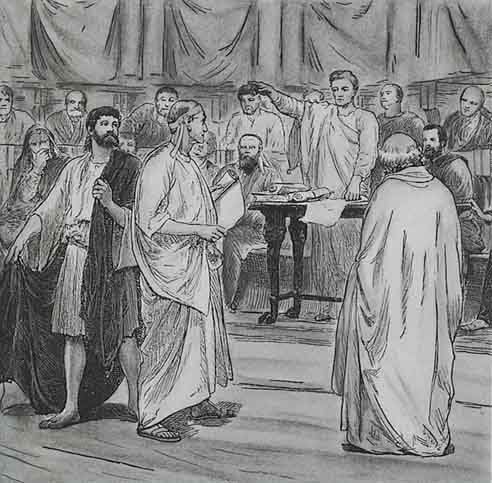
The powers of an emperor (his imperium) existed, in theory at least, by virtue of his "tribunician powers" (potestas tribunicia) and his "proconsular powers" (imperium proconsulare). In theory, the tribunician powers (which were similar to those of the Plebeian Tribunes under the old republic) made the Emperor's person and office sacrosanct, and gave the Emperor authority over Rome's civil government, including the power to preside over and to control the Senate.
The proconsular powers (similar to those of military governors, or Proconsuls, under the old Republic) gave him authority over the Roman army. He was also given powers that, under the Republic, had been reserved for the Senate and the assemblies, including the right to declare war, to ratify treaties, and to negotiate with foreign leaders.
The emperor also had the authority to carry out a range of duties that had been performed by the censors, including the power to control Senate membership. In addition, the emperor controlled the religious institutions, since, as emperor, he was always Pontifex Maximus and a member of each of the four major priesthoods. While these distinctions were clearly defined during the early Empire, eventually they were lost, and the emperor's powers became less constitutional and more monarchical.
Realistically, the main support of an emperor's power and authority was the military. Being paid by the imperial treasury, the legionaries also swore an annual military oath of loyalty towards him, called the Sacramentum.
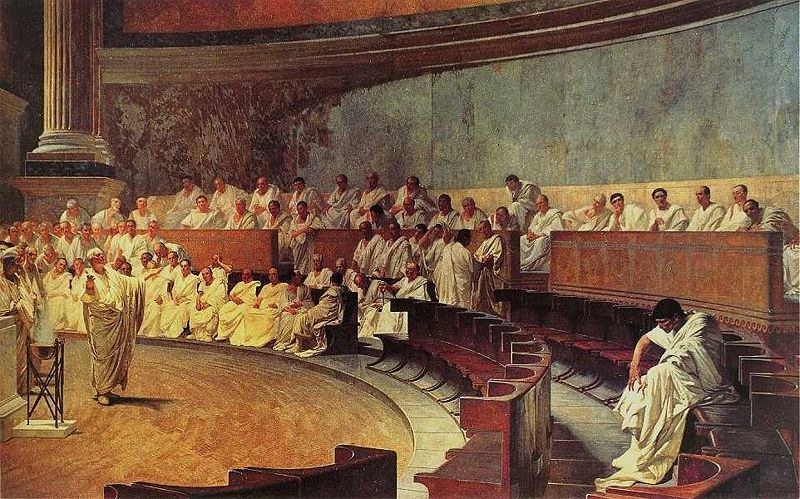
The death of an emperor led to a crucial period of uncertainty and crisis. In theory the Senate was entitled to choose the new emperor, but most emperors chose their own successors, usually a close family member. The new emperor had to seek a swift acknowledgement of his new status and authority in order to stabilize the political landscape. No emperor could hope to survive, much less to reign, without the allegiance and loyalty of the Praetorian Guard and of the legions. To secure their loyalty, several emperors paid the donativum, a monetary reward.
No emperor could rule the Empire without the Senatorial order and the Equestrian order. Most of the more important posts and offices of the government were reserved for the members of these two aristocratic orders. It was from among their ranks that the provincial governors, legion commanders, and similar officials were chosen.
These two classes were hereditary and mostly closed to outsiders. Very successful and favored individuals could enter, but this was a rare occurrence. The career of a young aristocrat was influenced by his family connections and the favor of patrons. As important as ability, knowledge, skill, or competence, patronage was considered vital for a successful career and the highest posts and offices required the Emperor's favor and trust.
The son of a senator was expected to follow the Cursus honorum, a career ladder, and the more prestigious positions were restricted to senators only. A senator also had to be wealthy; one of the basic requirements was the wealth of 12,000 gold aurei (about 100 kg of gold), a figure which would later be raised with the passing of centuries.
Below the Senatorial order was the Equestrian order. The requirements and posts reserved for this class, while perhaps not so prestigious, were still very important. Some of the more vital posts, like the governorship of Egypt (Latin Aegyptus), were even forbidden to the members of the Senatorial order and available only to equestrians.
Roman Navy
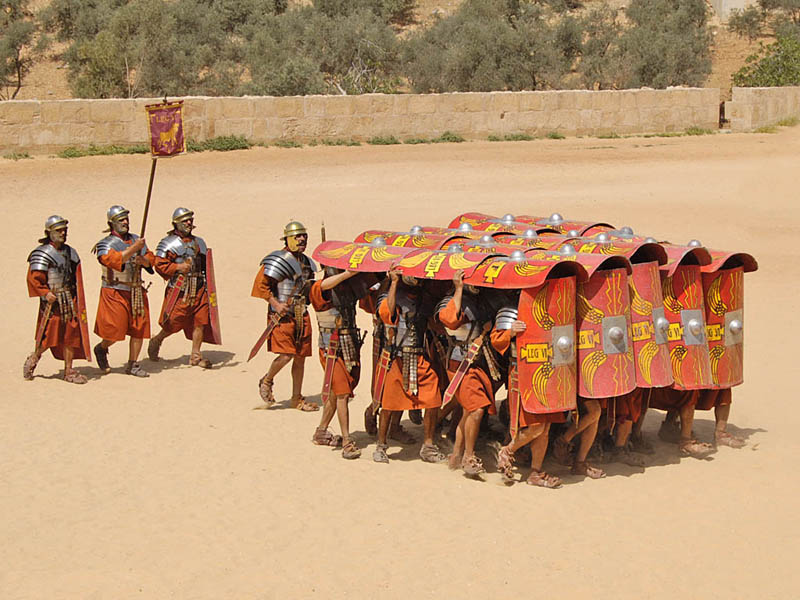
Roman Military, Army
During and after the civil war, Octavian reduced the huge number of the legions (over 60) to a much more manageable and affordable size (28). Several legions, particularly those with doubtful loyalties, were simply disbanded. Other legions were amalgamated, a fact suggested by the title Gemina (Twin).
In AD 9, Germanic tribes wiped out three full legions in the Battle of the Teutoburg Forest. This disastrous event reduced the number of the legions to 25. The total of the legions would later be increased again and for the next 300 years always be a little above or below 30.
Augustus also created the Praetorian Guard: nine cohorts ostensibly to maintain the public peace which were garrisoned in Italy. Better paid than the legionaries, the Praetorians also served less time; instead of serving the standard 25 years of the legionaries, they retired after 16 years of service.
While the auxilia (Latin: auxilia = supports) are not as famous as the legionaries, they were of major importance. Unlike the legionaries, the auxilia were recruited from among the non-citizens. Organized in smaller units of roughly cohort strength, they were paid less than the legionaries, and after 25 years of service were rewarded with Roman citizenship, also extended to their sons. According to Tacitus there were roughly as many auxiliaries as there were legionaries. Since at this time there were 25 legions of around 5,000 men each, the auxilia thus amounted to around 125,000 men, implying approximately 250 auxiliary regiments.
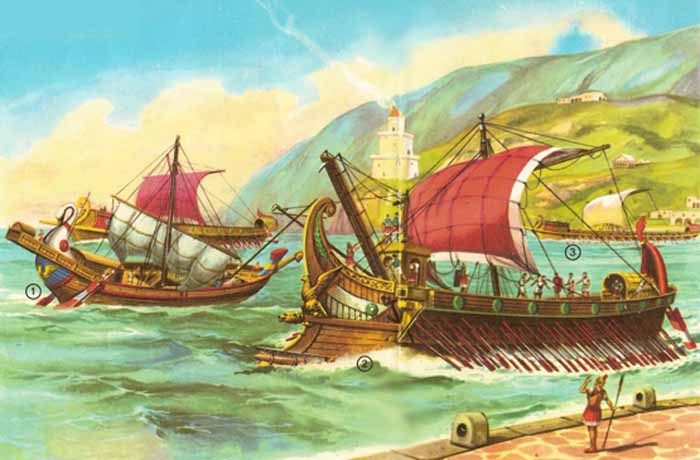
The Roman navy (Latin: Classis, lit. "fleet") not only aided in the supply and transport of the legions, but also helped in the protection of the frontiers in the rivers Rhine and Danube. Another of its duties was the protection of the very important maritime trade routes against the threat of pirates. Therefore it patrolled the whole of the Mediterranean, parts of the North Atlantic (coasts of Hispania, Gaul, and Britannia), and had also a naval presence in the Black Sea. Nevertheless the army was considered the senior and more prestigious branch.
Until the Tetrarchy (296 AD) Roman provinces were administrative and territorial units of the Roman Empire outside of Italy. In the old days of the Republic the governorships of the provinces were traditionally awarded to members of the Senatorial Order. Augustus' reforms changed this policy.
Imperial Provinces
Augustus created the Imperial provinces. Most, but not all, of the Imperial provinces were relatively recent conquests and located at the borders. Thereby the overwhelming majority of legions, which were stationed at the frontiers, were under direct Imperial control. Very important was the Imperial province of Egypt, the major breadbasket of the Empire, whose grain supply was vital to feed the masses in Rome. It was considered the personal fiefdom of the Emperor, and Senators were forbidden to even visit this province. The governor of Egypt and the commanders of any legion stationed there were not from the Senatorial Order, but were chosen by the Emperor from among the members of the lower Equestrian Order.
Senatorial Provinces
The old traditional policy continued largely unchanged in the Senatorial provinces. Due to their location, away from the borders, and to the fact that they were under longer Roman sovereignty and control, these provinces were largely peaceful and stable. Only a single legion was based in a Senatorial province: Legio III Augusta, stationed in the Senatorial province of Africa (modern northern Algeria). The status of a province was subject to change; it could change from Senatorial towards Imperial, or vice-versa. This happened several times during Augustus' reign. Another trend was to create new provinces, mostly by dividing older ones, or by expanding the Empire.
As the Empire expanded, and came to include people from a variety of cultures, the worship of an ever increasing number of deities was tolerated and accepted. The Imperial government, and the Romans in general, tended to be very tolerant towards most religions and cults, so long as they did not cause trouble. This could easily be accepted by other faiths as Roman liturgy and ceremonies were frequently tailored to fit local culture and identity. Since the Romans practiced polytheism they were also able to easily assimilate the gods of the peoples the Empire conquered. An individual could attend to both the Roman gods representing his Roman identity and his own personal religion, which was considered part of his personal identity. There were periodic persecutions of various religions at various points in time, most notably that of Christians.
In an effort to enhance loyalty, the inhabitants of the Empire were called to participate in the Imperial cult to revere (usually deceased) emperors as demigods. Few emperors claimed to be Gods while living, with the few exceptions being emperors who were widely regarded at the time to be insane (such as Caligula). Doing so in the early Empire would have risked revealing the shallowness of what the Emperor Augustus called the "restored Republic" and would have had a decidedly eastern quality to it. Since the tool was mostly one the Emperor used to control his subjects, its usefulness would have been greatest in the chaotic later Empire, when the emperors were often Christians and unwilling to participate in the practice.
Usually, an emperor was deified after his death by his successor in an attempt by that successor to enhance his own prestige. This practice can be misunderstood, however, since "deification" was to the ancient world what canonization is to the Christian world. Likewise, the term "god" had a different context in the ancient world. This could be seen during the years of the Roman Republic with religio-political practices such as the disbanding of a Senate session if it was believed the gods disapproved of the session or wished a particular vote. Deification was one of the many honors a dead emperor was entitled to, as the Romans (more than modern societies) placed great prestige on honors and national recognitions.
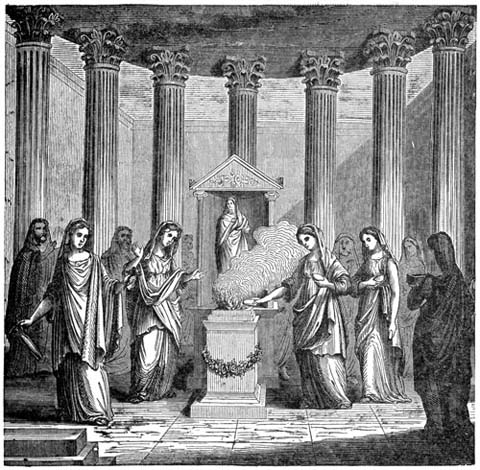
Roman Religion
The importance of the Imperial cult slowly grew, reaching its peak during the Crisis of the Third Century. Especially in the eastern half of the Empire, imperial cults grew very popular. As such it was one of the major agents of romanization. The central elements of the cult complex were next to a temple; a theatre or amphitheatre for gladiator displays and other games and a public bath complex. Sometimes the imperial cult was added to the cults of an existing temple or celebrated in a special hall in the bath complex.
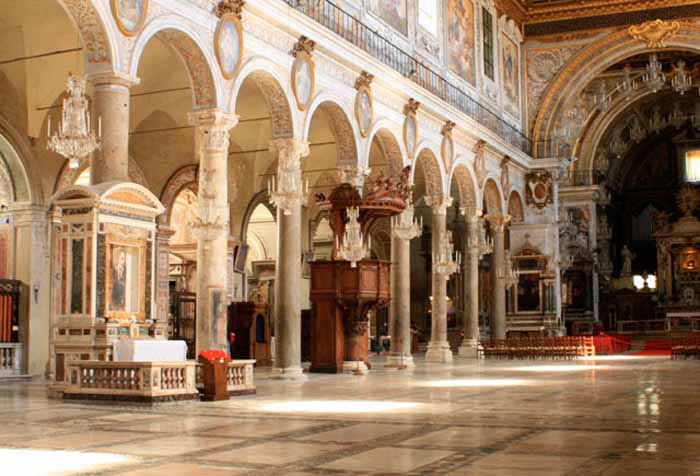
Temples
The seriousness of this belief is unclear. Some Romans ridiculed the notion that a Roman emperor was to be considered a living god, or would even make fun of the deification of an emperor after his death. Seneca the Younger parodied the notion of apotheosis in his only known satire The Pumpkinification of Claudius, in which the clumsy and ill-spoken Claudius is transformed not into a god, but a pumpkin or gourd. An element of mockery was present even at Claudius's funeral, and Vespasian's purported last words translate to: "Oh dear! I think I'm becoming a god!".
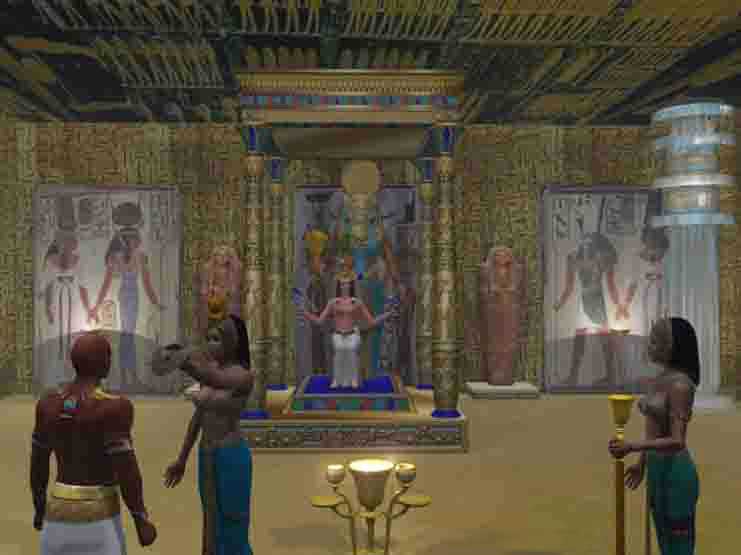
Religion in Ancient Egypt
Since Roman religion did not have a core belief that excluded other religions, several foreign gods and cults became popular. The worship of Cybele was the earliest, introduced from around 200 BC. Isis and Osiris were introduced from Egypt a century later. Bacchus and Sol Invictus were quite important and Mithras became very popular with the military. Several of these were Mystery cults. In the 1st century BC Julius Caesar granted Jews the freedom to worship in Rome as a reward for their help in Alexandria.
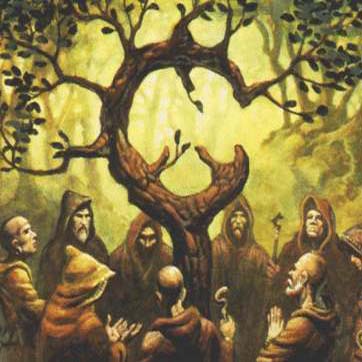
Druids were considered as essentially non-Roman: a prescript of Augustus forbade Roman citizens to practice "druidical" rites. Pliny reports that under Tiberius the druids were suppressed - along with diviners and physicians - by a decree of the Senate, and Claudius forbade their rites completely in AD 54.
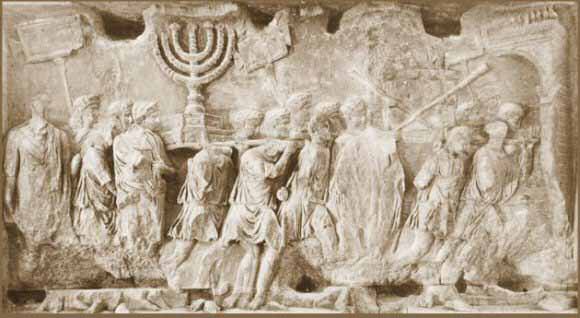
While Judaism was largely accepted, as long as Jews paid the Jewish Tax after AD 70, there was anti-Judaism in the pre-Christian Roman Empire and there were several Jewish-Roman wars. The Crisis under Caligula (AD 37 - 41) has been proposed as the "first open break between Rome and the Jews", even though problems were already evident during the Census of Quirinius in AD 6 and under Sejanus (before AD 31).
Until the rebellion in Judea in AD 66, Jews were generally protected. To get around Roman laws banning secret societies and to allow their freedom of worship, Julius Caesar declared Synagogues were colleges. Tiberius forbade Judaism in Rome but they quickly returned to their former protected status. Claudius expelled Jews from the city; however, the passage of Suetonius is ambiguous: "Because the Jews at Rome caused continuous disturbances at the instigation of Chrestus Claudius expelled them from the city." Chrestus has been identified as another form of Christus; the disturbances may have been related to the arrival of the first Christians, and that the Roman authorities, failing to distinguish between the Jews and the early Christians, simply decided to expel them all.
Historians debate whether or not the Roman government distinguished between Christians and Jews prior to Nerva's modification of the Fiscus Judaicus in 96. From then on, practicing Jews paid the tax; Christians did not.
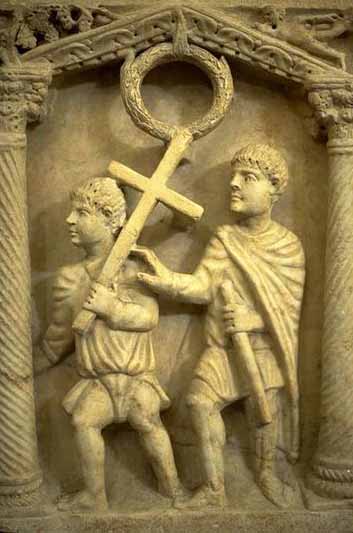
Christianity emerged in Roman Judea as a Jewish religious sect in the 1st century AD. The religion gradually spread out of Jerusalem, initially establishing major bases in first Antioch, then Alexandria, and over time throughout the Empire as well as beyond.
At first, imperial authorities viewed Christianity as a Jewish sect rather than a distinct religion. No emperor issued general laws against the faith or its Church, and persecutions, such as they were, were carried out under the authority of local government officials. A surviving letter from Pliny the Younger, governor of Bythinia, to the Emperor Trajan describes his persecution and executions of Christians; Trajan notably responded that Pliny should not seek out Christians nor heed anonymous denunciations, but only punish open Christians who refused to recant.
Suetonius mentions in passing that during the reign of Nero "punishment was inflicted on the Christians, a class of men given to a new and mischievous superstition" (superstitionis novae ac maleficae). He gives no reason for the punishment. Tacitus reports that after the Great Fire of Rome in AD 64, some among the population held Nero responsible and that the emperor attempted to deflect blame onto the Christians.
One of the earliest persecutions occurred in Gaul at Lyon in 177. Persecution was often local and sporadic, and some Christians welcomed martyrdom as a testament of faith. The Decian persecution (246-251) was a serious threat to the Church, but while it potentially undermined the religious hierarchy in urban centers, ultimately it served to strengthen Christian defiance. Diocletian undertook what was to be the most severe and last major persecution of Christians, lasting from 303 to 311.
Christianity had become too widespread to suppress, and in 313, the Edict of Milan made tolerance the official policy. Constantine I (sole ruler 324Ð337) became the first Christian emperor, and in 380 Theodosius I established Christianity as the official religion.
By the 5th century Christian hegemony had rapidly changed the Empire's identity even as the Western provinces collapsed. Those who practiced the traditional polytheistic religions were persecuted, as were Christians regarded as heretics by the authorities in power.
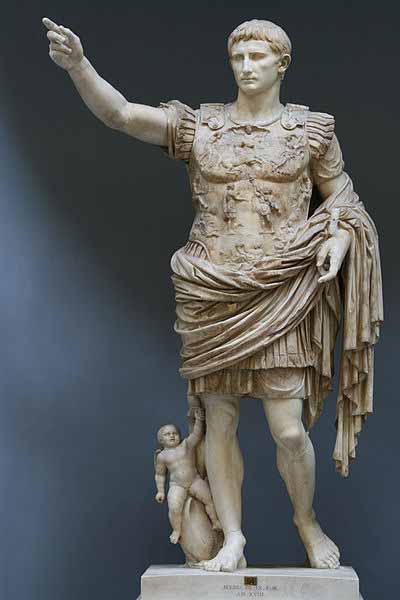
Roman Emperors - The Dynasties
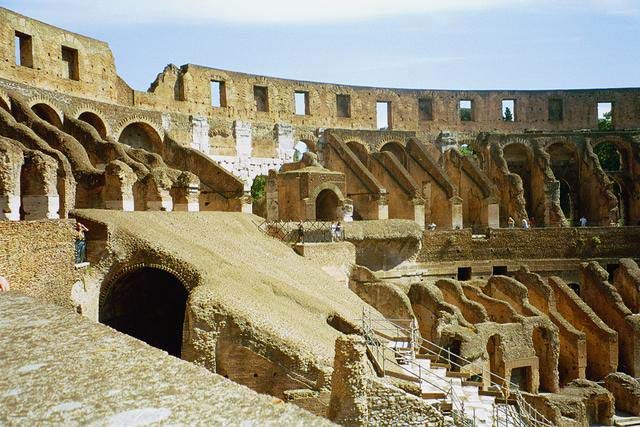
Crisis of the Third Century and the later emperors (235-395)
The changes in the institutions, society, economic life and eventually religion were so profound and fundamental, that the "Crisis of the Third Century" is increasingly seen as the watershed marking the difference between the classical world and the early medieval world, or world of late antiquity. Here we find the breakdown of outdated paradigms, which in any society signals the end of the old systems and the start of a new chapter.
The Dominate was the "despotic" latter phase of government in the ancient Roman Empire from the conclusion of the Third Century Crisis of 235-284 until the formal date of the collapse of the Western Empire in AD 476. It followed the period known as the Principate. In the Eastern half of the Empire, and especially from the time of Justinian I, the system of the Dominate evolved into Byzantine absolutism.
it is derived from the Latin dominus, meaning lord or master, an owner versus his slave - this had been used sycophantically to address emperors from the Julio-Claudian (first) dynasty on, but not used by them as a style - Tiberius in particular is said to have reviled it openly. It became common under Diocletian, who is therefore a logical choice as the first ruler of the "early" dominate. Historian David Potter describes the transformation of government under Diocletian when describing the shifts in imagery the Emperor used to display his power (in this case the building of a huge new palace at Sirmium).
During the Principate - the first period of the Roman Empire - the formalities of the constitutionally-never-abolished Roman Republic were still very much the "politically correct" image of Imperial government. It has also often been said to have ended after the 235-284 ADCrisis of the Third Century, which concluded when Diocletian established himself as Emperor. Moving the notion of the Emperor away from the republican forms of the Empire's first three centuries, Diocletian introduced a novel system of joint rule by four monarchs.
The Tetrarchy, and he and his colleagues and his successors (in two imperial territories, east and west, not four) chose to stop using the title princeps. Instead, they openly displayed the naked face of Imperial power, adopting a Hellenistic style of government more influenced by the veneration of the Eastern potentates of ancient Egypt and Persia than by the heritage of civic collegiality amongst the Roman governing class passed down from the days of the "uncrowned" Roman Republic.
Emperors of the Principate, emulating Augustus in his fiction of a republican government, created the idea of the Emperor as a concentration of the various civil and military offices upon one individual, nevertheless hiding any autocratic or despotic connotations by the preservation of the Senate and other facets of the Republican period, such as the annual paired consulship. After Diocletian, however, Emperors started to wear jeweled robes and shoes, in contrast with the simple toga praetexta used by Principate Emperors in emulation of Augustus.
Emperors inhabited luxurious palaces (the ruins of Diocletian's enormous palace in Dalmatia survive to this day; see Diocletian's Palace) and were surrounded by a court of individuals who, only due to the favor and proximity of the Emperor, attained the highest honorific titles and bureaucratic functions. In fact, many offices associated with the palatine life and that suggested intimate relationship with royalty eventually developed connotations of power, such as the offices of Chamberlain and Constable. The titles of Senator and Consul, after the loss of every residue of political power they had had in the Principate, became an honorific in the later Empire.
The adoption of Dominus as a formal title reflected the divine status (divus) that has come to be a prerogative of the Imperial position. Originally an exceptional honor awarded by the Senate to an Emperor posthumously, the elevation had devolved to an expected convention for still living Caesars. To dissuade the rebellions and usurpations of the Crisis of the Third Century, the Emperors sought the kind of divine legitimacy invoked by Eastern monarchies.
Emperors imported rituals such as kneeling before the Emperor, and kissing of the hem of the Imperial robe (proskynesis). After the personal adoption of Christianity by Constantine I (312), and its installation as the official state religion by Theodosius in 380, Imperial divinity became directly associated with the Christian Church. In the Eastern Roman Empire after AD 476, the symbiotic relation between the Imperial Crown in Constantinople and the Orthodox Church led to the distinctive character of the medieval Byzantine state.
Another clear symptom of the upgrading of the imperial status was the notion of the emperor as an incarnation of the majesty of Rome; thus lese majeste became high treason.
Present historians reject the interpretation of the transition from Principate to Dominate as a clear, easily definable break (cf. Late Antiquity). Rather, they now characterize it as a much more subtle, gradual transformation, in which Diocletian's reforms of the Imperial office, while significant, are but one point on a sliding scale.the distinction between two primary phases of Imperial government in Rome remains an important and useful one.
After 395, the emperors in the Western Roman Empire were usually figureheads, while the actual rulers were military strongmen. In 475 Orestes had revolted against Emperor Julius Nepos, causing him to flee to Dalmatia. Orestes then proclaimed his own son Romulus Augustus to be emperor, but could not get sanction from the Eastern Empire nor homage from scattered remnants of the Western Empire outside Italy (which was under his immediate military control.) A few months later, in 476 Orestes refused to honor his promises to the Foederati, (Germanic mercenaries in the service of the empire) who had supported his revolt against Nepos, for lands in Italy. The dissatisfied mercenaries, led by Odoacer, revolted, killing Orestes and removing Romulus Augustus. Odoacer ruled Italy as a king and refused imperial titulature, so the year 476 is generally used to mark the end of the Western Roman Empire.
Odoacer quickly conquered the remaining provinces of Italy, and was greeted as a liberator by the Roman Senate. Eastern Roman Emperor Zeno soon received two deputations. One was from the Senate returned the Imperial regalia and requested that the division of the empire be formally abolished and Zeno reign alone, and endorsing Odoacer's governance of Italy. The second deputation was from Nepos, asking for military support to regain control of the Italian Peninsula.
Zeno declined to abolish the Western Empire, but acceded to the requests to legitimize Odoacer's, nameing him patrician. He urged the Odoacer and the Senate, however, to recognize Nepo's authority and invite him to return to Italy. Nepos was not invited back, but Odoacer was careful to observe the formalities of the exiled emperor's titular status, often invoking his name and even minting coins with his image. Upon Nepos' death in 480, Zeno claimed Dalmatia for the East, but Odoacer, claiming his duty as vassal to arrest and punish the killers of the Western Emperor, invaded and took control of the country. He also did try and execute the assassins. When Odoacer supported the revolt of Illus and Leonitus (484-488), Zeno responded by declaring his own menacing ally Theodoric the Great, Ostrogoths, to be King of Italy. Theodoric invaded, crushed Odoacer, and took possession of Italy in 489.
The Empire became gradually less Romanized and increasingly Germanic in nature: although the Empire buckled under Visigothic assault, the overthrow of the last Emperor Romulus Augustus was carried out by federated Germanic troops from within the Roman army rather than by foreign troops. In this sense had Odoacer not renounced the title of Emperor and named himself "King of Italy" instead, the Empire might have continued in name. Its identity, however, was no longer Roman - it was increasingly populated and governed by Germanic peoples long before 476.
The Roman people were by the 5th century "bereft of their military ethos"and the Roman army itself a mere supplement to federated troops of Goths, Huns, Franks and others fighting on their behalf. Many theories have been advanced in explanation of the decline of the Roman Empire, and many dates given for its fall, from the onset of its decline in the 3rd century to the fall of Constantinople in 1453.
Militarily, however, the Empire finally fell after first being overrun by various non-Roman peoples and then having its heart in Italy seized by Germanic troops in a revolt. The historicity and exact dates are uncertain, and some historians do not consider that the Empire fell at this point. Disagreement persists since the decline of the Empire had been a long and gradual process rather than a single event.
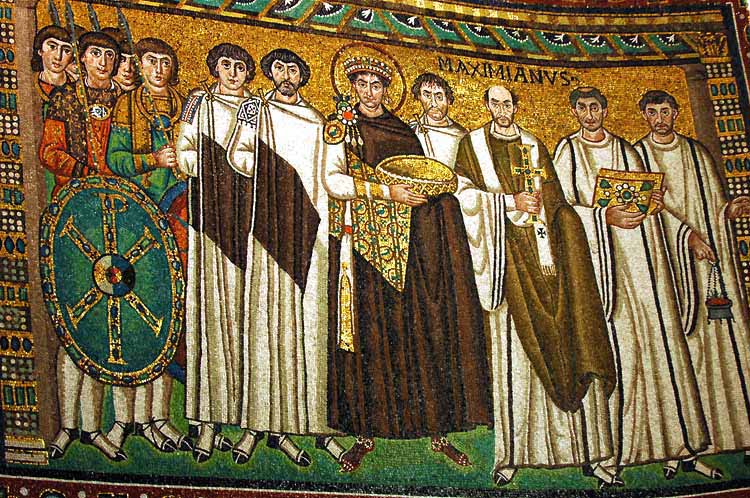
As the Western Roman Empire declined during the 5th century, the richer Eastern Roman Empire would be relieved of much destruction, and in the mid 6th century the Eastern Roman Empire (generally today called the Byzantine Empire) under the emperor Justinian I reconquered Italy and parts of Illyria from the Ostrogoths, North Africa from the Vandals, and southern Hispania from the Visigoths. The reconquest of southern Hispania was somewhat ephemeral, but North Africa served the Byzantines for another century, parts of Italy for another five centuries, and parts of Illyria even longer.
Of the many accepted dates for the end of the classical Roman state, the latest is 610. This is when the Emperor Heraclius made sweeping reforms, forever changing the face of the empire. Greek was readopted as the language of government and Latin influence waned. By 610, the Eastern Roman Empire had come under definite Greek influence, and could be considered to have become what many modern historians now call the Byzantine Empire. However, the Empire was never called thus by its inhabitants, who used terms such as Romania, Basileia Romaion or Pragmata Romaion, meaning "Land of the Romans" or "Kingdom of the Romans", and who still saw themselves as Romans, and their state as the rightful continuation of the ancient empire of Rome.
During the Muslim conquests in the 7th century, the Empire lost its possessions in Africa and the Levant to the Arab-Islamic Caliphate, reducing Byzantine lands to Anatolia, the Balkans and southern Italy. The sack of Constantinople at the hands of the Fourth Crusade in 1204 is sometimes used to date the end of Eastern Roman Empire: the destruction of Constantinople and most of its ancient treasures, total discontinuity of leadership, and the division of its lands into rival states with a Catholic-controlled "Emperor" in Constantinople itself was a blow from which the Empire never fully recovered.
Nevertheless, the Byzantines recovered Constantinople itself and reestablished the Empire in 1261, and continued to call themselves Romans until their fall to the Ottoman Turks in 1453. That year the eastern part of the Roman Empire was ultimately ended by the Fall of Constantinople. Even though Mehmed II, the conqueror of Constantinople, declared himself the Emperor of the Roman Empire (Caesar of Rome / Kayser-i Rum), and even though this capture was in some ways far less catastrophic than the sack, Constantine XI is usually considered the last Roman Emperor. The Greek ethnic self-descriptive name "Rhomios" (Roman) survives to this day.
In 444, the Huns, who had been employed as Roman allies by Aetius, were united under their king Attila, who invaded Gaul and was only stopped with great effort by a combined Roman-Germanic force led by Aetius in the Battle of Chalons (451). The next year, Attila invaded Italy and proceeded to march upon Rome, but he halted his campaign and died a year later in 453.
Aetius was murdered by Valentinian in 454, who was then himself murdered by the dead general's supporters a year later. With the end of the Theodosian dynasty, a new period of dynastic struggle ensued. The Vandals took advantage of the unrest, sailed up to Rome, and plundered the city in 455. As the barbarians settled in the former provinces, nominally as allies but de facto operating as independent polities, the territory of the Western Empire was effectively reduced to Italy and parts of Gaul.
From 455 onward, several emperors were installed in the West by the government of Constantinople, but their authority only reached as far as the barbarian commanders of the army and their troops (Ricimer (456-472), Gundobad (473-475)) allowed it to. In 475, Orestes, a former secretary of Attila, drove Emperor Julius Nepos out of Ravenna and proclaimed his own son Romulus Augustus as emperor.
In 476, Orestes refused to grant Odoacer and the Heruli federated status, prompting the latter to kill him, depose his son and send the imperial insignia to Constantinople, installing himself as king over Italy. Although isolated pockets of Roman rule continued even after 476, the city of Rome itself was under the rule of the barbarians, and the control of Rome over the West had effectively ended.
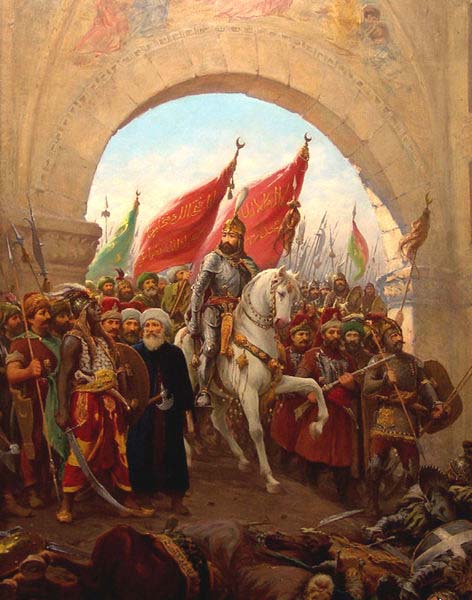
The Eastern Roman or Byzantine Empire ended with the
capture of Constantinople by the Ottoman Turks led by Mehmed II.
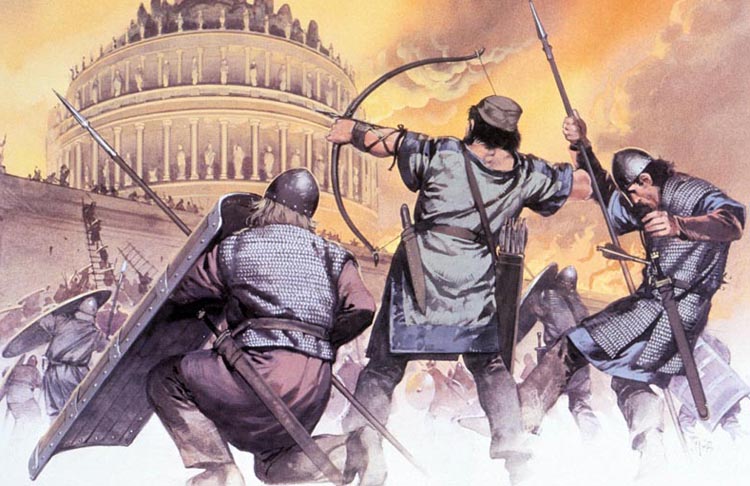
There are many theories about the ultimate fall of the Roman Empire in 476 AD. In truth there is no simple answer but many interwoven reasons based on ongoing events over many decades. Simply put - nothing worked anymore. To fix one problem, would mean to create others. It was time for change and everyone within - or connected to the Roman Empire - felt it coming.
The downhill slide began with the Crisis of the Third Century. Then after nearly half a millennium of rule - and split into two Empires - Western (Italy) and Eastern (Constantinople) - the Romans finally lost their grip on Europe in the 400's. This century left in its wake untold devastation, political chaos and some of the most fascinating and problematical issues in history.
Many would blame the usual corruption one finds in political, economic, religious, and social systems even today. The edifice of the Roman Empire had been built on unsound foundations to begin with - its fall in the final analysis - inevitable. It would seem the architecture blueprint of any reality is designed to serve a period of time in the human experience, then decline and end. The human experience is nothing more than a collective consciousness hologram set in physical reality to study emotions. That too is in the process of change. Wait for it !
Latin was the lingua franca of the Roman Empire, while particularly in the east indigenous languages such as Greek and Aramaic language continued to be in use. Despite the decline of the Western Roman Empire, the Latin language continued to flourish in the very different social and economic environment of the Middle Ages, not in the least because it became the official language of the Roman Catholic Church.
In Western, Central Europe, and parts of Africa, Latin retained its elevated status as the main vehicle of communication for the learned classes throughout the medieval period well into the Renaissance and Baroque periods. Works which made a revolutionary impact on science, such as Nicolaus Copernicus' De revolutionibus orbium coelestium (1543) were composed in Latin, which was not supplanted for scientific purposes by modern languages until the 18th century, and for formal descriptions in zoology and botany survived to the later 20th century: the modern international Binomial nomenclature holds to this day that the scientific name of each species is classified by a Latin or Latinized name.
Today, the Romance languages, which comprise all languages that descended from Latin, are spoken by more than 600 million native speakers worldwide, mainly in the Americas, Europe, and Africa. Additionally, the vocabulary of Germanic languages like German or English contains a large percentage of Latin words. In the case of English, the proportion of words with a Latin or Romance origin is estimated to be over 50%. English has many grammatical similarities to the Romance Languages, particularly French.
Today, the Latin script, the script of the Latin alphabet spread by the Roman Empire to most of Europe, and derived from the ancient Greek alphabet, is the most far-spread and commonly used script in the world. Spread by various colonies, trade routes, and political powers, the script has continued to grow in influence.
The Carolingian Renaissance of the eighth century rescued many works of Latin of oblivion: manuscripts transcribed at that time are our only sources for works that later fell into desuetude once more, only to be recovered during the Renaissance: Tacitus, Lucretius, Propertius and Catullus are examples. Other Latin writers were always read: Virgil was reinterpreted as a prophet of Christianity by the fourth century, and gained the reputation of a sorcerer in the twelfth century.
Cicero, in a limited number of his works, remained a model of good style, mined for quotations. Ovid was read with a Christian allegorical interpretation. Seneca was reimaged as the correspondent of Saint Paul. Lucan, Persius, Juvenal, Horace, Terence survived in the continuing canon and historians Valerius Maximus, Livy and Statius continued to be read for the moral lessons history was expected to impart.
Christianity spread through the Roman empire; since emperor Theodosius I (379-395 AD), the official state church of the Roman Empire was Christianity. Subsequently, former Roman territories became Christian states which exported their religion to other parts of the world, through colonisation and missionaries
Although the law of the Roman Empire is not used today, modern law in many jurisdictions is based on principles of law used and developed during the Roman Empire. Some of the same Latin terminology is still used today. Also, US Supreme Court Justices often refer to Roman law when formulating their opinions. The general structure of jurisprudence used today, in many jurisdictions, is the same (trial with a judge, plaintiff, and defendant) as that established during the Roman Empire.
Many Roman innovations were improved versions of other peoples inventions and ranged from military organization, weapon improvements, armour, siege technology, naval innovation, architecture, medical instruments, irrigation, civil planning, construction, agriculture and many more areas of civic, governmental, military and engineering development.
That said, the Romans also developed a huge array of new technologies and innovations. Many came from common themes but were vastly superior to what had come before, whilst others were totally new inventions developed by and for the needs of Empire and the Roman way of life.
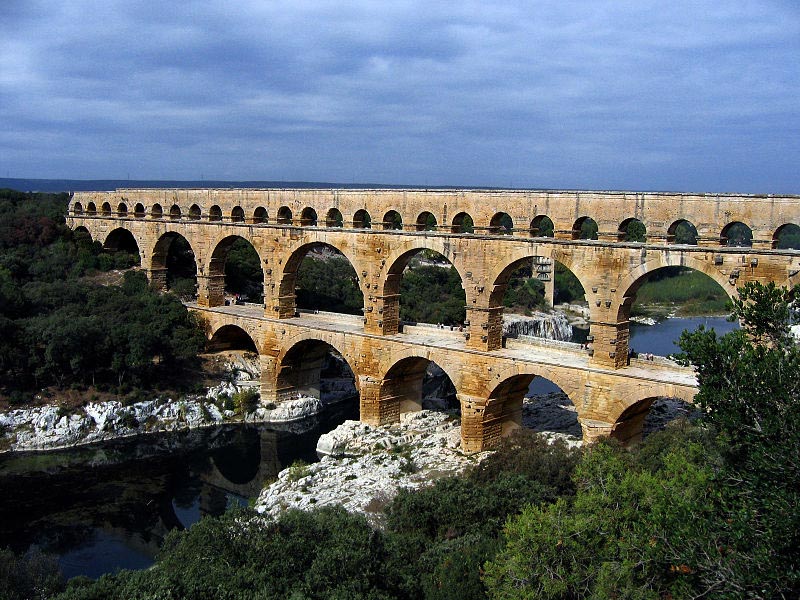
Ancient Roman Aqueducts
Some of the more famous examples are the Roman aqueducts (some of which are still in use today), Roman roads, water powered milling machines, thermal heating systems (as employed in Roman baths, and also used in palaces and wealthy homes) sewage and pipe systems and the invention and widespread use of concrete.
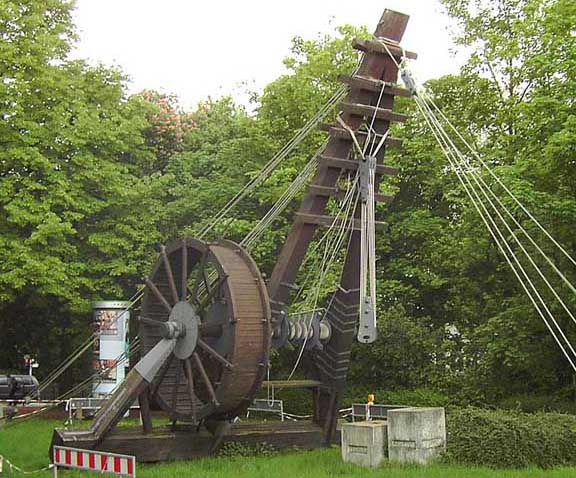
Science and Technology
Metallurgy and glass work (including the first widespread use of glass windows) and a wealth of architectural innovations including high rise buildings, dome construction, bridgeworks and floor construction (seen in the functionality of the Colosseum's arena and the underlying rooms/areas beneath it) are other examples of Roman innovation and genius.
Military inventiveness was widespread and ranged from tactical/strategic innovations, new methodologies in training, discipline and field medicine as well as inventions in all aspects of weaponry, from armor and shielding to siege engines and missile technology.
This combination of new methodologies, technical innovation, and creative invention in the military gave Rome the edge against its adversaries for half a millennium, and with it, the ability to create an empire that even today, more than 2000 years later, continues to leave its legacy in many areas of modern life.
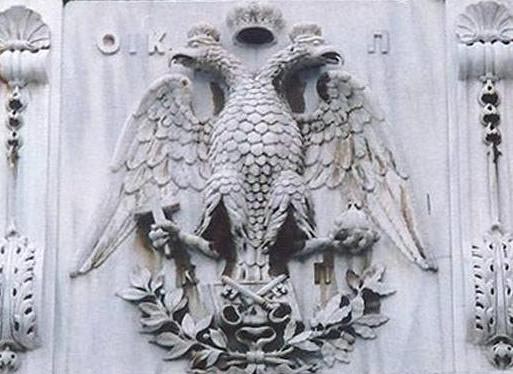
Coat of arms of the last imperial dynasty of the Eastern Roman Empire.
The Roman line continued uninterrupted to rule the Eastern Roman Empire. In a slow process, the Roman state internally transformed to the Byzantine Empire, whose main characteristics were Roman concept of state, medieval Greek culture and language and Christian faith. The Byzantines themselves never ceased to refer to themselves as Romans (Rhomaioi) and to their state as the Roman Empire, the Empire of the Romans. Likewise, they were called Ržm (Rome) by their eastern enemies to the point that competing neighbors even acquired its name, such as the Sultanate of Rum.
The designation of the Empire as "Byzantine" is a retrospective idea: it began only in 1557, a century after the fall of Constantinople, when German historian Hieronymus Wolf published his work Corpus Historae Byzantiae, a collection of Byzantine sources. The term did not come in general use in the Western world before the 19th century, when modern Greece was born. The end of the continuous tradition of the Roman Empire is open to debate: the final point was the capture of Constantinople in 1453 AD, while some place it at the sack of Constantinople by the Crusaders in 1204.
In Western Europe, the Roman concept of state was continued for almost a millennium by the Holy Roman Empire whose emperors, mostly of German tongue, viewed themselves as the legitimate successors to the ancient imperial tradition (King of the Romans) and Rome as the capital of its Empire. The German title of "Kaiser" is derived from the Latin word for Caesar.
The Holy Roman Empire was dissolved in 1806 owing to pressure by Napoleon I. In the early 20th century, the Italian fascists under their "Duce" Benito Mussolini dreamed of a new Roman Empire as an Italian one, encompassing the Mediterranean basin.
In Eastern Europe, the Russian czars Czar (derived from Caesar) adopted the idea of Moscow and Russia being a Third Rome. Sentiments of being the heir of the fallen Eastern Roman Empire began during the reign of Ivan III, Grand Duke of Moscow who had married Sophia Paleologue, the niece of Constantine XI, the last Eastern Roman Emperor. Being the most powerful Orthodox Christian state, the Tsars were thought of in Russia as succeeding the Eastern Roman Empire as the rightful rulers of the (Christian) world. There were also competing Bulgarian, Wallachian and Ottoman claims for legal succession of the Roman Empire, Mehmet II "the Conquerer" claiming the title Kayser-i Rum, meaning Caesar of Rome.