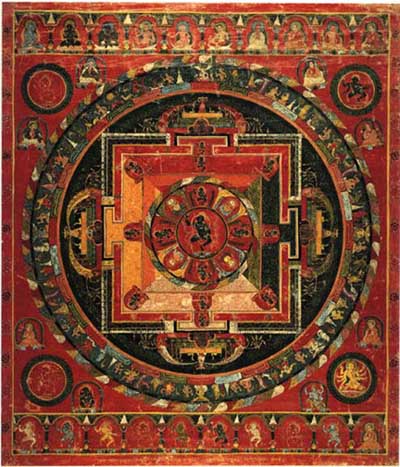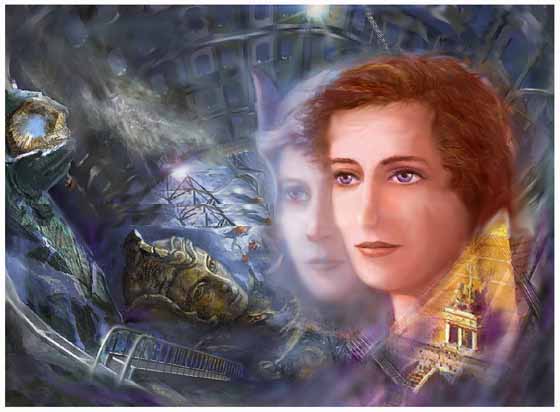
Reality is a consciousness Simulation set in linear time to experience emotions. Within the matrix of its design all things happen simultaneously, hence there is no past, present or future, but multidimensional experiences souls have simultaneously.
Experience can overlap from one grid experience to another as flashes information, dreams, or other out of body experiences. It's about your DNA programming and focus to experience as much as you can, record the information (your book, journal, video, etc.), and share with whomever. It's all just a journey, a dream, an illusion, or whatever else your mind is programmed to tell you.
To view a past life through regression, is to see an experience your soul is having in another reality that perhaps affects the outcome of what it is doing here. As a hypnotherapist, people have past life regressions to make sense of their current life and to heal their issues. The goal of any past life regression, as unique to the individual person involved rather than something that is part of their collective memory, is to physically verify the information given.
In a series of books, medium Jane Roberts channeled an entity named Seth on the topic of reincarnation. Seth believes that time and space are basically illusions. Consistent with this view, Seth argues that only parts of each person's soul incarnate in any specific reality as man is a multidimensional entity simultaneously experiencing in many contexts.
Many books, documentaries, and films have been created dealing with reincarnation, allowing the average person to believe we have more than one life, one experience, and there is more out there than just this physical reality.
As science and science fiction merge, topics like the Multiverse allow us to understand the multidimensional nature of our experiences.
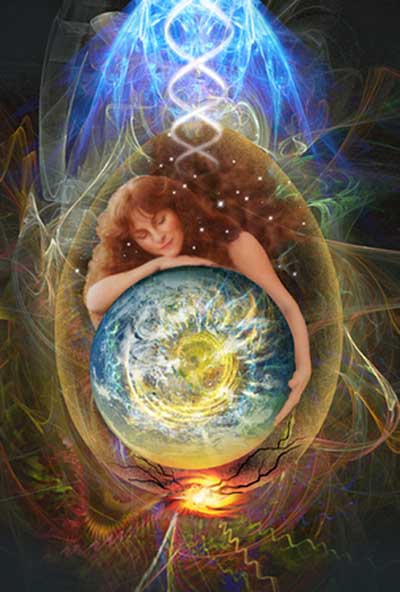
In the Cycles of Time and Illusion
When you wake up, your dreams, or other lives, continue.
Stories of 9/11 Reincarnations in Young Children Mysterious Universe - March 18, 2021
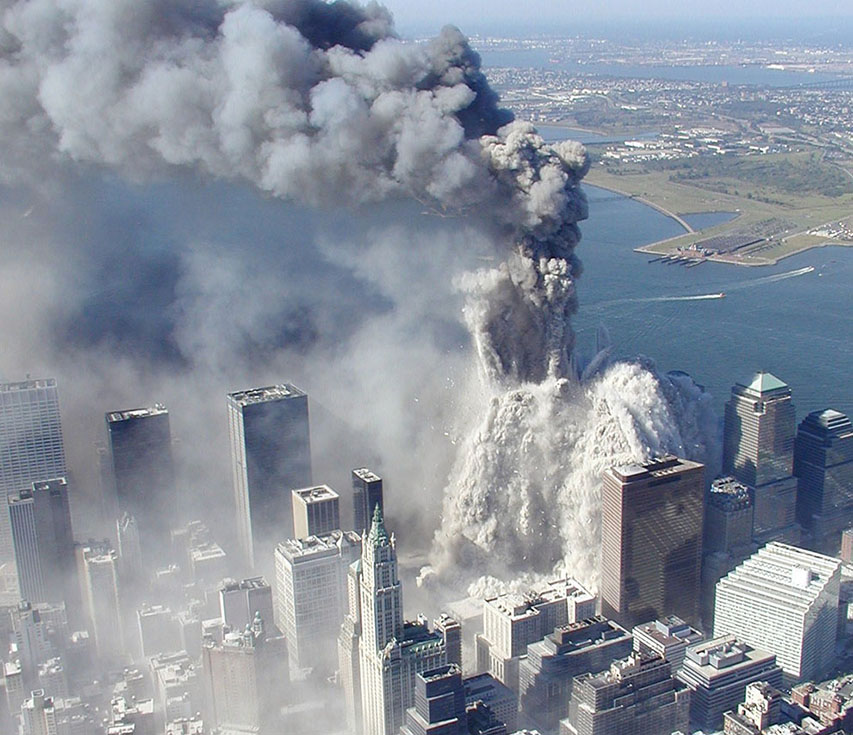
The stories in the article above are very interesting especially to me as I spoke with many of the people who died on 9/11 when their loved ones came to see me afterwards. It all starts with the acrid smell of smoke which wafts through my apartment allowing me to know I have company of the spirit kind ...
The Amazing Reincarnation of a World War II Fighter Pilot Mysterious Universe - November 30, 2020
We have long been enamored with the thought of what happens to us after we die. It is a conundrum that has consumed scientists, philosophers, and great thinkers since time unremembered. We have no more of an answer to this fundamental existential question now than we did since the very first flickers of consciousness bubbled up into the brains of our long forgotten ancestors, but there have been many ideas. One of these is the idea that we are some how reborn and recycled into a new body after death, and the cases of reincarnation are varied and at times very bizarre. One of the more famous of these is the story of a young boy, who one day realized that he was the next incarnation of a fighter pilot who had died during World War II, sending his family along an odyssey that has been discussed and debated to this day.
Some people see themselves transforming into other characters in recorded history, or as extreme as entities from other worlds and non-recorded history. The possibilities are endless. Sometimes people do not see themselves as they were/are in another experience, but tap into the collective unconsciousness, and view life through the eyes of someone else. This is not difficult as reality is nothing more than conscious experience.
When you see yourself as someone famous in a past life, it is possible you are playing that role in a parallel reality, but it is more likely you have matched your grid matrix with that of the other person and believe you are one and the same.
Famous World War II General George Patton was a staunch believer in reincarnation and, along with many other members of his family, often claimed to have seen vivid, lifelike visions of his ancestors. In particular, Patton believed he was a reincarnation of Carthaginian General Hannibal as well as the reincarnation of Julius Caesar.
Henry Ford was convinced he had lived before, most recently as a soldier killed at the battle of Gettysburg. A quote from the San Francisco Examiner from August 26, 1928 described Ford's beliefs:
Sadam Hussein believed he was the reincarnation of the ancient Babylonian King Nebakanether.
Some of the musical greats of the last few centuries leave us wondering about reincarnation. Mozart was composing entire symphonies by the time he was six years old. Beethoven and Bach were similar. Genius in almost every art form has emerged at almost unbelievable ages showing a proclivity for talent far beyond mortal logic.
Believing you are someone famous goes to the theory of channeling information from another soul, or aspect of your soul, having another experience somewhere out there. Enjoy!
Reincarnation, literally "to be made flesh again", is the belief that the soul, after death of the body, comes back to earth in another body. According to some beliefs, a new personality is developed during each life in the physical world, but the soul remains constant throughout the successive lives.
Belief in reincarnation has ancient roots. This doctrine is a central tenet within the majority of Indian religious traditions, such as Hinduism and Jainism. The idea was also entertained by some ancient Greek philosophers. Many modern Neopagans also believe in reincarnation as do some New Age movements, along with followers of Spiritism, practitioners of certain African traditions, and students of esoteric philosophies such as Kabbalah, and Gnostic and Esoteric Christianity. The Buddhist concept of Rebirth although often referred to as reincarnation differs significantly from the Hindu-based traditions and New Age movements in that there is no unchanging "soul" (or eternal self) to reincarnate.
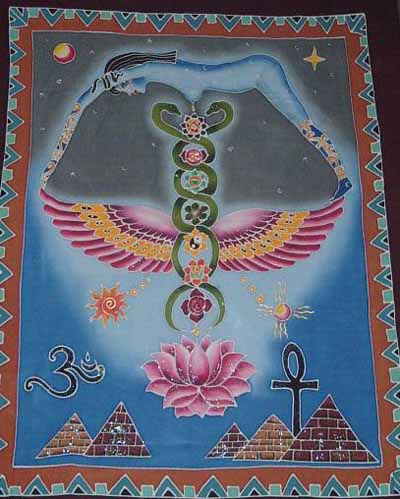
The Egyptian Book of the Dead mentions the journey of the soul into the next world without coming back to Earth. Ancient Egyptians embalmed the dead so the body might be preserved to accompany the soul into that world. This suggests their belief in resurrection than in reincarnation.
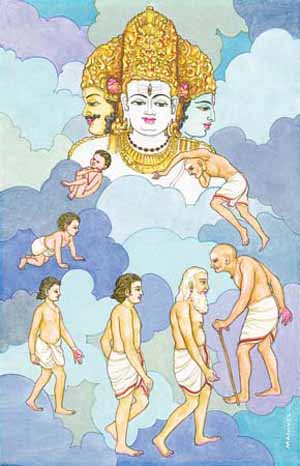
Eastern philosophical and religious beliefs regarding the existence or non-existence of an enduring 'self' have a direct bearing on how reincarnation is viewed within a given tradition. There are large differences in philosophical beliefs regarding the nature of the soul (also known as the jiva or atma) amongst the Dharmic Religions such as Hinduism and Buddhism. Some schools deny the existence of a 'self', while others claim the existence of an eternal, personal self, and still others say there is neither self or no-self, as both are false. Each of these beliefs has a direct bearing on the possible nature of reincarnation, including such concepts as samsara, moksha, nirvana, and bhakti.
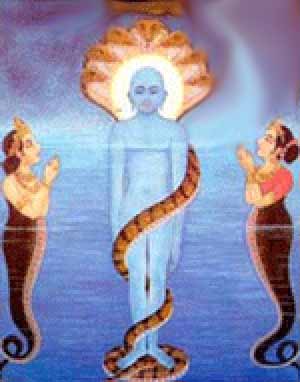
In Jainism, particular reference is given to how devas (gods) also reincarnate after they die. A Jainist who accumulates enough good karma may become a deva, but this is generally seen as undesirable since devas eventually die and one might then come back as a lesser being. This belief is also commonplace in a number of other schools of Hinduism.
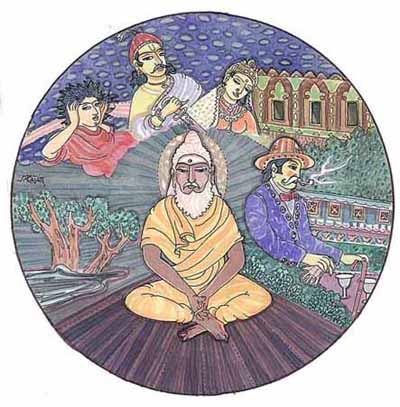
In India the concept of reincarnation is first recorded in the Upanishads (c. 800 BCE), which are philosophical and religious texts composed in Sanskrit. The doctrine of reincarnation is absent in the Vedas, which are generally considered the oldest of the Hindu scriptures.
According to Hinduism, the soul (atman) is immortal, while the body is subject to birth and death. The Bhagavad Gita states that:
The idea that the soul (of any living being - including animals, humans and plants) reincarnates is intricately linked to karma, another concept first introduced in the Upanishads.
Karma (literally: action) is the sum of one's actions, and the force that determines one's next reincarnation.
The cycle of death and rebirth, governed by karma, is referred to as 'samsara.'
Hinduism teaches that the soul goes on repeatedly being born and dying. One is reborn on account of desire: a person desires to be born because he or she wants to enjoy worldly pleasures, which can be enjoyed only through a body.
Hinduism does not teach that all worldly pleasures are sinful, but it teaches that they can never bring deep, lasting happiness or peace (ananda). According to the Hindu sage Adi Shankaracharya - the world as we ordinarily understand it - is like a dream: fleeting and illusory. To be trapped in Samsara is a result of ignorance of the true nature of being.
After many births, every person eventually becomes dissatisfied with the limited happiness that worldly pleasures can bring. At this point, a person begins to seek higher forms of happiness, which can be attained only through spiritual experience. When, after much spiritual practice (sadhana), a person finally realizes his or her own divine nature - i.e., realizes that the true "self" is the immortal soul rather than the body or the ego - all desires for the pleasures of the world will vanish, since they will seem insipid compared to spiritual ananda. When all desire has vanished, the person will not be reborn anymore.
When the cycle of rebirth thus comes to an end, a person is said to have attained moksha, or salvation. While all schools of thought agree that moksha implies the cessation of worldly desires and freedom from the cycle of birth and death, the exact definition of salvation depends on individual beliefs. For example, followers of the Advaita Vedanta school (often associated with jnana yoga) believe that they will spend eternity absorbed in the perfect peace and happiness that comes with the realization that all existence is One (Brahman), and that the immortal soul is part of that existence. The followers of full or partial Dvaita schools ("dualistic" schools, such as bhakti yoga), on the other hand, perform their worship with the goal of spending eternity in a loka, (spiritual world or heaven), in the blessed company of the Supreme being (i.e Krishna or Vishnu for the Vaishnavas, Shiva for the Shaivites).
In the beliefs of Eastern teachings like Hinduism and Buddhism, the Goddess Kali, the Mistress of life, death and rebirth, governs this wheel of becoming. This is the 'Wheel of Reincarnation'. Kali is considered the Great Mother that all must pass through to enter the afterworld. In the west we have come to fear her for she is often portrayed with skulls hanging from her wrists. Thus we have come to associate her with death and slaughter.
The origin of samsara has to be searched for in Hinduism and its classic writings. It cannot have appeared earlier than the 9th century BC because the Vedic hymns, the most ancient writings of Hinduism, do not mention it, proving that reincarnation wasn1t stated yet at the time of their recording (13th to 10th century BC). We will therefore analyze the development of the concept of immortality in the major Hindu writings, beginning with the Vedas and Brahmanas.
Immortality in the Vedic hymns and the Brahmanas:
At the time the Vedic hymns were written, the belief was that man continues to exist after death as a whole person. Between man and gods was stated an absolute distinction, as in all other polytheistic religions of the world. The concept of an impersonal fusion with the source of all existence, as later stated in the Upanishads, was far away. Here are some arguments for this thesis that result from the exegesis of the funeral ritual:
1. As was the case in other ancient religions (for instance those of Egypt and Mesopotamia), the deceased was buried with food and clothing necessary in the afterlife. More than that, the belief of ancient Aryans in the preservation of personal identity after death led them to incinerate the dead husband together with his (living) wife and bow so that they could accompany him in the afterlife. In some parts of India this ritual was performed until the British colonization.
2. Similar to the tradition of ancient Chinese religion, the departed relatives constituted a holy hierarchy. The last one deceased was commemorated individually for a year after his departure and then included in the mortuary offerings of the monthly shraddha ritual (Rig Veda 10,15,1-11). This ritual was necessary because the dead could influence negatively or positively the life of the living (Rig Veda 10,15,6).
3. According to Vedic anthropology, the components of human nature are the physical body, ashu and manas. Ashu represents the vital principle (different from personal attributes), and manas the sum of psycho-mental faculties (mind, feeling and will). The belief in the preservation of the three components after death is proved by the fact that the family addressed the departed relative in the burial ritual as a unitary person: "May nothing of your manas, nothing of the ashu, nothing of the limbs, nothing of your vital fluid, nothing of your body here by any means be lost" (Atharva Veda 18,2,24).
Yama, the god of death (mentioned in old Buddhist and Taoist scriptures too) was sovereign over the souls of the dead and also the one who received the offerings of the family for the benefit of the departed. In the Rig Veda it is said about him: "Yama was the first to find us our abode, a place that can never be taken away, where our ancient Fathers have departed; all who are born go there by that path, treading their own" (Rig Veda 10,14,2). Divine justice was provided by the gods Yama, Soma and Indra, not by an impersonal law such as karma. One of their attributes was to cast the wicked into an eternal dark prison out of which they can never escape (Rig Veda 7,104,3-17).
The premise for reaping the reward of one's life in a new earthly existence (instead of the heavenly afterlife) appeared in the Brahmana writings (9th century BC). They stated a limited heavenly immortality, depending on the deeds and the quality of the sacrifices performed during life. After reaping the reward for them, man has to face a second death in the heavenly realm (punarmrityu) and therefore return to an earthly existence. The proper antidote against this situation came to be considered esoteric knowledge, attainable only during one's earthly existence.
Reincarnation in the Upanishads
The Upanishads were the first writings to move the place of one's "second death" from the heavenly realm to this earthly world, considering its proper solution the knowledge of the atman-Brahman identity.
Ignorance of one's true self (atman or purusha) launches karma into action, the law of cause and effect in Eastern spirituality. Its first clear formulation can be found in the Brihadaranyaka Upanishad (4,4,5): "According as one acts, according as one behaves, so does he become. The doer of good becomes good. The doer of evil becomes evil. One becomes virtuous by virtuous action, bad by bad action." Reincarnation (samsara) is the practical way in which one reaps the fruits of his deeds. Therefore, the self is forced to enter a new material existence until all karmic debt is paid: "By means of thought, touch, sight and passions and by the abundance of food and drink there are birth and development of the (embodied) self. According to his deeds, the embodied self assumes successively various forms in various conditions" (Shvetashvatara Upanishad 5,11).
There can be observed a fundamental mutation in the meaning of afterlife in comparison with the Vedic perspective. Abandoning the desire to have communion with the gods (Agni, Indra, etc.), attained as a result of bringing good sacrifices, the Upanishads came to consider man's final destiny to be the impersonal fusion atman-Brahman, attained exclusively by esoteric knowledge. In this new context, karma and reincarnation are key elements that will mark from now on all particular developments in Hinduism.
Reincarnation in the Epics and Puranas
In the Bhagavad Gita, which is a part of the Mahabharata, reincarnation is clearly stated as a natural process of life that has to be followed by any mortal. Krishna says: "Just as the self advances through childhood, youth and old age in its physical body, so it advances to another body after death. The wise person is not confused by this change called death (2,13). Just as the body casts off worn out clothes and puts on new ones, so the infinite, immortal self casts off worn out bodies and enters into new ones (2,22)."
In the Puranas the speculation on this subject is more substantial and therefore specific destinies are figured for each kind of sin one performs: "The murderer of a Brahmin becomes consumptive, the killer of a cow becomes hump-backed and imbecile, the murderer of a virgin becomes leprous, all three born as outcastes. The slayer of a woman and the destroyer of embryos becomes a savage full of diseases; who commits illicit intercourse, a eunuch; who goes with his teacher's wife, disease-skinned. The eater of flesh becomes very red; the drinker of intoxicants, one with discolored teeth.... Who steals food becomes a rat; who steals grain becomes a locust... perfumes, a muskrat; honey, a gadfly; flesh, a vulture; and salt, an ant.... Who commits unnatural vice becomes a village pig; who consorts with a Sudra woman becomes a bull; who is passionate becomes a lustful horse.... These and other signs and births are seen to be the karma of the embodied, made by themselves in this world. Thus the makers of bad karma, having experienced the tortures of hell, are reborn with the residues of their sins, in these stated forms (Garuda Purana 5)."
Similar specific punishments are figured by The Laws of Manu (12, 54-69).
According to the Upanishads and Vedanta philosophy, the entity that reincarnates is the impersonal self (atman). Atman lacks any personal element, reason for which the use of the reflexive pronoun "self" is not quite right. Atman can be defined only through negating any personal attributes. Although it constitutes the existential substrata of man's existence, atman cannot be the carrier of one's "spiritual progress", because it cannot record any data produced in the illusory domain of psycho-mental existence. The spiritual progress one accumulates toward realizing theatman-Brahman identity is recorded by karma, or rather by a minimal quantity of karmic debt. According to one's karma, at (re)birth the whole physical and mental complex man consists of is reconstructed, all that pertains to the world of illusions. At this level, the newly shaped person experiences the fruits of "his" actions from previous lives and has to do his best to stop the vicious cycle avidya-karma-samsara.
As a necessary aid in explaining the reincarnation mechanism, Vedanta adopted the concept of a subtle bodies (sukshma-sharira), attached to atman as long as its bondage lasts, which actually records the karmic debts and transmits them from one life to another. However, this "subtle body" cannot be a form of preserving one's personal attributes, as it does not offer any actual data belonging to previous lives to the present conscious psycho-mental life. All this kind of data is erased, so that the facts recorded by the subtle body are a sum of hidden tendencies or impressions (samskara) imprinted by karma. They will materialize unconsciously in the life of the individual, without giving him any hint for understanding his actual condition. There is no possible form of transmitting conscious memory from one life to another, because its domain belongs to the world of illusions and dissolves at death.
In the Samkhya and Yoga darshanas, the entity that reincarnates is purusha, an equivalent of atman. Given the absolute duality stated between purusha and prakriti (substance), nothing that belongs to the psycho-mental life can pass from one life to the other because it belongs to prakriti, which has a mere illusory relation with purusha.
However, in the Yoga Sutra (2,12) is defined a similar mechanism of transmitting the effects of karma from one life to another, as was the case in Vedanta. The reservoir of karmas is called karmashaya. It accompanies purusha from one life to another, representing the sum of impressions (samskara) that could not manifest themselves during the limits of a certain life. In no way can it be a kind of conscious memory, a sum of information that the person could consciously use or a nucleus of personhood, because karmashaya has nothing in common with psycho-mental abilities. This deposit of karma merely serves as a mechanism for adjusting the effects of karma in one's life. It dictates in an impersonal and mechanical manner the new birth (jati), the length of life (ayu) and the experiences that must accompany it (bhoga).

Wheel of Life
The Buddha taught a concept of rebirth that was distinct from that of any Indian teacher contemporary with him. This concept was consistent with the common notion of a sequence of related lives stretching over a very long time, but was constrained by two core Buddhist concepts: anatta, that there is no irreducible atman or "self" tying these lives together; and anicca, that all compounded things are subject to dissolution, including all the components of the human person and personality. At the death of one personality, a new one comes into being, much as the flame of a dying candle can serve to light the flame of another.
Since according to Buddhism there is no permanent and unchanging self (identify) there can be no transmigration in the strict sense. However, the Buddha himself referred to his past-lives. Buddhism teaches that what is reborn is not the person but that one moment gives rise to another and that that momentum continues, even after death. It is a more subtle concept than the usual notion of reincarnation, reflecting the sophisticated Buddhist concept of personality existing (even within one's lifetime) without a "soul".
Buddhism never rejected samsara, the process of rebirth, but suggests that it occurs across six realms of beings. It is actually said to be very rare for a person to be reborn in the immediate next life as a human.
However, Tibetan Buddhists do believe that a new-born child may be the rebirth of some important departed lama.
The Buddha has this to say on rebirth. Kutadanta continued:
Said the Blessed One: "O Brahman, thou art religious and earnest. Thou art seriously concerned about thy soul. Yet is thy work in vain because thou art lacking in the one thing that is needful."
"There is rebirth of character, but no transmigration of a self. Thy thought-forms reappear, but there is no egoentity transferred. The stanza uttered by a teacher is reborn in the scholar who repeats the word."
Buddhism denies the reality of a permanent self, together with all things pertaining to the phenomenal world. The appearance of human existence is generated by a mere heap of five aggregates (skandha), which suffer from constant becoming and have a functional cause-effect relation:
2. sensation (product of the senses), 3. perception (built on sensation), 4. mental activity 5. consciousness.
All five elements, as well as the whole assembly they construct, are impermanent (anitya), undergo constant transformation and have no abiding principle or self. Man usually thinks that he has a self because of consciousness. But being itself in a constant process of becoming and change, consciousness cannot be identified with a self that is supposed to be permanent. Beyond the five aggregates nothing else can be found in man.
However, something has to reincarnate, following the dictates of karma. When asked about the differences between people in the matters of life span, illnesses, wealth, etc., the Buddha taught:
The Yogachara and Vajrayana (Tibetan Buddhism) schools of Mahayana Buddhism consider that there actually is an entity that reincarnates, namely consciousness (one of the five aggregates), thus having the same function as the atman of Vedanta. The Tibetan Book of the Dead describes in detail the alleged experiences one has in the intermediary state between two incarnations, suggesting that the deceased keeps some personal attributes. Although it is not clear what actually survives after death in this case, there is mentioned a mental body that cannot be injured by the visions experienced by the deceased:
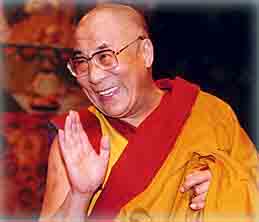
The 14th Incarnation
Years ago a boy came forward who said he was the incarnation of the Dali Lama who is the head of the Tibetan Buddhist tradition. He has incarnated many times throughout the centuries reassuming his position from lifetime to lifetime. This tradition first began when this young boy first presented as the reincarnation of the first Dali Lama. He was accepted by the priests by way of many signs. He proceeded to miracles of knowing, telepathy, mind reading and ceremony to prove that claim. This process has allowed subsequent Monks to develop a system to rediscovery successive incarnations of the Dali Lama and others of high spiritual development in each age.
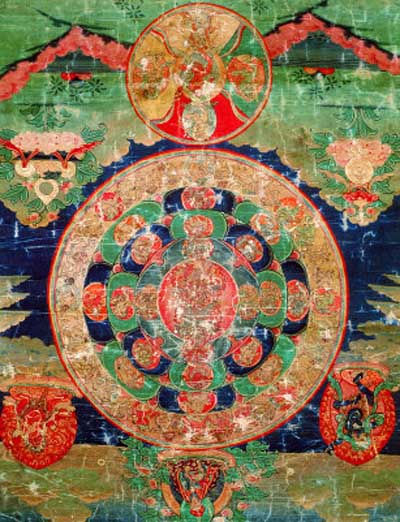
Taoist documents from as early as the Han Dynasty claimed that Lao Tzu appeared on earth as different persons in different times beginning in the legendary era of Three Sovereigns and Five Emperors. The (ca. 3rd century BCE) Chuang Tzu states: "Birth is not a beginning; death is not an end. There is existence without limitation; there is continuity without a starting-point. Existence without limitation is Space. Continuity without a starting point is Time. There is birth, there is death, there is issuing forth, there is entering in."
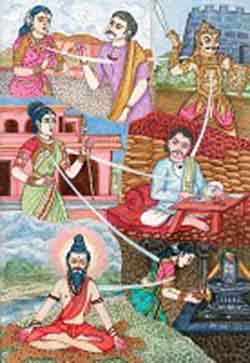
Reincarnation, simply stated, is the law of cause and effect: reincarnation does not create any caste or differences among people: past and present life's actions simply have a bearing upon a specific individual. Reincarnation in no way makes one superior to another.
Sikhs believe that every creature has a Soul; on death, the Soul is passed from one body to another until Liberation. The journey of the Soul is governed by the deeds and actions that we perform during our lives. If we perform good deeds and actions and remember the Creator, we attain a better life. On the contrary, if we carry out evil actions and sinful deeds, we will be incarnated in 'lower' life forms - snakes, lions, zebra, monkeys, hippopotamus etc. The person who has evolved to spiritual perfection attains salvation - union with God.
The Karma of a person will definitely have their effect, both good and bad. No worldly power can change the course of their movement. But according to the Sikh thought, the Almighty God, with his Grace, may pardon the wrongs of a person and thus release him/her from the pangs of suffering.
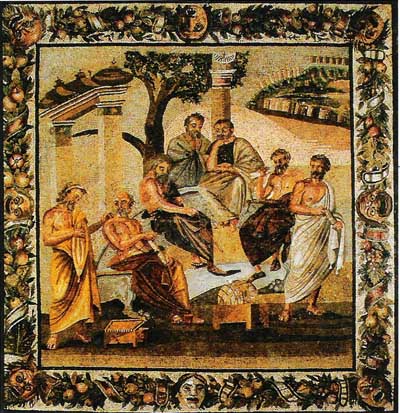
An early example of reincarnation in Western cultures comes from the Orphic or Dionysus mystery religions dating back between the 6th and 4th century BC, according to which the soul was breathed into the human body through the Aither (air) where the host, or human, would atone for the sins from the inheritance of titan heritage.
The soul would spend 10 transformations across a span of one thousand years each before atonement and become one with the gods; by living one's life as a philosopher it would only take three of these transformations.
Among the ancient Greeks, Socrates, Pythagoras, and Plato may be numbered among those who made reincarnation an integral part of their teachings. At the end of his life, Socrates said, "I am confident that there truly is such a thing as living again, and that the living spring from the dead." Pythagoras claimed he could remember his past lives, and Plato presented detailed accounts of reincarnation in his major works.
In the Hermetica, a Graeco-Egyptian series of writings on cosmology and spirituality attributed to Hermes Trismegistus - Thoth the doctrine of reincarnation is also central.
Plato stated the pre-existence of the soul in a celestial world and its fall into a human body due to sin. In order to be liberated from its bondage and return to a state of pure being, the soul needs to be purified through reincarnation. In stating these beliefs Plato was strongly influenced by the earlier philosophical schools of Orphism and Pythagoreanism. The first important Greek philosophical system that adopted a similar view on reincarnation to Hinduism was Neo-Platonism, born in the 3rd century AD, under certain Eastern influences.
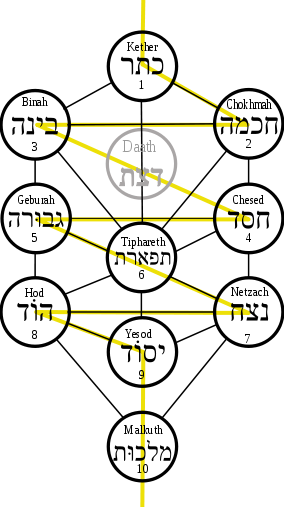
While ancient Greek philosophers like Plato and Socrates attempted to prove the existence of reincarnation through philosophical proofs, Jewish mystics who accepted this idea did not.
Reincarnation appeared in Jewish thought some time after the Talmud. There is no reference to reincarnation in the Talmud or any prior writings. The idea of reincarnation, called gilgul, became popular in folk belief, and is found in much Yiddish literature among Ashkenazi Jews.
Among a few kabbalists, it was posited that some human souls could end up being reincarnated into non-human bodies. These ideas were found in a number of Kabbalistic works from the 1200s, and also among many mystics in the late 1500s. Martin Buber's early collection of stories of the Baal Shem Tov's life includes several that refer to people reincarnating in successive lives.
Among well known (generally non-kabbalist or anti-kabbalist) Rabbis who rejected the idea of reincarnation are Saadia Gaon, David Kimhi, Hasdai Crescas, Yedayah Bedershi (early 14th century), Joseph Albo, Abraham ibn Daud, the Rosh and Leon de Modena.
Saadia Gaon, in Emunoth ve-Deoth, concludes Section vi with a refutation of the doctrine of metempsychosis (reincarnation). While refuting reincarnation, the Saadia Gaon further states that Jews who hold to reincarnation have adopted non-Jewish beliefs.
The belief is common in Orthodox Judaism. Indeed there is an entire volume of work called Sha'ar Ha'Gilgulim[36] (The Gate of Reincarnations), based on the work of Rabbi Isaac Luria (and compiled by his disciple, Rabbi Chaim Vital). It describes the deep, complex laws of reincarnation. One concept that arises from Sha'ar Ha'gilgulim is the idea that gilgul is paralleled physically by pregnancy.
Many Orthodox siddurim (prayerbooks) have a nightly prayer asking for forgiveness for sins that one may have committed in this gilgul or a previous one, which accompanies the nighttime recitation of the Shema before going to sleep.
The Kabala, the ancient mystical teachings of the Jewish faith is filled with references to reincarnation that are thousands of years old.

The overwhelming majority of mainstream Christian denominations reject the notion of reincarnation and consider the theory to challenge basic tenets of their beliefs. Certain churches indirectly address the subject through teachings about death.
A few consider the matter open to individual interpretation due to the few biblical references which survived the purging of texts considered to be heretical in the founding years of Christianity as a church. Some Christians contend that reincarnation was taught by the early Christian church, but due to bias and mistranslations, these teachings were lost or obscured.
Many of the philosophies associated with the theory of reincarnation focus on "working" or "learning" through various lifetimes to achieve some sort of higher understanding or state of "goodness" before salvation is granted or acquired.
Basic to Traditional Christianity is the doctrine that humans can never achieve the perfection God requires and the only salvation is total and complete forgiveness accomplished through the sacrifice Jesus made on the cross wherein he took the sins of mankind. There seems to be evidence however that some of the earliest Christian sects such as the Sethians and followers of the Gnostic Church of Valentinus believed in reincarnation, and they were persecuted by the Romans for this.
A number of Evangelical and (in the USA) Fundamentalist Christian maintain that any phenomena suggestive of it are deceptions of the devil. Although the Bible never mentions the word reincarnation, there are several passages through New Testament that reject reincarnation or the possibility of any return or contact with this world for the souls in Heaven or Hell (see Hebrews 9:27 and Luke 16:20-31)
The Bible contains passages in the New Testament that could be taken to allude to reincarnation. In Matthew 11:10-14 and 17:10-13, John 1:21, the Jews ask John the Baptist if he is Elijah and John replies clearly that he is not, implying that Jesus' reference was meant in a figurative sense (which is what most Christians accept). It should be noted that Elijah never actually "died," but was "raptured" in a chariot of fire.
Furthermore, the prophetic texts stated that God would send Elijah back to Earth, as a harbinger of Jesus Christ. As cousins they were born respectively to barren Elizabeth and Zacharias; Jesus, firstborn of Mary and Joseph, was the first to rise from the dead visibly demonstrating his power over death. It can also be taken to mean an apparition, not a reincarnation.
There are various contemporary attempts to entwine Christianity and reincarnation. Geddes Macgregor, wrote a book called Reincarnation in Christianity: A New Vision of Rebirth in Christian Thought, Rudolf Steiner wrote Christianity as Mystical Fact and Tommaso Palamidessi wrote Memory of Past Lives and Its Technique which contains several methods which are supposed to help in obtaining memories from previous lives.
Several groups which consider themselves to be Christian and support reincarnation include the Christian Community, the Liberal Catholic Church, Unity Church, The Christian Spiritualist Movement, the Rosicrucian Fellowship and Lectorium Rosicrucianum. The Medieval sect known variously as the Cathars or Albigensians who flourished in the Languedoc believed in Reincarnation, seeing each soul as a fallen angel born again and again into the world of Matter created by Lucibel (Lucifer).
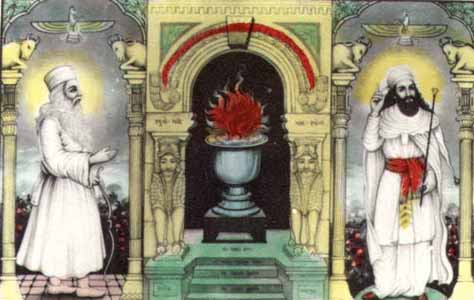
Zoroastrianism does not promote reincarnation. The soul is given final judgment 3 days after death. Zoroastrianism believes in Frashokereti, where the world will end, and the metal from the mountains will pour out throughout the earth. The souls that did good deeds, and those that are in heaven, will feel it as warm milk, and those who have done bad deeds and who are in hell will feel as if pointed, sharp rocks are poking at them. The world will be remade after this, with all of evil removed from the earth, and the souls will go through a phase where they will be "born again" or cleansed in higher light.
Reincarnation also appears in Norse mythology, in the Poetic Edda. The editor of the Poetic Edda says that Helgi Hjorvarosson and his mistress, the valkyrie Svafa, whose love story is told in the Helgakvioa Hjorvarossonar, were reborn as Helgi Hundingsbane and the valkyrie Sigrun. Helgi and Sigrun's love story is the matter of a part of the Volsunga saga and the lays Helgakvioa Hundingsbana I and II. They were reborn a second time as Helgi Haddingjaskati and the valkyrie Kara, but unfortunately their story, Karuljoo, only survives in a probably modified form in the Hromundar saga Gripssonar.
The belief in reincarnation was probably commonplace among the Vikings since the annotator of the Poetic Edda wrote that people formerly used to believe in it, but that it was in his (Christian) time considered "old wife's folly".
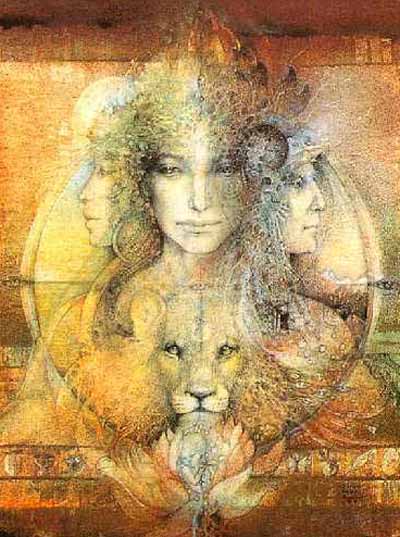
Reincarnation is an intrinsic part of many Native American and Inuit traditions. In the now heavily Christian Polar North (now mainly parts of Greenland and Nunavut), the concept of reincarnation is enshrined in the Inuit language. The survival of the concept of reincarnation applies across these nations in varying degrees of integrity, as these countries are now sandwiched between Native and European traditions.
Ancient Shamans and tribal groups worldwide have long believed that a traumatic experience within the realm of our inner selves can serve as a catalyst for the truth seeker to move beyond the illusions of the little self and enter the unity of the greater whole.
The Skull: By stripping away the illusions of society and the egoic structure of the little self one experiences an inner death. Kali's skulls were the symbol of those who would risk this personal death and transformation only to be reborn in the image of the greater self. Thus she sees through us to our essential core as we pass through the doorway of life, death, and rebirth.
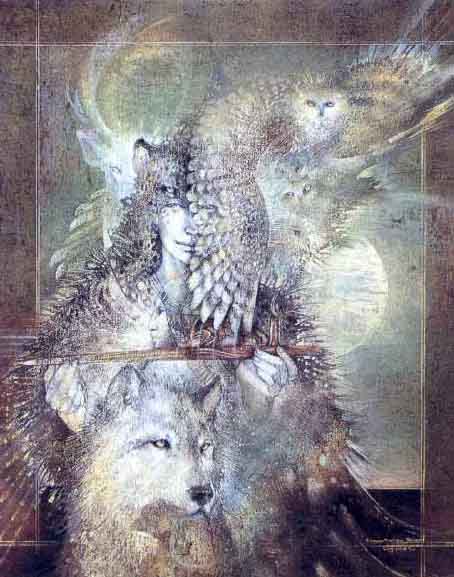
Transmigration of the soul (sometimes given simply as Transmigration) is a philosophy of reincarnation incorporating the specific belief that after death, the soul of a living being is then transferred (or transmigrates) into another living form and thus takes birth again.
The philosophy of transmigration is often connected with a belief that the karma (or, the actions) of the soul in one life (or, more generally, a series of past lives) determines the future existence.
It is a belief found within Hindu traditions (such as Yoga, Vaishnavism, and Jainism), Greek philosophy, animism, theosophy, anthroposophy, Wicca, and other theological systems, including Kabballa and a number of minority Christian groups.
Some psychic mediums of a variety of religious persuasions (from Wiccan all the way to Christian) and some Spiritualists believe in transmigration of the soul but hold that reincarnation is an anomaly if it occurs at all.
Transmigration in Hinduism and Buddhism
As the believed nature of the soul (jiva or atman) has a significant impact on any philosophy concerning transmigration, there are a number of significant differences between both Hindu and Buddhist versions as well as minor differences within the varied Hindu and Buddhist traditions themselves. In general, the Hindu sense is different from the Buddhist sense because, in Hinduism, a soul is both immutable and eternal, but in many schools of Buddhism the soul is believed to be susceptible to change, and thus the character of a soul from a previous life is imprinted on the new one.
"Never was there a time when I did not exist, nor you, nor all these kings; nor in the future shall any of us cease to be. As the embodied soul continuously passes, in this body, from boyhood to youth to old age, the soul similarly passes into another body at death. A sober person is not bewildered by such a change". (Bhagavad Gita, Chapter 2, texts 12-13)
Platonism, transmigration, and "innate knowledge"
The transmigration of souls, or metempsychosis, is a concept which underpins Plato's ideas concerning innate knowledge. Plato may have incorporated this concept from two Greek religious groups that preceded him: the Pythagoreans or the Orphics. Plato taught that "all learning is but recollection" because we have innate knowledge of universal ideas (e.g., everywhere, a triangle has 3 sides - hence its universality) from the past experiences of our immortal soul. This soul, according to Platonic thought, once separated from the body, spends an indeterminate amount of time in "formland" and then assumes another body. Therefore, according to Plato, we need only recall our buried memories to manifest innate knowledge.
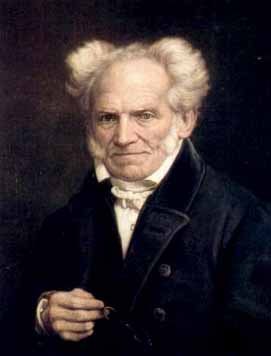
During the Renaissance, a new flowering of public interest in reincarnation occurred. One of the prominent figures in the revival was Italy's leading philosopher and poet Giordano Bruno, who was ultimately sentenced to be burned at the stake by the Inquisition because of his teachings about reincarnation.
During the classical period of German literature metempsychosis attracted much attention: Goethe played with the idea, and it was taken up more seriously by Lessing, who borrowed it from Charles Bonnet, and by Herder. It has been mentioned with respect by Hume and by Arthur Schopenhauer.
Irish poet and Nobel Laureate William Butler Yeats proposed a novel theory of reincarnation in his occult treatise A Vision. According to Yeats' view reincarnation does not occur within a framework of linear time. Rather, all of a person's past and future lives are happening at once, in an eternal now moment; and the decisions made in any of these lifetimes influence all of the other lives (and are influenced by them).
Hermann Hesse, Literary Nobel Prize, 1946, expressed a viewpoint of "...reincarnation as a mode of expression for stability in the midst of flux."
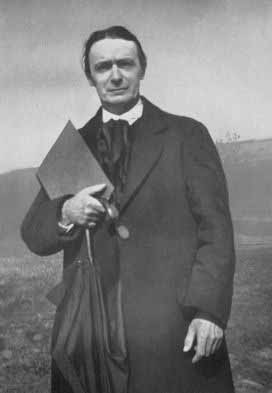
Reincarnation plays an important role in the ideas of Anthroposophy, a spiritual movement founded by Rudolf Steiner. Steiner described the human soul as gaining new experiences in every epoch and in a variety of races or nations. The unique personality, with its weaknesses and abilities, is not simply a reflection of the body's genetic heritage. Though Steiner described the incarnating soul as searching for and even preparing a familial lineage supportive of its future life, a person's character is also determined by his or her past lives.
Anthroposophy describes the present as being formed by a tension between the past and the future. Both influence our present destiny; there are events that occur due to our past, but there are also events that occur to prepare us rightly for the future. Between these two, there is space for human free will; we create our destiny, not only live it out, just as we build a house in which we then choose to live.
Anthroposophy has developed various spiritual exercises that are intended to develop the capacity to discern past lives and the deeper nature of the human being. In addition, Steiner investigated the karmic relationships of many historical individuals, from Karl Marx to Julian the Apostate.
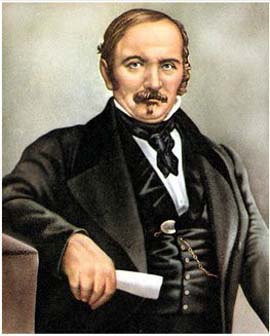
Reincarnation is the core of the doctrine of Spiritism, a tolerant religious movement started in France in 1857. According to Spiritists souls will reincarnate to perfect themselves toward communion with God.
The evolution of the soul is one of the main laws of the universe; it cannot be truly stopped, only delayed. Spirits have new chances to learn and evolve by reincarnating into new bodies. Forgetfulness of the past, including previous lives, is a gift through which souls get a chance to overcome their past, paying their debts to their enemies and themselves, and acquiring newer experiences for the future.
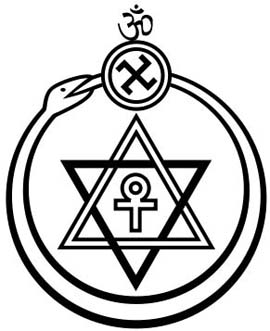
The Theosophical Society which draws much of its inspiration from India, was the first institution in modern times responsible for widely spreading the concept of reincarnation in the West. It has taken reincarnation, as well as karma and spiritual evolution, as one of its cardinal tenets; it is, according to a recent theosophical writer, "the master-key to modern problems," including heredity.
In the Theosophical world-view, the soul in man is originally pure, but it lacks self-consciousness and its powers are potential. Reincarnation is the vast rhythmic process by which the soul in man unfolds its spiritual powers in the world of form and gets to know itself.
First, the soul descends from its sublime, free, spiritual realms, to inhabit a baby form. While living in a human form, it gathers experience through its effort to express itself in the world. After the lifetime is over, there is a withdrawal from the physical plane to successively higher levels of Reality, in what we call death. It involves a process of purification and assimilation of the wisdom from its past life experience.
Finally, having completely withdrawn and cast off all instruments of personal experience, it stands again in its spiritual and formless nature. After that process is finished, the soul is ready to begin its next rhythmic manifestation and to descend into matter in a new effort to unfold its spiritual nature and to gain consciousness of its divine origin and nature.
From such a view point, which covers vast periods of time, what is called a lifetime is as a day in the life of the true spiritual human being. This spiritual entity moves forward on a vast pilgrimage, every lifetime bringing it closer to complete self-knowledge and self-expression.
According to Theosophy, then, that which reincarnates is the part of man which belongs to the formless non-material and timeless worlds. It is neither the physical body and all of its characteristics, nor the emotional nature, with all its personal likes and dislikes, nor the mental nature, with its accumulated knowledge and its habits of thinking, that will reincarnate. That which is above all these aspects is that which reincarnates.
However, when the formless essence of a human being begins its process of reincarnation, it attracts the old mental, emotional, and energetic karmic patterns to form the new personality. Thus the soul with the added powers developed during its previous lives and the post-mortem process of assimilation, deals with the old hindrances or shortcomings it was not able to work out in its previous lifetimes.
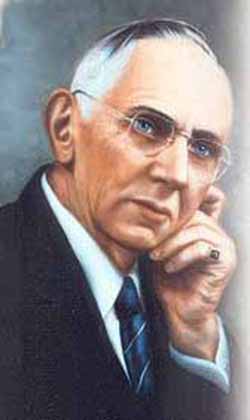
American mystic Edgar Cayce taught reality of reincarnation and karma, but as instruments of a loving God rather than blind natural laws. Its purpose is to teach us certain spiritual lessons. Animals are said to have undifferentiated, "group" souls rather than individuality and consciousness. Once the soul evolves through a succession of animal incarnations and achieves human status, it is not then reborn in animal form. Cayce's view arguably incorporates Theosophical teachings on spiritual evolution.
Past reincarnation, usually termed "past lives", is a key part of the principles and practices of the Church of Scientology.
Scientologists believe that the human individual is actually an immortal thetan, or spiritual entity, that has fallen into a degraded state as a result of past-life experiences. Scientology auditing is intended to free the person of these past-life traumas and recover past-life memory, leading to a higher state of spiritual awareness.
This idea is echoed in their highest fraternal religious order, the Sea Organization, whose motto is "Revenimus" or "We Come Back", and whose members sign a "billion-year contract" as a sign of commitment to that ideal. L. Ron Hubbard, the founder of Scientology, does not use the word "reincarnation" to describe its beliefs, noting that: "The common definition of reincarnation has been altered from its original meaning. The word has come to mean 'to be born again in different life forms' whereas its actual definition is 'to be born again into the flesh of another body.' Scientology ascribes to this latter, original definition of reincarnation."
The first writings in Scientology regarding past lives date from around 1951 and slightly earlier. In 1960, Hubbard published a book on past lives entitled Have You Lived Before This Life..
In 1968 he wrote Mission Into Time, a report on a five-week sailing expedition to Sardinia, Sicily and Carthage to see if specific evidence could be found to substantiate L. Ron Hubbard's recall of incidents in his own past, centuries ago.
PSYCHIC & SPIRITUAL DEVELOPMENT