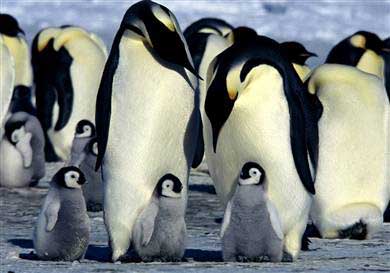
Penguins are a group of aquatic, flightless birds living almost exclusively in the Southern Hemisphere, especially in Antarctica. Highly adapted for life in the water, penguins have countershaded dark and white plumage, and their wings have evolved into flippers. Most penguins feed on krill, fish, squid and other forms of sea-life caught while swimming underwater. They spend about half of their lives on land and half in the oceans. Although all penguin species are native to the Southern Hemisphere, they are not found only in cold climates, such as Antarctica. In fact, only a few species of penguin live so far south. Several species are found in the temperate zone, and one species, the Gal‡pagos Penguin, lives near the equator. Read more ...
As a totem animal, the penguin is said to be a reminder of order in times of chaos, of teamwork while hunting under water, of moving in a steady line, inexorably forward on foot through fair weather and foul. The penguin also speaks to the advantages of being able to slip easily from one realm to another.
Penguin's ability to jump from the water and land on its feet symbolizes the ability to 'change planes' (or realities) easily. Some would say this represents a connection between the physical and the spiritual.
It is commonly known that penguins appear similar to men wearing black jacket or overcoat and hence, they are believed to represent good manners and charm.
Penguin in dreams: To see a penguin in your dream signifies that your problems are not as serious as you may think. It serves as a reminder for you to keep your cool and remain level-headed.
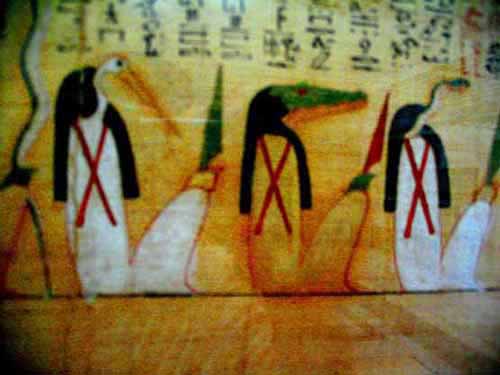
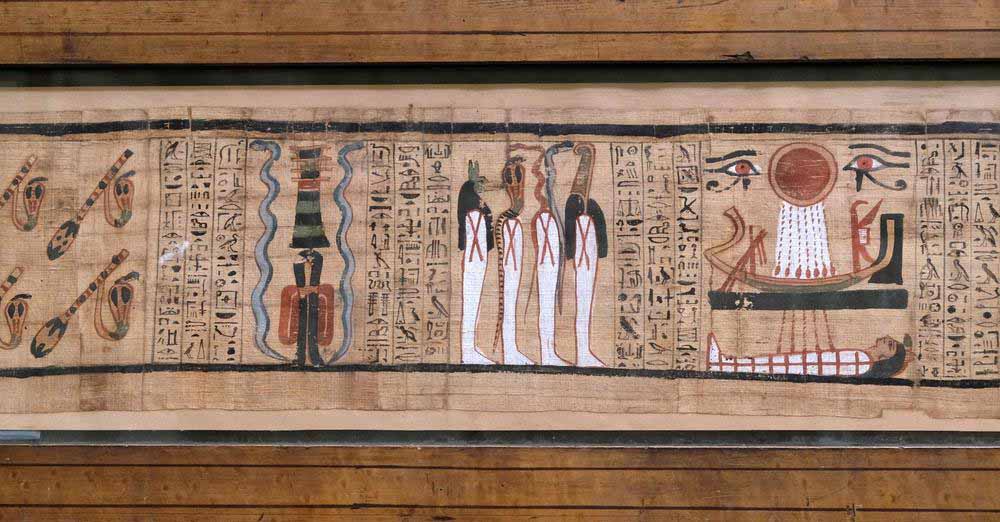
Ibis, Crocodile, Snake Scribes with Feather Pens as he wrote the story of our reality
Scientists Recreate Cleopatra's Favorite Perfume Smithsonian - May 23, 2022
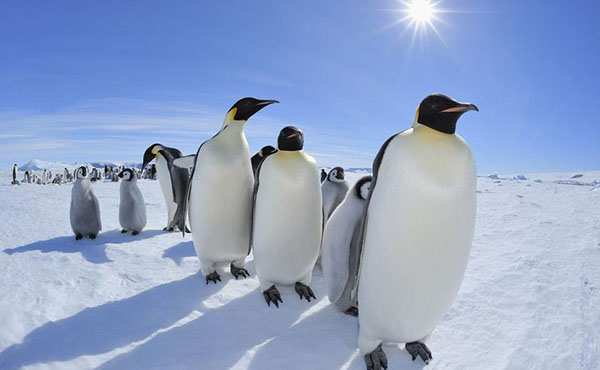
Rare total solar eclipse over Antarctica dazzles ... the penguins
Live Science - December 4, 2021
Once upon a time a penguin told me a story about an eclipse,

a land made of ice, a black hole beneath
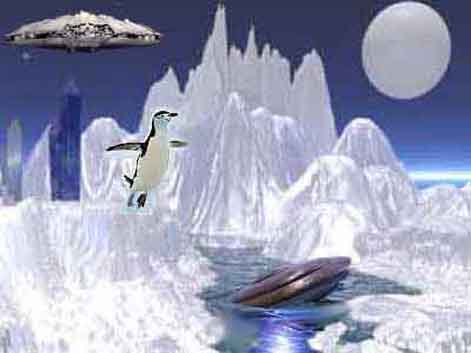
and extraterrestrial travelers.
Scientists Analyzed Penguin DNA And Found Something Quite Remarkable as They Adjust to Climate Science Alert - July 22, 2022
Scientists are concerned the evolutionary path of the penguin may be grinding to a halt, thanks to what appears to be the lowest evolutionary rates ever detected in birds.
Study reveals 60 million years of penguin evolution PhysOrg - July 19, 2022
An international team of 40 researchers analyzed the genomes - the complete set of DNA - of all living and recently extinct penguin species and combined this with the fossil record to gain new insights into the key events and processes that shaped the evolution of these iconic birds. The study revealed that penguin evolution was driven by changes in climate, and ocean currents. Scientists found "signatures" in the penguin genomes that suggest flip-flopping between small populations in climate refugia - regions in which penguins could survive during periods when conditions everywhere else were unfavorable - and population growth and re-colonization during periods when conditions improved. As temperatures dropped, penguins were forced further north, before moving back to the poles as temperatures warmed and habitats became available for re-colonization.
Giant Prehistoric Penguins Evolved During the Dinosaur Age Live Science - February 28, 2017
Penguins that walked the Earth 61 million years ago might have been giants, growing to nearly 5 feet tall, according to the oldest penguin fossils unearthed to date. Perhaps even more impressive, these oversize waddlers might have evolved alongside dinosaurs, the researchers report in a new study. Penguins are flightless, but they can swim at speeds of up to 22 mph (35 km/h). The biggest living penguin, the emperor penguin, can grow to be about 3.9 feet (1.2 meters) tall, but previously unearthed fossils revealed that extinct penguins could get as large as 5.4 feet (1.65 m) tall. Although penguins are flightless, their anatomy suggests that their ancestors could fly, just as other modern birds can. For example, some wing bones in living penguins are fused together in the same way as those in flying birds, said study co-author Paul Scofield, a paleontologist at the Canterbury Museum in Christchurch, New Zealand. In addition,modern penguins have air sacs in their bodies just as flying birds do, although in flying birds, these air sacs help reduce weight for flight, whereas in penguins, they help the birds control their buoyancy
Huddle Up: the Surprising Physics of Penguin Movements Live Science - December 17, 2013
Maintaining a massive huddle of thousands of penguins may sound fairly simple, but sticking together in a pack so large turns out to be quite complicated: When one penguin moves a single step, the rest must also move to accommodate the open space and stay warm. In this particular species of penguin, males play the unusual gender role of incubating eggs, so it is especially crucial that they maintain warmth during cold winters.
How Penguins Got Their Cold-Weather Coats Live Science - December 21, 2010
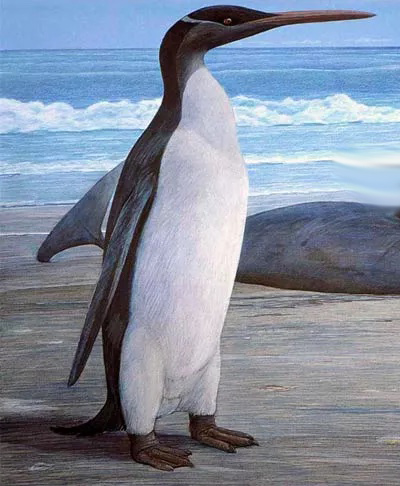
Those tuxedo-wearing birds that inhabit Earth's coldest continent may have evolved a means of retaining heat when they were still living in warm climates, scientists now suggest. A key adaptation that helped modern penguins to invade the cold waters of Antarctica within the last 16 million years is the so-called humeral arterial plexus, a network of blood vessels that limits heat loss through the wings.
Ancient giant penguin unearthed in Peru BBC - October 1, 2010
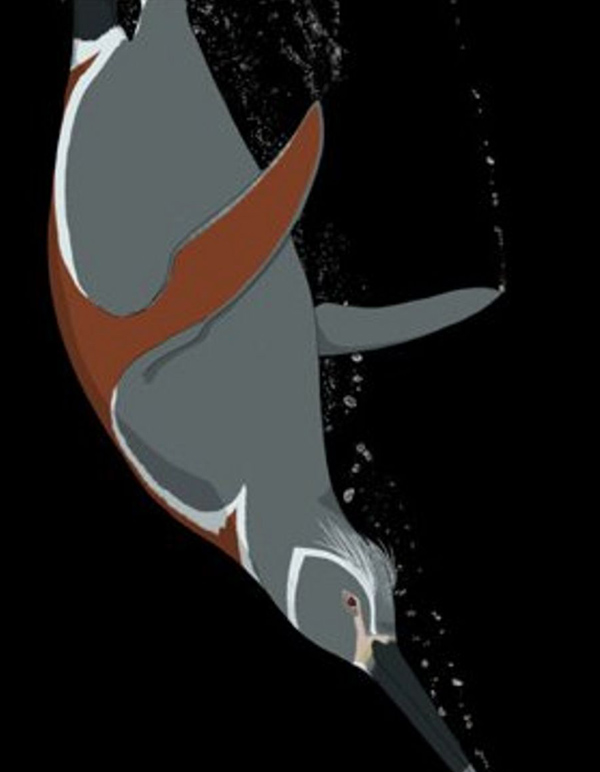
The fossil of a giant penguin that lived 36 million years ago has been discovered in Peru. Scientists say the find shows that key features of the plumage were present quite early on in penguin evolution. The animal's feathers were brown and grey, distinct from the black "tuxedo" look of modern penguins.
Historic penguin sketches found - chalk drawings BBC - December 21, 2007
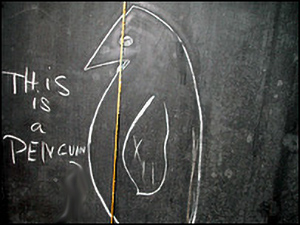
Penguin sketches made by Captain Scott and Ernest Shackleton have been found in a basement at Cambridge University. Penguin sketches made by Captain Scott and Ernest Shackleton. The legendary explorers drew the pictures on blackboards, probably for public lectures, in 1904 and 1909.