Mercury and the MESSENGER
In Roman mythology Mercury
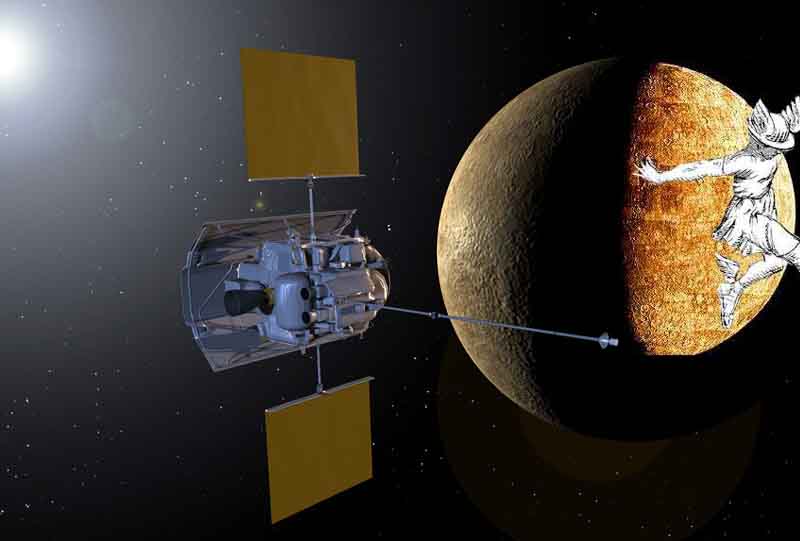
is the god of communications, transportation and trickery.
Mercury is the Greek god

Hermes
Hermes Trismegistus
(Greek for "Hermes the thrice-greatest" or 3D reality)
And the Egyptian god - Scribe of this Reality
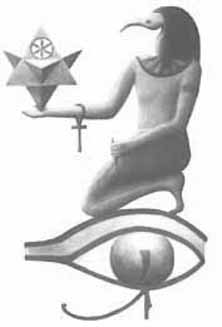
Thoth
Sacred Geometry
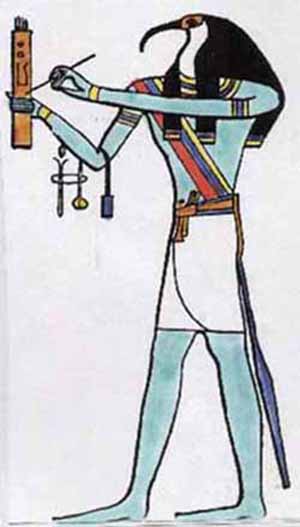
The Emerald Tablets of Thoth
As is above, so is below -- 'X' and 'Z'.
When the time is right, the Messenger will appear.
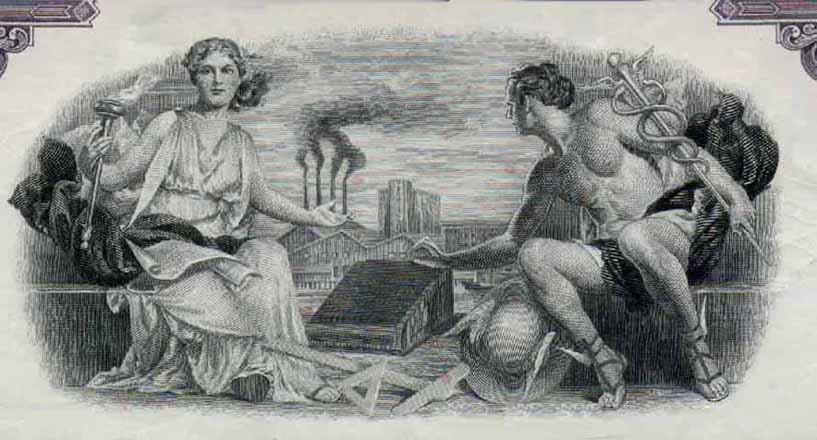
And so it was written ...
Look carefully. There is much encoded in this image. Are those the Twin Towers?
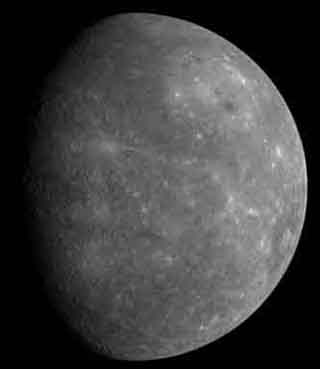
... Somewhere in space, not far from the first Mercury Retrograde of 2008 (January 28 - February 19) -- we find the spacecraft MESSENGER.
Mercury's Horizon from MESSENGER NASA - January 21, 2008
MESSENGER Images NASA - January 18, 2008
About MESSENGER
The MErcury Surface, Space ENvironment, GEochemistry and Ranging probe (or MESSENGER for short) is a NASA spacecraft, launched August 3, 2004 to study the characteristics and environment of Mercury from orbit. Specifically, the mission is to characterize the chemical composition of Mercury's surface, the geologic history, the nature of the magnetic field, the size and state of the core, the volatile inventory at the poles, and the nature of Mercury's exosphere and magnetosphere over a nominal orbital mission of one Earth year. The mission is the first to visit Mercury in over 30 years; the only previous probe to visit Mercury was Mariner 10, which completed its mission in March 1975. MESSENGER has vastly improved scanning capability, with cameras that can resolve surface features down to just 60 feet (18 m) across compared to the 1 mile (1.6 km) resolution of the Mariner 10. MESSENGER will also be able to image the entire planet; Mariner 10 was only able to observe one hemisphere that was lit during its flybys. In addition to being an acronym (or, more accurately, a backronym), MESSENGER was chosen as the probe's name because Mercury was the messenger of the gods in Roman mythology.
From NASA
Two days ago, the MESSENGER spacecraft became only the second in human history to swoop past Mercury. The last spacecraft to visit the Sun's closest planet was Mariner 10 over 35 years ago. Mariner 10 was not able to photograph Mercury's entire surface, and the images it did send back raised many questions. Therefore, much about planet Mercury remains unknown. This week's MESSENGER flyby was only the first of three. Over the next few years MESSENGER will swing past Mercury twice more and finally orbit in 2011, but MESSENGER is currently moving too fast to enter orbit around Mercury now. This image was taken by MESSENGER two days ago upon approach to Mercury. Many detailed images of Mercury are expected to be sent back over the next few days. The data acquired by MESSENGER will help better understand how Mercury's surface was formed, and why it is so dense.
ELLIE'S ARCHIVES 2008
ELLIE'S ARCHIVES
ELLIE'S WORLD BLOG
ALPHABETICAL INDEX
CRYSTALINKS HOME PAGE
PSYCHIC READING WITH ELLIE
BOOK: THE ALCHEMY OF TIME
DONATION TO CRYSTALINKS
ADVERTISE ON CRYSTALINKS