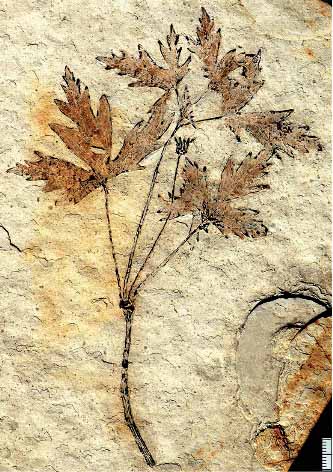
Paleobotany, also spelled as palaeobotany (from the Greek words paleon = old and "botany", study of plants), is the branch of paleontology or paleobiology dealing with the recovery and identification of plant remains from geological contexts, and their use for the biological reconstruction of past environments (paleogeography), and both the evolutionary history of plants, with a bearing upon the evolution of life in general. A synonym is paleophytology. Paleobotany includes the study of terrestrial plant fossils, as well as the study of prehistoric marine photoautotrophs, such as photosynthetic algae, seaweeds or kelp. A closely related field is palynology, which is the study of fossilized and extant spores and pollen.
Paleobotany is important in the reconstruction of ancient ecological systems and climate, known as paleoecology and paleoclimatology respectively; and is fundamental to the study of green plant development and evolution. Paleobotany has also become important to the field of archaeology, primarily for the use of phytoliths in relative dating and in paleoethnobotany. Read more ...
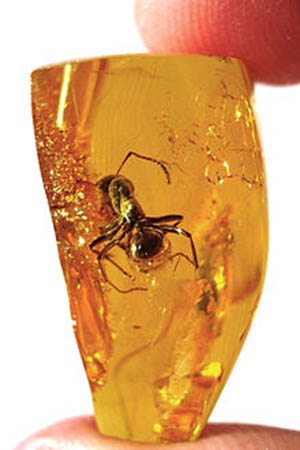
Amber is fossilized tree resin (not sap), which has been appreciated for its color and natural beauty since Neolithic times. Much valued from antiquity to the present as a gemstone, amber is made into a variety of decorative objects. Amber is used as an ingredient in perfumes, as a healing agent in folk medicine, and as jewelry. There are five classes of amber, defined on the basis of their chemical constituents. Because it originates as a soft, sticky tree resin, amber sometimes contains animal and plant material as inclusions. Amber occurring in coal seams is also called resinite, and the term ambrite is applied to that found specifically within New Zealand coal seams. Read more ...
Fossilized 350 Million-Year-Old Plant Is Like Nothing You've Ever Seen Before IFL Science - February 3, 2024
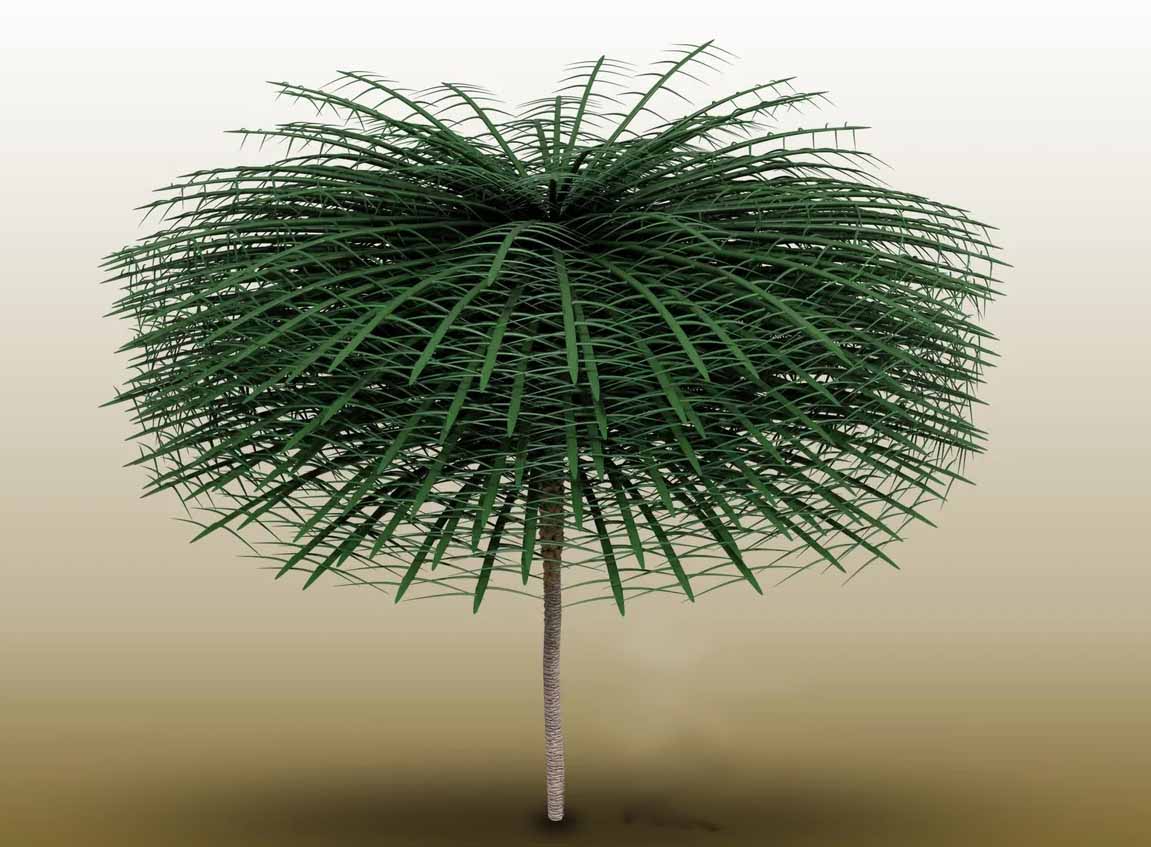
While fossilized plants turn up fairly often in the fossil record, they are usually preserved as a trunk or the odd leaf, giving little idea of what the whole tree might have looked like. Newly discovered fossilized trees from New Brunswick, Canada however have enough in the record to reveal that they had a very surprising appearance that has never been seen before.
400-Million-Year-Old Fossil Upends Our Understanding of Fibonacci Spirals in Nature Science Alert - June 17, 2023
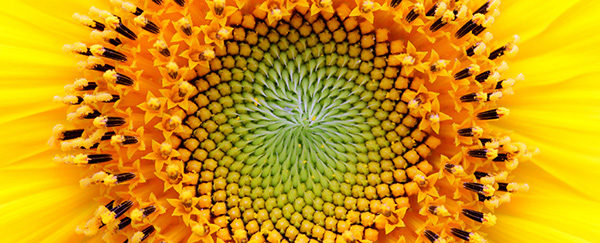
If your eyes have ever been drawn to the arrangement of leaves on a plant stem, the texture of a pineapple, or the scales of a pinecone, then you have unknowingly witnessed brilliant examples of mathematical patterns in nature. What ties all of these botanical features together is their shared characteristic of being arranged in spirals that adhere to a numerical sequence called the Fibonacci sequence.
These spirals, referred to as Fibonacci spirals for simplicity, are extremely widespread in plants and have fascinated scientists from Leonardo da Vinci to Charles Darwin. Such is the prevalence of Fibonacci spirals in plants today that they are believed to represent an ancient and highly conserved feature, dating back to the earliest stages of plant evolution and persisting in their present forms.
However, our new study challenges this viewpoint. We examined the spirals in the leaves and reproductive structures of a fossilized plant dating back 407 million years. Surprisingly, we discovered that all of the spirals observed in this particular species did not follow this same rule. Today, only a very few plants don't follow a Fibonacci pattern.
Bloom entombed in amber is the largest fossilized flower ever found Live Science - January 18, 2023
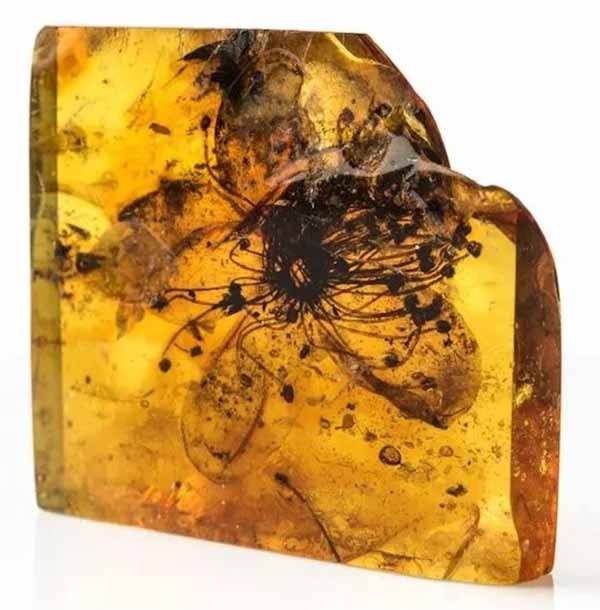
Scientists have officially identified the largest fossilized flower ever recorded: a nearly 40 million-year-old flower entombed in a hunk of amber. The flower had been known for 150 years but has only now been definitively identified as a new species and is offering new clues to climates and ecosystems of the past. Measuring about 1 inch (28 millimeters) wide, the strikingly well-preserved flower is three times larger than the next-biggest amber-embedded bloom ever found and was unearthed in 1872 in the Baltic forests of northern Europe. It dates to the late Eocene epoch (roughly 38 million to 33.9 million years ago). When the specimen was first discovered, naturalists classified it as the now extinct Stewartia kowalewskii, an ancient flowering evergreen plant,
A new discovery shows major flowering plants are 150 million years older than previously thought PhysOrg - August 31, 2022
A major group of flowering plants that are still around today, emerged 150 million years earlier than previously thought. This means flowering plants were around some 50 million years before the dinosaurs.
99 million-year-old flowers found perfectly preserved in amber bloomed at the feet of dinosaurs CNN - February 1, 2022
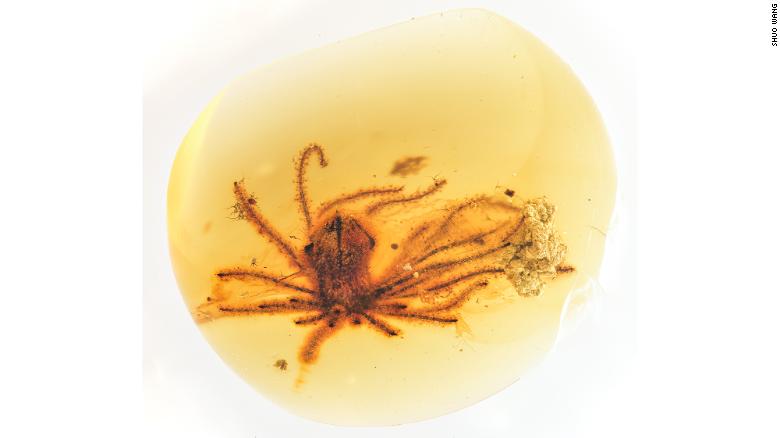 Flowers discovered perfectly preserved in globs of amber bloomed at the feet of dinosaurs, suggesting that some flowering plants in South Africa today have remained unchanged for 99 million years, a new study reveals. The two flowers once bloomed in what is now Myanmar and may shed light on how flowering plants evolved - a major episode in the history of life that was once described by Charles Darwin as an abominable mystery.
Fossils suggest flowers originated 50 million years earlier than thought PhysOrg - December 18, 2018
Scientists have described a fossil plant species that suggests flowers bloomed in the Early Jurassic, more than 174 million years ago. Before now, angiosperms (flowering plants) were thought to have a history of no more than 130 million years. The discovery of the novel flower species, which the study authors named Nanjinganthus dendrostyla, throws widely accepted theories of plant evolution into question, by suggesting that they existed around 50 million years earlier. Nanjinganthus also has a variety of 'unexpected' characteristics according to almost all of these theories. Angiosperms are an important member of the plant kingdom, and their origin has been the topic of long-standing debate among evolutionary biologists. Many previously thought angiosperms could be no more than 130 million years old. However, molecular clocks have indicated that they must be older than this. Until now, there has been no convincing fossil-based evidence to prove that they existed further back in time.
Oldest orchid fossil on record identified Science Daily - May 4, 2017
A newly published study documents evidence of an orchid fossil trapped in Baltic amber that dates back some 45 million years to 55 million years ago, shattering the previous record for an orchid fossil found in Dominican amber some 20-30 million years old. The orchid family has some 28,000 species -- more than double the number of bird species and quadruple the mammal species. As it turns out, they've also been around for a while.
Extinct plant species discovered in amber BBC - February 15, 2016
Biologists have described a new species of extinct plant, based on two fossil flowers that were trapped in chunks of amber for at least 15 million years. Strychnos electri belongs to the genus whose tropical shrubs, trees and vines are famous for producing the deadly toxin strychnine. The US researchers named it after the Greek word for amber ("elektron") - the fossilized resin of long-dead trees.
Ancestors of land plants were wired to make the leap to shore PhysOrg - October 5, 2015
When the algal ancestor of modern land plants first succeeded in making the transition from aquatic environments to an inhospitable shore 450 million years ago, it changed the world by dramatically altering climate and setting the stage for the vast array of terrestrial life. But the genetic and developmental innovations plants used to make the leap to land have been enduring secrets of nature.
Prehistoric Fossil Found in Spain May Be Mythical 'First Flower' NBC - August 18, 2015
A prehistoric aquatic plant may be the oldest flowering planet ever found, reshaping scientists' understanding of what the earliest ancestors of flowers might have looked like. Monsechia vidalii was a leafy freshwater plant that was likely to have been munched on by brachiosaurs and iguanodons more than 125 million years ago. Close study of extremely well-preserved (and meticulously restored) fossils recovered from an ancient lake bed in Spain show that, contrary to previous categorizations, Monsechia is in fact a flowering plant, or angiosperm. This puts it in the running with the Chinese Archaefructis as the earliest such organism ever identified - the "first flower" as some put it, although the phrase isn't precisely correct.
World's First Flowers May Have Bloomed Underwater BBC - August 18, 2015
A fluffy, frondy plant that wouldn't look out of place in a lake today was one of the oldest flowering plants on Earth, new research finds. Montsechia vidalii wouldn't have made for a great bouquet; it consisted of long shoots and small leaves, and its flowers lacked anything as elaborate as petals. But at 125 million to 130 million years old, this aquatic plant is a window into the early days of angiosperms, or plants with flowers.
Earliest Evidence of Flower Pollination by Birds Unearthed Live Science - May 28, 2014
Birds have been visiting and pollinating flowers for at least 47 million years, fossil evidence now suggests. The new find pushes back the onset of ornithophily, or bird pollination, by about 17 million years, researchers say. To pollinate, most species of angiosperms (flowering plants) require assistance from animals, particularly insects and birds. Though research suggests that insects have been pollinating flowers since the early Cretaceous period, over 100 million years ago, the onset of ornithophily has long remained elusive. Previously, fossils of modern-type hummingbirds suggested ornithophily began as early as 30 million years ago, but this conclusion was only inferred indirectly from the birds' long beaks and presumed hovering capabilities. However, researchers have now analyzed a well-preserved, 47-million-year-old fossil of the extinct bird Pumiliornis tessellatus, and found that the animal's stomach contents contain numerous angiosperm pollen grains. The discovery is the first direct fossil evidence of flower visitation by birds, and suggests that ornithophily is far older than previously believed.
Ancient plants 'frozen in time' by space impacts BBC - April 18, 2014
Ancient plant material has been preserved in the glass formed by asteroids hitting the Earth, scientists report. The "frozen in aspic" appearance of what are apparently fragments of grass is spectacular enough. Incredibly, the searing heat generated by the impacts was responsible for the remarkable preservation.
Million suns shed light on fossilized plant PhysOrg - March 25, 2014
Scientists have used one of the brightest lights in the Universe to expose the biochemical structure of a 50 million-year-old fossil plant to stunning visual effect. The team of paleontologists, geochemists and physicists investigated the chemistry of exceptionally preserved fossil leaves from the Eocene-aged 'Green River Formation' of the western United States by bombarding the fossils with X-rays brighter than a million suns produced by synchrotron particle accelerators.
Amber fossil reveals ancient reproduction in flowering plants PhysOrg - January 3, 2014
A 100-million-year old piece of amber has been discovered which reveals the oldest evidence of sexual reproduction in a flowering plant - a cluster of 18 tiny flowers from the Cretaceous Period - with one of them in the process of making some new seeds for the next generation. The perfectly-preserved scene, in a plant now extinct, is part of a portrait created in the mid-Cretaceous when flowering plants were changing the face of the Earth forever, adding beauty, biodiversity and food. It appears identical to the reproduction process that "angiosperms," or flowering plants still use today.
This Could Be the Oldest Flowering Plant Ever Found in North America Smithsonian - November 29, 2013
>
A new analysis of the Smithsonian's fossil collection turned up a remarkably ancient flowering plan - scientists think it's between 125 and 115 million years old. The fossil most closely resembles a modern subfamily of poppies called Fumarioideae, which includes the bleeding heart There's also a much more recent history of this fossil that's just as fascinating. Jud did a bit of research and found that it'd been excavated in 1971 by a former Smithsonian curator, Leo Hickey, who went on to Yale and died in February before working with Jud to re-analyze the fossil after all these years. Hickey had found it during a dig at the Dutch Gap, in Virginia, in sediments that were exposed over a century earlier, by freed slaves who were forcibly taken from the Roanoke Island Freedmen's Colony by Union troops and forced to dig a canal in August 1864. While digging, they exposed ancient fossil-filled rocks, and a few decades later, in the 1870s and 1880s, scientists worked there to collect fossils and create some of the Smithsonian's first fossil collections. Later, Hickey and other researchers returned to collect remaining specimens.
Oldest Grave Flowers Unearthed in Israel Live Science - July 1, 2013
The oldest example of grave flowers has been discovered in Israel. An ancient burial pit dating to nearly 14,000 years ago contained impressions from stems and flowers of aromatic plants such as mint and sage. The new find "is the oldest example of putting flowers and fresh plants in the grave before burying the dead. Though the exact purpose of these plants remains a mystery, the findings, detailed today (July 1) in the journal Proceedings of the National Academy of Sciences, shed light on some of the rituals used by one of the earliest human cultures living in fixed settlements.
Russians revive Ice Age flower from frozen burrow PhysOrg - February 20, 2012
It was an Ice Age squirrel's treasure chamber, a burrow containing fruit and seeds that had been stuck in the Siberian permafrost for over 30,000 years. From the fruit tissues, a team of Russian scientists managed to resurrect an entire plant in a pioneering experiment that paves the way for the revival of other species.
Oldest known Eucalyptus fossils found in South America PhysOrg - July 19, 2011
Fossils of leaves, flowers, fruits and buds found in Patagonia, Argentina, have been identified as Eucalyptus and date to 51.9 million years ago, making them the oldest scientifically validated Eucalyptus macrofossils and the only ones conclusively identified as naturally occurring outside of Australasia.
Early sunflower family fossil found in South America PhysOrg - September 28, 2010
A beautifully preserved fossil identified as being of an early relative of the Asteraceae, or aster, family nearly 50 million years old suggests the plant family, which has now colonized much of the planet, originated in South America after Gondwana separated, forming South America, Australia, Africa, Antarctica and India.
Rare fossilized flower found, related to sunflowers BBC - September 24, 2010
A fossilized flower found in Patagonia by an Argentinean team is shedding light on the origins of sunflowers. The large flower is highly unusual because most plant fossils are just pollen grains. The fossil is from the Asteraceae family, the relatives of daisies, sunflowers, and dandelions. Until now, scientists have relied on genetic evidence to work out where this plant family originated.
How Ancient Flowering Plants Grew: Early Angiosperms Were Weedy, Fast-Growing Science Daily - April 21, 2010
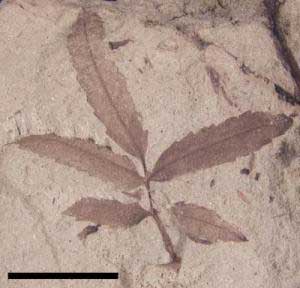
Secrets In A Seed: Clues Into The Evolution Of The First Flowers Science Daily - October 28, 2009
Approximately 120-130 million years ago, one of the most significant events in the history of the Earth occurred: the first flowering plants, or angiosperms, arose. In the late 1800s, Darwin referred to their development as an "abominable mystery." To this day, scientists are still challenged by this "mystery" of how angiosperms originated, rapidly diversified, and rose to dominance.
Orchids date to time of the dinos BBC - August 29, 2007
Ancient orchid pollen found attached to a bee trapped in amber suggests the "supermodels of the plant world" were blooming at the time of the dinosaurs. The discovery indicates that orchids arose between 76 and 84 million years ago, making them far older than experts had previously thought. Experts used the fossil pollen grains to estimate the ages of major branches of orchids living today.
Fossilized Chinese plant may have been the first flower BBC - May 3, 2002
The ancestor of all the grains, fruits and blossoms of the modern world may have been a fragile water plant that lived in a Chinese lake approximately 125 million years ago. The plant, called Archaefructus sinensis for "ancient fruit from China," is of a species never before seen and carries the clear characteristics of the most primitive of flowering plants.
ANCIENT AND LOST CIVILIZATIONS