
There have been at least five mass extinctions in the history of life, and four in the last 3.5 billion years in which many species have disappeared in a relatively short period of geological time. These are covered in more detail in the article on extinction events.
Earth's Biggest Mass Extinction Reveals Chilling Parallels to Today's World Science Alert - July 30, 2026

For the first 280 million years of animal life on Earth, slow-living creatures such as clam-like brachiopods and crinoid sea lilies dominated seafloor ecosystems. Then, suddenly, things changed. The planet warmed due to enormous amounts of greenhouse gases unleashed into the atmosphere by massive volcanic eruptions, triggering the Great Dying that ended the Permian period.
The 6th mass extinction hasn't begun yet, study claims, but Earth is barreling toward it Live Science - August 11, 2022

There have been five major mass extinctions throughout Earth's 4.5 billion-year history, and scientists look to those cataclysms of the distant past to understand how climate change is now affecting global diversity in ways that may be irreversible.
Human extinction refers to the possibility that the human species may become extinct. Although humans are relatively intelligent and adaptive, they could cause an extinction through their own actions, or allow a natural extinction event to occur through negligence. Humans can also possibly die out because of an event that they are incapable of preventing, such as another meteor strike.
Human extinction would be the extinction of the human species, Homo sapiens, whether on Earth (often as the result of a doomsday event) or from the entire universe, provided the species colonizes on other planets.
Attitudes to human extinction vary widely depending on beliefs concerning spiritual survival (souls, heaven, reincarnation, and so forth), the value of the human race, whether the human race evolves individually or collectively, and many other factors. Many religions prophesy an end time to the universe, so eventual human extinction is necessarily a part of the faith of many humans, to the extent that the end time means the absolute end of humanity (see eschatology), except for possibly their "souls".
Many people consider that the extinction of the entire species would be a much worse fate than the death of an individual. Although the mortality of the individual can be accepted as an inevitable part of the human condition, humans can nevertheless expect to attain some measurement of immortality through their progeny, or through contributions or advancement in culture or science. However, the extent to which this "immortality" can be achieved is subject to the continuation of the species as a whole, and human extinction would represent the termination of such expectations. Fear of human extinction is said to be one of the motivating factors of the environmentalist movements of the 20th and 21st century.

New evidence suggests volcanoes caused biggest mass extinction ever Science Daily - April 16, 2019
Researchers say mercury buried in ancient rock provides the strongest evidence yet that volcanoes caused the biggest mass extinction in the history of the Earth. The extinction 252 million years ago was so dramatic and widespread that scientists call it 'the Great Dying.' The catastrophe killed off more than 95 percent of life on Earth over the course of hundreds of thousands of years. The extinction 252 million years ago was so dramatic and widespread that scientists call it "the Great Dying." The catastrophe killed off more than 95 percent of life on Earth over the course of hundreds of thousands of years.
Paleontologist suggests 'great dying' 252 million years ago wasn't as bad as thought PhysOrg - October 4, 2016
Paleontologist and evolutionary biologist Steven Stanley of the University of Hawaii has challenged the notion that the Permian-Triassic mass extinction event 252 million years ago killed off up to 96 percent of all marine life. Instead, he claims in his paper published in Proceedings of the National Academy of Sciences, that background extinctions should account for some of that loss, and because of that, the actual extinction rate for marine life was probably closer to 81 percent.
Algeo tracks evidence of 'The Great Dying' PhysOrg - October 28, 2010
More than 251 million years ago, at the end of the Permian period, Earth almost became a lifeless planet. Around 90 percent of all living species disappeared then, in what scientists have called "The Great Dying."
The Permian-Triassic (P-T or PT) extinction event, sometimes informally called the Great Dying, was an extinction event that occurred approximately 251.0 million years ago (mya), forming the boundary between the Permian and Triassic geologic periods. It was the Earth's most severe extinction event, with about 90 percent of all marine species and 70 percent of terrestrial vertebrate species going extinct.
At one time, this die-off was assumed to have been a gradual reduction over several million years. Now, however, it is commonly accepted that the event lasted less than a million years, from 252.3 to 251.4 MYA (both numbers -300,000 years), a very brief period of time in geological terms. Organisms throughout the world, regardless of habitat, suffered similar rates of extinction, suggesting that the cause of the event was a global, not local, occurrence, and that it was a sudden event, not a gradual change.
New evidence from strata in Greenland shows evidence of a double extinction, with a separate, less dramatic extinction occurring 9 million years before the Permian-Triassic (P-T) boundary, at the end of the Guadalupian epoch. Confusion of these two events is likely to have influenced the early view that the extinction was extended.
For some time after the event, fungal species were the dominant form of terrestrial life. Though they only made up approximately 10% of remains found before and just after the extinction horizon, fungal species subsequently grew rapidly to make up nearly 100% of the available fossil record. However, some researchers argue that fungal species did not dominate terrestrial life, as their remains have only been found in shallow marine deposits. Alternatively, others argue that fungal hypha are simply better suited for preservation and survival in the environment, creating an inaccurate representation of certain species in the fossil record.
Explanatory theories
Many theories have been presented for the cause of the extinction, including plate tectonics, an impact event, a supernova, extreme volcanism, the release of frozen methane hydrate from the ocean beds to cause a greenhouse effect, or some combination of factors.
Plate tectonics
At the time of the Permian extinction, all the continents had recently joined to form the super-continent Pangaea and the super-ocean Panthalassa. This configuration radically decreased the extent and range of shallow aquatic environments and exposed formerly isolated organisms of the rich continental shelves to competition from invaders. As the planet's epicontinental systems coalesced; many marine ecosystems, especially ones that evolved in isolation, would not have survived those changes. Pangaea's formation would have altered both oceanic circulation and atmospheric weather patterns, creating seasonal monsoons. Pangaea seems to have formed millions of years before the great extinction, however, and very gradual changes like continental drift alone probably could not cause the sudden, simultaneous destruction of both terrestrial and oceanic life.
Impact event
When large bolides (asteroids or comets) impact Earth, the aftermath weakens or kills much of the life that thrived previously. Release of debris and carbon dioxide into the atmosphere reduces the productivity of life and causes both global warming and ozone depletion. Evidence of increased levels of atmospheric carbon dioxide exist in the fossil record. Material from the Earth's mantle released during volcanic eruption has also been shown to contain iridium, an element associated with meteorites. At present, there is only limited and disputed evidence of iridium and shocked quartz occurring with the Permian event, though such evidence has been very abundantly associated with an impact origin for the Cretaceous-Tertiary extinction event.
If an extraterrestrial impact triggered the Permian extinction event, scientists ask, where is the impact crater? Part of the answer may lie in the fact that there is no Permian-age oceanic crust remaining; all of it has been subducted, so plate tectonics during the last 252 million years have erased any possible P-T seafloor crater.
Adrian Jones, University College London, models the effects of impacts on the Earth's geological crust. After an impact, the crust rebounds to form a large shallow crater. Jones suggests that in a truly massive impact, the combined heat of the impact and rebound is enough to melt the crust. Lava floods through and the crater disappears beneath new crust. If Jones is right, the Permian meteorite crater can't be found because it doesn't exist.
But geologist John Gorter of Agip found evidence of a circular structure 200 kilometers in diameter called the Bedout, in currently submerged continental crust off the northwestern coast of Australia, and geologist Luann Becker, of the University of California, confirmed it, finding shocked quartz and brecciated mudstones.
The geology of the area of continental shelf dates to the end of the Permian. The Bedout impact crater is also associated in time with extreme volcanism and the break-up of Pangaea. "We think that mass extinctions may be defined by catastrophes like impact and volcanism occurring synchronously in time," Dr. Becker explains. "This is what happened 65 million years ago at Chicxulub but was largely dismissed by scientists as merely a coincidence. With the discovery of Bedout, I don't think we can call such catastrophes occurring together a coincidence anymore," Dr. Becker added in a news release.
It has also been proposed that such a collision might heat up ocean waters enough to produce "hypercanes," gigantic storms with winds possibly exceeding the speed of sound. Although not impossible, this theory has little supporting evidence.
Supernova
A supernova occurring within ten parsecs (1 parsec = 3.26 light years) of Earth would produce enough gamma radiation to destroy the ozone layer for several years. The resulting direct ultra-violet radiation from the sun would weaken or kill nearly all existing species. Only those deep in the oceans would be unaffected. Statistical frequency of supernovae suggests that one at the P-T boundary would not be unlikely. A gamma ray burst (the most energetic explosions in the universe; believed to be caused by a very massive supernova (hypernova) or two objects as dense as neutron stars colliding) that occurred within ~6000 light years would produce the same effect.
Volcanism
The P-T boundary was marked with many volcanic eruptions. In the Siberian Traps, now a sub-Arctic wilderness, over 200,000 square kilometers were covered in torrents of lava. The Siberian flood basalt eruption, the biggest volcanic effect on Earth, lasted for millions of years.
The acid rain, brief initial global cooling with each of the bursts of volcanism, followed by longer-term global warming from released volcanic gases, and other weather effects associated with enormous eruptions could have globally threatened life.
The theory is debated if volcanic activity, over such a long time, could alter the climate enough to kill off 95% of life on Earth. Volcanic activity affects the concentration of atmospheric gases directly, and, indirectly, the oceanic dissolved gases.
Increases in carbon dioxide enhance the greenhouse effect and cause global warming, which would reduce the temperature gradient between the equator and the poles. As a result, thermohaline circulation would slow and eventually stop.
The oceans would stagnate, and nutrients would fail to disperse themselves. Many marine ecosystems rely on upwelling and circulation of nutrients, oxygen included; without the regular circulation, organisms would starve or suffocate.
In addition, sulfur and particulates contribute to cooling, or volcanic winter, which usually lasts three to six months. Combinations of the two effects could produce a cooling cycle in which the climate alternatively warms then cools. Such temperature fluctuations could cause convective overturn of the oceans, bringing anoxic bottom waters to the surface; in an already oxygen-deprived environment, this would be fatal to many forms of life. Significant evidence supports this theory.
Fluctuations in air and water temperature are evident in the fossil record, and the uranium/thorium ratios of late Permian sediments indicate that the oceans were severely anoxic around the time of the extinction. Numerous indicators of volcanic activity at the P-T boundary are present, though they are similar to bolide impact indicators, including iridium deposits.
The volcanism theory has the advantage over the bolide theory, though, in that it is certain that an eruption of the Siberian Traps - the largest known eruption in the history of Earth - occurred at this time, while no direct evidence of bolide impact has been located. Read more ...
How "Dark Extinctions" Are Silently Erasing Life On Earth IFL Science - May 22, 2024
There's something missing on our planet, but we don't know what it is. Like trees that fall in the silence of an empty forest, entire species are vanishing with no one to witness or record their existence - or their demise. It's a phenomenon known as "dark extinction", and it severely undermines our ability to catalog the world's biodiversity or to fully understand our own impact on the web of life.
The term "dark extinction" refers to the loss of species that we don't even know exist. In other words, it applies to life forms that become extinct before they have been discovered or scientifically described, meaning they have not received a taxonomic classification. Typically, the label is reserved for those plants and animals that have exited the building as a direct result of human-induced habitat change, which means undiscovered dinosaurs don't count as dark extinctions. However, these unknown anthropogenic extinctions are by no means limited to the modern era and extend all the way back to prehistoric times when our ancestors first colonized the world's continents and hunted certain megafauna to oblivion. Many of these long-lost giants are well represented in the fossil record, yet experts believe there are probably a fair few megafaunal extinctions from the past 10,000 years that we don't even know about.
Sediments reveal the ancient ocean during a mass extinction event PhysOrg - June 25, 2024

About 183 million years ago, volcanic activity in modern South Africa unleashed an estimated 20,500 gigatons of carbon dioxide (CO2) into the ocean–atmosphere system over a period of 300 to 500 thousand years. Known as the Toarcian Oceanic Anoxic Event (T-OAE), the lack of oxygen, or anoxia, in the water during this time caused a mass extinction of marine species. Human activity since the industrial revolution has already resulted in cumulative CO2 emissions representing 12% of the total CO2 released during the entire T-OAE, in less than 0.1% of the time. The T-OAE foreshadows what might happen to our oceans if greenhouse gas emissions continue to increase.
Why scientists feel we are in the middle of the next mass extinction CNN - December 23, 2023

A brief history of the end of the world: Every mass extinction, including the looming next one, explained that no species lasts forever - extinction is part of the evolution of life. But at least five times, a biological catastrophe has engulfed the planet, killing off the vast majority of species from water and land over a relatively short geological interval. The most famous of these mass extinction events - when an asteroid slammed into Earth 66 million years ago, dooming the dinosaurs and many other species - is also the most recent. But scientists say it won't be the last. Many researchers argue we're in the middle of a sixth mass extinction, caused not by a city-size space rock but by the overgrowth and transformative behavior of a single species - Homo sapiens. Humans have destroyed habitats and unleashed a climate crisis.
Mammals may be driven to extinction by volcanic new supercontinent Pangaea Ultima Live Science - September 26, 2023
The next supercontinent, Pangea Ultima, is likely to get so hot so quickly that mammals cannot adapt, a new supercomputer simulation has forecast.
The Next Supercontinent Formation Could Wipe Out Most Mammal Life Science Alert - September 26, 2023
Suspected Mass Extinction Was Actually A Volcanic Double-Punch 3 Million Years Apart IFL Science - April 11, 2023
During the Capitanian age 260 million years ago, the oceans suffered a drastic loss of oxygen causing, or perhaps amplifying, widespread global extinctions. Then 3 million years later the same thing happened again, sediment records reveal. The findings could explain a major point of confusion about the Permian period, a time overshadowed by its catastrophic ending in the greatest mass extinction event of all.
One of Earth's biggest mass extinctions caused by rising sea levels in eerie echo of today Live Science - March 15, 2023

Depleting oxygen and rising hydrogen sulfide levels in the oceans may have been responsible for one of Earth's most significant mass extinctions more than 350 million years ago, a new study finds. The changes were likely driven by rising sea levels and have some spooky parallels to conditions seen today.
Methane discovery sheds new light on world's largest mass extinction event PhysOrg - December 1, 2022

Methane emissions created by volcanic activity burning buried fossil fuel deposits could have played a major role in the global warming that triggered the largest mass extinction event in Earth's history, a new study suggests.
Earth might be experiencing 7th mass extinction, not 6th Science Daily - November 27, 2022
Earth is currently in the midst of a mass extinction, losing thousands of species each year. New research suggests environmental changes caused the first such event in history, which occurred millions of years earlier than scientists previously realized. New research suggests environmental changes caused the first such event in history, which occurred millions of years earlier than scientists previously realized. Most dinosaurs famously disappeared 66 million years ago at the end of the Cretaceous period. Prior to that, a majority of Earth's creatures were snuffed out between the Permian and Triassic periods, roughly 252 million years ago.
Scientists just found a hidden 6th mass extinction in Earth's ancient past Live Science - November 15, 2022

A global drop in oxygen levels about 550 million years ago led to Earth's first known mass extinction, new evidence suggests.
Extinct Pathogens Along With Climate Change Ushered The Fall of Ancient Civilizations Science Alert - August 6, 2022

Thousands of years ago, across the Eastern Mediterranean, multiple Bronze Age civilizations took a distinct turn for the worse at around the same time. The Old Kingdom of Egypt and the Akkadian Empire both collapsed, and there was a widespread societal crisis across the Ancient Near East and the Aegean, manifesting as declining populations, destruction, reduced trade, and significant cultural changes.
As usual, fingers have been pointed at climate change and shifting allegiances. But scientists have just found a new culprit in some old bones. In remains excavated from an ancient burial site on Crete, in a cave called Hagios Charalambos, a team led by archaeogeneticist Gunnar Neumann of the Max Planck Institute for Evolutionary Anthropology in Germany found genetic evidence of bacteria responsible for two of history's most significant diseases - typhoid fever and plague. Therefore, the researchers said, widespread illnesses caused by these pathogens cannot be discounted as a contributing factor in the societal changes so widespread around 2200 to 2000 BCE.
After The Largest Extinction Event on Earth, These Animals Were The First to Recover Science Alert - July 1, 2022
The Permian–Triassic extinction event, which happened roughly 252 million years ago, is colloquially known as the Great Dying because of the way it obliterated life on Earth - almost ending it completely. It's the most severe extinction event in history.
The 6th Mass Extinction Really Has Begun, Scientists Warn in Newly Published Study Science Alert - January 18, 2022

The signs of death are everywhere, if you look. For years, scientists have rung the alarm bell, warning that grave declines in animal biodiversity around the globe herald the onset of what will be Earth's sixth mass extinction.
New study pinpoints twin triggers of Triassic era extinction event PhysOrg - January 11, 2022

By studying microscopic fossils preserved in rock in the Bristol Channel Basin, in the southwestern United Kingdom, they identified the twin mechanisms responsible for the mass extinction.
Uncovering the secrets behind Earth's first major mass extinction PhysOrg - November 1, 2021

We all know that the dinosaurs died in a mass extinction. But did you know that there were other mass extinctions? There are five most significant mass extinctions, known as the "big five," where at least three-quarters of all species in existence across the entire Earth faced extinction during a particular geological period of time. With current trends of global warming and climate change, many researchers now believe we may be in a sixth.
A team of scientists has concluded that earth experienced a previously underestimated severe mass-extinction event, which occurred about 260 million years ago raising the total of major mass extinctions in the geologic record to six Science Daily - September 9, 2019

Notably, all six major mass extinctions are correlated with devastating environmental upheavals - specifically, massive flood-basalt eruptions, each covering more than a million square kilometers with thick lava flows.
Climate change could trigger an 'extinction domino effect' that would annihilate all life on Earth, chilling report warns Daily Mail - November 30, 2018
The theory, known as 'co-extinctions', means an organism dies out because it depends on another doomed species. Researchers say the end of all life is a worst case scenario, but warn the 'domino effect' could dramatically increase the risks of climate change - and found 5-6 degrees of average warming globally is enough to wipe out most life on the planet.
Mass extinctions remove species but not ecological variety PhysOrg - January 9, 2018

Sixty-five million years ago, clouds of ash choked the skies over Earth. Dinosaurs, along with about half of all the species on Earth, staggered and died. But in the seas, a colorful population of marine bivalves - the group including oysters, clams and scallops - soldiered on, tucked into the crevices of ocean floors and shorelines.
Video: Sixth mass extinction: The era of biological annihilation CNN - July 11, 2017
Many scientists say it's abundantly clear that Earth is entering its sixth mass-extinction event, meaning three-quarters of all species could disappear in the coming centuries. That's terrifying, especially since humans are contributing to this shift.
DNA of extinct humans found in caves BBC - April 28, 2017

The DNA of extinct humans can be retrieved from sediments in caves - even in the absence of skeletal remains. Researchers found the genetic material in sediment samples collected from seven archaeological sites. The remains of ancient humans are often scarce, so the new findings could help scientists learn the identity of inhabitants at sites where only artifacts have been found. Researchers were able to identify the DNA of various animals belonging to 12 mammalian families, including extinct species such as the woolly mammoth, woolly rhinoceros, cave bear and cave hyena.
Mars volcano, Earth's dinosaurs went extinct about the same time PhysOrg - March 20, 2017

Around the same time that the dinosaurs became extinct on Earth, a volcano on Mars went dormant, NASA researchers have learned. Arsia Mons is the southernmost volcano in a group of three massive Martian volcanoes known collectively as Tharsis Montes. Until now, the volcano's history has remained a mystery. But thanks to a new computer model, scientists were finally able to figure out when Arsia Mons stopped spewing out lava. According to the model, volcanic activity at Arsia Mons came to a halt about 50 million years ago. Around that same time, Earth experienced the Cretaceous-Paleogene extinction event, which wiped out three-quarters of its animal and plant species, including the dinosaurs.
Greenland fossils reveal global ecosystem recovery after mass extinction PhysOrg - October 31, 2016

A paper published in the Nature journal Scientific Reports shows how higher latitude ecosystems recovered after the World's most cataclysmic extinction event 252 million years ago. New fossils discovered by Uppsala University paleontologists record an empty alien world from immediately after the extinction.
Previously unknown global ecological disaster discovered PhysOrg - June 28, 2016

There have been several mass extinctions in the history of the earth. One of the largest known disasters occurred around 252 million years ago at the boundary between the Permian and the Triassic. Almost all sea-dwelling species and two thirds of all reptiles and amphibians died out. Although there were also brief declines in diversity in the plant world, they recovered in the space of a few thousand years, which meant that similar conditions to before prevailed again. Researchers from the Institute and Museum of Paleontology at the University of Zurich have now discovered another previously unknown ecological crisis on a similar scale in the Lower Triassic. The team headed by Peter A. Hochuli and Hugo Bucher revealed that another event altered the vegetation fundamentally and for longer approximately 500,000 years after the major natural disaster at the boundary between the Permian and the Triassic.
Strange sea-dwelling reptile fossil hints at rapid evolution after mass extinction PhysOrg - May 23, 2016

Two hundred and fifty million years ago, life on earth was in a tail-spin - climate change, volcanic eruptions, and rising sea levels contributed to a mass extinction that makes the death of the dinosaurs look like child's play. Marine life got hit hardest - 96% of all marine species went extinct. For a long time, scientists believed that the early marine reptiles that came about after the mass extinction evolved slowly, but the recent discovery of a strange new fossil brings that view into question.
'Proof' of Little-Known Mass Extinction Found Live Science - July 8, 2015

A little-known mass extinction may have killed up to about 80 percent of all vertebrates on land about 260 million years ago, researchers say. This catastrophic die-off coincided with the onset of volcanism in what is now southern China, which suggests a cause for this calamity, the scientists added. The history of life on Earth is ominously interrupted by mass extinctions. Over the past 500 million years, five mass extinctions - at times called "The Big Five" - are each thought to have annihilated anywhere from 50 to 95 percent of all species on the planet. Recently, scientists have suggested that a sixth mass extinction is beginning, a disaster caused by humans.
Earth 'entering new extinction phase' - US study BBC - June 20, 2015
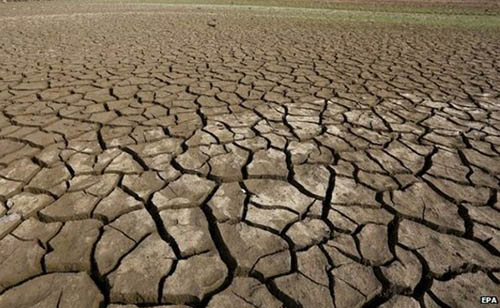
The Earth has entered a new period of extinction, a study by three US universities has concluded, and humans could be among the first casualties. The report, led by the universities of Stanford, Princeton and Berkeley, said vertebrates were disappearing at a rate 114 times faster than normal.
Greatest mass extinction driven by acidic oceans, study finds Live Science - April 10, 2015

The event, which took place 252 million years ago, wiped out more than 90 per cent of marine species and more than two-thirds of the animals living on land. It happened when Earth's oceans absorbed huge amounts of carbon dioxide from volcanic eruptions, researchers say.
Oxygen-depleted toxic oceans had key role in mass extinction over 200 million years ago Science Daily - April 1, 2015

Changes in the biochemical balance of the ocean were a crucial factor in the end-Triassic mass extinction, during which half of all plant, animal and marine life on Earth perished, according to new research. The study, published in the upcoming edition of Geology, reveals that a condition called 'marine photic zone euxinia' took place in the Panathalassic Ocean - the larger of the two oceans surrounding the supercontinent of Pangaea. Photic zone euxinia occurs when the sun-lit surface waters of the ocean become devoid of oxygen and are poisoned by hydrogen sulphide -- a by-product of microorganisms that live without oxygen that is extremely toxic to most other lifeforms. The international team of researchers studied fossilized organic molecules extracted from sedimentary rocks that originally accumulated on the bottom of the north-eastern Panthalassic Ocean, but are now exposed on the Queen Charlotte Islands, off the coast of British Columbia, Canada.
Extinctions during human era one thousand times more than before Science Daily - September 3, 2014

The gravity of the world's current extinction rate becomes clearer upon knowing what it was before people came along. A new estimate finds that species die off as much as 1,000 times more frequently nowadays than they used to. That's 10 times worse than the old estimate of 100 times.
Has the Earth's sixth mass extinction already arrived? PhysOrg - March 2, 2011
With the steep decline in populations of many animal species, from frogs and fish to tigers, some scientists have warned that Earth is on the brink of a mass extinction like those that occurred only five times before during the past 540 million years. Each of these 'Big Five' saw three-quarters or more of all animal species go extinct.

Humans on Verge of Causing 6th Great Mass Extinction Live Science - March 2, 2011
Mass extinctions include events in which 75 percent of the species on Earth disappear within a geologically short time period, usually on the order of a few hundred thousand to a couple million years. It's happened only five times before in the past 540 million years of multicellular life on Earth. (The last great extinction occurred 65 million years ago, when the dinosaurs were wiped out.) At current rates of extinction, the study found, Earth will enter its sixth mass extinction within the next 300 to 2,000 years.
Mystery of Ancient Extinction in Earth's Oceans Revealed Live Science - January 4, 2011

About 375 million years ago, the diversity of species in the Earth's oceans plummeted - not because more species were going extinct, but because fewer new groups of organisms were forming. A new study identifies a culprit: invasive species. The crisis of the Late Devonian Period is typically considered to be one of the "Big Five" mass extinctions; however, this terminology is inaccurate, according to Alycia Stigall, the study researcher and an associate professor of geology at Ohio University.
Prehistoric Fish Extinction Paved the Way for Modern Vertebrates; Event of Unknown Origin Occurred as First Vertebrates Tested Land Science Daily - May 20, 2010

A mass extinction of fish 360 million years ago hit the reset button on Earth's life, setting the stage for modern vertebrate biodiversity, a new study reports.
Antarctica Served as Climatic Refuge in Earth's Greatest Extinction Event Science Daily - December 4, 2009

The largest known mass extinction in Earth's history, about 252 million years ago at the end of the Permian Period, may have been caused by global warming. A new fossil species suggests that some land animals may have survived the end-Permian extinction by living in cooler climates in Antarctica. Researchers have identified a distant relative of mammals, Kombuisia antarctica, that apparently survived the mass extinction by living in Antarctica.
Mass Extinction: Why Did Half of N. America's Large Mammals Disappear 40,000 to 10,000 Years Ago? Science Daily - November 27, 2009
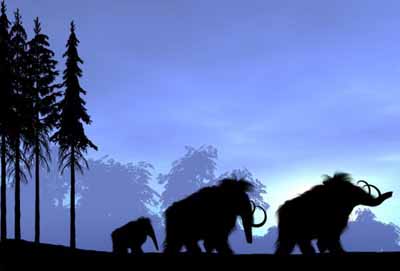
Years of scientific debate over the extinction of ancient species in North America have yielded many theories. However, new findings reveal that a mass extinction occurred in a geological instant.
Greatest Mysteries: What Causes Mass Extinctions? Live Science - August 8, 2007

They are known ominously as the Big Five - the five greatest mass extinctions over the past 500 million years, each of which is thought to have annihilated anywhere from 50 to 95 percent of all species on the planet. Many unsolved mysteries remain regarding these disasters, perhaps the greatest of which is what caused each of them. But research is uncovering how these extinction events dictated the fate of life on this planet - for instance, determining which animals first crawled onto land and which ruled the oceans.
Dramatic shift from simple to complex marine ecosystems occurred 250M years ago at mass extinction PhysOrg - November 23, 2006

The earth experienced its biggest mass extinction about 250 million years ago, an event that wiped out an estimated 95% of marine species and 70% of land species. New research shows that this mass extinction did more than eliminate species: it fundamentally changed the basic ecology of the world's oceans.
Great extinction came in phases BBC - April 1, 2005

The greatest mass extinction recorded in Earth history did not occur as a result of one single cataclysmic event. A joint UK-Chinese team tell Nature magazine the disaster that befell the planet 250 million years ago must have happened in phases. Their conclusion is based on the abundance of "organic fossils" found in rocks at Meishan in southern China. These suggest there were at least two episodes to the mass die-off that saw up to 95% of lifeforms disappear.
Climate Change Plus Human Pressure Caused Large Mammal Extinctions In Late Pleistocene Science Daily - October 4, 2004

A University of California, Berkeley, paleobiologist and his colleagues warn that the future of the Earth's mammals could be as dire as it was between 50,000 and 10,000 years ago, when a combination of climate change and human pressure resulted in the extinction of two-thirds of all large mammals on the planet.

Simulation Theory
Reality as a simulation that destroys then reboots based on algorithms