The Fifth Dynasty of ancient Egypt (notated Dynasty V) is often combined with Dynasties III, IV and VI under the group title the Old Kingdom. The Fifth Dynasty dates approximately from 2494 to 2345 BC.
Manetho writes that the Dynasty V kings ruled from Elephantine, but archeologists have found evidence clearly showing that their palaces were still located at Ineb-hedj ("White Walls"). As before, expeditions were sent to Wadi Maghara and Wadi Kharit in the Sinai to mine for turquoise and copper, and to quarries northwest of Abu Simbel for gneiss. Trade expeditions were sent south to Punt to obtain malachite, myrrh, and electrum, and archeological finds at Byblos attest to diplomatic expeditions sent to that Phoenician city. Finds bearing the names of a several Dynasty V kings at the site of Dorak, near the Sea of Marmara, may be evidence of trade but remain a mystery.
How Pharaoh Userkaf founded this dynasty is not known for certain.
The Papyrus Westcar, which was written during the Middle Kingdom, tells a story of how king Khufu of the Fourth Dynasty was given a prophecy that triplets born to the wife of the priest of Ra in Sakhbu would overthrow him and his heirs, and how he attempted to put these children - named Userkaf, Sahura, and Neferirkara - to death; however in recent years, scholars have recognized this story to be at best a legend, and admit their ignorance over how the transition from one dynasty to another transpired.
During this dynasty, Egyptian religion made several important changes. The earliest known copies of funerary prayers inscribed on royal tombs (known as the Pyramid Texts) appear.
The cult of the god Ra gains added importance, as kings from Userkaf through Menkauhor built temples dedicated to Ra at or near Abusir.
Then late in this dynasty, the cult of Osiris assumes importance, most notably in the inscriptions found in the tomb of Unas.
Amongst non-royal Egyptians of this time, Ptahhotep, vizier to Djedkare Isesi, won fame for his wisdom; The Maxims of Ptahhotep was ascribed to him by its later copyists.
Non-royal tombs were also decorated with inscriptions, like the royal ones, but instead of prayers or incantations, biographies of the deceased were written on the walls.
As before, expeditions were sent to Wadi Maghara and Wadi Kharit in the Sinai to mine for turquoise and copper, and to quarries northwest of Abu Simbel for gneiss.
Trade expeditions were sent south to Punt to obtain malachite, myrrh, and electrum, and archeological finds at Byblos attest to diplomatic expeditions sent to that Phoenician city.
Finds bearing the names of a several Fifth Dynasty kings at the site of Dorak, near the Sea of Marmara, may be evidence of trade but remain a mystery.
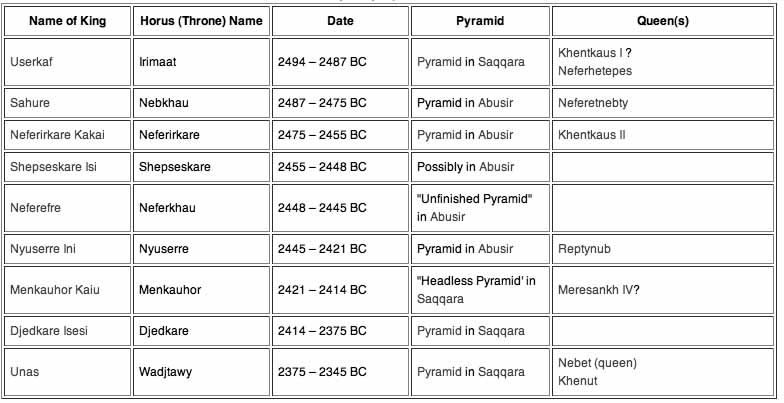
Known rulers in the Fifth Dynasty are listed below. The pharaohs of this dynasty ruled for approximately 150 years. The Horus names and names of the Queens are taken from Dodson and Hilton.
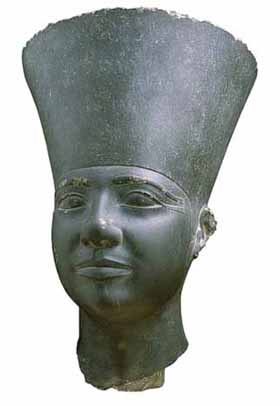
Userkaf was the founder of the Fifth dynasty of Egypt and the first pharaoh to start the tradition of building sun temples at Abusir. His name means "his Ka (or soul) is powerful". He ruled from 2494-2487 BC and constructed the Pyramid of Userkaf complex at Saqqara.
Userkaf's wife was Queen Neferhetepes, mother of Sahure. It is possible that queen Khentkaus I was Userkaf's mother. His father is unknown. It is believed that he was father of two pharaohs: Sahure and Neferirkare Kakai. It seems he was Neferirkare's grandfather. Another less common view, in concordance with a story of the Westcar Papyrus, is that the first three rulers of the fifth dynasty were all brothers - the sons of woman named Raddjedet.
It is believed that he was father of two pharaohs, Sahure and Neferirkare Kakai, who both succeeded him to the throne. Another less common view, in concordance with a story of the Westcar Papyrus, is that first three rulers of the Fifth dynasty were all brothers, the sons of queen Khentkaus I. He is given a reign of 7 Years by both the Turin King List and Manetho.
His pyramid complex at Saqqara introduced several new changes from the previous dynasty. In comparison with the tombs of the Fourth dynasty, his pyramid was rather small. Instead, increased focus was put on the mortuary temple, which were more richly decorated than in the previous Fourth dynasty. In the temple courtyard, a colossal statue of the king was raised. The mortuary temple was to the south of the pyramid, not to the east, as was traditional. This is now seen as being due to the increasing importance of the sun god in the south, the temple would be bathed in the sun's rays throughout the day.
Userkaf, as the originator of the fifth dynasty, clearly felt he should associate himself with one of his great predecessors. To achieve this, he build his pyramid complex at Saqqara, as close as possible to that of Djoser. When completed, the pyramid was 161 ft (49 m) high and encased in limestone, though the core was sloppily built and therefore crumbled when this casing was removed by robbers. Although the complex is now ruined and largely inaccessible, limited excavations there have produced a huge pink granite head of Userkaf. Userkaf also built the first of the Solar Temples of Abu-Gurob.
Reference: Oxford History of Ancient Egypt Ian Shaw, 2000
Tomb of ancient Egyptian prince discovered at Saqqara - and has a giant 'false' pink door Live Science - April 26, 2025

Archaeologists in Egypt have discovered the 4,400-year-old tomb of a prince whose burial has a giant "false" pink door to enable souls to enter and exit. The tomb belongs to Prince Userefre, also spelled Waser-If-Re, the son of King Userkaf, also spelled Wserkaf a pharaoh who reigned around 2465 to 2458 B.C. during Egypt's fifth dynasty (circa 2465 to 2323 B.C.). The newly discovered false door has inscriptions that say that he was a "hereditary prince," as well as a "judge," a "minister," a "governor" of two regions, and a "chanting priest," the statement said.
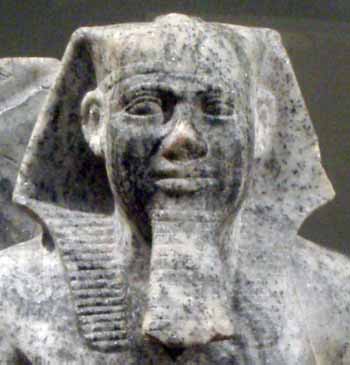
The second king of the 5th Dynasty.
"He Who is Close to Re" - (2487 - 2477 BC)
Sahure was a son of queen Neferhetepes, as shown in scenes from the causeway of Sahure's pyramid complex in Abusir. His father was Userkaf. Sahure's consort was queen Neferetnebty. Reliefs show Sahure and Neferetnebty with their sons Ranefer and Netjerirenre. He was succeeded by Neferirkare, the first king known to have used separate names. Miroslav Verner speculates that Prince Ranefer took the throne as Neferirkare and Prince Netjerirenre may have later take the throne as Shepseskare.
Sahure ruled Egypt from around 2487 BC to 2475 BC. The Turin King List gives him a reign of twelve years while the contemporary Palermo Stone Annal preserves Years 2-3, 5-6 and the final year of Sahure's reign.
The document notes six or seven cattle counts, which would indicate a reign of at least 12 full years if the Old Kingdom cattle count was held biannually (i.e.: every 2 years) as this Annal document implies for the early Fifth Dynasty. If this assumption is correct and Sahure's highest date was the Year after the 6th count rather than his 7th count as Wilkinson believes, then this date would mean that Sahure died in his 13th Year and should be given a reign of 13 Years 5 Months and 12 days. This number would be only one year more than the Turin Canon's 12 year figure for Sahure.
Most foreign intercations during the reign of Sahure were economic, rather than military. In one scene in his pyramid, there are great ships with Egyptians and representatives from the Middle East on board. It is believed they are returning from the port of Byblos in Lebanon with huge cedar trees. There is corroborating evidence for this in the form of his name on a piece of thin gold stamped to a chair, as well as other evidence of the Fifth dynasty king's cartouches found in Lebanon on stone vessels. Other scenes in his temple depict what seem to be Syrian bears.
There is also the first documented expedition to the land of Punt, which apparently yielded a quantity of myrrh, along with malachite and electrum, and because of this, Sahure is often credited with establishing an Egyptian navy. There are also scenes of a raid into Libya which yielded various livestock and showed the king smiting the local chieftains. The Palermo stone also corroborates some of these events and also mentions expeditions to the Sinai and to the exotic land of Punt, as well as to the diorite quarries northwest of Abu Simbel in Nubia.
However, this same scene of the Libyan attack was used two hundred years later in the mortuary temple of Pepi II and in a Kawa temple of Taharqa. The same names are quoted for the local chieftain. Therefore, there is the possibility that Sahure was also copying an even earlier representation of this scene.
He apparently built a sun temple - as did most of the 5th Dynasty kings - called Sekhet-re, meaning "the Field of Re" but thus far its location is unknown. His palace, called Uetjesneferusahure ("Sahure's splendor soars up to heaven"), is known from an inscription on tallow containers recently discovered in Neferefre's mortuary temple. It may have been located at Abusir as well. Under Sahure, the turquoise quarries in the Sinai were exploited (probably at Wadi Maghara and Wadi Kharit), along with the diorite quarries in Nubia.
Sahure is further attested by a statue now located in New York's Metropolitan Museum, in a biography found in the tombs of Perisen at Saqqara and on a false door of Niankhsakhment at Saqqara. He is also mentioned in the Twelfth dynasty tombs of Sekhemkare and Nisutpunetjer, in Giza.
Historical records and Egyptian art show that Sahure established an ancient Egyptian navy and sent a fleet to Punt and traded with cultures in the Eastern Mediterranean. His pyramid had colonnaded courts and relief sculptures which illustrated his naval fleet and recorded his military career consisting mostly of campaigns against the Libyans in the western desert. He is credited with having begun the cemetery complex at Saqqara and he also used a diorite quarry just west of Abu Simbel.
His pyramid complex was the first built at the new royal burial ground at Abusir, a few kilometres north of Saqqara (though Userkaf had probably already built his solar temple there) and marks the decline of pyramid building, both in terms of size and quality, though many of the surviving fragments of reliefs which decorated the temple walls of both Sahure's and other Fifth Dynasty's kings are of high quality.
His pyramid provides us most of the information we know of this king. The reliefs in his mortuary and valley temple depict a counting of foreigners by or in front of the goddess Seshat and the return of a fleet from Asia, perhaps Byblos. This may indicate a military interest in the Near East, but the contacts may have been diplomatic and commercial as well. As part of the contacts with the Near East, the reliefs from his funerary monuments also hold the oldest known representation of a Syrian bear.
When it was excavated in the first years of the 20th century, a great amount of fine reliefs were found to an extent and quality superior to those from the dynasty before. Some of the low relief-cuttings in red granite are masterpieces of their kind and still in place at the site. The construction of the pyramid was made (like the others from this dynasty) with an inner core of roughly hewn stones in a step construction held together in many sections with a mortar of mud.
While this was under construction, a corridor was left into the shaft where the grave chamber was erected separately and later covered by leftover stone blocks and debris. This construction strategy is clearly visible from two unfinished pyramids and reflects the older style from the Third dynasty now coming back into fashion after being temporarily abandoned by the builders of the five great pyramids at Dahshur and Giza during the Fourth dynasty.
Today, only the inside construction remains of his pyramid and remain partly visible in a pile of rubble originating from the crude filling of debris and mortar behind the casing stones taken away a thousand years ago. The whole inner construction is badly damaged and not possible to access today.
The entrance at the north side is a short descending corridor lined with red granite followed by a passageway ending at the burial chamber. It has a gabled roof made of big limestone layers. Fragments of the sarcophagus were found here when it was entered in the early 19th century. The colossal roof blocks of Suhare's temple weighed up to about 220 tons based on estimates by J.S. Perring.
He estimated the size of the largest blocks at 35 feet by 9 feet by 12 feet. One end of these blocks was tapered so the estimated volume is 95 cubic meters or 2.4 tons. There were a total of at least 12 blocks the smallest of which was less than 100 tons. All but 2 of these are now broken. The Valley building of Sahure's Pyramid at Abu Sir included 8 monolithic granite columns with leafs on their capitals. These were probably not more than about 10 tons each but what makes them worth noting is that over a portion 2.6 meters long they taper from 91.2 cm to 79.8 cm with the error from the mean diameter never more than 8 millimetres.
He apparently built a sun temple, as did most of the 5th Dynasty kings. Its name was Sekhet-re, meaning "the Field of Re", but so far its location is unknown. We know of his palace, called Uetjesneferusahure ("Sahure's splendor soars up to heaven"), from an inscription on tallow containers recently discovered in Neferefre's mortuary temple. It may have been located at Abusir as well. We also know that under Sahure, the turquoise quarries in the Sinai were worked (probably at Wadi Maghara and Wadi Kharit), along with the diorite quarries in Nubia.
Sahure is further attested by a statue now located in New York's Museum of Modern Art, in a biography found in the tombs of Perisen at Saqqara and on a false door of Niankhsakhment at Saqqara, and is also mentioned in the tombs of Sekhemkare and Nisutpunetjer, kings of the Twelfth dynasty at their tombs in Giza.
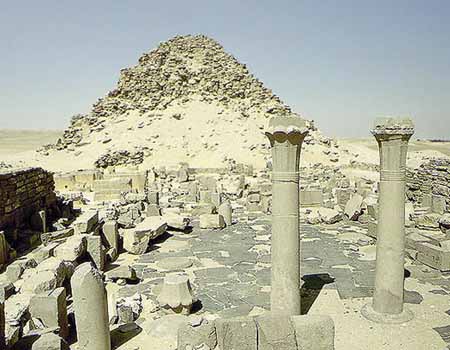
His pyramid complex was the first built at the new royal burial ground at Abusir a few kilometres north of Saqqara (though Userkaf had probably already built his solar temple there) and marks the decline of pyramid building, both in the size and quality, though many of the reliefs are very well done.
His pyramid provides us most of the information we know of this king. The reliefs in his mortuary and valley temple depict a counting of foreigners by or in front of the goddess Seshat and the return of a fleet from Asia, perhaps Byblos. This may indicate a military interest in the Near East, but the contacts may have been diplomatic and commercial as well. As part of the contacts with the Near East, the reliefs from his funerary monuments also hold the oldest known representation of a Syrian bear.
When it was excavated in the first years of the 1900s, a great amount of fine reliefs were found to an extent and quality superior to those from the dynasty before. Some of the low relief-cuttings in red granite are masterpieces of their kind and still in place at the site. The construction of the pyramid was on the other hand (like the others from this dynasty) made with an inner core of roughly hewn stones in a step construction held together in many sections with a mortar of mud.
While this was under construction a corridor was left into the shaft where the grave chamber was erected separately and later covered by leftover stone blocks and debris. This working strategy is clearly visible from two unfinished pyramids and was the old style from the Third dynasty now coming back after being temporary abandoned by the builders of the five great pyramids at Dahshur and Giza during the Fourth dynasty.
Few depictions of the king are known, but in a sculpture he is shown sitting on his throne with a local nome deity by his side.
Today only the inner construction remains partly visible in a pile of rubble originating from the crude filling of debris and mortar behind the casing stones taken away a thousand years ago. The whole inner construction is badly damaged and not possible to access today.
The entrance at the north side is a short descending corridor lined with red granite followed by a passageway ending at the burial chamber. It has a gabled roof made of big limestone layers and fragments of the sarcophagus were found here when it was entered in the early 1800s.
Sahure established the Egyptian navy and sent a fleet to Punt and traded with Palestine. His pyramid at Abusir has colonnaded courts and reliefs of his naval fleet, but his military career consisted mostly of campaigns against the Libyans in the western desert. Reliefs on the walls show evidence for trading expeditions outside Egypt - ships are shown with both Egyptians and Asiatics on board. These ships are part of an expedition to the Lebanon, searching for cedar logs. This is corroborated by inscriptions found in the Lebanon testifying to an expedition there under Sahure. As part of the contacts with the Near-East, the reliefs from his funerary monuments also hold the oldest known representation of a Syrian bear.
A relief showing a war against Libya is believed by some to be historical and by others to be merely ritual. The Palermo-stone also mentions expeditions the the Sinai and to the exotic land of Punt, as well as to the diorite quarries North-West of Abu Simbel, thus far into Nubia.
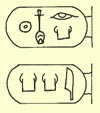
Divine of the Body
He was the third king of the 5th Dynasty.
Neferirkare Kakai was the third Pharaoh of Egypt during the Fifth dynasty. His praenomen, Neferirkare, means "Beautiful is the Soul of Ra". His Horus name was Userkhau, his Golden Horus name Sekhemunebu and his Nebti name Khaiemnebty.
It is not known who Neferirkare's parents were. Some Egyptologists see him as a son of Userkaf and Khentkaus I. Scenes discovered in Sahure's funerary domains may indicate however that Neferirkare may have been the son of Sahure and Queen Neferetnebty. One theory holds that Neferirkare may have been known as Prince Ranefer when he was young, and had a (twin?) brother named Netjerirenre, who may have taken the throne under the name of Shepseskare. Neferirkare married Queen Khentkaus II and had 2 sons who both became pharaoh: Ranefer - under the name Neferefre- - and Niuserre.
Little is known about his reign. Manetho's Kingslist assigns Neferirkare a reign of 20 years but verso 5 of the damaged Palermo Stone preserves the Year of his 5th Cattle Count (Year 9 on a biannual count). His following years were lost in the missing portion of the document. The Czech Egyptologist Miroslav Verner maintains, however, that it cannot have been as long as 20 years due to the unfinished state of Neferirkare's Abusir pyramid complex.
Since the annals in the Palermo stone terminate around Neferirkare's rule, some scholars have suggested that they might have been compiled during his reign. However, evidence from the other side of the stela implies that the document covered the reigns of later Old Kingdom kings. Hence, it is possible that these Annals were composed during the time of Nyuserre Ini who had a long reign and was the third successor to Neferirkare, after the ephemeral Shepseskare Isi and the short-lived Neferefre.
A decree, exempting personnel belonging to a temple from undertaking compulsory labour, shows that taxation was imposed on everybody as a general rule. An important cache of Old Kingdom administrative papyri, the Abusir Papyri, was discovered in Neferirkare's mortuary temple between 1893 and 1907. This cache dates primarily from the reigns of Djedkare Isesi and Unas. One of the documents is a letter from Djedkare to the temple priests provisioning Neferirkare's funerary temple.
From the large size of his mortuary complex at Abusir, he was an important king, but since the Palermo stone fragments after his rule, little is actually known about his reign. The Pyramid of Neferirkare Kakai (burial place of the king) was initially designed as a 6-step pyramid 52 m high, but later it was extended to the form of a typical pyramid and it reached a height of 72 m. The mortuary complex is unfinished, and only part of the lower mortuary temple was completed before, it is supposed, the abandonment of the project.
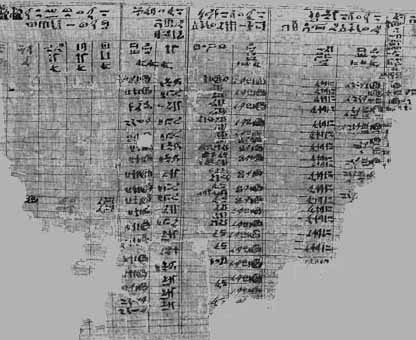
The hieratic papyrus found at his pyramid complex are probably his most notable contributions to Egyptology. They were originally discovered in 1893 by local farmers and consist of 300 papyrus fragments. They remained unpublished for some seventy-five years, even as the first archaeologists were excavating Abusir. Only later did a Czech mission, which explored the site in 1976, take full advantage of these documents.
The Neferirkara archive reveals a world of detailed and very professional administration. Elaborate tables provide monthly rosters of duty: for guarding the temple, for fetching the daily income (or 'offerings') and for performing ceremonies including those on the statues, with a special roster for the important Feast of Seker.
Similar tables list the temple equipment, item by item and grouped by materials, with details of damage noted at a monthly inspection. Other records of inspection relate to doors and rooms in the temple building. The presentation of monthly income is broken down by substance, source and daily amount. The commodities are primarily types of bread and beer, meat and fowl, corn and fruit. They also mention a mortuary temple of a little-known king, Raneferef, who's tomb was yet to be discovered but thanks to these papyrus, is now known and has yielded significant discoveries.
He also completed (or modified) the solar-temple built by Userkaf in Abusir. His own solar-temple, called Set-ib-Re, has yet to be located.
He was also the second king to erect his funerary monument at Abusir. The seals and papyri discovered in his mortuary temple give some insights into the functioning of this temple. The documents are dated to the end of the 6th Dynasty, which indicates that the cult for the deceased Neferirkare at least lasted until the end of the Old Kingdom.
Shepseskare Isi, also spelt Shepseskare, (in Greek known as Sisiris), was a Pharaoh of Egypt during the Fifth dynasty, who is thought to have reigned from around 2455 to 2448 BC. His throne name means "Noble is the Soul of Re." However, he is the most ephemeral ruler of this dynasty and some Egyptologists such as Miroslav Verner have strongly argued that Shepseskare's reign lasted only a few months at the most based upon the evidence of an unfinished fifth dynasty royal pyramid at Abusir, whose base was barely completed before it was abandoned as well as the very small number of objects identifying this king. The state of the unfinished Abusir pyramid tells us that this king's reign was unexpectedly cut short. However, both the Turin King List and Manetho state that Shepseskare ruled Egypt for seven years.
The only artifacts known for Shepseskare's reign are several clay sealings from Abusir, where the king may have been buried, and two cylinder seals, according to the respected Czech Egyptologist Miroslav Verner. Verner advocates the hypothesis that Shepseskare succeeded, rather than preceded, Neferefre based upon the archaeological context of the 1982 discovery of several new clay seal impressions bearing this king's name - Horus Sekhemkau - "in the oldest part of Neferere's mortuary temple at Abusir, which was not built" until Neferefre's death.
This appears to show that Shepseskare ruled after - rather than before - Neferefre. As Verner observes, while Shepseskare is noted as the immediate predecessor of Neferefre in the Egyptian king-lists, "this slight discrepancy can...be attributed to the political disorders of the time and its dynastic disputes." Shepseskare may have been a son of Sahure who briefly seized power after the premature death of Neferefre. Verner stresses that the progress of Shepseskare's intended pyramid at Abusir, which is unfinished and is situated just north of Sahure's own pyramid,
In Verner's view, Shepseskare was a son of Sahure who attempted to continue his family's royal line; hence, the close proximity of his pyramid next to Sahure's. His claim to the throne was thwarted by Niuserre, Neferefre's younger brother and the younger son of king Neferirkare and Queen Khentkaus II. Khentkaus II's pivotal role in Niuserre's eventual accession to the throne might explain her high esteem in Egyptian folklore and "the additional enlargement and upgrading of her mortuary temple" by Nyuserre.
The contemporary sources also show that this king's reign was extremely short: the stela of the 5th dynasty official Khau-Ptah lists an uninterrupted sequence of kings whom he served under namely Sahure, Neferirkare, Neferefre and Niuserre.
No mention whatsoever occurs for a king "Shepseskare" between Neferirkare and Neferefre. Since the Turin King-list was a later New Kingdom document from the reign of Ramesses II while the Manetho's Epitome dates from the 3rd century BC under Ptolemy II, Khau-Ptah's contemporary account can be regarded as a more accurate reading of the political situation during the 5th dynasty.
If Shepseskare had ruled Egypt for 7 years between Neferirkare and Neferefre, it seems inconceivable that Khau-Ptah would have failed to list his service under this king - especially since Neferefre had a reign of only between 1 to 2 years. Consequently, the monumental record points to a reign lasting no more than a few months for Shepseskare.
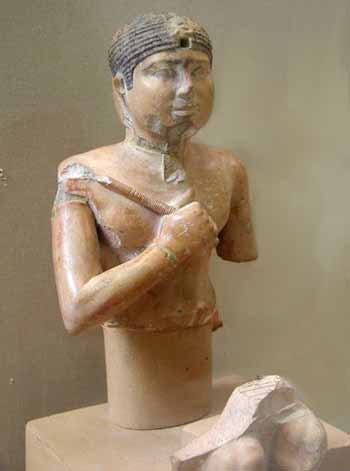
"Beautiful is Re" - (2460 - 2453 BC)
He was the fifth king of the 5th Dynasty.
Neferefre was the son of king Neferirkare Kakai by queen Khentkaus II, and the elder brother of pharaoh Nyuserre Ini.
While Neferefre is given a reign of some twenty years in Manetho's Epitome, this number is a substantial overestimation of his true reign length; the current academic view is that he enjoyed a very short rule based on the completely unfinished state of his intended pyramid. A visual examination of the partly damaged data for Neferefre's reign in the Turin King List shows only a single vertical stroke for this king (each vertical stroke signifies one year). This would give him a reign of about 1 or 2 years which agrees well with the archaeological evidence. The Czech Egyptologist, Miroslav Verner, who has been excavating at Abusir since 1976, states in a 2001 journal article that:
"The shape of the tomb of Neferefra...as well as a number of other archaeological finds clearly indicate that the construction of the king's funerary monument was interrupted, owing to the unexpected early death of the king. The plan of the unfinished building had to be basically changed and a decision was taken to hastily convert the unfinished pyramid, (of which only the incomplete lowest step of the core was built), into a "square-shaped mastaba" or, more precisely, a stylized primeval hill. At the moment of the king's death neither the burial apartment was built, nor was the foundation of the mortuary temple laid."
Verner concludes that based on the position of a mason's inscribed Year 1 date from Neferefre's reign which was found "on a large corner block situated at the end of the tunnel for the pyramid's descending corridor at about two thirds of the height of the extant core of the monument", Neferefre reign lasted "not longer than about two years."
The only known date from his reign is the aforementioned mason's inscription from his first Year in the foundation of his pyramid tomb. Little else is known about Neferefre. While the name of Neferefre's undiscovered sun temple is known to be Hetep-Re, no such structure has yet been discovered owing perhaps to the short length of his reign.
A significant cache of administrative papyri-comparable in size to the Abusir Papyri found in the temple of Neferirkare-was discovered at Abusir by a 1982 University of Prague Egyptological Institute excavation from a storeroom of his mortuary temple.
Likewise, it is not known whom he succeeded and by whom he was in turn succeeded as pharaoh. Generally, his predecessor is held to be Shepseskare, an even less-known king, and Neferefre's successor is often believed to be his younger brother Niuserre. But Shepseskare apparently ruled for a few weeks only - he is not mentioned in Khau-Ptah's list of the kings he served under -, and seals bearing his horus name were found in the oldest part of Neferere's mortuary temple - which, as noted above, was not started until after Neferere was already dead. Consequently, Shepseskare might have ruled either before or after Neferefre, perhaps signifying a dynastic conflict between the lineages of Neferirkare Kakai (to which Neferefre and Niuserre belonged) and Sahure (of whom Shepseskare might have been a son).
Because of the premature death of Neferefre, his successor hastily completed work on Neferefre's pyramid at Abusir, which acquired the form of a mastaba. Although it may share the same resemblance to a mastaba tomb, it is not situated north-south, and it is not rectangular in shape, but square on all sides. Known as the "Unfinished Pyramid", it stands just seven meters high, but from the constructed portions, the walls slope at a 64° angle. Similarly to other sites of other Ancient Egyptian pyramids, the burial site of Neferefre contains more than one pyramid, and his lines up the three pyramids, similarly to the Great Pyramids.
Artifacts found at the site show that the name of his pyramid was called "Divine is Neferefre's Power." All the other buildings of Neferefre's mortuary complex were erected under the reign of his brother, Nyuserre Ini. While exploring ruins of the mortuary complex, a Czech archaeological expedition discovered papyri of temple accounts, statues of the king, decorated plates and many seal prints.
Pieces of mummy wrappings and bones were also found, which were discovered to be the remains of Neferefre. An anthropological analysis of his mummy reveals the king to have died in his early twenties, at between 20 and 23 years old. This evidence accords well for a king who died relatively soon into his reign and left an unfinished tomb.
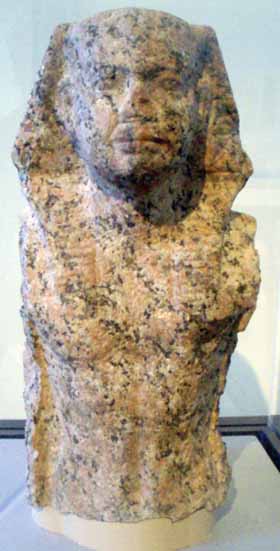
(2453 - 2422 BC)
He was the sixth king of the Fifth Dynasty.
Nyuserre Ini (also spelt as Neuserre Izi or Niuserre Isi, and sometimes Nyuserra; in Greek known as Rathoris), was a Pharaoh of Egypt during the Fifth dynasty. He is frequently given a reign of 24 or 25 years and is dated from ca. 2445 BC to 2421 BC. His prenomen, Nyuserre, means "Possessed of Re's Power". Nyuserre was the younger son of pharaoh Neferirkare Kakai by Queen Khentkaus II, and the brother of the short-lived king Neferefre.
He is often thought to have succeeded his brother directly, but there is some evidence to suggest that Shepseskare reigned between the two, albeit only for a few weeks. Possibly, the latter had attempted to restore the lineage of Sahure who might have been his father, deposing the lineage of Neferirkare Kakai in the process, but was unsuccessful.
Nyuserre's only known consort was Reptynub. A King's Daughter by the name of Khamerernebty (A) was the daughter of Nyuserre. The identity of her mother is not known. Khamerernebty was married to the vizier Ptahshepses.
A limestone fragment was found in the pyramid complex of Nyuserre's mother Khentkaus mentioning a King's Daughter Reputnebty, who is followed by a King's Son Khentykauhor. From context, Reputnebty was a daughter of Nyuserre and Khentykauhor a son.
In Manetho's Epitome, Nyuserre is assigned a reign of 44 years but this data is considered suspect. The Turin King List data for his reign is badly damaged although scholars have usually assumed that it was 24 years. The Danish Egyptologist Kim Ryholt who twice analysed the Turin King List papyrus in the 1990s, however, notes that "Niuserre's reign is damaged. There is a distinct trace of a 10, 20 or 30, followed by a stroke after which the papyrus breaks off. Accordingly, the possibilities are 11-14, 21-24, and 31-34 years for Nyuserre, and not just 24 years" as is conventionally assumed. However, since a Sed Feast scene is noted for Nyuserre from his solar temple at Abu Gurab, a reign of more than 30 years can be suggested for this Pharaoh.
The Czech Egyptologist Miroslav Verner who has been excavating the Old Kingdom pyramids on behalf of the University of Prague in Egypt since 1976 concurs with the view that Nyuserre had a reign in excess of 30 years. He bases his opinion here on this king's numerous building activities in Abusir which included the construction of his own pyramid complex and two small complexes Lepsius no.XXIV and no.XXV for his wives,... the completion of the unfinished funerary monuments of his direct relatives Neferirkara, Khentkhaus II and Neferefra" as well as the completion of this king's substantial sun temple building complex at Abu Gurab.
"Beautiful reliefs with the scenes of the sed-festival from this sun temple are occasionally considered as indirect evidence of a long reign for this king. Generally, the historical authenticity... of such reliefs is doubted since the sed-festival scenes very probably belonged in the Old Kingdom to the standard 'Bildprogram' of the royal funerary monuments. However, in Niuserre's case, the sed-festival scenes from Abu Ghurob most probably reflect the 30th jubilee of the king's ascension to the throne".
Nyuserre's burial place is a pyramid at Abusir located between those of pharaohs Sahure and Neferirkare Kakai. Its initial height was around 52 meters, with a base of about 79 meters along each side, and a slope of 52 degrees. The volume of stone was a total of about 112,000 cubic meters. It was originally covered with fine limestone as shown by some remaining casing stones. The burial chamber and antechamber were both lined with fine limestone as well and roofed with 3 tiers of megalithic limestone beams 10 meters long weighing 90 tons each. His queen, Reptynub, was also buried nearby. His magnificent sun temple at Abusir is called the Joy of Re. While military campaigns to Libya and Asia are mentioned in documents of this period, we have no specific evidence regarding the military activities of this ruler.
An inscription found in the Sinai shown Niuserre triumphant over his enemies. It is debatable whether this inscription refers to an actual victory of Niuserre, or whether it was merely symbolic. It does, however, show that Niuserre was active in the Sinai.
He built a solar-temple, named Shesepu-ib-re, in Abu Gurab, a kilometre or more to the North of Abusir. Not only is this the biggest and most complete solar-temple, it is also the only one that was constructed completely of stone. The many finely carved reliefs that remain show the king during a Sed-festival and the world as created by the solar god, with representations of the seasons and the provinces of Egypt. With the reign of Niuserre, the solar-cult appears to have come to its summit.
The sanctuary consisted of an entrance hall that was leading to a court of 100x75 m / 330x250 ft. in size which was surrounded by a stone wall. In the middle of the courtyard stood a huge obelisk, a stone that looked like the modern-day Washington Monument. The obelisk was the cultic symbol for Re, the sun-god.
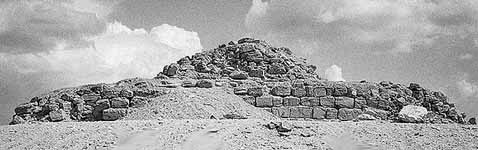
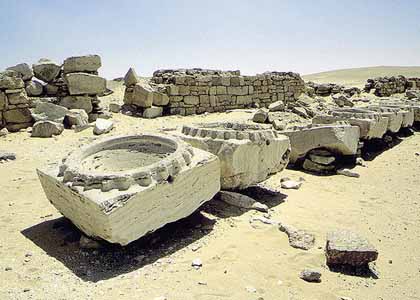
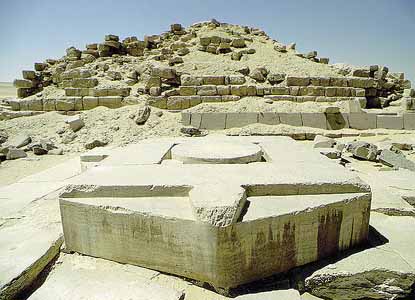
The pyramid-complex of Niuserre is located at Abusir, between the pyramids of Sahure and Neferirkare. Instead of building his own valley temple, he had his pyramid complex connected to the valley temple of Neferirkare. His two wives, Reputneb and Khentikus, were buried near him at Abusir.
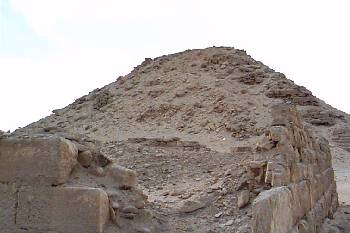
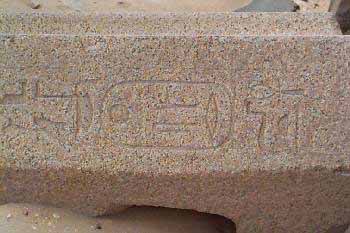
His Cartouche
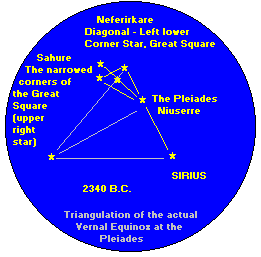
Nile Pyramid Complexes
Astronomical Triangulations of Aries, Equinoxes,
Solstices and the Duat of Pharaonic Egypt
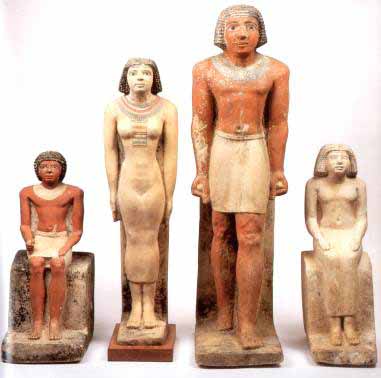
Menkauhor was the seventh king of the 5th Dynasty.
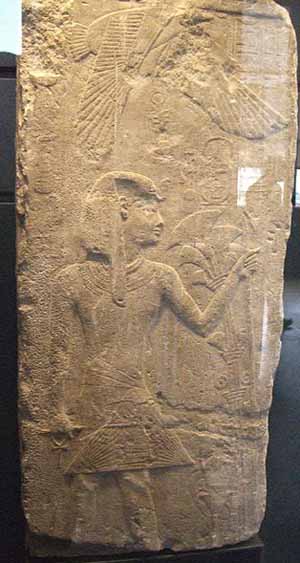
Menkauhor Kaiu (Menkaouhor, in Greek known as Menkeris), was a Pharaoh of the Fifth dynasty during the Old Kingdom. He was the successor of King Nyuserre Ini and was succeeded by Djedkare Isesi. Menkauhor's royal name or prenomen means "Eternal are the Souls of Horus".
Menkauhor may have been a son of Nyuserre. Reliefs from the mortuary temple of Khentkaus II may point to this proposed family relationship, but it is not a certainty.
Queen Meresankh IV has been suggested as the consort for Menkauhor. It is possible however that she was a wife to Djedkare Isesi instead. Queen Khuit I has also been suggested as a possible wife of Menkauhor, but this is not certain.
It has been suggested that Menkauhor's successor Djedkare Isesi was his son. Other possible children include the princes Raemka and Khaemtjenent, but it is also possible they are sons of Djedkare Isesi, so they could be his grandsons instead.
The Turin King List assigns Menkauhor 8 years of rule. He was the last pharaoh to build a sun temple - called Akhet-Re. His pyramid was reported to have been found in 1842 by German archaeologist Karl Richard Lepsius at Saqqara. Lepsius called it number 29 or the "Headless Pyramid".
The pyramid was then lost under shifting sands until it was rediscovered in 2008. The pyramid is believed to be his. This would validate contemporary fifth dynasty records which indicate Menkauhor's pyramid was located at either Dahshur or Saqqara. He is, in terms of present-day knowledge, the second most obscure 5th Dynasty ruler after the ephemeral Shepseskare - although a relief by an official named Tjutju depicts him adoring the pharaoh, one major quarry inscription at Wadi Maghara in the Sinai dated to his reign, a single seal bearing his name and a small alabaster statue prove his existence beyond doubt.
Several Old Kingdom administrative records at Abusir indicate that Menkauhor finished his pyramid complex which was called Ntry-iswt-Mn-kw-hr while his funerary cult was still operational long after his death.
Menkauhor is also attested to by a small alabaster statue that is now located in the Egyptian museum in Cairo and by a relief of Tjutju adoring King Menkauhor and other divinities. This relief, owned by the Louvre, has been on loan to the Cleveland Museum of Art.
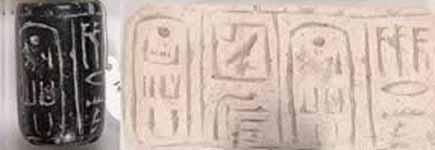
Djedkare Isesi in Greek known as Tancheres from Manetho's Aegyptiaca, was a Pharaoh of Egypt during the Fifth dynasty. He is assigned a reign of twenty-eight years by the Turin King List although some Egyptologists believe this is an error and should rather be thirty-eight years. Manetho ascribes to him a reign of forty-four years while the archaeological evidence suggests that his reign is likely to have exceeded thirty-two years. Djedkare's prenomen or royal name means "The Soul of Ra Endureth."
t is not known who Djedkare's parents were. Djedkare could be Menkauhor's son, or Niuserre's son. He may have been either a son, brother or cousin of his predecessor Menkauhor. Similarly the identity of his mother is unknown.
The name of Djedkare Isesi's principal wife is not known. An important queen consort was very likely the owner of the pyramid complex located to the northeast of Djedkare's pyramid in Saqqara. The queen's pyramid had an associated temple and it had its own satellite pyramid. Baer suggested that the reworking of some of the reliefs may point to this queen ruling after the death of Djedkare. It is possible that this queen was the mother of Unas, but no conclusive evidence exists to support this theory.
Queen Meresankh IV has been suggested as a possible wife of Djedkare, but she is more commonly thought to be a wife of Menkauhor.
Djedkare Isesi did not, as was customary for his dynasty, build his own sun temple, but did build his pyramid at Saqqara instead of Abusir. This is believed to be a sign that Osiris had now replaced the sun-god Ra as the most popular god. Titles were now thought to hold magical power; their growing importance believed to be a sign of a gradual decentralization of power.
Several people from the reign of Djedkare Isesi are known through their tombs in Giza. Cemetery 2000 contains several tombs of overseers and inspectors of the Palace attendants. These people are thought to have held functions in the royal palace. The inspectors of the palace attendants include Redi (G 2086), Kapi (G 2091), and Pehenptah (G 2088). Some of these individuals attested in Giza held further position within the royal court.
A courtier named Saib (G 2092+2093) was also a companion and held the positions of director of the palace. Saib was also secretary of the House of Morning. Saib was buried ina double mastaba. He may have shared this tomb with his wife Tjentet, who was a priestess of Neith. Nimaatre (G 2097) was another palace attendant of the Great House. Nimaatre may have been related to Saib, but this is not certain. Nimaatre also served as secretary of the Great House (i.e. the Palace).
A man named Nefermesdjerkhufu (G 2240) was companion of the house, overseer of the department of palace attendants of the Great House, he who is in the heart of his lord, and secretary. He also held the positions of overseer of the two canals of the Great House, and he held a porition related to the royal documents.
A nobleman by the name of Kaemankh (G 4561) was royal acquaintance and was associated with the royal treasury. Kaemwankh was an inspector of administrators of the treasury, and secretary of the king's treasure.
Possibly one of the best known nobles from the time of Djedkare is his vizier Ptahhotep who was buried in Saqqara.
Djedkare had another vizier by the name of Rashepses. A letter directed to Rashepses has been preserved. This decree is inscribed in his tomb in Saqqara.
Another well attested vizier was Senedjemib Inti. Senedjemib Inti was buried in Giza; in mastaba G 2370. He is described as true count Inti, chief justice and vizier Senedjemib, and the royal chamberlain Inti. Letters from Djedkare to his Vizier have been preserved because Senedjemib Inti had them inscribed in his tomb. One royal decree is addressed to the chief justice overseer of all works of the king and overseer of scribes of royal documents, Senedjemib. This decree mentions the planning of a court in the pool area(?) of the jubilee palace called "Lotus-of-Isesi". This decree is dated to either the 6th or 16th count, 4th month of the 3rd season, day 28. A second letter concerns a draft of the inscriptions of a structure called the "Sacred Marriage Chapel of Isesi". The third decree recorded in Inti's tomb mentions the construction of a lake.
Senedjemib Inti died during the reign of Djedkare Isesi. Inscriptions in the tomb of Inti describe how his son, Senedjemib Mehi, asks and receives permission to bring a sarcophagus from Tura. Senedjemib Mehi would later follow in his father's footsteps and become vizier during the reign of one of Djedkare's successors.
Inscriptions in the Sinai - in Wadi Maghareh - shows a continued presence during the reign of Djedkare Isesi. Expeditions were sent to find and bring back semi-precious stones such as turqoise. Inscriptions can be dated to the 3rd (or 4th) and 9th cattle count.
Djedkare is known to have had expeditions to Byblos and Punt. The expedition to Punt is referred to in the letter from Pepi II to Harkuf some 100 years later. Harkuf had reported that he would bring back a "dwarf of the god's dancers from the land of the horizon dwellers". Pepi mentions that the god's sealbearer Werdjededkhnum had returned from Punt with a dwarf during the reign of Djedkare Isesi and had been richly rewarded. The decree mentions that "My Majesty will do for you something greater than what was done for the god's sealbearer Werdjededkhnum in the reign of Isesi, reflecting my majesty's yearning to see this dwarf".
An entire series of dated administrative papyri from Djedkare's reign was discovered in king Neferirkare's mortuary temple. According to Miroslav Verner, Djedkare Isesi's highest known date is a Year 22 IV Akhet day 12 papyrus, which would belong anywhere from Year 32 to Year 44 of his reign depending on whether the Cattle Count was Bi-annual (2 times) or semi-annual (1.5 times). Djedkare Isesi's reign is well documented by the Abusir Papyri,numerous royal seals and contemporary inscriptions; taken together, they indicate a fairly long reign for this king.
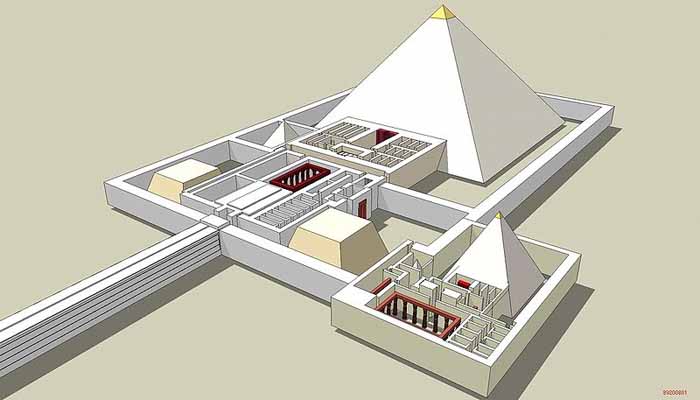
Djedkare moved from Abusir to South Saqqara to construct his pyramid complex. His pyramid was called "Beautiful is Djedkare". Today it is called Haram el-Shawaf El-Kably which means "the Southern Sentinel pyramid". The pyramid tomb at Saqqara was constructed with six steps, which were then covered with white limestone. The top three levels of the pyramid are now missing and most of the limestone casing has been removed.
In the interior of the pyramid three rooms would have contained Djedkare's burial. The burial chamber contained the dark grey basalt sarcophagus which held the body of the king. The canopic jars were buried in the floor of the burial chamber, to the north-east of the sarcophagus. An antechamber and a storage chamber completed the set of interior rooms. Djedkare's almost complete mummy, along with a badly broken basalt sarcophagus and a niche for the canopic chest, was discovered in the pyramid. Djedkare died at ca 50-60 years of age.
To the east of the pyramid Djedkare's mortuary temple was laid out. The east facade of the mortuary temple featured to massive stone structures which resemble the later pylons. The motruary temple is connected via a causeway to a valley temple. An interesting structure associated with Djedkare's pyramid is the so-called "Pyramid of the Unknown Queen". This pyramid complex lies at the south-east corner of Djedkare's complex.
His heir was his son, Prince Remkuy, who died before he assumed the throne.
Reference: The Oxford History of Ancient Egypt, Ian Shaw 2000
Unas was the ninth and last king of the 5th Dynasty and what some believe to be the end of the Golden Age of the Old Kingdom.
The 6th Dynasty would finally be the end of Egypt's grand beginning, as the country would then slip into the troubling First intermediate Period.
Unas (also Oenas, Unis, Wenis, or Ounas) was a Pharaoh of Ancient Egypt, and the last ruler of the Fifth dynasty from the Old Kingdom. His reign has been dated between 2375 BC and 2345 BC. Unas is believed to have had two queens, Nebet and Khenut, based on their burials near his tomb.
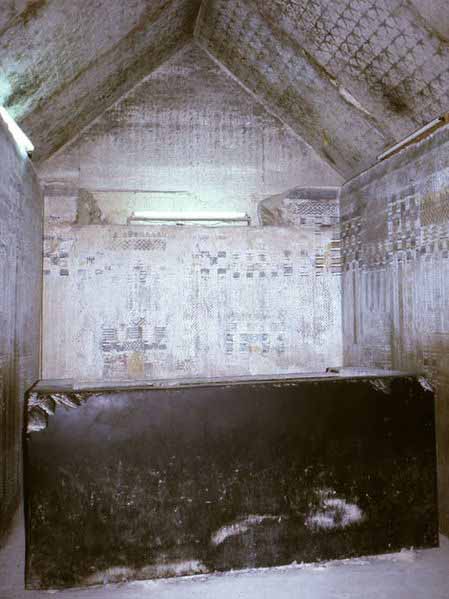
With his death, the Fifth dynasty came to an end, according to Manetho; he probably had no sons. Furthermore, the Turin King List inserts a break at this point, which "gives us some food for thought," writes Jaromir Malek, "because the criterion for such divisions in the Turin King List invariably was the change of location of the capital and royal residence."
However, there are several instances of uninterrupted continuity between the Fifth and the sixth dynasties: Kagemni, the vizer of Unas's successor Teti, began his career under Djedkare Isesi and Unas. Teti's queen, Iput, is believed to have been the daughter of Unas, which shows Teti, Nicolas Grimal argues, "made no conscious break with the preceding dynasty." The break between the two dynasties may have been more as an official act than in fact. The causeway of Unas's pyramid complex includes a bas relief showing how they transported a palm column by boat on the Nile.
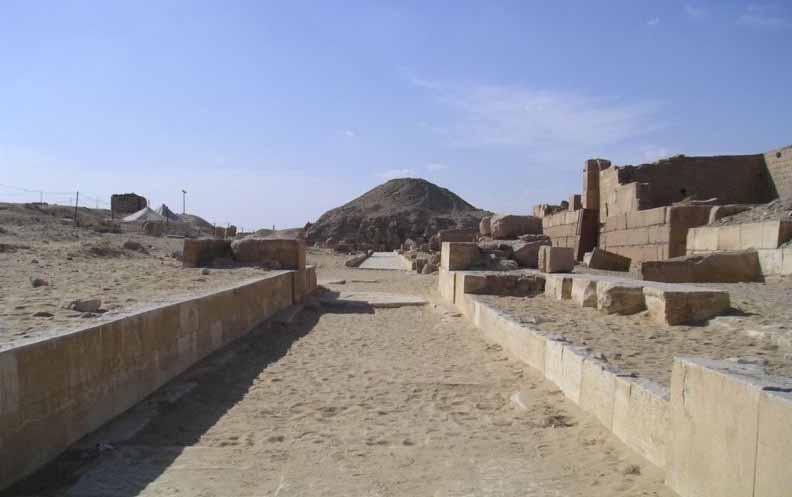
According to the Pyramid Texts, he built a small pyramid at Saqqara, originally named "Beautiful are the places of Unas", close to the Step Pyramid of Djoser. It has been excavated by Vyse, Barsanti, Gaston Maspero, Firth, Selim Hassan, A. Husein, and Alexandre Piankoff. Its interior is decorated with a number of reliefs detailing events during his reign as well as a number of inscriptions.
However, Jaromir Malek considers "the main innovation of Unas' pyramid, and one that was to be characteristic of the remaining pyramids of the Old Kingdom (including some of the queens), was the first appearance of the Pyramid Texts". These texts were inscribed in Sixth Dynasty royal versions, but Unas's texts contains verses and spells which were not included in the later 6th dynasty copies. The pyramid texts were intended to help the king in overcoming hostile forces and powers in the Underworld and thus join with the Sun God Ra, his divine father in the afterlife. The king would then spend his days in eternity sailing with Ra across the sky in a solar boat.
Unas was his birth name, but he is also referred to as Unis, Ounas and Wenis. His Horus name was Wadj-tawy which means "Horus, the flourishing one of the Two Lands".
According to the Turin King list, Unas ruled for 30 years, or perhaps slightly more of part of the number is in the lacuna, which is confirmed by Manetho, who recorded 33 years. He probably ruled Egypt between 2375 and 2345 BC.
Wenis had two wives, Queen Nebet, who was the mother of Prince Wenisakh, and Queen Khenut. It has been proposed that Iput the first was his daughter. Both of Unas' Queens were buried in mastaba tombs outside of Unas' pyramid complex which, in itself is unusual since often in this period the Queens would be buried in smaller pyramids near their husband's.
His reign is not well attested therefore we know little about this king despite his fairly well preserved funerary complex at the southwest corner of the Step Pyramid of Djoser at Saqqara. It now lies in ruins on the Saqqara Plateau.
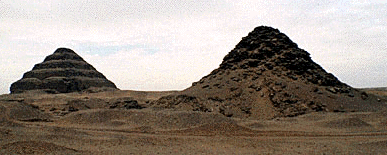
Beneath the rubble, in the burial chamber, we find one of the finest examples of the Pyramid Text inscriptions hewn in the polished stone walls and ceiling.
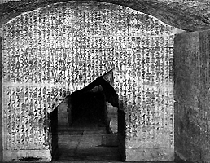
Rise up my father, great king
so that you may sit in front of them.
The cavern of the broad sky is opened to you
so that you may stride in the sunshine.
Stand up for me, Osiris, my father.
I am your son. I am Horus.
I have come that I might cleanse and purify you,
that I might preserve you and collect your bones.
I say this for you.
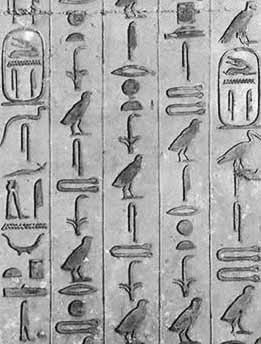
While Unas' pyramid is the smallest of the royal pyramids build during the Old Kingdom, it was the first that we know of to have its internal walls inscribed with the various (128) spells making up the Pyramid Text. The texts, meant to aid the pharaoh's soul on its journey to the next world, would adorn the walls of many future pyramids and tombs and is the earliest large religious composition known from ancient Egypt.
Unas' pyramid also established the typical plan of the internal chambers for pyramids that would be used through the end of the 6th Dynasty.
In death, King Unas is identified with the gods Ra and Osiris, and referred to as Osiris Unas. E. A. Wallis Budge, in his "The Gods of the Egyptians", also tells us that he was called Unas, the Slayer and Eater of Gods.
He was apparently worshipped around Saqqara for many years after his death.
Osiris was originally a local deity of the Eastern delta, but sometime around the reign of Unas his worship became much more widespread. We believe Maspero discovered parts of Unas' mummy in 1880, which are now in the Cairo Museum.
It is not believed that Unas left an heir, though he may have one time had a son named Ptahshepses, and therefore there was a short period of political instability prior to Teti, the first ruler of the 6th Dynasty, ascent to the throne. Teti's wife, Iput, was possibly a daughter of Unas, and his vizier Kagemni probably also worked under Unas. Furthermore, a pink granite gateway in Unas' mortuary temple bears the inscription of the names and titles of Teti, indicating that part of the temple was completed after Unas's death. This evidence suggests that there may not have been a true break between the 5th and 6th Dynasties.
We find scenes from his causeway that links his mortuary temple and valley temple depicting the moving by barge of granite columns from the quarries at Aswan to his mortuary temple, but we also find scenes of emaciated people. These latter scenes may show the effects of a famine that might have been the cause of the political decline that ended the Old Kingdom. There are also scenes of Asiatic traders arriving in Egypt by boat, perhaps from Byblos, as well as scenes of markets, hunting in the desert and a small vignette of desert life. We believe that Unas probably pursued a policy of diplomatic contact both with Byblos and Nubia. He also apparently was also responsible for building activities at Elephantine near modern Aswan, as well as Saqqara. At Elephantine, an inscription also shows a giraffe and other exotic animals that were apparently bought to Egypt during his reign. Another drawing found on a discovered vase shows battle scenes during his reign.
His name has been found in Elephantine, at the Southern border of Egypt (Aswan), and also on an alabaster vessel found in Byblos, the latter perhaps indicating some commercial or diplomatic activities between Egypt and the Near East during this period. He seems not to have left any apparent heirs after his death, which may have resulted in some political instability following his death.
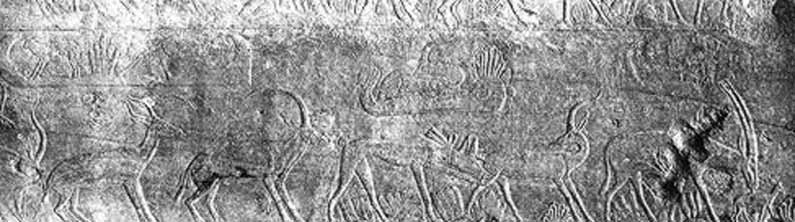
An inscription raised at Elephantine shows a giraffe that was brought to Egypt with other exotic animals for ancient Egyptians, during Wenis' reign when successful trade expeditions were conducted with neighboring nations.
Reference: Monarchs of the Nile Aidan Dodson, 1995