Scientists discover a surprising clue to why some brains resist Alzheimer's Science Daily - October 27, 2026
Scientists may have uncovered an important clue hidden in a rare group of immature brain cells. Researchers discovered that these cells remain present even in people over 80, but their behavior differs dramatically between those who develop dementia and those who remain cognitively healthy.
Talking Inside Your Head Changes Your Pupils in a Totally Different Way to Talking Out Loud Science Alert - October 25, 2026
Speaking aloud versus using your inner voice appears to correspond to different levels of arousal in the brain.
Your Brain May Be Switching Between Two Versions of Reality 15 Times Every Second Science Alert - October 24, 2026

How grounded do you feel in the present moment? It may be a little less than you think. Even as you fix your gaze on the screen in front of you to read these words, your brain may be flickering between what you're consciously taking in and other visual information that never quite reaches your awareness. A new preprint study involving both macaque monkeys and humans suggests that the brain may be switching back and forth between conscious and unconscious information around 15 times a second – raising the strange possibility that something other than visual availability is guiding your conscious experience of the world.
Brain scans reveal 'number line' that's used to mentally compare values Live Science - October 24, 2026

Scientists discover a hidden messaging (communication) system deep inside the brain Science Daily - October 23, 2026

A tiny region deep within the brain has surprised scientists by revealing a remarkably sophisticated communication system. Previously thought to broadcast the same chemical signal throughout the brain, this region actually sends targeted messages that help control learning, attention, and behavior.
Brain scans reveal 'number line' that's used to mentally compare values Live Science - October 23, 2026
Although whole numbers and fractions are processed differently in the brain, when you compare their values, a single "mental map" akin to a number line lights up.
Old Blood Cells Have Been Transformed Into Brain Stem Cells That Get Younger As They Age Science Alert - October 21, 2026

Now, scientists have transformed old blood cells into young brain stem cells, which continued to grow younger as they grew older..
Is the brain actually 2 nervous systems smooshed together? A new study claims it is. Live Science - October 17, 2026
Recent research challenges, long-standing idea about how the brain develops. Rather than a rising from a single source, the brain may emerge from two distinct populations of cells. Researchers concluded that the front part of the brain and the back part of the brain come from different sources, which are pushed together to create the appearance of a single organ.
Yale scientists discover how stress changes the brain to make memories stronger Science Daily - October 16, 2026

Yale scientists have uncovered how the stress hormone cortisol helps the brain turn emotional experiences into stronger, longer-lasting memories. The discovery reveals that stress can reshape communication between brain networks involved in emotion and memory, potentially explaining why certain moments are so difficult to forget.
Scientists uncover a hidden map of the brain with 539 distinct regions Science Daily - October 13, 202

Scientists have uncovered a hidden layer of organization in the brain by creating the first detailed 3D map of its lipids, the fatty molecules essential for brain structure and communication. By analyzing millions of measurements from mouse brains, researchers identified 539 distinct chemical zones, revealing patterns and boundaries that traditional brain maps have missed. Surprisingly, even white matter, once thought to be relatively uniform, contains a complex patchwork of chemically distinct regions.
Textbook Rewrite: The Human Brain Has Two Distinct Origins Science Alert - September 18, 2026
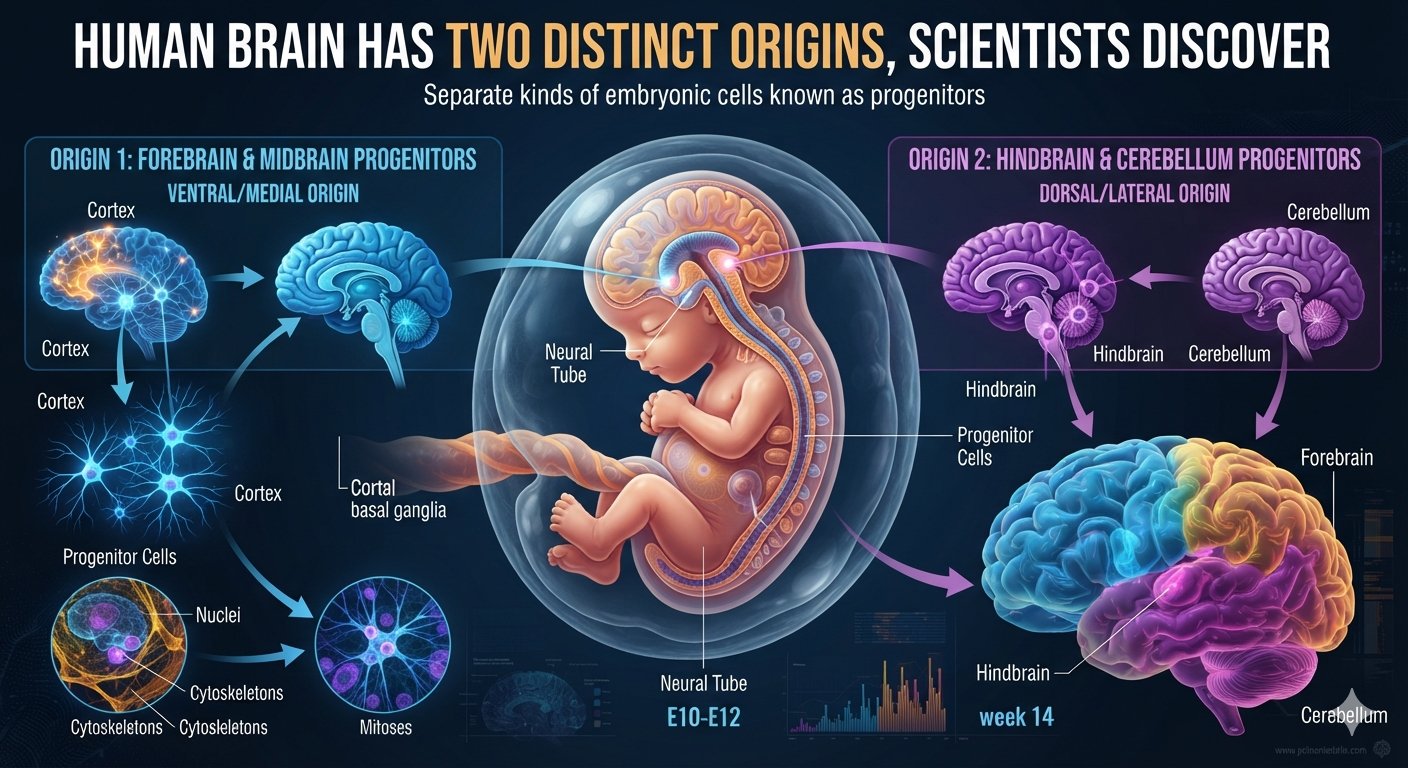
In a paper published in Nature Neuroscience today, a Stanford-led research team says the brains of humans and other animals are actually made up of two collaborating neural systems that start developing in parallel in an embryo's earliest moments. The study suggests that the different brain regions arise from separate kinds of embryonic cells known as progenitors.
Your Brain Cleans Itself While You Sleep - Scientists Just Discovered How Fast SciTech Daily - September 12, 2026

AI reveals a striking two-speed cleanup system that helps the sleeping brain clear away harmful waste. During deep sleep, a water-like fluid moves through and around the brain, helping remove metabolic waste associated with disorders including Alzheimer’s disease.
Scientists Discover a Hidden Immune Organ Inside the Skull SciTech Daily - September 1, 2026

Orexin, The Brain Chemical Behind Staying Motivated Science Alert - August 25, 2026
Motivation (or a lack of it) shapes our lives in ways large and small every day: From changing careers to changing TV channels, we're guided by what motivates us and what we find rewarding. In a new study a team has identified neurons that produce the chemical orexin as playing an important role in food-reward motivation in rats.
The World's Largest Psychedelic Brain Study of Its Kind Just Found 'Hidden Order' in The Chaos Science Alert - August 20, 2026

Psychedelics are becoming more clinically relevant, and a slew of recent research has explored the effects of psilocybin in ever-greater detail, revealing that it has the ability to imprint lasting, meaningful changes in brain activity. Psilocybin, the psychoactive powerhouse in 'magic mushrooms', is thought to induce brain plasticity, reorganizing neural connections and signaling pathways to potentially alter our otherwise stagnant mind states.
A Crucial Part of The Brain's Memory Center Seems to Shrink in People With Depression Science Alert - August 16, 2026

It's long been known that depression has links to dementia and also specifically to Alzheimer's disease, but exactly how depression and cognitive decline may interact with one another remains unexplained.
Brain activity reveals how people juggle changing goals in real time Medical Express - August 16, 2026

In a recent study published in Nature, researchers wanted to understand how the human brain makes decisions continuously, in real time, as we navigate dynamic environments. They studied people's behavior and brain activity while they performed a continuous prey-chasing task, a video game in which players used a joystick to chase fleeing virtual prey moving at different speeds and changing directions.
MIT neuroscientists discover the brain can reason without words Science Daily - August 13, 2026

Language and logical reasoning are powered by separate systems in the brain. Even people with severe language impairments caused by stroke were able to solve challenging logic puzzles as well as people without those impairments, while brain scans showed that language-processing regions stayed largely quiet during reasoning tasks.
Brain activity reveals two stages of visual processing before conscious perception Medical Express - August 7, 2026

Seeing feels immediate; we open our eyes and the world seems to appear as a continuous stream. But some visual illusions show that events occurring later can change how we perceive what happened earlier, suggesting that the brain may collect and combine information for a short time before producing the experience that reaches awareness. This effect is known as "postdiction." Here's an example: Two colored dots appear briefly in different places, but people see only a single moving dot that changes color along the way. This means that the second dot must influence how the first is perceived, a typical example of postdiction.
Ghosts of 'Forgotten' Memories May Linger in The Brain, Study Suggests - And Could Even Be Restored Science Alert - August 7, 2026

Some forgotten memories may be less like a deleted computer file and more like a dusty book buried deep in the stacks of an ancient library. They're no longer easy to find. But, under the right set of circumstances, they could be brought back.
Scientists discover the brain cells that keep you motivated Live Science - August 5, 2026

Scientists have discovered brain cells that may help turn the expectation of a reward into the determination to keep going.
Scientists may finally know how human brains have evaded decay for thousands of years Live Science - August 5, 2026
Researchers found that brain preservation isn't a rare anomaly, it's a novel chemical pathway. Despite being one of the first tissues to begin decomposing after death, human brains are surprisingly prolific in archaeology: more than 4,400 preserved brains have been discovered among human remains spanning the last 12,000 years
Scientists Discover the Brain Is Not Always Ready To Make Memories SciTech Daily - July 28, 2026

Findings suggest that memory formation depends not only on what happens to us but also on the brain’s condition at that exact moment.
The Brain Can Reason Without Language, MIT Study Finds SciTech Daily - July 22, 2026

Neuroscientists found that logical reasoning does not rely on the brain regions involved in language processing. A person may be unable to form a sentence after a stroke yet still solve a difficult puzzle, recognize a hidden pattern, or make a sound logical judgment. That contrast points to a basic question about the mind: does reasoning depend on language, or can the brain think logically without words?
Scientists Discover a Surprising Link Between Sleep, Genes, and Alzheimer's SciTech Daily - July 14, 2026

A new study suggests that sleep habits may influence how certain genetic variants affect early brain and cognitive changes associated with Alzheimer's disease. Sleep may do more than help the brain recover from a busy day. New research suggests it could also influence how certain genes shape the earliest brain changes associated with Alzheimer's disease. A restless night can leave more than fatigue behind. REM sleep plays a central role in emotional processing, stress adaptation and mental recovery, and persistent disruptions to this stage have been linked to conditions including depression, anxiety and post-traumatic stress disorder
Scientists discover how the brain rewires itself to truly multitask Science Daily - July 12, 2026

Practice may do more than make perfect. Researchers found that extensive training physically reorganizes the brain, allowing learned tasks to bypass the prefrontal cortex and run through specialized circuits instead. By freeing the brain's "thinking" center, people became better at performing another task at the same time, challenging the long-held idea that humans only switch rapidly between tasks rather than truly multitask.
A Sound Moving Toward You Can Literally Warp Your Sense of Time Science Alert - July 7, 2026

Albert Einstein taught us that time is relative in a physical sense, but personal experiences teach us that time is also perceptually relative.
Schizophrenia And Bipolar Disorder Share 70% of Their Genetic Roots, Landmark Study Finds Science Alert - July 7, 2026

Researchers are beginning to realize that even vastly different psychiatric disorders can share startlingly similar genetic roots. Eight different psychiatric conditions all shared a common genetic basis. By identifying what is shared across these disorders, we can hopefully come up with strategies to target them in a different way that doesn't require four separate pills or four separate psychotherapy interventions.
Scientists have finally uncovered the brain circuit that explains why deep sleep is essential for growth hormone, healthy metabolism, and brain function. Science Daily - July 6, 2026

Understanding this system could pave the way for new therapies for sleep disorders and diseases tied to metabolism and the brain, including Alzheimer's and Parkinson's.
Scientists Discover the Brain Can Rewire Itself To Truly Multitask SciTech Daily - June 29, 2026

Extensive practice can rewire the brain so a learned skill runs more automatically, making some forms of true multitasking possible. Why does driving eventually feel effortless, while learning to drive demands total concentration? A new study from Georgetown University suggests the answer lies in the brain’s ability to rewire itself, shifting well-practiced skills into different neural circuits so they can be performed with less conscious effort.
Scientists Translated Brain Signals Into Movies With Surprising Accuracy SciTech Daily - June 28, 2026

Scientists led by University College London (UCL) have reconstructed videos using only brain activity recorded from mice, allowing them to recreate what the animals were seeing.
Speaking may be more about what the brain hears and feels than how it moves - a finding that could transform speech recovery after a stroke Science Daily - June 23, 2026

A new study suggests that learning and remembering speech relies more on how the brain processes sounds and sensations than on the areas that control mouth and face movements. The discovery could reshape speech therapy and help improve future brain-based communication technologies.
Scientists Let People Play Video Games Using Only Their Thoughts SciTech Daily - June 19, 2026

Yale researchers have developed a brain-computer interface that allows people to control a video game using only their thoughts, achieving rapid learning with minimal training.
Could Vitamin C Be the Secret to Keeping Your Brain Younger? SciTech Daily - June 19, 2026
Lower vitamin C levels were linked to reduced brain volume and weaker neural connectivity in older adults, suggesting a potential connection between nutrition and brain health.Lower vitamin C levels were linked to reduced brain volume and weaker neural connectivity in older adults, suggesting a potential connection between nutrition and brain health.
Scientists discover the brain chemical that helps you break bad habits Science Daily - June 8, 2026

Scientists have uncovered a key brain signal that helps us break old habits and adapt when circumstances suddenly change. By watching mice navigate a virtual maze, researchers found that disappointment - when an expected reward failed to appear - triggered a surge of the neurotransmitter acetylcholine, making the animals more likely to try a new strategy. When acetylcholine was blocked, the mice became less flexible and were more likely to stick with outdated choices.
Older brains work harder to stay upright, with nearly 50% longer delay Medical Express - June 3, 2026

Aging is known to degrade sensory systems, posing a major challenge to balance control and resulting in an increased risk of falls. Despite its importance, though, the role of the brain has only been explored indirectly, for example, by asking people to perform mental tasks while walking or standing.
Scientists thought brain inflammation was driving long COVID but the scans told a different story Science Daily - May 28, 2026

Long COVID may have less to do with lingering brain inflammation - and more to do with how the brain handles stress and emotion. A new brain imaging study is raising questions about one of the most widely discussed explanations for long COVID. Researchers found no evidence of widespread brain inflammation in people experiencing lingering symptoms after COVID-19 infection. Instead, patients with more severe symptoms showed increased activity in brain regions linked to emotion, stress, and memory.
Scientists Discover Hidden Sleep Switch That Boosts Brainpower, Builds Muscle, and Burns Fat SciTech Daily - May 20, 2026
A new study reveals how the brain carefully balances sleep, growth hormone release, and wakefulness - a connection that may influence everything from metabolism to cognition.
Inside the cerebellum, unique neurons predict the timing of future events Medical Express - May 14, 2026

New findings suggest that the probability distributions of temporal events are learned by circuits in the cerebellum. They also show that statistical information about the expected timing of future events is encoded by large, unique neurons in the cerebellum, called Purkinje cells.
Your brain has a shortcut for hard problems, and it starts by ignoring most of them ScienceX - May 15, 2026
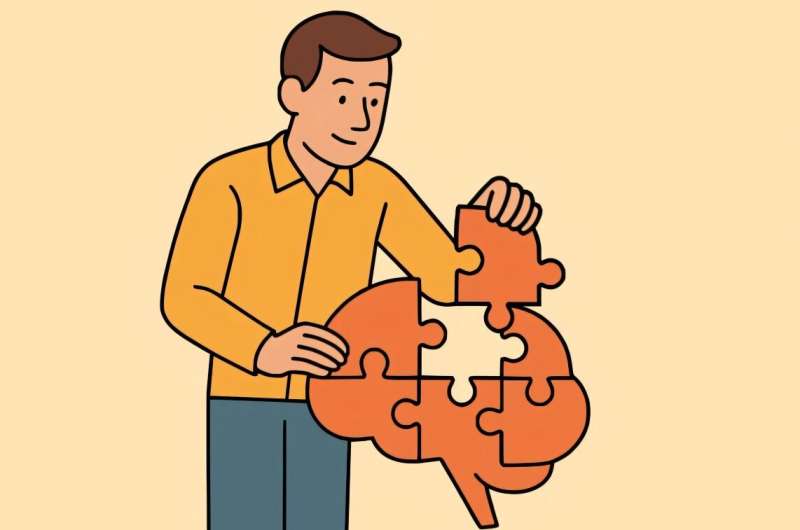
What's the best way to learn a puzzle or solve a problem? Consider a task where you must predict the weather from mysterious symbols. Should you try to interpret all the clues at once, or master them one by one? A new study published in the journal Nature Human Behaviour tested this head-to-head.
How the brain switches between older and newer memories Medical Express - May 14, 2026

As humans and other animals experience new things, their brains continuously update their memory of past events. These updates allow them to adapt to changing environments, all while preserving older memories that could still help them to make decisions in some situations. Many past neuroscience studies have investigated the neural circuits involved in the encoding and retrieval of memories. However, the mechanisms via which it decides whether to retrieve older or newly updated memories remain poorly understood.
Psychologists Say People Who Still Use Paper Calendars Aren't Stubborn or Old-Fashioned. Their Brains Are Wired to Process Information in a Richer Way Daily Galaxy - May 10, 2026
Handwriting on paper doesn't just feel different. It forces the brain into a deeper kind of encoding that screens cannot trigger, and the difference shows up on MRI scans within an hour. A pen presses grooves into a paper calendar while someone scribbles down an appointment. An hour later, that person recalls the details faster and with greater accuracy than someone who typed the same information into a smartphone. University of Tokyo neuroscientists have now captured exactly why. Writing on physical paper activates memory-related brain regions more intensely than using a tablet or smartphone. During later recall, functional magnetic resonance imaging picked up significantly stronger responses in the hippocampus, language processing areas, and visual cortices among participants who had used paper.
Alzheimer's Symptoms May Start Outside the Brain, Study Finds SciTech Daily - April 21, 2026

Researchers report that certain movement-related symptoms of Alzheimer’s disease may originate in the peripheral nervous system rather than the brain.
Researchers have identified patterns of neuropsychiatric symptoms that may reveal when Alzheimer's disease occurs alongside another lesser-understood brain disorder. SciTech Daily - April 21, 2026

Many people diagnosed with Alzheimer’s disease are not dealing with a single condition. A growing body of research shows that multiple brain diseases often develop at the same time, quietly shaping symptoms in ways that are easy to miss. One of these conditions, frontotemporal lobar degeneration (FTLD), is especially difficult to identify during life and has traditionally been confirmed only after death. Researchers now report that patterns of behavior and mood could help doctors recognize when Alzheimer’s and FTLD are occurring together, offering a potential path toward earlier and more accurate diagnosis.
What if Your Memories Never Happened? Physicists Take a New Look at the Boltzmann Brain Paradox SciTech Daily - April 17, 2026
Boltzmann Brain Thought Experiment

We trust our memories because they feel natural, and we trust time because it seems to flow in only one direction. Physics, however, allows for stranger possibilities that challenge this intuition. What if your entire past never actually happened? That unsettling idea is at the center of a new study. They revisit the 'Boltzmann brain hypothesis', a thought experiment that has challenged physicists for over a century. Named after 19th century physicist Ludwig Boltzmann, the idea comes from his work on entropy, a measure of disorder that tends to increase over time according to the second law of thermodynamics.
Scientists Uncover Brain Changes That Link Pain to Depression SciTech Daily - April 13, 2026

Researchers have identified a brain mechanism that may determine why chronic pain leads to depression in some individuals but not others. The findings suggest the brain initially adapts to persistent pain, but subtle changes over time can shift this balance toward emotional decline
Scientists discover hidden brain switch that tells you to stop eating Science Daily - April 7, 2026

A surprising new discovery reveals that your brain may rely on more than just neurons to decide when you're full. Your brain's 'stop eating' signal may come from an unexpected source. Researchers found that astrocytes once thought to just support neurons actually play a key role in controlling appetite. After a meal, glucose triggers tanycytes, which send signals to astrocytes that then activate fullness neurons. This newly discovered pathway could lead to innovative treatments for obesity and eating disorders.
Neuroscientists Discover That Adult Brain Is Filled With Millions of Silent Synapses SciTech Daily - March 29, 2026

Scientists have uncovered a surprisingly large reserve of silent synapses in the adult brain - unused neural connections that can be rapidly activated to store new memories.
Brain 'Stretching' Is The Secret to Protecting Your Mind From Dementia Science Alert - March 10, 2026

One recent study linked a lower risk of Alzheimer's disease and cognitive decline to lifelong learning, meaning intellectually stimulating experiences - reading and writing, learning another language, playing chess, solving puzzles, going to museums - from childhood into retirement.
Expert Reveals 3 Simple Ways to Stop Constant Sounds Hijacking Your Brain Science Alert - March 10, 2026

For most of human existence, listening was closely tied to moments that carried meaning, emotion, or survival. Nature supplied the backdrop - wind, water, animals - and music surfaced in hunting rituals, healing ceremonies, and communal celebrations. That balance began to shift with the industrial revolution, and the arrival of many loud, unnatural sounds.
A Migraine Is Not Just a Headache: The 4 Distinct Stages Explained Science Alert - March 1, 2026

A migraine attack is not just a "bad headache". Migraine is a debilitating neurological condition which can cause nausea, vomiting, and sensitivity to light or sound, in addition to severe headaches. Migraine affects roughly five million Australians, but few people understand the different stages of a migraine attack. Knowing the four distinct phases can help you recognize the symptoms and manage pain at each stage.
Scientists Reveal the Brain's Hidden Map of Thought SciTech Daily - February 18, 2026

Researchers have demonstrated that the brain's connection patterns can predict the function of each region across a wide range of cognitive tasks. This discovery strengthens the idea that how the brain is wired determines how it works.
That mouth-drying bite from cocoa or berries may be a hidden brain trigger. By stimulating sensory nerves, flavanols can activate attention, memory, and stress-response systems - much like a mild workout for the brain. Science Daily - February 7, 2026

New research suggests the astringent sensation caused by flavanols could act as a direct signal to the brain, triggering effects similar to a mild workout for the nervous system. In mouse experiments, flavanol intake boosted activity, curiosity, learning, and memory despite these compounds barely entering the bloodstream. The key appears to be sensory stimulation: the taste itself activates brain pathways linked to attention, motivation, and stress response, lighting up regions involved in arousal and memory.
Scientists May Have Found How the Brain Becomes One Intelligent System Science Daily - January 28, 2026

New research suggests intelligence arises not from a single brain region, but from how networks across the brain work together as an integrated system. Neuroscientists often describe the brain as a collection of specialist teams. Skills like attention, perception, memory, language, and thinking have been linked to different networks, and research has typically zoomed in on one network at a time.
Episodic Memory - 10,000 Brain Scans Reveal Why Your Memory Gets Worse With Age Science Alert - January 28, 2026
Our episodic memory - the ability to recall past events and experiences – is known to decline as we age. Exactly how and why has remained something of a mystery, and a recent study goes some way towards solving it.
New Brain Study Challenges Decades of Memory Research SciTech Daily - January 27, 2026

Brain scans show that recalling facts and reliving past experiences activate the same brain regions. The result overturns long-standing ideas about memory and suggests the brain treats different kinds of remembering more alike than expected.
Several Psychiatric Disorders Share The Same Root Cause, Study Suggests Science Alert - January 27, 2026
Researchers have discovered that eight different psychiatric conditions share a common genetic basis. Many of these variants remain active for extended periods, potentially influencing multiple developmental stages - and offering new targets for treatments that could address several disorders at once.
Your brain does something surprising when you don’t sleep Science Daily - January 20, 2026
When you’re exhausted, your brain may choose to clean itself instead of paying attention. When you’re short on sleep and your focus suddenly drifts, your brain may be briefly slipping into cleanup mode. Scientists discovered that these attention lapses coincide with waves of fluid washing through the brain, a process that usually happens during sleep. It’s the brain’s way of compensating for missed rest. Unfortunately, that internal cleaning comes at the cost of momentary mental shutdowns.
Your Brain Doesn't Magically Finish Developing at 25. Here's What Actually Happens SciTech Daily - January 16, 2026
Brain development does not end at 25 but continues into the early 30s as neural networks become more efficient and specialized.
A new study reveals that alpha brain waves help the brain decide what belongs to your body Science Daily - January 14, 2026
A study explains how rhythmic brain activity known as alpha oscillations helps the brain separate the body from the outside world. The research provides new insight into how the brain combines information from different senses to maintain a stable feeling of bodily self.
The brain has a hidden language and scientists just found it Science Daily - December 30, 2025

Scientists can finally hear the brain’s quietest messages, revealing how neurons decide when to fire.
Empathy: Researchers found eight body-like maps in the visual cortex that organize what we see in the same way the brain organizes touch. Science Daily - December 23, 2025
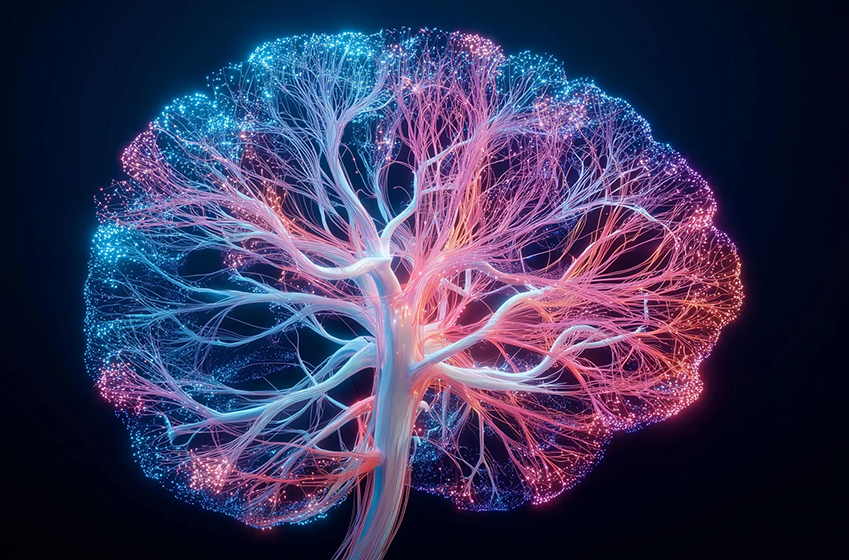
These maps help us instantly understand actions, emotions, and intentions in others. The discovery sheds light on human empathy and opens doors for new brain-based therapies and AI systems that better understand the body.
'Zap-and-freeze' snapshots catch brain cells in the act of learning Medical Express - December 17, 2025
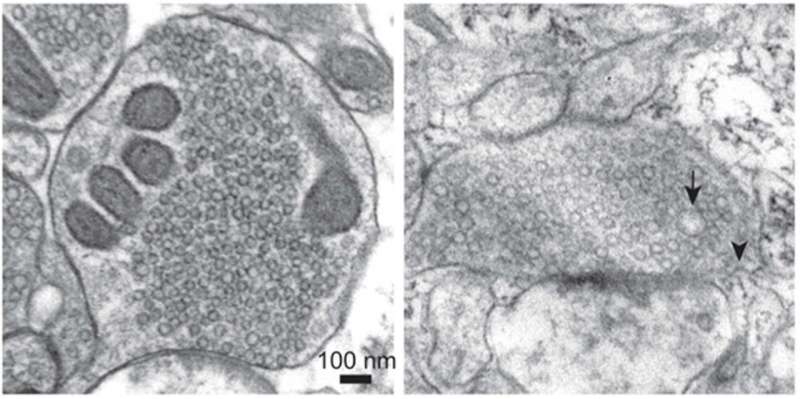
The so-called zap-and-freeze technique, which allows processes of signal transmission between nerve cells to be visualized within milliseconds, has now been successfully applied for the first time to acute brain slices from both mice and humans. This will make it possible in the future to investigate how nerve cells adapt their signal transmission while they are active - in other words, how the release of neurotransmitters and the plasticity of nerve cell processes, so-called synapses, change during learning.
Disappointment alters brain chemistry and behavior, mouse study shows Medical Express - December 17, 2025
The brain mechanisms behind changing behaviors have remained elusive, because adapting to a given scenario is very neurologically complex. It requires interconnected activity across multiple areas of the brain.
ADHD Isn't Just a Deficit: New Study Reveals Powerful Psychological Strengths SciTech Daily - December 16, 2025
Adults with ADHD who understand and apply their personal strengths experience better well-being and fewer mental health difficulties.
The brain switch that could rewrite how we treat mental illness Science Daily - December 13, 2025
Research into stress, addiction, and resilience has revealed biological mechanisms that help explain why some people recover quickly while others struggle. These discoveries are shifting mental health science toward approaches that enhance natural strengths.
New study reveals how the brain measures distance Medical Express - December 17, 2025

Whether you are heading to bed or seeking a midnight snack, you don't need to turn on the lights to know where you are as you walk through your house at night. This hidden skill comes from a remarkable ability called path integration: your brain constantly tallies your steps and turns, allowing you to mentally track your position like a personal GPS. You're building a map by tracking movement, not sight.
Breakthrough brain discovery reveals a natural way to relieve pain. Scientists uncovered a brainstem pain map that could revolutionize pain relief without opioids Science Daily - November 4, 2025
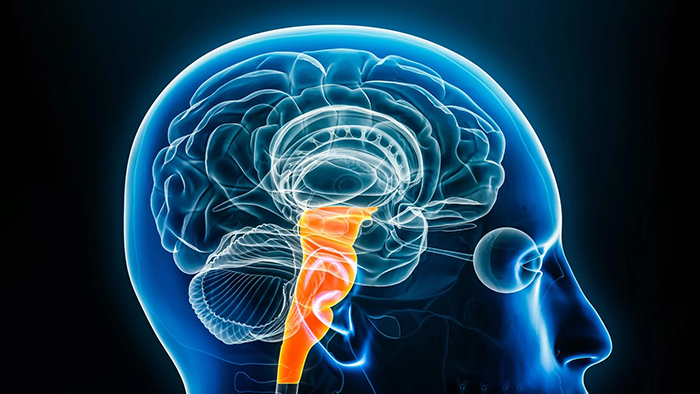
Using powerful 7-Tesla brain imaging, researchers mapped how the brainstem manages pain differently across the body. They discovered that distinct regions activate for facial versus limb pain, showing the brain's built-in precision pain control system. The findings could lead to targeted, non-opioid treatments that use cannabinoid mechanisms instead of opioids, offering safer pain relief options.
Scientists reverse anxiety by rebalancing the brain Science Daily - November 4, 2025
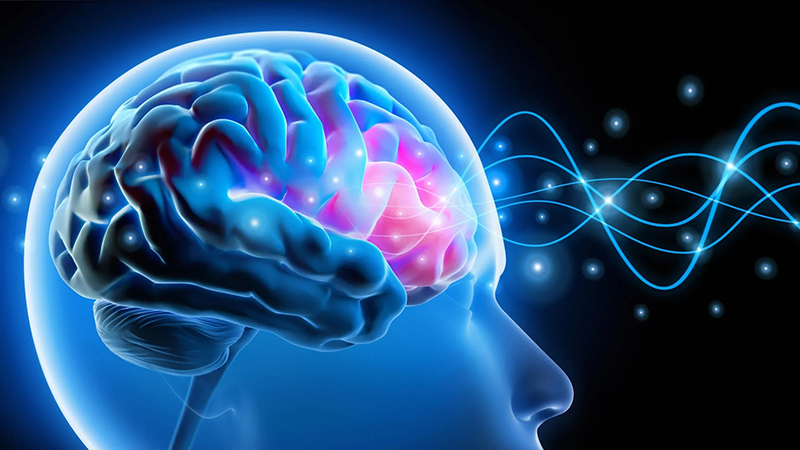
Researchers have discovered a specific set of neurons in the amygdala that can trigger anxiety and social deficits when overactive. By restoring the excitability balance in this brain region, they successfully reversed these symptoms in mice. The results point toward targeted neural therapies for emotional disorders. This finding could reshape how anxiety and depression are treated at the circuit level.
MIT scientists discover how the brain spins back into focus Science Daily - November 3, 2025

Researchers at MIT’s Picower Institute found that rotating waves of brain activity help restore focus after distractions. In animal tests, these rotations predicted performance: full rotations meant full recovery, while incomplete ones led to errors. The brain needed time to complete the cycle, revealing a biological rhythm of cognitive recovery.
A new study reveals why time seems to move faster the older we get Live Science - October 21, 2025
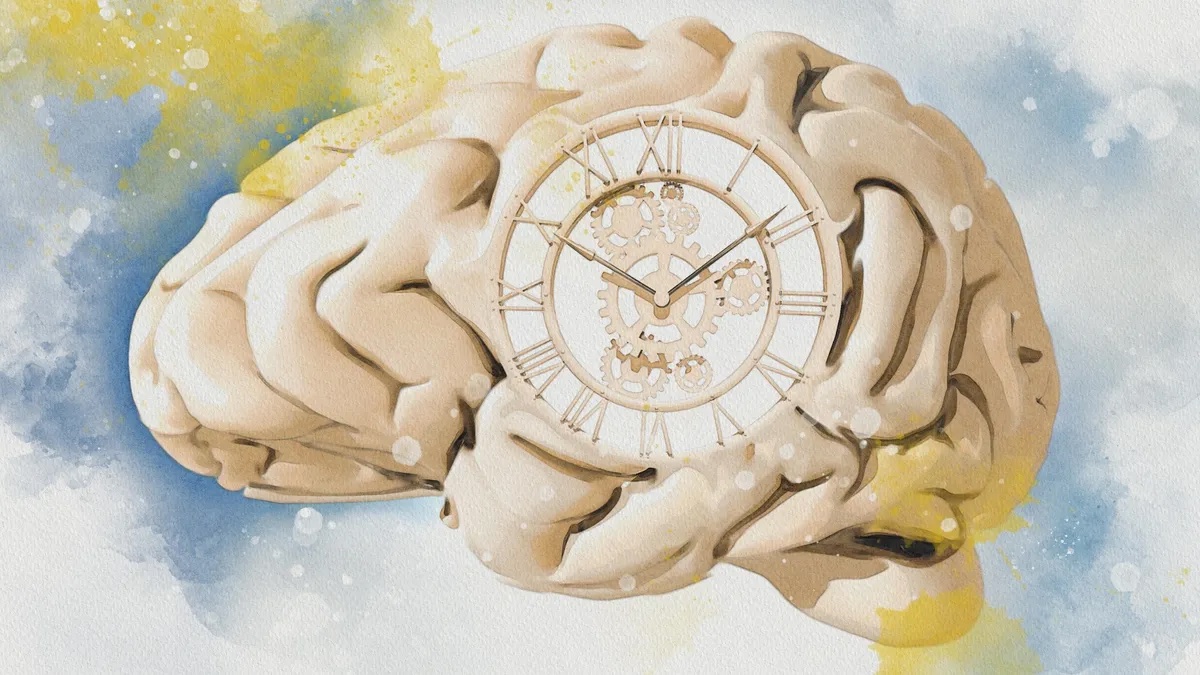
An Expert Reveals How to Keep Your Brain Sharp as You Age Science Alert - October 18, 2025
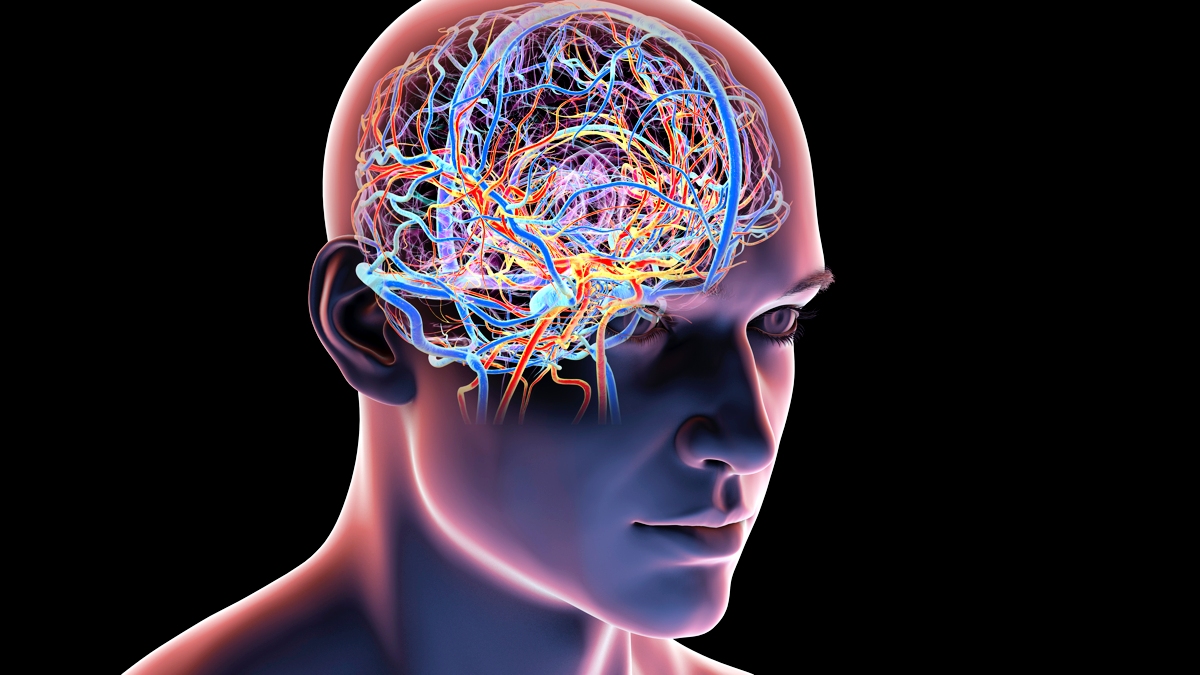
Education has long been considered the main indicator of cognitive reserve. It reflects prolonged exposure to intellectually stimulating activities that promote the development of effective brain networks.
Researchers Discover the Cell's Secret Anti-Aging Mechanism SciTech Daily - October 18, 2025

Hutchinson-Gilford progeria syndrome (HGPS) is a rare genetic condition that causes rapid aging and a range of visible and internal symptoms. Individuals with HGPS often experience early skin wrinkling, reduced skin elasticity, loss of body fat beneath the skin, hair loss, hardening of the arteries (atherosclerosis), and insulin resistance.
Study Reveals The Surprising Age at Which Your Brain Reaches Its Peak - Between Ages 55 - 60 Science Alert - October 18, 2025
for many of us, overall psychological functioning actually peaks between ages 55 and 60.
Study Reveals Brain System That Repairs Your Body While You Sleep Science Alert - September 23, 2025

When we sleep, the body releases its 'growth hormone', building up and repairing muscles and bones – but the details of how and why have been something of a mystery, until now. Through a close analysis of brain circuitry in mice, researchers have found special mechanisms and feedback loops that regulate growth hormone release while we sleep.
Scientists just found the brain's secret GPS system Science Daily - August 20, 2025

Researchers used neuroimaging and virtual reality to identify two brain regions that help people maintain their sense of direction while moving around
Pseudoscience Explanation: The brain is a computer that observes the world through binary code and is rebooting.
When your mind goes 'blank,' your brain activity resembles deep sleep, scans reveal Live Science - August 3, 2025
Neuroscientists think moments of "mind blanking" could be a way for the brain to protect itself. You look up from your phone screen and suddenly realize you weren't thinking about anything. It's not a lapse in memory or a daydream; it's literally a moment when you're not thinking of anything at all. Neuroscientists have a term for it - mind blanking - which they define as a brief, waking state when conscious thought simply stops. Scientists used to think our waking minds were always generating thoughts, but recent research shows that's not the case. Mind blanking is now recognized as a distinct conscious state associated with changes in arousal, which in neuroscience refers to alertness and responsiveness to stimuli. Studying this curious state could shed light on how consciousness works, some researchers think.
https://www.sciencealert.com/switching-off-for-a-moment-lets-your-brain-do-something-wonderful Science Alert - August 6, 2025
Every day, we're faced with constant opportunities for stimulation. With 24/7 access to news feeds, emails and social media, many of us find ourselves scrolling endlessly, chasing our next hit of dopamine. But these habits are fueling our stress - and our brains are begging for a break. What our brains really need is some much needed time off from concentrating. By not consciously focusing on anything and allowing the mind to drift, this can reduce stress and improve cognitive sharpness.
Memories aren't static in the brain - they 'drift' over time Live Science - July 29, 2025

Memories of places "drift" across the brain as they are carried by different sets of neurons over time, a new study in mice suggests. Historically, neuroscientists thought that memories of locations and features of our immediate environment were encoded by specific "place cells." These place cells, located in a key memory center called the hippocampus, light up when a mammal enters the specific environment they correspond to - say, the door to a home or a waterfall on a hiking trail. It was thought that the activation of these place cells acted as a kind of map in the brain by encoding lasting memories of specific places as well as enabling navigation.
Psychology 101: When you have emotional problems you burn out at a younger age. Depression and anxiety kill.
The brain is the gatekeeper of longevity and your DNA programming.
Your Brain's Youthfulness (or Lack of It) Could Predict How Long You Live Science Alert - July 11, 2025

The brain is the gatekeeper of longevity.
Can adults make new brain cells? New study may finally settle one of neuroscience's greatest debates Live Science - July 4, 2025

Scientists say they have very strong evidence that the adult human brain is capable of making new neurons, a point of ongoing controversy in neuroscience.
How diverse brain cells reach a decision together Medical Express - June 25, 2025

The researchers found that while individual neurons have perplexingly complex responses, their activity is shaped by a shared structure that ultimately guides the brain toward a unified choice.
This is sometimes referred to as someone's aura. I know when someone has died when shown a picture of the person in during a reading and can no longer 'see' their aura.
Your Brain Emits a Secret Light That Scientists Are Trying to Read Science Alert - June 18, 2025

Going all the way back to 1923, a number of studies have found humans luminesce in frequencies that would be visible if they weren't too faint for us to actually see. From the moment of conception until we shuffle off this mortal coil, we literally shine.
How the brain deploys different reasoning strategies to tackle challenging mental tasks Medical Express - June 11, 2025

The human brain is very good at solving complicated problems. One reason for that is that humans can break problems apart into manageable subtasks that are easy to solve one at a time. This allows us to complete a daily task like going out for coffee by breaking it into steps: getting out of our office building, navigating to the coffee shop, and once there, obtaining the coffee. This strategy helps us to handle obstacles easily. For example, if the elevator is broken, we can revise how we get out of the building without changing the other steps.
Fewer than 500 neurons are associated with the suppression of binge drinking, new research finds Medical Express - June 11, 2025

The hope is these findings provide insights into binge-drinking behavior and alcohol dependency that may lead to new therapeutic targets.
Tracing brain circuits that tell us when to eat - and when to stop Medical Express - June 11, 2025

Scientists know the stomach talks to the brain, but two new studies from Rutgers Health researchers suggest the conversation is really a tug-of-war, with one side urging another bite, the other signaling "enough."
Tiny Brain Cell Cluster Found to Drive Obesity and Overeating. A tiny subset of PNOC neurons in the hypothalamus drives overeating and weight gain. Neuroscience News - June 1, 2025

Scientists Flip the Brain's 'Fat-Off' Switch Sci Tech Daily - June 1, 2025
Scientists Discover a Trait in Speech That Foreshadows Cognitive Decline - Difficulty Finding the Right Word Science Alert - March 11, 2025
Many of us will experience "lethologica", or difficulty finding words, in everyday life. And it usually becomes more prominent with age.
Several Psychiatric Disorders Share The Same Root Cause, Study Reveals Science Alert - February 9, 2025

Researchers recently discovered that eight different psychiatric conditions share a common genetic basis. They found many are active for longer during brain development and potentially impact multiple stages, suggesting they could be new targets to treat multiple conditions.
Intermittent calorie restriction leads to significant changes both in the gut and the brain, which may open up new options for maintaining a healthy weight Science Alert - November 21, 2024

Researchers from China studied 25 volunteers classed as obese over a period of 62 days, during which they took part in an intermittent energy restriction (IER) program - a regime that involves careful control of calorie intake and relative fasting on some days. Not only did the participants in the study lose weight - 7.6 kilograms (16.8 pounds) or 7.8 percent of their body weight on average – there was also evidence of shifts in the activity of obesity-related regions of the brain, and in the make-up of gut bacteria.
Scientists have identified a unique form of cell messaging occurring in the human brain Science Alert - November 19, 2024

The discovery hints that our brains might be even more powerful units of computation than we realized. Brains - especially those of the human variety - are often compared to computers. The analogy has its limits, but on some levels they perform tasks in similar ways.
Study reveals how the brain divides days into 'movie scenes' Live Science - October 9, 2024
Similar to how a movie is divided into scenes, our brains organize our memories of each day into segments - separating when we went out to lunch from when we came home from work, for instance. But in movies, directors and editors decide when one scene ends and a new one begins. So how does the brain choose?
Scientists Mapped The Human Brain's Sewage System For The First Time Science Alert - October 9, 2024
The inner workings of our brain's 'sewage system' are finally coming to light after years of speculation. Deep within the crevices of five human brains, scientists have, for the very first time, imaged the dynamic intricacies of an underlying plumbing network – previously seen in mice and only hypothesized in our own species. The findings support the existence of a glymphatic system, which scientists first identified in the brains of mice in 2012. This system carries cerebrospinal fluid (CSF), which bathes the outside of the brain, into the interior, delivering nutrients and removing waste products – such as proteins that form clumps in Alzheimer's disease.
How do you see pictures in your brain? Live Science - September 30, 2024
Mental imagery is the ability to visualize things and scenarios in your mind, without actual physical input. For example, when you think about your best friends, you may automatically picture their faces in your head without actually seeing them in front of you. When you daydream about an upcoming vacation, you may see yourself on the sunny beach. Scientists believe your primary visual cortex, located in the back of your brain, is involved in internal visualization. This is the same part of the brain that processes visual information from the eyes and that lets you see the world around you. Another brain region, located in the very front of the brain, also contributes to mental imagery. This structure, called the prefrontal cortex, is in charge of executive functions - a group of high-level mental skills that allow you to concentrate, plan, organize and reason.
Feeling Happy And Sad? Here's How Our Brains Manage Mixed Emotions Science Alert - September 25, 2024
A research group found that volunteers' physiological responses - such as heart rate and skin conductance - display unique patterns during experiences that are both disgusting and funny, compared with either category separately.
The Human Brain's Complexity Verges on The Brink of Chaos, Physicists Say Science Alert - June 17, 2024

Two physicists have now used statistical physics to explain the complexity seen in a highly detailed 3D map of a human brain. At a cellular level, the high-level hardware encased in our skulls is at a structural sweet spot closely approaching a phase transition. A common feature of this critical point is the branch-like structure of neurons, known as fractal patterns.
What's going on in our brains when we plan? Study uncovers how mental simulations rely on stored memories Medical Express - June 7, 2024

In pausing to think before making an important decision, we may imagine the potential outcomes of different choices we could make. While this "mental simulation" is central to how we plan and make decisions in everyday life, how the brain works to accomplish this is not well understood.
The human brain has been shrinking and no-one quite knows why BBC - May 18, 2024
The brains of modern humans are around 13% smaller than those of Homo sapiens who lived 100,000 years ago. Is it because of the changing climate, or some of the skills we've picked up? Traditionally our "big brain" is thought to be what sets our species apart from other animals. Our capacity for thought and innovation allowed us to create the first art, invent the wheel, and even land on the Moon.
Microbes Found in Healthy Brains, Raising Questions Science Alert - May 16, 2024

The microbes that live in your gut are having their moment in the sun. Even if you haven't been following the research, you can't have missed the hundreds of adverts for probiotics and prebiotics, aimed at selling you products to keep your microbiome healthy.
Google and Harvard unveil most detailed ever map of human brain CNN - May 15, 2024
Frozen human brain tissue can now be revived without damage New Scientist - May 15, 2024

A new technique has allowed scientists to freeze human brain tissue so that it regains normal function after thawing, potentially opening the door to improved ways of studying neurological conditions. Brain tissue doesn't usually survive freezing and thawing, a problem that has significantly hindered medical research.
If you think you can't focus for long, you're right CNN - May 15, 2024
Measuring the human attention span ... If we look at work in terms of switching projects, as opposed to the micro view of switching screens, we find people spend about 10 1/2 minutes in any work project before being interrupted - internally or by someone else - and then switch to another work project.
A minimal cognitive architecture reproduces control of human decision-making processes Medical Express - May 14, 2024

Neuroscientists and psychologists have been trying to pinpoint the processes behind human decision-making for decades. While their efforts led to numerous interesting insights, the intricacies of complex decision-making remain poorly understood. Humans do not always invest their maximum mental efforts when making decisions. This can lead to various widely documented errors and cognitive biases (i.e., recurring deviations from rational thinking).
Writing By Hand Is Surprisingly Important For Thinking And Learning IFL Science - May 14, 2024
When was the last time you wrote something down by hand? For many of us, writing by hand may have become an infrequent - if not abandoned - practice. The ability to make notes on phones or to type out ideas with keyboards is generally quicker and easier, but is the value of writing by hand gone for good? Not according to a new body of research exploring the cognitive benefits of pen and paper.
Scientists Confirm Exercise Slows Down The Perception of Time Science Alert - May 12, 2024

A 10-minute session on the bike might sound like an achievable goal before the timer starts, but when your body gets going, those seconds are about to feel longer than normal, according to a series of new experiments.
A Neuroscientist Explains How Your Brain Actually Thinks Science Alert - May 12, 2024
Have you ever wondered how your brain creates thoughts or why something randomly popped into your head? It may seem like magic – but actually the brain is like a supercomputer inside your head that helps you think, learn and make decisions.
An Unexpected Function Discovered Inside The 'Little Brain' at The Back of Your Head. The cerebellum comprises just 10 percent of the entire brain's mass Science Alert - April 29, 2024

FU Orionis, a double star system, first caught astronomers' attention in 1936 when the central star suddenly became 1,000 times brighter than usual. This behavior, expected from dying stars, had never been seen in a young star like FU Orionis.
Younger Generations Have Larger Brains. Is That Healthier? Science Alert - March 27, 2024
The size of the human brain may be gradually increasing over time, and that could reduce the risk of dementia in younger generations, according to new research. The study imaged the brains of more than 3,000 Americans, between the ages of 55 and 65, and found that those born in the 1970s have a 6.6 percent greater overall brain volume than those born in the 1930s. Members of Generation X also had a nearly 8 percent greater volume of white matter and an almost 15 percent greater volume of gray matter surface area than the members of the Silent Generation. One specific part of the brain, called the hippocampus, which plays a major role in memory and learning, expanded by 5.7 percent in volume over the successive generations studied. This was true even after considering other contributing factors like height, age, and sex.
World's First Neuralink User Plays Chess Via Thought After Brain Implant Science Alert - March 22, 2024
Recent study suggests that it's the speed of speech, rather than the difficulty in finding words that is a more accurate indicator of brain health in older adults Science Alert - March 15, 2024

The researchers asked 125 healthy adults, aged 18 to 90, to describe a scene in detail. Recordings of these descriptions were subsequently analyzed by artificial intelligence (AI) software to extract features such as speed of talking, duration of pauses between words, and the variety of words used. Participants also completed a standard set of tests that measure concentration, thinking speed, and the ability to plan and carry out tasks. Age-related decline in these "executive" abilities was closely linked to the pace of a person's everyday speech, suggesting a broader decline than just difficulty in finding the right word. A novel aspect of this study was the use of a "picture-word interference task", a clever task designed to separate the two steps of naming an object: finding the right word and instructing the mouth on how to say it out loud.
Breakthrough Therapy Obliterates Deadly Brain Tumor in Days Science Alert - March 15, 2024
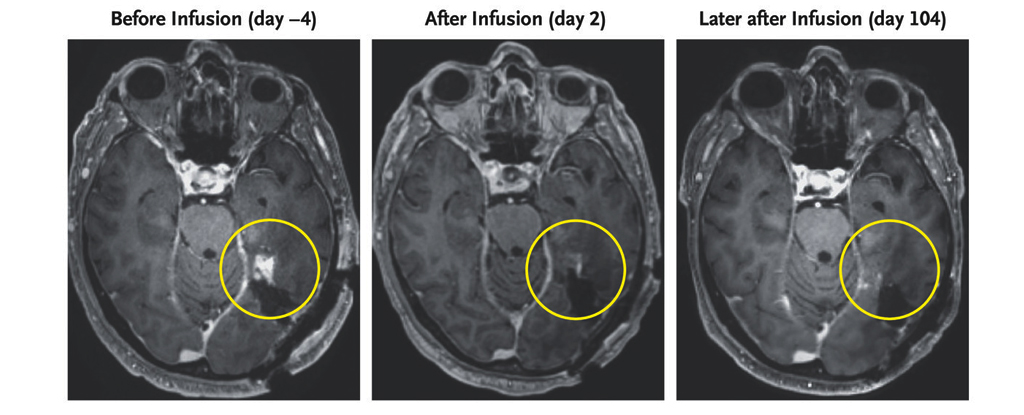
Brain scans of a 72-year-old man diagnosed with a highly aggressive form of cancer known as a glioblastoma have revealed a remarkable regression in his tumor's size within days of receiving an infusion of an innovative new treatment.
Scientists Discovered a 'Fear Switch' in The Brain, And How to Turn It Off Science Alert - March 15, 2024

There are times when fear isn't an appropriate reaction. In cases such as anxiety disorders and stress disorders, the fear response can become disproportionate to the situation or environment of the individual, seriously impeding mental health and quality of life.
Expert Reveals What Intermittent Fasting Could Be Doing to Your Brain Science Alert - March 15, 2024
Intermittent fasting has become a popular dietary approach to help people lose or manage their weight. It has also been promoted as a way to reset metabolism, control chronic disease, slow ageing and improve overall health.
Aging And Schizophrenia Share Striking Similarities in 2 Types of Brain Cells Science Alert - March 14, 2024
US researchers examined gene expression in more than a million brain cells collected post-mortem from 191 donors. Those with schizophrenia and older adults were found to have a comparatively reduced expression of specific genes in both neurons and supporting cells called astrocytes. These cell types are not acting as independent entities, but have really close coordination. The scientists named these synchronized changes – involved in communication hubs called synapses - the Synaptic Neuron and Astrocyte Program (SNAP).
Brain-Imaging Experiment Reveals The Secret Behind Creative Flow Science Alert - March 10, 2024
Getting into 'the zone' when being creative can be tricky, even if you've been there before. People strive for this famous mental state in a wide range of endeavors, many hoping for even just a few moments of fun, effortless productivity. Also known as 'flow,' the state of mind is a real psychological phenomenon, albeit still a poorly understood one. A new study by researchers from Drexel University in the US sheds light on what's happening inside a human brain during flow – and provides insight on how to achieve it.
Ultrasound Can Probe Deep Into The Brain to Relieve Pain Science Alert - February 25, 2024
Treating pain in the brain isn't easy – what with it being essential for everything we think and do - but a newly developed, non-invasive method of using ultrasound is showing particular promise. Researchers used tightly focused beams of ultrasound, aimed at one particular part of the brain, to reduce the perception of pain and some of its related effects (such as heart rate changes). While this approach is still in the early stages, the team is hopeful that it can be developed further as a way of manipulating the brain and soothing our bodies, especially for those experiencing chronic pain.
'Time Cells' in Human Brain Encode The Flow of Time, Study Finds Science Alert - December 16, 2023
How does the human brain keep track of the order of events in a sequence? Research suggests that 'time cells' - neurons in the hippocampus thought to represent temporal information - could be the glue that sticks our memories together in the right sequence so that we can properly recall the correct order in which things happened.
New math approach provides insight into memory formation PhysOrg - December 5, 2023
The simple activity of walking through a room jumpstarts the neurons in the human brain. An explosion of electrochemical events or "neuronal spikes" appears at various times during the action. These spikes in activity, otherwise known as action potentials, are electrical impulses that occur when neurons communicate with one another
Most detailed human brain map ever contains 3,300 cell types Live Science - October 14, 2023
Scientists just unveiled the largest and most detailed "atlas" of the human brain ever created. It details the arrangement and inner workings of 3,300 types of brain cells, only a fraction of which were previously known to science. dvances and Science Translational Medicine.
Brain cells, interrupted: How some genes may cause autism, epilepsy and schizophrenia - October 2, 2023
A team of researchers has developed a new way to study how genes may cause autism and other neuro-developmental disorders: by growing tiny brain-like structures in the lab and tweaking their DNA. These "assembloids," could one day help researchers develop targeted treatments for autism spectrum disorder, intellectual disability, schizophrenia, and epilepsy.
Part of Your Brain Acts Like a Pause Button That Freezes Your Whole Body Science Alert - August 13, 2023
Deeply focused, our bodies can enter a literal state of suspended animation. Our limbs freeze. Breathing ceases. Heart rate slows. The Universe constricts until there is nothing but the task at hand. A selection of cells in a part of the brainstem called the pedunculopontine nucleus (PPN) could be responsible for this 'freeze frame' effect. The discovery not only helps us map the location of tissues that contribute to the more zen-like properties of the human mind, it could help us better understand the progress of symptoms in neurodegenerative conditions like Parkinson's disease, potentially leading to better forms of therapy.
Your Pupils Can Reveal a Hidden Signal About Your Brain Function Science Alert - August 12, 2023
The way your pupils react to light exercise could reveal whether you're getting one of the key benefits of movement – the cognitive boost linked to improved mood and enhanced executive function. Results showed that the more people's pupils dilated during light exercise - in other words, the bigger they got - the better the cognitive boost they received.
Mysterious Spiral-Shaped Signals Detected in The Human Brain Science Alert - June 30, 2023
The brain's intricate neural circuitry appears to have patterns of activity swirling on the surface. The cortex is the wrinkled outer layer of neuron-dense tissue that folds into the two hemispheres of our brain, responsible for computing complex cognitive functions such as language and storing memories. Functional MRI scans produce imaging data that shows when and where the brain 'lights up' in a burst of activity, flooded with oxygenated blood. The spiraling patterns identified in the data resemble kaleidoscopic waves or, when simplified into directional vortices, circular pressure lines on a weather map. These spiral patterns exhibit intricate and complex dynamics, moving across the brain's surface while rotating around central points known as phase singularities.
Conscious Activity Seen In Dying Brains May Explain Near-Death Experiences IFL Science - May 1, 2023
Researchers have observed the brains of dying patients going down in a blaze of neural glory, indicating that the final throes of life may be considerably more colorful than a mere fade to black. Despite their comatose state, some of the perishing participants displayed brain activity that is associated with consciousness during their last moments, all of which may explain the ethereal experiences often reported by heart attack survivors.
Mysterious Surge of Activity Detected in The Brains of Dying People Science Alert - May 1, 2023
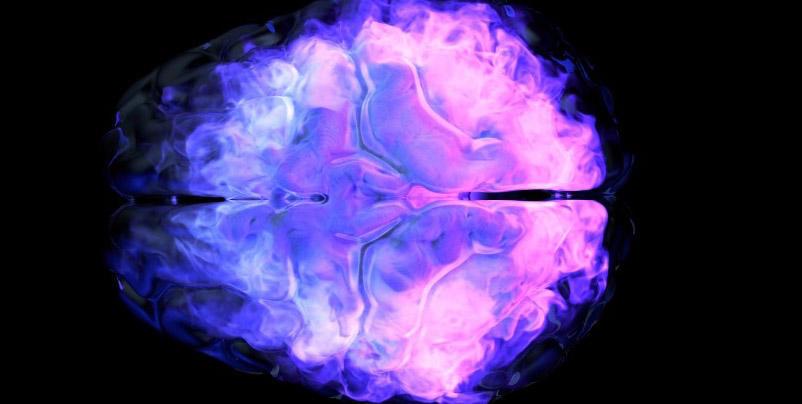
Scientists from the University of Michigan in the US have detected a surge of activity in the brains of two people as they transitioned into death, with the phenomenon similar to spikes of brain activity seen previously in animals whose hearts had stopped beating.
What Happens To Your Brain In A "Flow State" - engrossed in a task that you just lose yourself in it? How You Can Achieve It IFL Science - April 29, 2023
Despite that somewhat vague-sounding origin, today, flow is much more tightly understood. It’s not just a state of effortless focus – as scientists have learned in recent years, it actually comes with several observable changes in the brain. Underneath the flow state is a complicated mass of neurobiology.
A First-of-Its-Kind Signal Has Been Detected in The Human Brain Science Alert - April 19, 2023
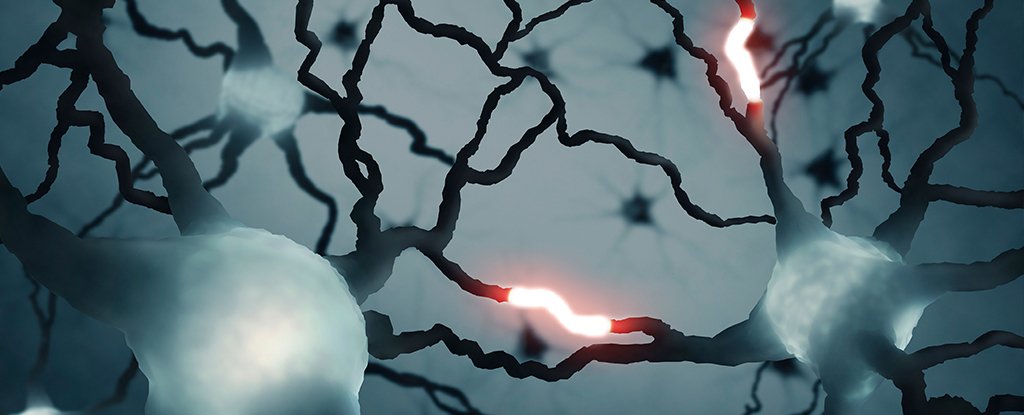
Scientists have recently identified a unique form of cell messaging occurring in the human brain that's not been seen before. Excitingly, the discovery hints that our brains might be even more powerful units of computation than we realized.
'Muscle memories' get 'zipped and unzipped' in the brain, like computer files Live Science - February 23, 2023
Tapping into your "muscle memory" to tie your shoes or play an instrument may feel automatic - but to execute these learned motions, the brain erupts into a flurry of activity, rapidly "unzipping" and "zipping" all the key information about the movement being performed, a new study suggests.
Some People's Brains Are Wrinklier Than Others, And Now We Know Why - a condition that affects normal brain development called Polymicrogyria (PMG) Science Alert - January 21, 2023
Polymicrogyria comes in many forms, with localized or widespread cortical thickening detectable on brain scans. Mutations in 30 genes and counting have been associated with the condition. But how any of those genetic errors, alone or in tandem, result in the overfolded brain tissue remains unclear. Many cases of PMG also lack an identifiable genetic cause. It's thought to have something to do with the tardy migration of cortical brain cells in early development that leads to a disordered cortex. The cortex is the outermost layer of the brain's two-lobed cerebrum, a thin sheet of gray matter composed of billions of cells.
Scientists Just Uncovered A Whole New Layer of Brain Anatomy Science Alert - January 5, 2023
The human brain is a ridiculously complex organ that doesn't give up its secrets easily. Thanks to advances in imaging technology, hidden forms and functions of neurological anatomy continue to emerge, from novel kinds of nerve cells to entirely new nubs of tissue.
Newfound 'protective shield' in the brain is like a watchtower for immune cells Live Science - January 5, 2023
A newfound "protective shield" in the brain helps clear waste from the organ and serves as a sentry tower for watchful immune cells that monitor for signs of infection, scientists reported in a study of mouse and human brains.
How the brain stores remote fear memory - a memory of traumatic events that occurred in the distant past Medical Express - December 23, 2022
A remote fear memory is a memory of traumatic events that occurred in the distant past - a few months to decades ago. The study demonstrates that remote fear memories formed in the distant past are permanently stored in connections between memory neurons in the prefrontal cortex, or PFC. It is the prefrontal memory circuits that are progressively strengthened after traumatic events and this strengthening plays a critical role in how fear memories mature to stabilized forms in the cerebral cortex for permanent storage.
Silent synapses are abundant in the adult brain. These immature connections may explain how the adult brain is able to form new memories and absorb new information Science Daily- December 1, 2022
Neuroscientists discovered that the adult brain contains millions of 'silent synapses' - immature connections between neurons that remain inactive until they're recruited to help form new memories. Until now, it was believed that silent synapses were present only during early development, when they help the brain learn the new information that it's exposed to early in life. However, the new MIT study revealed that in adult mice, about 30 percent of all synapses in the brain's cortex are silent. The existence of these silent synapses may help to explain how the adult brain is able to continually form new memories and learn new things without having to modify existing conventional synapses, the researchers say.
'Time Cells' in The Human Brain Encode The Flow of Time, Scientists Say Science Alert - October 27, 2022
How does the human brain keep track of the order of events in a sequence? Research suggests that 'time cells' - neurons in the hippocampus thought to represent temporal information - could be the glue that sticks our memories together in the right sequence so that we can properly recall the correct order in which things happened.
How does the brain store memories? Live Science - September 25, 2022
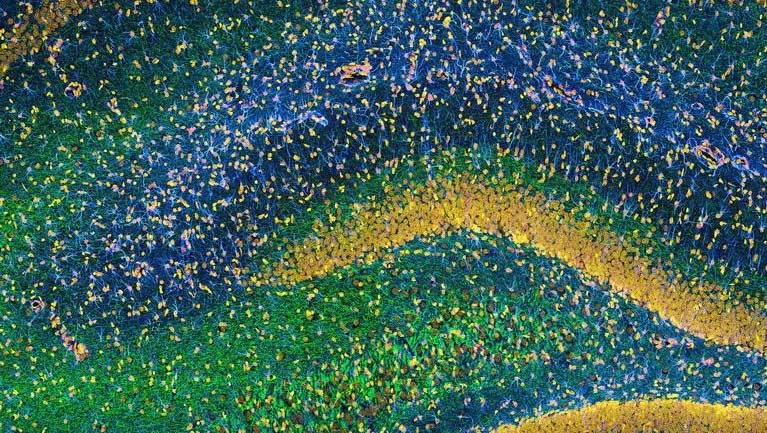
The simplest answer is that the human brain reshapes itself with each new memory. This happens through the actions of synapses, or the tiny gaps between brain cells. Brain cells, or neurons, communicate with each other through an elegant electrochemical system. A change in the electrical charge of one cell triggers the release of chemicals called neurotransmitters across synapses. The neurotransmitters are then taken up by the neuron on the other side of the gap, where they trigger electrical changes in that cell.
Looking at a Human Face Triggers Activity in Our Brains Unlike Any Other Object Science Alert - March 22, 2022
When the participants in an experiment looked at human faces, neurons fired and synchronized between the amygdala and the hippocampus in a specific pattern that was different to the results from the other stimuli - which the team interprets as evidence of how the brain handles memory encoding for important social information, distinct from other non-social objects.
There Are 'Secret' Tunnels Connecting Your Skull And The Brain Science Alert - March 17, 2022
Did you know you have tiny tunnels in your head? That's OK, no one else did either until recently! But that's exactly what a team of medical researchers confirmed in mice and humans in 2018 – tiny channels that connect skull bone marrow to the lining of the brain.
Scientists discover a brain circuit that triggers the execution of planned movement Science Daily - March 12, 2022
Planned movement is essential to our daily lives, and it often requires delayed execution. As children, we stood crouched and ready but waited for the shout of 'GO!' before sprinting from the starting line. As adults, we wait until the traffic light turns green before making a turn. New research explores how cues in our environment can trigger planned movement.
Scientists identify neurons in the brain that drive competition and social behavior within groups Science Daily - March 12, 2022
In mice, social ranking in a group was linked to the results of competition, and certain neurons in the brain stored this social ranking information to inform decisions. Manipulating the activity of these neurons could increase or decrease an animal's competitive effort and therefore control their ability to successfully compete against others.
Here's How The Human Brain Reboots Itself After The Deep Sleep of Anesthesia Science Alert - March 11, 2022
It turns out that the brain switches back on one section at a time, rather than all at once – and abstract problem-solving capabilities, as handled by the prefrontal cortex, are the functions that come back online the quickest. Other brain areas, including those managing reaction time and attention, take longer.
Just One Extra Drink a Day Is Linked to Brain Shrinking, Study of 36,000 People Shows Science Alert - March 10, 2022
Despite the joys that may come from a boozy Friday night, alcohol is bad for us. And not just in large quantities. Recent studies have been warning that even a moderate amount of drinking is linked to cardiovascular issues and brain damage. A new study looking at over 36,000 adults has now put the boot in as well, finding that going from one to two drink 'units' per day is linked to a shrinking of brain matter - equivalent to two years of aging.
The Search for Meaning in a Mysterious Brain Signal at Death Motherboard - March 10, 2022
Research on a surge of gamma wave activity at death has been cited as proof your life flashes before your eyes before you die; in truth, no one knows exactly what it means.
Study proposes how changes in the neural code unlock the brain's 'inner learning' Medical Express - March 10, 2022
Our brains are highly skilled at learning patterns in the world and making sense of them. The brain continually learns and adapts throughout our lives, and even the neurons supporting learned behaviors, such as the daily walk to work, are constantly changing. This "representational drift" occurs without any obvious change in behavior or task performance. Everything seems routine and stable, i.e., you follow the same path to work, make the same plan and take the same steps, but all the while, patterns of neural activity in certain parts of the brain are changing. A new study, published in the journal PNAS, proposes how the brain stays stable despite changes in the neural code.
How does the brain know whether our actions actually make a difference? Medical Express - March 10, 2022
Determining whether we have control over a situation is not just a matter of trial and error. Our ability to do so is strongly influenced by internal factors, most prominently by our mental state. High levels of stress, anxiety and depression impair people's sense of controllability, often causing them to believe that their actions don't matter, even when they do.
Researchers uncover how the human brain separates, stores, and retrieves memories Science Daily - March 9, 2022
Researchers have identified two types of cells in our brains that are involved in organizing discrete memories based on when they occurred. This finding improves our understanding of how the human brain forms memories and could have implications in memory disorders such as Alzheimer's disease.
Neuroscientists Find Two Types of Brain Cells That Help Us Make Memories Science Alert - March 9, 2022
Researchers have discovered two types of human brain cells that physically help us form memories. These cells play a significant role in dividing continuous conscious experience into distinct segments that can be recalled in the future.
How our environment affects what we remember Medical Express - March 10, 2022
Our episodic memory enables us to recount things that we personally experienced. For example, when reminiscing with a friend about seeing a film together in the cinema, people are able to share all kinds of funny details of things that happened that evening. When people think back to watching a film that made them emotional, this may even cause their heart to start racing again. That is because we relive experiences much more physically when our emotional memory is triggered. However, memories can change. We sometimes forget certain details, our memory starts to incorporate details from other experiences, or the evoked emotion of an experience becomes stronger when our memory of it is repeatedly triggered.
Seniors with memory issues take multiple meds, but most are willing to cut down Medical Express - March 8, 2022
In a study, researchers tracked a national sample of 422 seniors, representing 1.8 million Medicare beneficiaries, who were recruited by the National Health and Aging Trends Study (NHATS). Approximately three-quarters were 75-plus; 44% had possible dementia and 56% had probable dementia
Researchers uncover how the human brain separates, stores, and retrieves memories Science Daily - March 7, 2022
Researchers have identified two types of cells in our brains that are involved in organizing discrete memories based on when they occurred. This finding improves our understanding of how the human brain forms memories and could have implications in memory disorders such as Alzheimer's disease.
Science one step closer to 'turning off' seizures, sleep disturbances linked to intellectual disability Medical Express - February 24, 2022
The potential to zero in on the root-level cause of a host of adverse symptoms associated with unique subtypes of neuro-developmental disorders, work that could one day improve the lives of millions worldwide. Seizures and sleep deficits are two of the most common and most disruptive symptoms in children with neurodevelopmental disorders, and sleep deficits in particular are not well treated and can impact the entire family.
Neuroscientists identify population of neurons in the brain that respond to singing but not other types of music Medical Express - February 22, 2022
For the first time, MIT neuroscientists have identified a population of neurons in the human brain that lights up when we hear singing, but not other types of music. These neurons, found in the auditory cortex, appear to respond to the specific combination of voice and music, but not to either regular speech or instrumental music. Exactly what they are doing is unknown and will require more work to uncover, the researchers say.
We May Have Just Discovered Why Stressful Events Loom So Large in Memory Science Alert - October 23, 2021
You may have noticed that stressful situations tend to leave a bigger imprint on our memory banks than periods of peace and contentment, and new research may have now revealed the key reason why. There had been two schools of thought about this - that these stressful memories were either stored in a significantly different way or in a largely similar way in the brain - and this latest study backs up the second idea.
World-First Brain Implant Successfully Treats Resistant Depression in a Patient Science Alert - October 5, 2021
Altogether, up to a third of people with depression don't respond or become resistant to treatment. No medication or therapy type seems to help. For those with such treatment-resistant depression, the future can look especially bleak. This is what happened to Sarah, a 36-year-old woman who's had severe and treatment-resistant depression since she was a child. But a new proof-of-concept intervention has provided significant relief for Sarah, and could offer hope for many like her. The only catch? It requires a custom-designed 'brain pacemaker' for each person.
New study uncovers brain circuits that control fear responses Medical Express - October 5, 2021
The study, published today in Neuron, identifies a new brain circuit in the ventral lateral geniculate nucleus (vLGN), an inhibitory structure in the brain. The neuroscientists found that when activity in this brain region was suppressed, animals were more likely to seek safety and escape from perceived danger, whereas activation of vLGN neurons completely abolished escape responses to imminent threats. While it is normal to experience fear or anxiety in certain situations, we can adjust our fear responses depending on our knowledge or circumstances. For example, being woken up by loud blasts and bright lights nearby might evoke a fear reaction. But if you have experienced fireworks before, your knowledge will likely prevent such reactions and allow you to watch without fear. On the other hand, if you happen to be in a war zone, your fear reaction might be strongly increased.
Differences in brain structure between siblings make some more susceptible to developing severe antisocial behavior Medical Express - October 5, 2021
Structural differences in the area of the brain responsible for decision making could explain why two siblings living in the same family might differ in their risk of developing the condition conduct disorder.
Genetic predisposition to rare form of stroke identified Medical Express - October 5, 2021
New research from a consortium led by Royal Holloway, University of London, has identified the first genetic link for Cerebral Venous Thrombosis (CVT): an uncommon form of stroke affecting mostly young individuals, and primarily women.
Brain connections mean some people lack visual imagery Medical Express - June 9, 2021
New research has revealed that people with the ability to visualize vividly have a stronger connection between their visual network and the regions of the brain linked to decision-making. The study also sheds light on memory and personality differences between those with strong visual imagery and those who cannot hold a picture in their mind's eye.
Scientists have reported finding some success in using low intensity, focused ultrasound to 'jumpstart' parts of the brains of people in coma-like conditions, reawakening certain functions in patients who had previously been in a "minimally conscious state" Science Alert - January 30, 2021
Does the human brain resemble the Universe? PhysOrg - November 18, 2020
An astrophysicist at the University of Bologna and a neurosurgeon at the University of Verona compared the network of neuronal cells in the human brain with the cosmic network of galaxies... and surprising similarities emerged
Scientists: The Human Brain Has Odd Similarities to the Entire Universe Futurism - November 18, 2020
IMG SRC="daydreaming-binarycode.jpg" width=500>
An astrophysicist and a neurosurgeon walked into a room. It may sound like the beginning of a bad joke, but what a pair of Italian researchers came up with is a truly galaxy brain take: The structures of the observable universe, they say, is astonishingly similar to the neuronal networks of the human brain. The brain contains an estimated 69 billion neurons, while the observable universe is composed of at least 100 billion galaxies, strung together loosely like a web. Both actual galaxies and neurons only account for about 30 percent of the total masses of the universe and brain, respectively. And both galaxies and neurons arrange themselves like beads on long strings or filaments. In the case of galaxies, the remaining 70 percent of mass is dark energy. The equivalent in the human brain, the duo said: water.
'Tired' brain cells may distort your sense of time Live Science - September 29, 2020
Time in the brain doesn't follow the steady ticking of the world's most precise clocks. Instead, it seems to fly by at one moment and practically stand still at others. This distorted sense of time may be caused, in part, by brain cells getting tired, according to a new study. When the brain has been exposed to the same exact time interval too many times, neurons or brain cells get overstimulated and fire less often, the study finds. However, our perception of time is complicated, and many other factors may also explain why time moves slowly sometimes and quickly at others. We have only very recently begun to understand how our brains perceive time. It was only in 2015, that researchers found the first evidence of neurons whose activity fluctuates with our perception of time. But it wasn't clear if these neurons, found in a small brain region called the supramarginal gyrus (SMG), were keeping accurate time for the brain, or creating a subjective experience of time.
Research advances understanding of how the brain focuses while ignoring distractions Medical Express - July 8, 2020
When trying to complete a task we are constantly bombarded by distracting stimuli. How does the brain filter out these distractions and enable us to focus on the task at hand? Psychologists at the University of California, Riverside, have made a discovery that could lead to an answer.
Found: Brain structure that controls our behavior Medical Express - May 19, 2020
For our social life and our profession we must be able to deal with our environment and other people. Executive functions, meaning the basic intellectual abilities that control human thought and action, help us to do this. These include selective attention, otherwise known as the ability to concentrate on one stimulus and suppress others, or the working memory, with which we can retain and manipulate information. These functions also enable us to plan actions and to divide them into individual steps. However, some people do not succeed, finding it difficult to focus, plan their actions in a goal-oriented manner, and they have poor control over their impulses and emotions. They suffer from a condition called Dysexecutive Syndrome, which is often caused by craniocerebral trauma or a stroke.
Scientists find brain center that 'profoundly' shuts down pain Science Daily - May 18, 2020
Somewhat unexpectedly, this brain center turns pain off, not on. It's located in an area where few people would have thought to look for an anti-pain center, the amygdala, which is often considered the home of negative emotions and responses, like the fight or flight response and general anxiety.
Genetic regions associated with left-handedness identified and linked with brain architecture in language regions Science Daily - September 7, 2019
A new study has for the first time identified regions of the genome associated with left-handedness in the general population and linked their effects with brain architecture. Of the four genetic regions they identified, three of these were associated with proteins involved in brain development and structure. In particular, these proteins were related to microtubules, which are part of the scaffolding inside cells, called the cytoskeleton, which guides the construction and functioning of the cells in the body.
Scratching the surface of how your brain senses an itch Science Daily - August 25, 2019
Light touch plays a critical role in everyday tasks, such as picking up a glass or playing a musical instrument, as well as for detecting the touch of, say, biting insects. Researchers have discovered how neurons in the spinal cord help transmit such itch signals to the brain. The findings could help contribute to a better understanding of itch and could lead to new drugs to treat chronic itch, which occurs in such conditions as eczema, diabetes and even some cancers.
Mapping the path from symbol visualization to comprehension in the brain Medical Express - August 20, 2019
Researchers mapped the neural process that occurs during conversion of symbols that are read to understanding what they mean. Processing occurs in the brain when converting given symbols to meaningful information. The first time a reader encounters an acronym on Twitter, for example, they learn it, and from then on, the conversion happens naturally. In this new effort, the researchers sought to learn more about what actually happens in the brain when that conversion occurs.
Researcher decodes the brain to help patients with mental illnesses Medical Express - August 16, 2019
Approximately 1 in 5 adults in the United States experience mental illness in a given year. Severe mental illnesses cause the brain to have trouble dealing with cognitively effortful states, like focusing attention over long periods of time, discriminating between two things that are difficult to tell apart, and responding quickly to information that is coming in fast.
A HREF="https://medicalxpress.com/news/2019-06-neurons-affect-dont.html">These neurons affect how much you do, or don't, want to eat Medical Express - June 25, 2019
Like a symphony, multiple brain regions work in concert to regulate the need to eat.
How the brain helps us make good decisions and bad ones Medical Express - June 25, 2019
A prevailing theory in neuroscience holds that people make decisions based on integrated global calculations that occur within the frontal cortex of the brain. However, Yale researchers have found that three distinct circuits connecting to different brain regions are involved in making good decisions, bad ones and determining which of those past choices to store in memory
Rhythmic control of 'brain waves' can boost memory: study Medical Express - June 6, 2019
Controlling the frequency of 'brain waves' could help to improve people's recall of memories and potentially provide a key to unlock conditions such as Alzheimer's disease, according to a new article.
New neurons form in the brain into the tenth decade of life, even in people with Alzheimer's Medical Express - May 24, 2019
In a new study from the University of Illinois at Chicago, researchers examining post-mortem brain tissue from people ages 79 to 99 found that new neurons continue to form well into old age. The study provides evidence that this occurs even in people with cognitive impairment and Alzheimer's disease, although neurogenesis is significantly reduced in these people compared to older adults with normal cognitive functioning.
How to enhance or suppress memories - Stimulating different parts of the brain can dial up or down a specific memory's emotional oomph, study shows Science Daily - May 24, 2019
Neuroscientists identify a brain circuit that helps break decisions down into smaller pieces Science Daily - May 17, 2019
Neuroscientists have identified a brain circuit that helps break complex decisions down into smaller pieces. The study sheds light on how the brain reasons about probable causes of failure after a hierarchy of decisions.
Blood flow command centre discovered in the brain Medical Express - May 15, 2019
A team of scientists from Australia, France, New Zealand and the UK has discovered a group of brain cells that function as a 'master-controller' for the cardiovascular system by orchestrating the control of blood flow to different parts of the body.
Brain-controlled, non-invasive muscle stimulation allows chronic paraplegics to walk Medical Express - May 15, 2019
In another major clinical breakthrough of the Walk Again Project, a nonprofit international consortium aimed at developing new neurorehabilitation protocols, technologies, and therapies for spinal cord injury, two patients with paraplegia regained the ability to walk with minimal assistance, via a fully non-invasive brain-machine interface that does not require the use of any invasive spinal cord surgical procedure.
Room for thought: Brain region that watches for walls identified Science Daily - May 13, 2019
To move through the world, you need a sense of your surroundings, especially of the constraints that restrict your movement: the walls, ceiling and other barriers that define the geometry of the navigable space around you. And now, a team of neuroscientists has identified an area of the human brain dedicated to perceiving this geometry. This brain region orients us in space, so we can avoid bumping into things, figure out where we are and navigate safely through our environment.
Dopamine conducts prefrontal cortex ensembles Medical Express - April 2, 2019
Anyone who has savored a bite of chocolate or glanced at each new blinking notification on their smart phone is familiar with dopamine. But that is not all dopamine does. This chemical neurotransmitter also plays a fundamental role in the prefrontal cortex of the brain, which controls higher functions such as paying attention, staying motivated, and making decisions. Now, research in reveals for the first time how dopamine changes the function of the prefrontal cortex. Researchers found that dopamine has little effect on individual cells. Instead, it generates sustained activity in the ensemble of cells in the prefrontal cortex that lasts for up to 20 minutes.
New brain cells made throughout life BBC - March 25, 2019
People keep making new brain cells throughout their lives (well at least until the age of 97), according to a study on human brains. The idea has been fiercely debated, and it used to be thought we were born with all the brain cells we will ever have. The researchers at the University of Madrid also showed that the number of new brain cells tailed off with age. And it falls dramatically in the early stages of Alzheimer's disease - giving new ideas for treating the dementia. Most of our neurons - brain cells that send electrical signals - are indeed in place by the time we are born. Studies on other mammals have found new brains cells forming later in life, but the extent of "neurogenesis" in the human brain is still a source of debate.
Our ability to detect patterns might stem from the brain's desire to represent things in the simplest way possible Medical Express - March 6, 2019
During their first year of life, infants can recognize patterned sound sequences. As we grow, we develop the ability to pick out increasingly complex patterns within streams of words and musical notes. Traditionally, cognitive scientists have assumed that the brain uses a complicated algorithm to find links between disparate concepts, thereby yielding a higher-level understanding. Researchers are building an entirely different model, indicating that our ability to detect patterns might stem, in part, from the brain's desire to represent things in the simplest way possible.
More than just memories - a new role for the hippocampus during learning Medical Express - March 6, 2019
This study has important implications for understanding how the brain's memory systems contribute to learning and decision-making.
Background music disrupts creativity and verbal reasoning, experts say Daily Mail - February 28, 2019
The common belief that music boosts brain function and spurs creativity may be little more than a myth, after researchers found 'strong' evidence to suggest the opposite to be true. Music was found to significantly 'disrupt' a host of brain functions that are associated with creativity, including verbal ability and problem solving, a new study has showed. Performing these tasks under library environments however did not affect performance when compared to with working in the quiet. Putting background music on while you work or revise could in fact stunt creativity and prevents concentration, contrary to popular belief.
Scientists shed light on processes behind age-related decline in brain structures important for memory Medical Express - January 31, 2019
Aging can cause damage to support cells in the white matter, which in turn may lead to damage in the grey matter of the hippocampus. A new study not only confirms that aging leads to both grey matter decline in the hippocampus and white matter decline in the surrounding area, but also reveals the causal relationship between the two.
To predict the future, the brain uses two clocks - In music, sports and other activities, we calculate movement in two different parts of the brain Science Daily - November 24, 2018
One type of anticipatory timing relies on memories from past experiences. The other on rhythm. Both are critical to our ability to navigate and enjoy the world, and scientists have found they are handled in two different parts of the brain.
Mind's quality control center found in long-ignored brain area Medical Express - October 25, 2018
The cerebellum can't get no respect. Located inconveniently on the underside of the brain and initially thought to be limited to controlling movement, the cerebellum has long been treated like an afterthought by researchers studying higher brain functions. But researchers say overlooking the cerebellum is a mistake. Their findings suggest that the cerebellum has a hand in every aspect of higher brain functions - not just movement, but attention, thinking, planning and decision-making.
The 'chasing dots' optical illusion that reveals how our brains work
Daily Mail - October 17, 2018
Scientists have developed an optical illusion that makes the brain believe a
simulated scenario is actually reality. The illusion places two dots on a moving
map of the city of Tokyo. It appears that the red dot is chasing the blue dot.
Scientists unlock secret of how the brain encodes speech Medical Express - September 26, 2018
People like the late Stephen Hawking can think about what they want to say, but are unable to speak because their muscles are paralyzed. In order to communicate, they can use devices that sense a person's eye or cheek movements to spell out words one letter at a time. However, this process is slow and unnatural. Scientists want to help these completely paralyzed, or "locked-in," individuals communicate more intuitively by developing a brain machine interface to decode the commands the brain is sending to the tongue, palate, lips and larynx (articulators.) The person would simply try to say words and the brain machine interface (BMI) would translate into speech.
Why it doesn't get dark each time you blink: Scientists find a region of the brain that provides a picture of our surroundings even while our eyes are briefly closed Daily Mail - September 24, 2018
Scientists may have finally solved a long-standing mystery over why it doesn't get dark when we blink. Humans blink around once every five seconds to keep our eyes moist, briefly shutting off light from our eyes. Researchers have now found a brain region that they believe provides a picture of our surroundings while our eyes are closed for each brief second. It remembers what we've just seen and overlays the image onto the dark patches during blinks to create a continual image. Scientists say the region, which is involved in our short-term memory, allows us to maintain a stable idea of what's around us despite regularly shutting off our vision.
Thousands of unknown DNA changes in the developing brain revealed by machine learning Medical Express - September 24, 2018
Unlike most cells in the rest of our body, the DNA (the genome) in each of our brain cells is not the same: it varies from cell to cell, caused by somatic changes. This could explain many mysteries - from the cause of Alzheimer's disease and autism to how our personality develops. But much remains unknown, including when these changes arise, their size and locations, and whether they are random or regulated. DNA technologies used to study these "copy number variations" (CNVs) in single brain cells have been limited to longer DNA sequences - those above one million base pairs.
Sugar pills relieve pain for chronic pain patients Science Daily - September 12, 2018
Placebo benefits can be predicted by brain anatomy and psychological traits - Someday doctors may prescribe sugar pills for certain chronic pain patients based on their brain anatomy and psychology. And the pills will reduce their pain as effectively as any powerful drug on the market, according to new research. Scientists have shown they can reliably predict which chronic pain patients will respond to a sugar placebo pill based on the patients' brain anatomy and psychological characteristics.
Researchers unearth secret tunnels between the skull and the brain Medical Express - August 27, 2018
Bone marrow, the spongy tissue inside most of our bones, produces red blood cells as well as immune cells that help fight off infections and heal injuries. According to a new study of mice and humans, tiny tunnels run from skull bone marrow to the lining of the brain and may provide a direct route for immune cells responding to injuries caused by stroke and other brain disorders.
Scientists Find a Strange New Cell in Human Brains: The 'Rosehip Neuron' Live Science - August 27, 2018
Neuroscientists have made a rosy discovery: a new type of human brain cell. The newest neuron has been named the "rosehip neuron," thanks to its bushy appearance. The brain cell, with its unique genes, distinctive shape and diverse connections with other neurons, has not been described before and, what's more, it isn't present in neuroscientists' favorite subject: mice.
MS researchers find new ways to regenerate the brain's insulation Medical Express - August 27, 2018
Finding ways to restore the myelin sheath is recogniszed as important to preventing the progression of disability in MS patients.
Blood vessels instruct brain development
Function and homeostasis of the brain relies on communication between its complex network of cells. Consequently, development of the different groups of cells in the brain needs to be coordinated in time and space.
Diet: Found: A destructive mechanism that blocks the brain from knowing when to stop eating Science Daily - August 22, 2018
Researchers have uncovered a destructive mechanism at the molecular level that causes a well-known phenomenon associated with obesity: leptin resistance. They found that mice fed a high-fat diet produce an enzyme named MMP-2 that clips receptors for the hormone leptin from the surface of neuronal cells in the hypothalamus. This blocks leptin from binding to its receptors. This in turn keeps the neurons from signaling that your stomach is full and you should stop eating.
Flip a switch and shut down seizures? New research suggests how to turn off out-of-control signaling in the brain Medical Express - August 10, 2018
he brain is a precision instrument. Its function depends on finely calibrated electrical activity triggering the release of chemical messages between neurons. But sometimes the brain's careful balance is knocked out of control, as in epilepsy. Electroencephalography, or EEG, visualizes a brain's electrical activity and can reveal how an epileptic seizure diverges from the predictable wave pattern of typical brain activity. But medicine still lacks a solution to epilepsy. There's limited possibility of predicting a seizure, and no way to intervene even when you can predict. Although pharmaceuticals are available to people dealing with epilepsy, they are fraught with side effects, and they do not work for everyone.
Pay attention – how the brain performs a background scan to help focus Medical Express - July 13, 2018
In simple terms, scanning function explains for example how we have the mental capacity to react suddenly while driving. This background scanning activity frees up cognitive function, so that if someone steps out in front of the car, we have neurons available to focus on the new action.
Where the brain processes spiritual experiences Science Daily - June 2, 2018
Yale scientists have identified a possible neurobiological home for the spiritual experience -- the sense of connection to something greater than oneself. Activity in the parietal cortex, an area of the brain involved in awareness of self and others as well as attention processing, seems to be a common element among individuals who have experienced a variety of spiritual experiences. researchers stressed other brain areas are probably also involved in formation of spiritual experiences. The method can help future researchers study spiritual experience and its impact on mental health, he said.
Study reveals brain activity patterns underlying fluent speech Medical Express - June 1, 2018
When we speak, we engage nearly 100 muscles, continuously moving our lips, jaw, tongue, and throat to shape our breath into the fluent sequences of sounds that form our words and sentences. A new study by UC San Francisco scientists reveals how these complex articulatory movements are coordinated in the brain. The new research reveals that the brain's speech centers are organized more according to the physical needs of the vocal tract as it produces speech than by how the speech sounds (its "phonetics"). Linguists divide speech into abstract units of sound called "phonemes" and consider the /k/ sound in "keep" the same as the /k/ in "coop." But in reality, your mouth forms the sound differently in these two words to prepare for the different vowels that follow, and this physical distinction now appears to be more important to the brain regions responsible for producing speech than the theoretical sameness of the phoneme.
Some human brains are nearly twice the size of others but how might that matter? Medical Express - June 1, 2018
Differences in size are related to the brain's shape and the way it is organized. The bigger the brain, the more its additional area is accounted for by growth in thinking areas of the cortex, or outer mantle - at the expense of relatively slower growth in lower order emotional, sensory, and motor areas.
Scientists find fear, courage switches in brain Science Daily - May 2, 2018
Located smack-dab in the middle of the brain, these clusters, or nuclei, each send signals to a different area of the brain, igniting opposite behaviors in the face of a visual threat. By selectively altering the activation levels of the two nuclei, the investigators could dispose the mice to freeze or duck into a hiding space, or to aggressively stand their ground, when approached by a simulated predator.
Brain injuries increase dementia risk, study finds BBC - April 11, 2018
An analysis of 2.8 million people found those who had one or more traumatic brain injuries were 24% more likely to get dementia than those who had not. The risk was greatest in people who had the injuries in their 20s, who were 63% more likely to get the condition at some point in their life.
Older adults grow just as many new brain cells as young people Science Daily - April 6, 2018
Researchers show for the first time that healthy older men and women can generate just as many new brain cells as younger people. There has been controversy over whether adult humans grow new neurons, and some research has previously suggested that the adult brain was hard-wired and that adults did not grow new neurons. This study counters that notion. The findings may suggest that many senior citizens remain more cognitively and emotionally intact than commonly believed.
The brain learns completely differently than we've assumed since the 20th century Medical Express - March 23, 2018
The brain is a complex network containing billions of neurons, where each of these neurons communicates simultaneously with thousands of other via their synapses (links). However, the neuron actually collects its many synaptic incoming signals through several extremely long ramified "arms" only, called dendritic trees.
Hyperreality: How Will Your Brain Handle the Future Internet? Seeker - March 22, 2018
Technology is changing the way our brains work. Cell phones and computers trigger cognitive offloading. For example, it used to be common to memorize phone numbers; many people can still recall their childhood best friend’s number. However, children today will most likely never commit a phone number to memory. This is cognitive offloading - information is put into devices so we do not have to store it in our brains. This is one example, of many, that showcases how technology is possibly negatively impacting our brains. But what are ways internet obsession can be used for good? Hyperreality may hold the answer.
Do you see what I see? Researchers harness brain waves to reconstruct images of what we perceive Medical Express - February 22, 2018
A new technique developed by neuroscientists at the University of Toronto Scarborough can, for the first time, reconstruct images of what people perceive based on their brain activity gathered by EEG. The technique developed by Dan Nemrodov, a postdoctoral fellow in Assistant Professor Adrian Nestor's lab at U of T Scarborough, is able to digitally reconstruct images seen by test subjects based on electroencephalography (EEG) data.
Neuroscientists discover a brain signal that indicates whether speech has been understood Medical Express - February 22, 2018
Neuroscientists from Trinity College Dublin and the University of Rochester have identified a specific brain signal associated with the conversion of speech into understanding. The signal is present when the listener has understood what they have heard, but it is absent when they either did not understand, or weren't paying attention. The uniqueness of the signal means that it could have a number of potential applications, such as tracking language development in infants, assessing brain function in unresponsive patients, or determining the early onset of dementia in older persons.
Human brain tripled in size gradually over three million years as we developed culture, language, and the ability to make tools, study reveals Daily Mail - February 21, 2018
The evolution of the human brain may have occurred far more gradually than previously believed. A new study on nearly 100 fossils from several different human species has found that brain size tripled over the course of the last three million years, in a process that was likely slow and consistent, as opposed to a series of 'step-like increases.' Experts say the shift was driven by increasing complexity, as humans developed culture, language, and the ability to make tools.
Brain-machine interface study suggests how brains prepare for action Medical Express - February 16, 2018
Somewhere right now in Pyeongchang, South Korea, an Olympic skier is thinking through the twists and spins she'll make in the aerial competition, a speed skater is visualizing how he'll sneak past a competitor on the inside line, and a curler is imagining the perfect sweep. It's called mental rehearsal, and psychologists and athletes alike know that it works: picturing ourselves going through routines, whether it's figure skating or something more mundane, improves our chances of success.
Researchers discover brain cells change following close contact with a stressed individual Medical Express - February 16, 2018
Health-care workers treating soldiers with post-traumatic stress disorder (PTSD) report that some soldiers' partners and family members display symptoms of PTSD despite never serving in the military. Stress transmitted from others can change the brain in the same way as a real stress does.
Tickling the brain with electrical stimulation improves memory Science Daily - January 29, 2018
Tickling the brain with low-intensity electrical stimulation in a specific area can improve verbal short-term memory. Mayo Clinic researchers report their findings in Brain. The researchers found word recall was enhanced with stimulation of the brain's lateral temporal cortex, the regions on the sides of the head by the temples and ears. Patients recalled more words from a previously viewed list when low-amplitude electrical stimulation was delivered to the brain. One patient reported that it was easier to picture the words in his mind for remembering.
Unique pattern of neural wiring in people who are creative geniuses is found for the first time Daily Mail - January 16, 2018
A simple brain scan can now determine whether or not you have a creative mind. Scientists have found a pattern of neural activity that marks out people who are good at generating original ideas, such as Steve Jobs and Elon Musk. Experts could one day target the brain regions responsible using a 'creativity pill' to make people more imaginative, according to one researcher.
That music playing in your head is a real conundrum for scientists Medical Express - November 10, 2017
Researchers at EPFL can now see what happens in our brains when we hear music in our heads. The researchers hope that in time their findings will be used to help people who have lost the ability to speak. When we listen to music, different parts of our brain process different information - such as high and low frequencies - so that our auditory perception of the sounds matches what we hear. It's easy to study the brain activity of someone who is listening to a song, for instance, as we have the technology to record and analyze the neural responses that each sound produces as it is heard. It's much more complicated, however, to try and understand what happens in our brain when we hear music in our heads without any auditory stimulation. As with analyzing real music, the brain's responses have to be linked to a given sound. But when the music is in our heads, that sound doesn't actually exist - or at least our ears don't hear it. Using a novel approach, researchers with EPFL's Defitech Foundation Chair in Human-Machine Interface (CNBI) were able to analyze what happens in our brains when we hum in our heads.
How Your Brain Blocks Out Unwanted Thoughts and Memories Live Science - November 7, 2017
A new, small study study suggests that GABA, or gamma-Aminobutyric acid, plays a key role in suppressing unwanted thoughts and memories in a region of the brain called the hippocampus. GABA is a neurotransmitter, or chemical messenger, that's found throughout mammals' central nervous systems. The new finding offers insight into how humans pull off the daily mental task of squashing down thoughts they don't want to think about, according to the study. The study also provides clues as to what goes wrong in the brains of people with illnesses such as schizophrenia, in which people have trouble suppressing intrusive thoughts, the researchers said.
Brain waves reflect different types of learning Science Daily - October 13, 2017
Researchers have, for the first time, identified neural signatures of explicit and implicit learning. Figuring out how to pedal a bike and memorizing the rules of chess require two different types of learning, and now for the first time, researchers have been able to distinguish each type of learning by the brain-wave patterns it produces.
Human brain recalls visual features in reverse order than it detects them Science Daily - October 10, 2017
Study challenges traditional hierarchy of brain decoding; offers insight into how the brain makes perceptual judgements. New research has contributed to solving a paradox of perception, literally upending models of how the brain constructs interpretations of the outside world. When observing a scene, the brain first processes details -- spots, lines and simple shapes -- and uses that information to build internal representations of more complex objects, like cars and people. But during recall, the brain remembers those larger concepts first. This could shed light on concepts such as eyewitness testimony to autism.
First evidence of the body's waste system in the human brain discovered Science Daily - October 3, 2017
By scanning the brains of healthy volunteers, researchers saw the first, long-sought evidence that our brains may drain some waste out through lymphatic vessels, the body's sewer system. The results further suggest the vessels could act as a pipeline between the brain and the immune system.
The Human Brain Can Create Structures in Up to 11 Dimensions Science Alert - September 20, 2017
Neuroscientists have used a classic branch of maths in a totally new way to peer into the structure of our brains. What they've discovered is that the brain is full of multi-dimensional geometrical structures operating in as many as 11 dimensions.
Scientists find evidence of a multidimensional universe inside our brain Educate Inspire.com - September 20, 2017
With the help of mathematical methods of algebraic topology, scientists have found structures and multidimensional geometric spaces in human brain networks. Experts have previously stated how human brains are estimated to contain a staggering 86 billion neurons, including several connections from each cell expanding and connecting in every possible direction producing a super-vast cellular network that somehow makes us capable of thought and consciousness.
Brain cells found to control aging Science Daily - July 27, 2017
Scientists at Albert Einstein College of Medicine have found that stem cells in the brain's hypothalamus govern how fast aging occurs in the body. The hypothalamus was known to regulate important processes including growth, development, reproduction and metabolism. In a 2013 Nature paper, Einstein researchers made the surprising finding that the hypothalamus also regulates aging throughout the body. Now, the scientists have pinpointed the cells in the hypothalamus that control aging: a tiny population of adult neural stem cells, which were known to be responsible for forming new brain neurons.
The Strange Similarity of Neuron and Galaxy Networks Nautil.us - July 25, 2017
An astrophysicist and a neuroscientist joined forces to quantitatively compare the complexity of galaxy networks and neuronal networks. The first results from our comparison are truly surprising: Not only are the complexities of the brain and cosmic web actually similar, but so are their structures. The universe may be self-similar across scales that differ in size by a factor of a billion billion billion. The total number of neurons in the human brain falls in the same ballpark of the number of galaxies in the observable universe.
Scientists Surprised to Find No Two Neurons Are Genetically Alike Scientific American - May 3, 2017
The genetic makeup of any given brain cell differs from all others. That realization may provide clues to a range of psychiatric diseases. The past few decades have seen intensive efforts to find the genetic roots of neurological disorders, from schizophrenia to autism. But the genes singled out so far have provided only sketchy clues. Even the most important genetic risk factors identified for autism, for example, may only account for a few percent of all cases.
Scientists identify how the brain predicts speech Science Daily - April 25, 2017
Researchers have discovered a mechanisms in the brain's auditory cortex involved in processing speech and predicting upcoming words, which is essentially unchanged throughout evolution. Their research reveals how individual neurons coordinate with neural populations to anticipate events, a process that is impaired in many neurological and psychiatric disorders such as dyslexia, schizophrenia and Attention Deficit Hyperactivity Disorder (ADHD)
Is consciousness just an illusion? BBC - April 4, 2017
Daniel Dennett has always believed our minds are machines. For him the question is not can computers be human? But are humans really that clever? Intuition is simply knowing something without knowing how you got there. Our minds are made of molecular machines, otherwise known as brain cells.. Our minds are made of molecular machines, otherwise known as brain cells.
How the brain sees the world in 3-D Science Daily - March 21, 2017
We live in a three-dimensional world, but everything we see is first recorded on our retinas in only two dimensions. So how does the brain represent 3-D information? In a new study, researchers for the first time have shown how different parts of the brain represent an object's location in depth compared to its 2-D location. In a new study, researchers for the first time have shown how different parts of the brain represent an object's location in depth compared to its 2-D location. The results showed that as an image first enters our visual cortex, the brain mostly codes the two dimensional location. But as the processing continues, the emphasis shifts to decoding the depth information as well.
Your brain is unique - here's how it could be used as the ultimate security password PhysOrg - March 10, 2017
Biometrics - technology that can recognize individuals based on physical and behavioral traits such as their faces, voices or fingerprints – are becoming increasingly important to combat financial fraud and security threats. This is because traditional approaches, such as those based on PIN numbers or passwords, are proving too easily compromised. For example, Barclays has introduced TouchID, whereby customers can log onto internet banking using fingerprint scanners on mobile phones.
Brain is 10 times more active than previously measured, researchers find Medical Express - March 9, 2017
Research showed that dendrites are electrically active in animals that are moving around freely, generating nearly 10 times more spikes than somas. The finding challenges the long-held belief that spikes in the soma are the primary way in which perception, learning and memory formation occur. Dendrites make up more than 90 percent of neural tissue. Knowing they are much more active than the soma fundamentally changes the nature of our understanding of how the brain computes information. It may pave the way for understanding and treating neurological disorders, and for developing brain-like computers.
Prize for cracking the brain's reward system BBC - March 6, 2017
Three UK-based scientists have won a prestigious prize worth 1m euros for studying the brain's reward centre. Their work helps understand our drive to shop, eat or even land on the moon. Reward is necessary for keeping us alive, but it can also spiral out of control leading to gambling and drug addiction. The trio's work over three decades has unravelled the critical role of the brain chemical dopamine.
Brain imaging headband measures how our minds align when we communicate Science Daily - February 27, 2017
Past research has revealed that our brains synchronize when listening to the same idea or story. Now, biomedical engineers have developed a tool to better understand this phenomenon. Drexel University biomedical engineers, in collaboration with Princeton University psychologists, are using a wearable brain-imaging device to see just how brains sync up when humans interact. It is one of many applications for this functional near-infrared spectroscopy (or fNIRS) system, which uses light to measure neural activity during real-life situations and can be worn like a headband.
When your eyes override your ears: New insights into the McGurk Effect Science Daily - February 16, 2017
New model shows how the brain combines information from multiple senses. Seeing is not always believing -- visual speech (mouth movements) mismatched with auditory speech (sounds) can result in the perception of an entirely different message. This mysterious illusion is known as the McGurk Effect. Neuroscience researchers have created an algorithm to reveal key insight into why the brain can sometimes muddle up one of the most fundamental aspects of the human experience.
How does the brain make perceptual predictions over time? Medical Express - February 6, 2017
Prediction is crucial for brain function - without forecasting, our actions would always be too late because of the delay in neural processing. However, there has been limited theoretical work explaining how our brains perform perceptual predictions over time. Prediction may be a general principle of cortical function along with the already-established role of inference. Largely missing from our understanding of brain function had been models akin to those routinely employed by meteorologists. In making their predictions, forecasters rely on past weather information to project climate conditions over the next several days. Similarly, the neural networks in our brains embody a type of model of our surroundings. However, we don't have a clear understanding of how they operate to make predictions. Existing theories of brain function and neural networks used in artificial intelligence use a hierarchical structure: sensory input comes in at one end and progressively more abstract representations are computed along the hierarchy.
Researchers find link between concussions and Alzheimer's disease Medical Express - January 12, 2017
New research has found concussions accelerate Alzheimer's disease-related brain atrophy and cognitive decline in people who are at genetic risk for the condition. Moderate-to-severe traumatic brain injury is one of the strongest environmental risk factors for developing neurodegenerative diseases such as late-onset Alzheimer's disease, although it is unclear whether mild traumatic brain injury or concussion also increases this risk.
Brain's party noise filter revealed by recordings BBC - December 21, 2016
Direct recordings have revealed what is happening in our brains as we make sense of speech in a noisy room. Focusing on one conversation in a loud, distracting environment is called "the cocktail party effect". It is a common festive phenomenon and of interest to researchers seeking to improve speech recognition technology. Neuroscientists recorded from people's brains during a test that recreated the moment when unintelligible speech suddenly makes sense. A team measured people's brain activity as the words of a previously unintelligible sentence suddenly became clear when a subject was told the meaning of the "garbled speech".
 This is your brain when thinking about God Medical Express - November 29, 2016
Spiritual experiences activate brain reward circuits. Religious and spiritual experiences activate the brain reward circuits in much the same way as love, sex, gambling, drugs and music. We're just beginning to understand how the brain participates in experiences that believers interpret as spiritual, divine or transcendent.
Scientists Can Make People Hallucinate Using Flickering Image Live Science - October 16, 2016
How can we measure the mind? When you ask someone what they're thinking about, what they tell you is not necessarily the truth. This doesn't mean they're lying. It means many environmental, social and personal influences can change what someone tells us. If I put on a white lab coat, suit or t-shirt and ask you a bunch of questions, what I wear will change what you say. This was demonstrated in the famous Milgrim experiments in the 1960s, which showed the power of perceived authority to control others' behavior. People want to be liked, or give a certain impression. This is commonly referred to as impression management and is one of the hardest obstacles to overcome in scientific research. Neuroscientists have made notable advances in measuring the anatomy of the brain and its regions at different scales. But they've made few big advances in measuring the mind, which is what people think, feel and experience. The mind is notoriously difficult to measure; but it needs to be done as it will aid development of new treatments for mental and neurological disorders.
Does brain size really matter? Medical Express - October 6, 2016
Brain size may matter. In the world's largest MRI study on brain size to date, USC researchers and their international colleagues identified seven genetic hotspots that regulate brain growth, memory and reasoning as well as influence the onset of Parkinson's disease.
How brain separates relevant and irrelevant information Medical Express - September 20, 2016
Imagine yourself sitting in a noisy cafe trying to read. To focus on the book at hand, you need to ignore the surrounding chatter and clattering of cups, with your brain filtering out the irrelevant stimuli coming through your ears and "gating" in the relevant ones in your vision - words on a page. The study's authors used computational models to show that even with the seemingly random connections, dendrite-targeting neurons can gate individual pathways by aligning with excitatory inputs through different pathways. They showed that this alignment can be realized through synaptic plasticity - a brain mechanism for learning through experience.
Map provides detailed picture of how the brain is organized Science Daily - July 20, 2016
A detailed new map lays out the landscape of the cerebral cortex -- the outermost layer of the brain and the dominant structure involved in distinctly human functions such as language, tool use and abstract thinking. The map will accelerate progress in the study of brain diseases, as well as help to elucidate what makes us unique as a species.
A New Map of the Brain Redraws the Boundaries of Neuroscience Wired - July 20, 2016
Your brain is a strange three-pound lump in your head that also happens to determine your personality, control your movements, and hold all of your hopes and dreams. Neuroscientists have been mapping the brain for centuries to try to tease apart its inner workings. But people are complicated, and so are brains - intricate bits of biology packed with neurons and axons and all the synapses that tie them together.
Human intelligence measured in the brain Science Daily - July 18, 2016
Human intelligence is being defined and measured for the first time ever. It turns out that the more variable a brain is, and the more its different parts frequently connect with each other, the higher a person's IQ and creativity are. This study may also have implications for a deeper understanding of another largely misunderstood field: mental health. Altered patterns of variability were observed in the brain's default network with schizophrenia, autism and Attention Deficit Hyperactivity Disorder (ADHD) patients. Knowing the root cause of mental health defects brings scientists exponentially closer to treating and preventing them in the future.
Researchers using MRI to quantify human intelligence Medical Express - July 18, 2016
Research to quantify the brain's dynamic functions, and identify how different parts of the brain interact with each other at different times - namely, to discover how intellect works.
Mental, physical exercises produce distinct brain benefits Medical Express - July 18, 2016
Cognitive brain training improves executive function whereas aerobic activity improves memory. Researchers found that healthy adults who participated in cognitive training demonstrated positive changes in executive brain function as well as a 7.9 percent increase in global brain flow compared to study counterparts who participated in an aerobic exercise program. The aerobic exercise group showed increases in immediate and delayed memory performance that were not seen in the cognitive training group. The randomized trial is the first to compare cerebral blood flow and cerebrovascular reactivity data obtained via MRI.
How Well Can We Remember Someone's Life after They Die? Scientific American - July 18, 2016
Our memories of our own lives are often unreliable, so it should be no surprise that the same is true for our departed loved ones
Dreaming brain rhythms lock in memories BBC - May 12, 2016
Disrupting brain activity in sleeping mice, specifically during the rapid eye movement (REM) phase, can stop the animals remembering things they learned that day, a study suggests. It is the clearest evidence to date that REM sleep is critical for memory. By switching off certain brain cells, the researchers silenced a particular, rhythmic type of brain function - without waking the mice. If they did this during REM sleep, the mice failed subsequent memory tests.
New Brain Atlas Reveals Where Words Are Stored Live Science - April 29, 2016
A new brain atlas shows where our noggins store many ideas and words. Words and concepts are clustered in very specific regions of the cortex, the outer layer of the brain responsible for most higher-order thinking. For instance, some parts of this brain region light up when people are thinking about violence versus social relationships versus conceptions of time.
Derailed train of thought? Brain's stopping system may be at fault Medical Express - April 18, 2016
Have you had the experience of being just on the verge of saying something when the phone rang? Did you then forget what it is you were going to say? A study of the brain's electrical activity offers a new explanation of how that happens. Researchers suggest that the same brain system that is involved in interrupting, or stopping, movement in our bodies also interrupts cognition - which, in the example of the phone ringing, derails your train of thought
Your Brain May Work Differently in Winter Than Summer Live Science - February 9, 2016

The way your brain works may vary from season to season, a new study suggests. Researchers found that when people in the study did certain cognitive tasks, the ways that the brain utilizes its resources to complete those tasks changed with the seasons. Although people's actual performance on the cognitive tasks did not change with the seasons, "the brain activity for the ongoing process varied. Read the study ...
How the brain wakes you up Science Daily - December 23, 2015
A mechanism that is responsible for the rapid arousal from sleep and anesthesia in the brain has been discovered by researchers. The results of their study suggest new strategies for the medical treatment of sleep disorders and recovery of consciousness in vegetative states.
Mazes and brains: When preconception trumps logic Science Daily - December 22, 2015
Rhe regions of the brain responsible for preconception have been found by researchers who have decoded what scenes people picture in their minds. The discovery helps researchers to reconstruct what we see in our minds when we navigate -- and explain how we get directions wrong.
The search for happiness: Using MRI to find where happiness happens Science Daily - November 20, 2015

Researchers have mapped out using MRI where happiness emerges in the brain. The study paves the way for measuring happiness objectively - and also provides insights on a neurologically based way of being happy. Exercising, meditating, scouring self-help books... we go out of our way to be happy, but do we really know what happiness is?
Surprise: Your visual cortex is making decisions Science Daily - October 5, 2015
The part of the brain responsible for seeing is more powerful than previously believed. In fact, the visual cortex can essentially make decisions just like the brain's traditional 'higher level' areas, finds a new study. The combination of differing patterns seen by the two eyes creates an optical illusion and perception switches between the two patterns as the brain tries to make sense of the contradictory information the eyes are providing. Previous research using MRI readings indicated the decision to switch perceptions is controlled by the association cortex, which is known for higher-level functions such as making choices, while the visual cortex handles the simpler task of processing visual information. But in those past studies, participants knew the moment their perception changed because the illusion was obvious (such as the famous duck-rabbit image, meaning they were surprised. And the areas of the brain known to be involved with surprise and those involved with making decisions are very similar.
Scientists to bypass brain damage by re-encoding memories Science Daily - September 29, 2015
Researchers are testing a prosthesis that translates short-term memories into longer-term ones, with the potential to bypass damaged portions of the brain. The prosthesis, which includes a small array of electrodes implanted into the brain, has performed well in laboratory testing in animals and is currently being evaluated in human patients.
Particular brain connections linked to positive human traits Science Daily - September 28, 2015

There is a strong correspondence between a particular set of connections in the brain and positive lifestyle and behavior traits, according to a new study. The researchers point out that their results resemble what psychologists refer to as the 'general intelligence g-factor': a variable first proposed in 1904 that's sometimes used to summarize a person's abilities at different cognitive tasks. While the new results include many real-life measures not included in the g-factor -- such as income and life satisfaction, for instance -- those such as memory, pattern recognition and reading ability are strongly mirrored.
Waiting for pleasure Science Daily - August 4, 2015
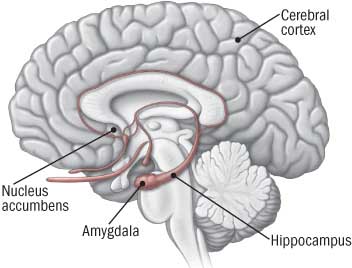
Brain structures involved in delayed gratification identified; implications for range of psychiatric disorders. Researchers have clearly identified, for the first time, the specific parts of the brain involved in decisions that call for delayed gratification. They demonstrated that the hippocampus (associated with memory) and the nucleus accumbens (associated with pleasure) work together in making critical decisions of this type, where time plays a role.
Anxious Brains Are Inherited, Study Finds Live Science - July 8, 2015
The brain function that underlies anxiety and depression is inherited, a new study finds - but there is still plenty of space for experience and environment to reduce the risk of a full-blown mental disorder. The research focused on rhesus monkeys. Like humans, some young rhesus monkeys have what's called an "anxious temperament." Expose them to a mildly stressful situation, like being in a room with a stranger, and the monkeys will stop moving and stop vocalizing while their stress hormones skyrocket. Extremely shy children do the same, said Dr. Ned Kalin, a psychiatrist at the University of Wisconsin–Madison. Kalin and his colleagues scanned the brains of young monkeys, anxious and not, and found three brain regions associated with anxiety that also showed evidence of heritability. About 30 percent of the variation in early anxiety is explained by family history
Why Do I See Patterns When I Close My Eyes? Huffington Post - June 26, 2015
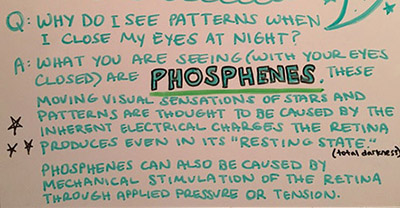
Many people who have seen this visual phenomenon think it is an light-induced afterimage of what they had seen before they closed their eyes but an afterimage may only be part of what they are seeing. The real reason we are treated to this fuzzy fireworks display behind closed lids has to do with phosphenes! Phosphenes are the moving visual sensations of stars and patterns we see when we close our eyes. They are thought to be caused by the inherent electrical charges the retina produces even when it is in its "resting state" and not taking in a ton of information and light like it does when our eyes are open.
Emotional brains 'physically different' from rational ones Science Daily - June 19, 2015
Researchers have found physical differences in the brains of people who respond emotionally to others' feelings, compared to those who respond more rationally. People who are high on affective empathy are often those who get quite fearful when watching a scary movie, or start crying during a sad scene. Those who have high cognitive empathy are those who are more rational.
Study unites neuroscience and psychology to paint more complete picture of sleep and memory PhysOrg - June 11, 2015
A new study from the Florida campus of The Scripps Research Institute (TSRI) integrates neuroscience and psychological research to reveal how sleep is more complex than the Bard might have imagined. The new research shows in animal models that sleep suppresses the activity of certain nerve cells that promote forgetting, insuring that at least some memories will last. We have revealed that one of the ways sleep protects a new memory is by quieting dopamine neuron activity that causes forgetting. Since laboratory animals and humans share a need for sleep, as well as many genetic and circuit mechanisms underlying learning and memory, our findings may shed light on the mechanisms underlying the interaction between sleep and memory in humans.
Researchers observe the moment when a mind is changed Science Daily - May 5, 2015
Researchers studying how the brain makes decisions have, for the first time, recorded the moment-by-moment fluctuations in brain signals that occur when a monkey making free choices has a change of mind. This basic neuroscience discovery will help create neural prostheses that can withhold moving a prosthetic arm until the user is certain of their decision, thereby averting premature or inopportune movements. The team's findings also bear on a longstanding philosophical debate about human consciousness.
Why You Get the Joke: Brain's Sarcasm Center Found Live Science - April 8, 2015
Sarcasm might feel like a natural way to communicate to many people, but it's sometimes lost on stroke survivors. Now, a new study finds that damage to a key structure in the brain may explain why these patients can't perceive sarcasm. Researchers looked at 24 people who had experienced a stroke in the right hemispheres of their brains. Those with damage to the right sagittal stratum tended to have trouble recognizing sarcasm. This bundle of neural fibers connects a number of brain regions, including those that process auditory and visual information. The finding may help families caring for stroke survivors understand why their loved ones don't understand the reason for an eye roll or a certain tone of voice.
'Lightning bolts' in brain show learning in action Science Daily - March 30, 2015
Researchers have captured images of the underlying biological activity within brain cells and their tree-like extensions, or dendrites, in mice that show how their brains sort, store and make sense out of information during learning. Among the study's key findings was that learning motor tasks such as running forward and backward induced completely separate patterns of lightning bolt-like activity in the dendrites of brain cells. These lightning bolts triggered a chain-like reaction, which changed the strength of connections between neurons. The study also identified a unique cell type in the brain that controlled where the lightning bolts were generated. When these cells were turned off, lightning bolt patterns in the brain were disrupted, and as a result, the animal lost the information it had just learned.
After learning new words, brain sees them as pictures PhysOrg - March 24, 2015
When we look at a known word, our brain sees it like a picture, not a group of letters needing to be processed. The brain learns words quickly by tuning neurons to respond to a complete word, not parts of it. Neurons respond differently to real words, such as turf, than to nonsense words, such as turt, showing that a small area of the brain is "holistically tuned" to recognize complete words. This small area in the brain, called the visual word form area, is found in the left side of the visual cortex, opposite from the fusiform face area on the right side, which remembers how faces look. One area is selective for a whole face, allowing us to quickly recognize people, and the other is selective for a whole word, which helps us read quickly.
Teaching science to the brain: How the brain learns the way things work PhysOrg - March 17, 2015
When you learn a new technical concept, something happens in your brain, but exactly what has been a mystery until now.For the first time, Carnegie Mellon University scientists have traced the brain processes that occur during the learning of technical concepts. The findings reveal how new technical knowledge is built up in the brain during the course of different learning stages.
New findings on how the brain ignores distractions PhysOrg - February 3, 2015
When we concentrate on something, we also engage in the unsung, parallel act of purposefully ignoring other things. A new study describes how the brain may achieve such "optimal inattention." With this knowledge, scientists at Brown University hope they can harness our power to ignore for instance, to reduce pain. This is about the mechanisms the brain is using to block out distracting things in the environment.
Genomic differences between developing male and female brains in the womb PhysOrg - February 3, 2015
Researchers examined changes in the way that genes are regulated during human brain development. One observation was that a number of differences in a process called DNA methylation were found between male and female brains, potentially contributing to sex differences in behavior, brain function and disease. The study focussed on the molecular "switches" that regulate the way that genes are activated without changing the underlying DNA blueprint. These processes, known as epigenetics, direct the way in which different cells and tissue types develop, and help differentiate brain cells from those in other parts of the body.
Making sense through order PhysOrg - December 16, 2014
Cognitive scientists at the University of Rochester say they have an alternative to the standard explanation for why order matters when the human mind processes information. Instead of ignoring the order in which people receive information, they embrace it.
Dazzling Images of the Brain Created by Neuroscientist-Artist PhysOrg - December 10, 2014
The brain has been called the most complex structure in the universe, but it may also be the most beautiful. One artist's work captures both the aesthetics and sophistication of this most enigmatic organ. Greg Dunn earned a PhD in neuroscience before deciding to become a professional artist. The patterns of branching neurons he saw through the microscope reminded him of the aesthetic principles in Asian art, which he had always admired. Dunn realized that neurons could be painted in the sumi-e (ink wash painting) style, which involves making as few brush strokes as possible to capture the soul of the subject.
The Brains Of Bipolar Disorder Patients Look Different Huffington Post - December 10, 2014
As brain imaging technologies have advanced and matured over the past few decades, there's been considerable interest in understanding whether and how there are differences between the brains of people with mental illness and those without. In particular, neuroscientists studying depression have been interested in structural variation, such as differences in total brain volume. Still, the various forms of bipolar disorder have received somewhat less attention than others, such as major depression, schizophrenia, or autism.
Study pinpoints part of brain that triggers addiction PhysOrg - December 10, 2014
Activating the brain's amygdala, an almond-shaped mass that processes emotions, can create an addictive, intense desire for sugary foods. Rewards such as sweet tasty food or even addictive drugs like alcohol or cocaine can be extremely attractive when this brain structure is triggered.
Scientists detect brain network that gives humans superior reasoning skills PhysOrg - December 4, 2014
UC Berkeley scientists have found mounting brain evidence that helps explain how humans have excelled at "relational reasoning," a cognitive skill in which we discern patterns and relationships to make sense of seemingly unrelated information, such as solving problems in unfamiliar circumstances.
Researchers identify brain regions that encode words, grammar, story PhysOrg - November 26, 2014
Researchers performed functional magnetic resonance imaging (fMRI) scans of eight people as they read a chapter of a Potter book. They then analyzed the scans, cubic millimeter by cubic millimeter, for every four-word segment of that chapter. The result was the first integrated computational model of reading, identifying which parts of the brain are responsible for such subprocesses as parsing sentences, determining the meaning of words and understanding relationships between characters. Exactly how the brain creates these neural encodings is still a mystery but it is the beginning of understanding what the brain is doing when a person reads.
Imagination, reality flow in opposite directions in the brain Science Daily - November 20, 2014
As real as that daydream may seem, its path through your brain runs opposite reality. Aiming to discern discrete neural circuits, researchers have tracked electrical activity in the brains of people who alternately imagined scenes or watched videos.
Brain's taste secrets uncovered BBC - November 10, 2014
The brain has specialist neurons for each of the five taste categories - salty, bitter, sour, sweet and umami - US scientists have discovered. The separate taste sensors on the tongue had a matching partner in the brain. The scientists hope the findings could be used to help reverse the loss of taste sensation in the elderly. It is a myth that you taste sweet only on the tip of the tongue.
Each of the roughly 8,000 taste buds scattered over the tongue is capable of sensing the full suite of tastes. But specialized cells within the taste bud are tuned to either salty, bitter, sour, sweet or umami tastes. When they detect the signal, a message is sent to the brain. Although how the brain deals with the information has been up for discussion.
This is what brain cell conversations look like
Scientists identify signature of aging in the brain PhysOrg - September 29, 2014
How the brain ages is still largely an open question - in part because this organ is mostly insulated from direct contact with other systems in the body, including the blood and immune systems. In researchers found evidence of a unique "signature" that may be the "missing link" between cognitive decline and aging. The scientists believe that this discovery may lead, in the future, to treatments that can slow or reverse cognitive decline in older people.
Brain encodes time and place of taste memory PhysOrg - September 23, 2014
Have you ever eaten something totally new and it made you sick? Don't give up; if you try the same food in a different place, your brain will be more "forgiving" of the new attempt. In a new study researchers found for the first time that there is a link between the areas of the brain responsible for taste memory in a negative context and those areas in the brain responsible for processing the memory of the time and location of the sensory experience. When we experience a new taste without a negative context, this link doesn't exist.
Brain wave may be used to detect what people have seen, recognize PhysOrg - September 23, 2014
Brain activity can be used to tell whether someone recognizes details they encountered in normal, daily life, which may have implications for criminal investigations and use in courtrooms, new research shows. The findings, published in Psychological Science, a journal of the Association for Psychological Science, suggest that a particular brain wave, known as P300, could serve as a marker that identifies places, objects, or other details that a person has seen and recognizes from everyday life.
Presence or absence of early language delay alters anatomy of the brain in autism PhysOrg - September 23, 2014
A new study led by researchers from the University of Cambridge has found that a common characteristic of autism - language delay in early childhood - leaves a 'signature' in the brain.The researchers studied 80 adult men with autism: 38 who had delayed language onset and 42 who did not. They found that language delay was associated with differences in brain volume in a number of key regions, including the temporal lobe, insula, ventral basal ganglia, which were all smaller in those with language delay; and in brainstem structures, which were larger in those with delayed language onset.
Flexing the brain: Scientists discover why learning tasks can be difficult PhysOrg - August 28, 2014
Learning a new skill is easier when it is related to an ability we already have. For example, a trained pianist can learn a new melody easier than learning how to hit a tennis serve. Scientists from the Center for the Neural Basis of Cognition have discovered a fundamental constraint in the brain that may explain why this happens. They found for the first time that there are limitations on how adaptable the brain is during learning and that these restrictions are a key determinant for whether a new skill will be easy or difficult to learn. Understanding the ways in which the brain's activity can be "flexed" during learning could eventually be used to develop better treatments for stroke and other brain injuries.
Neuroscientists watch imagination happening in the brain PhysOrg - August 28, 2014
Stefania Ashby and her faculty mentor devised experiments using MRI technology that would help them distinguish pure imagination from related processes like remembering. There's a bit of scientific debate over whether memory and imagination truly are distinct processes. Ashby and her faculty mentor devised MRI experiments to put it to the test. They were able to see the distinctions even in those small regions of the hippocampus.
Our genes determine the traces that stress leaves behind on our brains PhysOrg - August 18, 2014
Not every individual reacts in the same way to life events that produce the same degree of stress. Some grow as a result of the crisis, whereas others break down and fall ill, for example with depression. The outcome is determined by a complex interaction between depression gene versions and environmental factors. There are interactions between stressful life events and certain risk gene variants that subsequently change the volume of the hippocampus forever. The hippocampus is a switching station in the processing of emotions and acts like a central interface when dealing with stress.
New research explains how we use the GPS inside our brain to navigate PhysOrg - June 5, 2014
The way we navigate from A to B is controlled by two brain regions which track the distance to our destination. The study found that at the beginning of a journey, one region of the brain calculates the straight-line to the destination ('the distance as a crow flies'), but during travel a different area of the brain computes the precise distance along the path to get there.
Uploading the Mind: Could a Digital Brain Feel Pain? BBC - June 2, 2014
Scientists may one day be able to use electronic copies of human brains to explore the nature of the mind. But is it ethical to make that e-mind suffer and die if one can resurrect it at will and delete any memory of the suffering? Successfully emulating human or animal brains could pose many ethical challenges regarding the suffering these copies may undergo, a researcher says. Scientists are pursuing several strategies to create intelligent software. In one, called "whole brain emulation" or "mind uploading," scientists would scan a brain in detail and use that data to construct a software model. When run on appropriate hardware, this model would essentially replicate the original brain.
Learning second language 'slows brain aging' BBC - June 2, 2014
Learning a second language can have a positive effect on the brain, even if it is taken up in adulthood, a University of Edinburgh study suggests.
Your brain is fine-tuning its wiring throughout your life Science Daily - February 3, 2014
The white matter microstructure, the communication pathways of the brain, continues to develop/mature as one ages. Studies link age-related differences in white matter microstructure to specific cognitive abilities in childhood and adulthood.
Researchers discover how brain regions work together, or alone Science Daily - February 3, 2014
Various regions of the brain often work independently. But what happens when two regions must cooperate to accomplish a task? What mechanism allows them to communicate in order to cooperate, yet avoid interfering with one another when they work alone? Scientists reveal a previously unknown process that helps two brain regions cooperate when joint action is required.
The brain's function in perseverance PhysOrg - December 6, 2013
Perseverance is a quality that plays a large role in the success or failure of many pursuits. It has never been entirely clear why this trait seems more apparent in some people than others, but a new piece of research may at least help explain where it comes from. The research team found stimulating part of the anterior cingulate cortex, an area of the brain commonly associated with emotion and decision making, produced a feeling of anxiety in each of the subjects - combined with a strong willingness to overcome it.
Researchers gain new insights into brain neuronal networks PhysOrg - November 4, 2013
A paper published in a special edition of the journal Science proposes a novel understanding of brain architecture using a network representation of connections within the primate cortex. Using brain-wide and consistent tracer data, the researchers describe the cortex as a network of connections with a "bow tie" structure characterized by a high-efficiency, dense core connecting with "wings" of feed-forward and feedback pathways to the rest of the cortex (periphery). The local circuits, reaching to within 2.5 millimeters and taking up more than 70 percent of all the connections in the macaque cortex, are integrated across areas with different functional modalities (somatosensory, motor, cognitive) with medium- to long-range projections.
Surprising Variation Among Genomes of Individual Neurons from Same Brain Science Daily - November 4, 2013
It was once thought that each cell in a person's body possesses the same DNA code and that the particular way the genome is read imparts cell function and defines the individual. For many cell types in our bodies, however, that is an oversimplification. Studies of neuronal genomes published in the past decade have turned up extra or missing chromosomes, or pieces of DNA that can copy and paste themselves throughout the genomes.
The Unlikely Network at the Core of Your Brain's Internet Wired - October 30, 2013
To successfully send a text message, your brain has to compose the wording and coordinate the deft tapping of your thumbs while checking for typos. Solving a simple algebra problem involves the visual cortex - to process the symbols - and the parts of the brain used for computation and short-term memory. And driving, best performed without texting, requires a combination of visual, tactile and spatial data. How do different areas of the brain communicate and coordinate their efforts to complete these tasks? Neuroscientists have long struggled to understand the brain's ability to synthesize a dog's breakfast of sensory inputs and cognitive processes. But a growing body of evidence suggests that a network of highly interlinked brain regions exists that could prove essential in facilitating higher-order tasks. This collection of highly connected hubs has been dubbed the "rich club" network because it resembles groups of well-connected individuals, such as Ivy League alumni organizations, that help others meet and exchange information.'
'Minicomputers' Live Inside the Human Brain Live Science - October 29, 2013
The brain may be an even more powerful computer than before thought - microscopic branches of brain cells that were once thought to basically serve as mere wiring may actually behave as minicomputers, researchers say. The most powerful computer known is the brain. The human brain possesses about 100 billion neurons with roughly 1 quadrillion - 1 million billion - connections known as synapses wiring these cells together. Neurons each act like a relay station for electrical signals. The heart of each neuron is called the soma - a single thin cable-like fiber known as the axon that sticks out of the soma carries nerve signals away from the neuron, while many shorter branches called dendrites that project from the other end of the soma carry nerve signals to the neuron.
New high-res images show brain activity like never before PhysOrg - October 4, 2013
In the middle of the human brain there is a tiny structure shaped like an elongated donut that plays a crucial role in managing how the body functions. Measuring just 10 millimeters in length and six millimeters in diameter, the hollow structure is involved in a complex array of behavioral, cognitive, and affective phenomena, such as the fight or flight response, pain regulation, and even sexual activity.
Some Brains May Be Hard-Wired for Chronic Pain Live Science - September 18, 2013
Structural differences in the brain may be one reason why one person recovers from pain while another develops chronic agony, a new study suggests. The researchers scanned the brains of 46 people who had lower back pain for about three months, and then evaluated their pain four times over the following year. About half of the patients recovered during the year; the other half continued to have persistent pain throughout the study.
Left Brain vs. Right: It's a Myth, Research Finds Live Science - September 3, 2013
It's the foundation of myriad personality assessment tests, self-motivation books and team-building exercises - and it's all bunk. Popular culture would have you believe that logical, methodical and analytical people are left-brain dominant, while the creative and artistic types are right-brain dominant. Trouble is, science never really supported this notion. Now, scientists at the University of Utah have debunked the myth with an analysis of more than 1,000 brains. They found no evidence that people preferentially use their left or right brain. All of the study participants - and no doubt the scientists - were using their entire brain equally, throughout the course of the experiment.
Researcher Controls Colleague's Motions in First Human Brain-To-Brain Interface Science Daily - August 28, 2013
University of Washington researchers have performed what they believe is the first noninvasive human-to-human brain interface, with one researcher able to send a brain signal via the Internet to control the hand motions of a fellow researcher.
Brain picks out salient sounds from background noise by tracking frequency and time PhysOrg - July 23, 2013
New research reveals how our brains are able to pick out important sounds from the noisy world around us. Our ears can effortlessly pick out the sounds we need to hear from a noisy environment - hearing our mobile phone ringtone in the middle of the Notting Hill Carnival, for example - but how our brains process this information (the so-called 'cocktail party problem') has been a longstanding research question in hearing science. Researchers have previously investigated this using simple sounds such as two tones of different pitches, but now have used complicated sounds that are more representative of those we hear in real life. The team used 'machine-like beeps' that overlap in both frequency and time to recreate a busy sound environment and obtain new insights into how the brain solves this problem.
Scientists create first 3D digital brain BBC - June 20, 2013
Researchers have created the first high-resolution 3D digital model of the human brain, which they have called "Big Brain". The reconstruction shows the brain's anatomy in microscopic detail, enabling researchers to see features smaller than a strand of hair.
Researchers identify emotions based on brain activity PhysOrg - June 19, 2013
For the first time, scientists at Carnegie Mellon University have identified which emotion a person is experiencing based on brain activity. The findings illustrate how the brain categorizes feelings, giving researchers the first reliable process to analyze emotions. Until now, research on emotions has been long stymied by the lack of reliable methods to evaluate them, mostly because people are often reluctant to honestly report their feelings. Further complicating matters is that many emotional responses may not be consciously experienced.
Brain Can Plan Actions Toward Things the Eye Doesn't See Science Daily - June 19, 2013
People can plan strategic movements to several different targets at the same time, even when they see far fewer targets than are actually present. A team of researchers at the Brain and Mind Institute at the University of Western Ontario took advantage of a pictorial illusion -- known as the "connectedness illusion" -- that causes people to underestimate the number of targets they see. When people act on these targets, however, they can rapidly plan accurate and strategic reaches that reflect the actual number of targets. Using sophisticated statistical techniques to analyze participants' responses to multiple potential targets, the researchers found that participants' reaches to the targets were unaffected by the presence of the connecting lines. Thus, the "connectedness illusion" seemed to influence the number of targets they perceived but did not impact their ability to plan actions related to the targets.
Brain System for Emotional Self-Control Discovered Science Daily - May 9, 2013
Different brain areas are activated when we choose to suppress an emotion, compared to when we are instructed to inhibit an emotion. In this study, published in Brain Structure and Function, the researchers scanned the brains of healthy participants and found that key brain systems were activated when choosing for oneself to suppress an emotion. They had previously linked this brain area to deciding to inhibit movement. This result shows that emotional self-control involves a quite different brain system from simply being told how to respond emotionally
Individual Brain Cells Track Where We Are and How We Move Science Daily - May 5, 2013
Leaving the house in the morning may seem simple, but with every move we make, our brains are working feverishly to create maps of the outside world that allow us to navigate and to remember where we are. Take one step out the front door, and an individual brain cell fires. Pass by your rose bush on the way to the car, another specific neuron fires. And so it goes. Ultimately, the brain constructs its own pinpoint geographical chart that is far more precise than anything you'd find on Google Maps.
Taste of beer, without effect from alcohol, triggers dopamine release in the brain PhysOrg - April 16, 2013
The taste of beer, without any effect from alcohol itself, can trigger dopamine release in the brain, which is associated with drinking and other drugs of abuse.
Stimulating the brain blunts cigarette craving PhysOrg - April 16, 2013
Cigarette smoking is the leading cause of preventable deaths globally. Unfortunately smoking cessation is difficult, with more than 90% of attempts to quit resulting in relapse.
Bad Decisions Arise from Faulty Information, Not Faulty Brain Circuits Science Daily - April 16, 2013
Making decisions involves a gradual accumulation of facts that support one choice or another. A person choosing a college might weigh factors such as course selection, institutional reputation and the quality of future job prospects. But if the wrong choice is made, Princeton University researchers have found that it might be the information rather than the brain's decision-making process that is to blame. The researchers report in the journal Science that erroneous decisions tend to arise from errors, or "noise," in the information coming into the brain rather than errors in how the brain accumulates information.
Brain Development Is Guided by Junk DNA That Isn't Really Junk Science Daily - April 16, 2013
Specific DNA once dismissed as junk plays an important role in brain development and might be involved in several devastating neurological diseases, UC San Francisco scientists have found. While researchers have been busy exploring the roles of proteins encoded by the genes identified in various genome projects, most DNA is not in genes. This so-called junk DNA has largely been pushed aside and neglected in the wake of genomic gene discoveries, the UCSF scientists said.
Mental Picture of Others Can Be Seen Using fMRI, Finds New Study Science Daily - March 5, 2013
It is possible to tell who a person is thinking about by analyzing images of his or her brain. Our mental models of people produce unique patterns of brain activation, which can be detected using advanced imaging techniques according to a study by Cornell University neuroscientist Nathan Spreng. When we looked at our data, we were shocked that we could successfully decode who our participants were thinking about based on their brain activity," Understanding and predicting the behavior of others is a key to successfully navigating the social world, yet little is known about how the brain actually models the enduring personality traits that may drive others' behavior, the authors say. Such ability allows us to anticipate how someone will act in a situation that may not have happened before.
Secret to Self-Control: A More Efficient Brain? Live Science - January 22, 2013
People with greater self-control may have brains that function more efficiently, a new study suggests. The findings are only correlational, and so they can't tease out whether efficient brains cause the greater self-control. However, the results hint that those with self-control may have extra willpower because it takes them less effort to exert it.
Researchers find clues to how the brain decides when to rest PhysOrg - January 22, 2013
Scientists studying how people make decisions regarding work have over time devised theories of cost versus benefit scenarios to describe what causes people to engage in work activities, or to not. Not so well studied is how people come to decide when it's time to take a break. Some have suggested that some part of the brain is constantly engaged in weighing the costs of the work involved with potential rewards, and based on both creates a signal of sorts alerting the rest of the brain to when it's time to pause. This new research supports that theory.
Brain structure of infants predicts language skills at one year PhysOrg - January 22, 2013
Using a brain-imaging technique that examines the entire infant brain, researchers have found that the anatomy of certain brain areas - the hippocampus and cerebellum - can predict children's language abilities at 1 year of age.
Uncovering the secrets of 3D vision: How glossy objects can fool the human brain PhysOrg - January 22, 2013
It's a familiar sight at the fairground: rows of people gaping at curvy mirrors as they watch their faces and bodies distort. But while mirrored surfaces may be fun to look at, new findings by researchers from the Universities of Birmingham, Cambridge and Giessen, suggest they pose a particular challenge for the human brain in processing images for 3D vision.
Where does it hurt? Pain map discovered in the human brain PhysOrg - November 29, 2012
Scientists have revealed the minutely detailed pain map of the hand that is contained within our brains, shedding light on how the brain makes us feel discomfort and potentially increasing our understanding of the processes involved in chronic pain.
Universe Grows Like a Giant Brain Live Science - November 27, 2012
The universe may grow like a giant brain, according to a new computer simulation. The results suggest that some undiscovered, fundamental laws may govern the growth of systems large and small, from the electrical firing between brain cells and growth of social networks to the expansion of galaxies. "Natural growth dynamics are the same for different real networks, like the Internet or the brain or social networks. Past studies showed brain circuits and the Internet look a lot alike. But despite finding this functional similarity, nobody had developed equations to perfectly predict how computer networks, brain circuits or social networks grow over time.
What Happens to the Brain in a Coma Live Science - November 27, 2012
What is going on inside the heads of individuals in a coma has been steeped in mystery. Now, a new study finds coma patients have dramatically reorganized brain networks, a finding that could shed light on the mystery of consciousness. Compared with healthy patients in the study, high-traffic hubs of brain activity are dark in coma patients while more quiet regions spring to life. Consciousness may depend on the anatomical location of these hubs in the human brain network.
How connections in the brain must change to form memories could help to develop artificial cognitive computers PhysOrg - November 7, 2012
Exactly how memories are stored and accessed in the brain is unclear. Neuroscientists, however, do know that a primitive structure buried in the center of the brain, called the hippocampus, is a pivotal region of memory formation. Here, changes in the strengths of connections between neurons, which are called synapses, are the basis for memory formation. Networks of neurons linking up in the hippocampus are likely to encode specific memories.
Science Explains Instant Attraction Live Science - November 7, 2012
How do you know when you're attracted to a new face? Thank your medial prefrontal cortex, a brain region now discovered to play a major role in romantic decision-making. Different parts of this region, which sits near the front of the brain, make a snap judgment about physical attraction and about whether the person is Mr. or Ms. Right - all within milliseconds of seeing a new face, a new study from Ireland finds. The research is the first to use real-world dating to examine how the brain makes fast romantic judgments.
When You're At Rest, Your Brain's Right Side Hums Live Science - October 18, 2012
There's plenty of brain activity even when people are thinking nothing at all. But it's the brain's right side - for most people the less-dominant half - that stays busiest while you're at rest, according to surprising new findings. Researchers found that during periods of wakeful rest, the right hemisphere of the brain chatters more to itself than the left hemisphere does. It also sends more messages to the left hemisphere than vice versa. Surprisingly, this remains true whether the owner of the brain is left- or right-handed. That seems odd, because in right-handed people the left hemisphere is the dominant one, and in left-handed people the right is usually more dominant.
Feel-Good Brain Chemical's Role in Sleep Live Science - June 20, 2012
A feel-good brain chemical called dopamine has been linked to everything from laziness and creativity to impulsivity and a tendency to partake in one-night stands. Now, we can add sleep regulation to that list. When dopamine latches onto its receptor in a special part of the brain, it seems to signal the body to "wake up" by turning down levels of the sleepiness hormone melatonin, the researchers found. The first clue to this new discovery came when researchers noticed that dopamine receptor 4, a protein on the outside of certain cells that binds to dopamine, was active in the part of the brain called pineal gland. This gland regulates our internal clock, known as our circadian rhythm, by releasing melatonin in response to light.