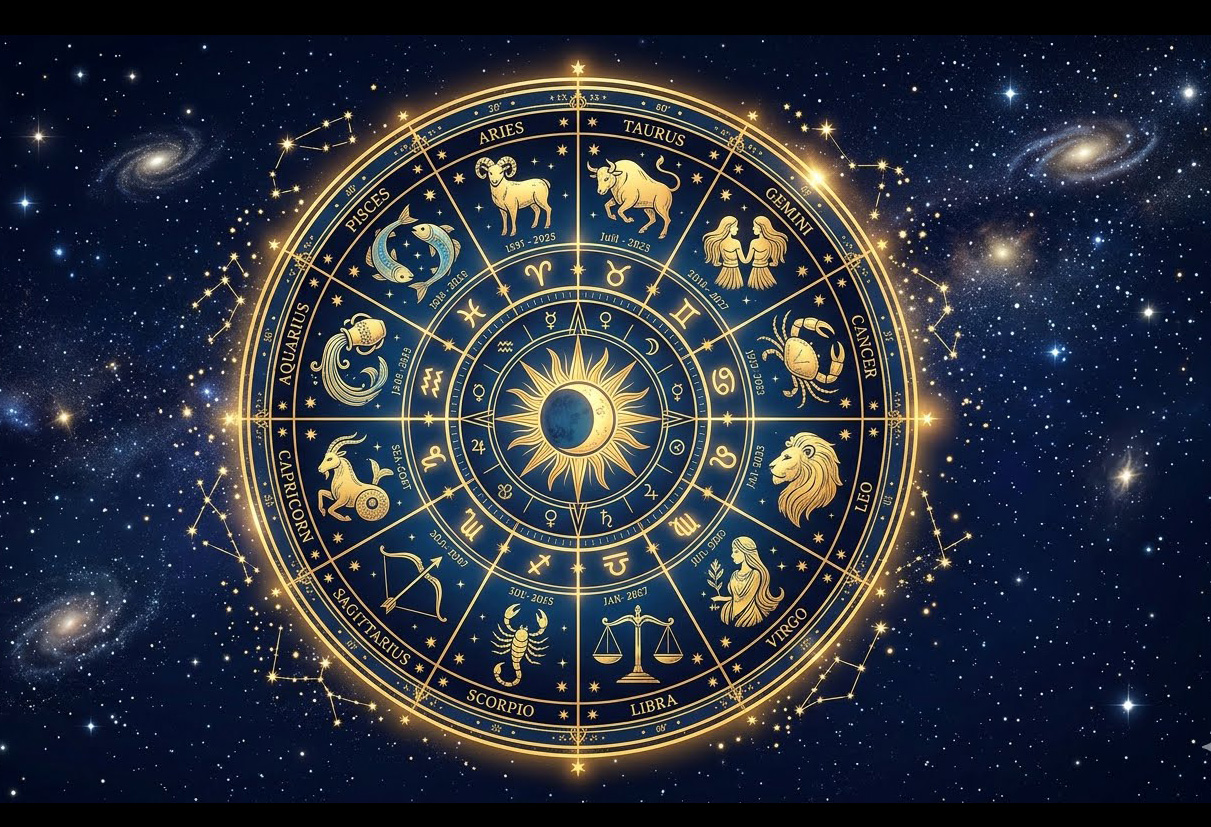
Astrology is a pseudoscience whose predictions are open for personal interpretation by the astrologer reading a chart. Our lives are not just influenced by the planets in our solar system, but by the collective unconscious through which we experience reality.
Astrology taken as a guide can be helpful - but is not perfect - considered by most to be pseudoscience.
An astrological system written long ago, may not take into account the way we live our lives in the 21st century - where astrological charts are not just for people - but could apply to anything based on its original start date.
As with all oracles of divination, Astrology is subjective based on interpretation. It involves understanding the relationship between the interrelated aspects of someone's chart combined with the astrologer's psychic abilities applied to modern day interpretations.
Astrology charts could be interpreted differently by different astrologers based on their own experience and knowledge related to information given.
One must have the ability to look at the total chart not just the positive aspects.
Psychology is another factor when interpreting someone's chart.
Astrologers often give a 'window' when events may occur - but generally not precise names, dates, and places.
Different astrologers conveyed the same chart, and come up with different interpretations.
Astrology charts today are often created on a computer - and if one were to take that one step further - add interpretations by artificial intelligence (AI). Interpretations add insight one might otherwise not have about the direction of their destiny - in both the long and short term.
I believe that the ultimate objective is to bring hope and also warn of a time when someone's life could take a negative turn. The answers are in the details.
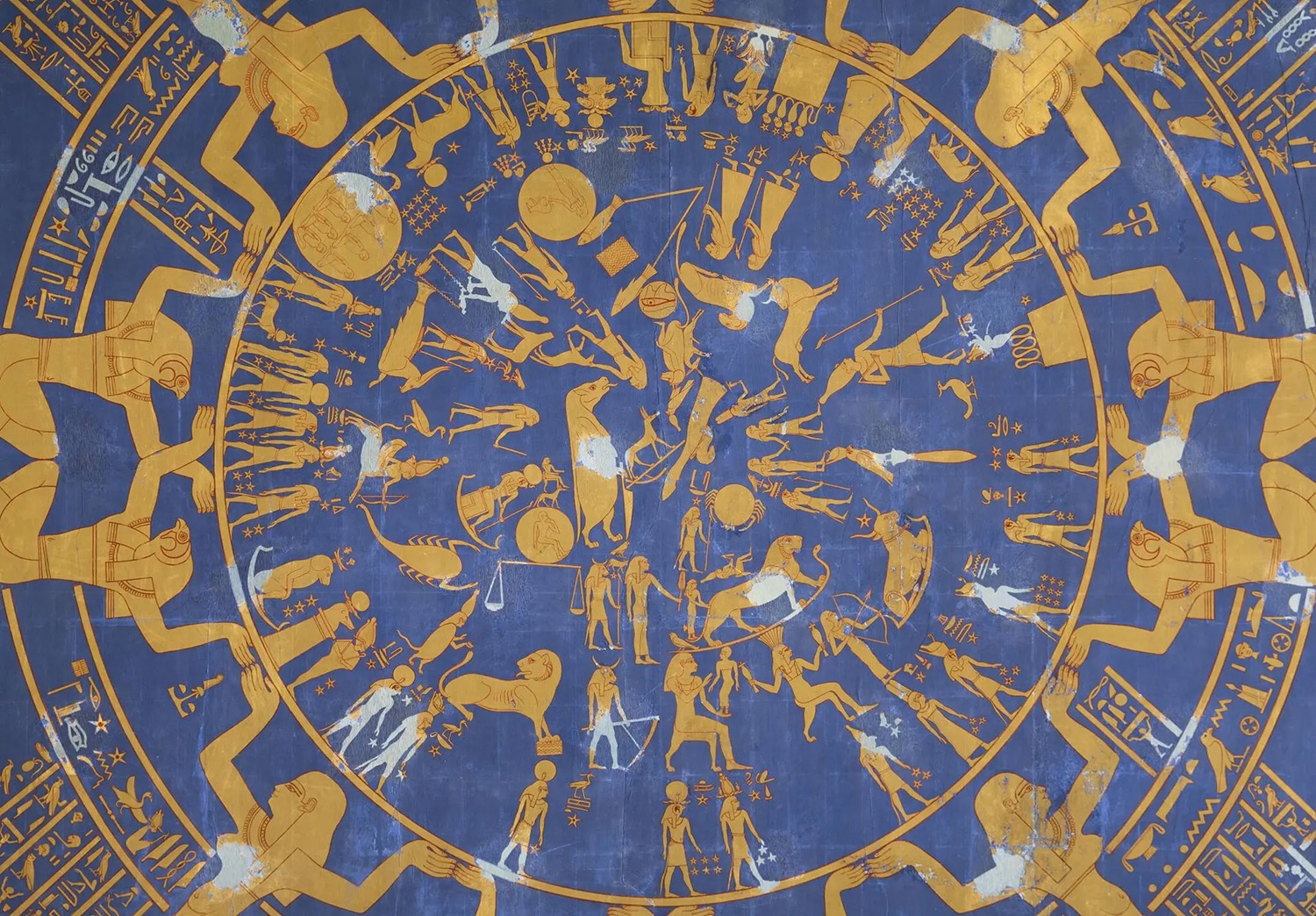
Long before horoscope apps, the foundations of today's multibillion-dollar astrology industry were laid in Babylonia, Egypt and the classical world. NY Times - March 27, 2026
Originally invented around 410 B.C. in Babylon, in what is now Iraq, horoscopy emerged from early attempts to measure the pathways of the moon, stars and planets across the sky. Based on their calculations, Babylonians devised sophisticated mathematical models to predict the bodies' movements. The invention of the zodiac paved the way for a lot of the innovations in science, social practice and religion that still exist today. These include the 360-degree circle, and the use of 'computation as opposed to observation' for predicting the movement of planets. Read more ...
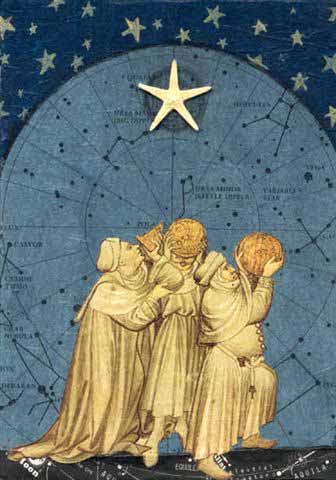
Astrology, in its broadest sense, is the search for meaning in the sky. It has therefore been argued that astrology began as a study as soon as human beings made conscious attempts to measure, record, and predict seasonal changes by reference to astronomical cycles.
Early evidence of such practices appears as markings on bones and cave walls, which show that lunar cycles were being noted as early as 25,000 years ago; the first step towards recording the Moon's influence upon tides and rivers, and towards organizing a communal calendar. Agricultural needs were also met by increasing knowledge of constellations, whose appearances change with the seasons, allowing the rising of particular star-groups to herald annual floods or seasonal activities.
By the third millennium BCE, widespread civilizations had developed sophisticated awareness of celestial cycles, and are believed to have consciously oriented their temples to create alignment with the heliacal risings of the stars.
There is scattered evidence to suggest that the oldest known astrological references are copies of texts made during this period. Two, from the Venus tablet of Ammisaduqa (compiled in Babylon around 1700 BCE) are reported to have been made during the reign of king Sargon of Akkad (2334-2279 BCE).
Another, showing an early use of electional astrology, is ascribed to the reign of the Sumerian ruler Gudea of Lagash (ca. 2144-2124 BCE). This describes how the gods revealed to him in a dream the constellations that would be most favorable for the planned construction of a temple. However, there is controversy about whether they were genuinely recorded at the time or merely ascribed to ancient rulers by posterity. The oldest undisputed evidence of the use of astrology as an integrated system of knowledge is therefore attributed to the records of the first dynasty of Mesopotamia (1950-1651 BCE).
The system of Chinese astrology was elaborated during the Zhou dynasty (1046Ð256 BC) and flourished during the Han Dynasty (2nd century BC to 2nd century AD), during which all the familiar elements of traditional Chinese culture - the Yin-Yang philosophy, theory of the 5 elements, Heaven and Earth, Confucian morality - were brought together to formalize the philosophical principles of Chinese medicine and divination, astrology and alchemy.
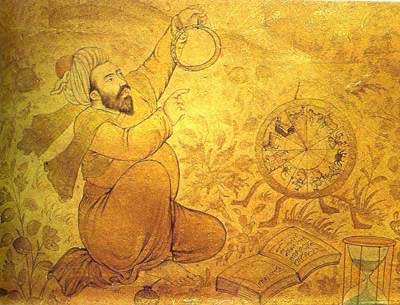
Astrology was taken up by Islamic scholars following the collapse of Alexandria to the Arabs in the 7th century, and the founding of the Abbasid empire in the 8th. The second Abbasid caliph, Al Mansur (754-775) founded the city of Baghdad to act as a centre of learning, and included in its design a library-translation centre known as Bayt al-Hikma ÔStorehouse of Wisdom', which continued to receive development from his heirs and was to provide a major impetus for Arabic-Persian translations of Hellenistic astrological texts.
The early translators included Mashallah, who helped to elect the time for the foundation of Baghdad, and Sahl ibn Bishr, (a.k.a. Zael), whose texts were directly influential upon later European astrologers such as Guido Bonatti in the 13th century, and William Lilly in the 17th century. Knowledge of Arabic texts started to become imported into Europe during the Latin translations of the 12th century, the effect of which was to help initiate the European Renaissance.
Other important Arabic astrologers include Albumasur and Al Khwarizmi, the Persian mathematician, astronomer and astrologer, who is considered the father of algebra and the algorithm. The Arabs greatly increased the knowledge of astronomical cycles, and many of the star names that remain in common use today, such as Aldebaran, Altair, Betelgeuse, Rigel and Vega retain the legacy of their language.
Astrology saw a popular revival from the nineteenth century as part of a general revival of spiritualism and later New Age philosophy, and through the influence of mass media such as newspaper horoscopes and astrology software.
Early in the twentieth century psychologist Carl Jung developed some concepts concerning astrology, which led to the development of psychological astrology.
Other new developments included Uranian astrology, Astrocartography and Financial astrology.
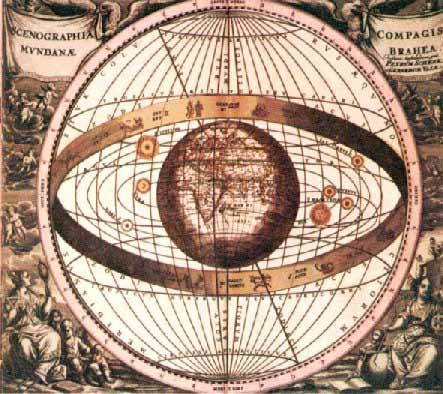
The core beliefs of astrology were prevalent in parts of the ancient world and are epitomized in the Hermetic maxim, "as above, so below". Tycho Brahe used a similar phrase to summarize his studies in astrology: suspiciendo despicio, "by looking up I see downward".
Although the principle that events in the heavens are mirrored by those on Earth was once generally held in most traditions of astrology around the world, in the West there has historically been a debate among astrologers over the nature of the mechanism behind astrology.
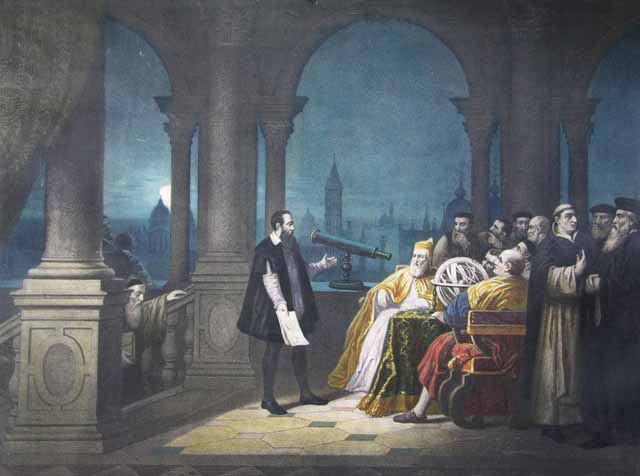
Although the connection between celestial mechanics and terrestrial dynamics was explored first by Isaac Newton with his development of a universal theory of gravitation, claims that the gravitational effects of the celestial bodies are what accounts for astrological generalizations are not substantiated by scientific research.
Most astrological traditions are based on the relative positions and movements of various real or construed celestial bodies and on the construction of implied or calculated celestial patterns as seen at the time and place of the event being studied. These are chiefly the astrological planets, the stars, the lunar nodes, Arabic parts and hypothetical planets.
The frame of reference for such apparent positions is defined by the tropical or sidereal zodiac of twelve signs on one hand, and by the local horizon (ascendant-descendant axis) and midheaven-imum coeli axis on the other. This latter (local) frame is typically further divided into the twelve astrological houses. Furthermore, the astrological aspects are used to determine the geometric/angular relationship(s) between the various celestial bodies and angles in the horoscope.
Predictive astrology, in the Western tradition, employs two main methods: astrological transits and astrological progressions. In astrological transits the ongoing movements of the planets are interpreted for their significance as they transit through space and the horoscope. In astrological progressions the horoscope is progressed forward in time according to set methods.
In the past, astrologers often relied on close observation of celestial objects and the charting of their movements. Modern astrologers use data provided by astronomers which are transformed to a set of astrological tables called ephemerides, showing the changing zodiacal positions of the heavenly bodies through time.
Throughout its long history, astrology has come to prominence in many regions and undergone developments and change. There are many astrological traditions that are historically important, but which have largely fallen out of use. Astrologers still retain an interest in them and regard them as an important resource. Historically significant traditions of astrology include: