
March 21 - April 20
Aries is a Cardinal Fire Sign.

Aries is ruled by Mars
March 21 - April 20
Aries is a Cardinal Fire Sign.
Aries is ruled by Mars
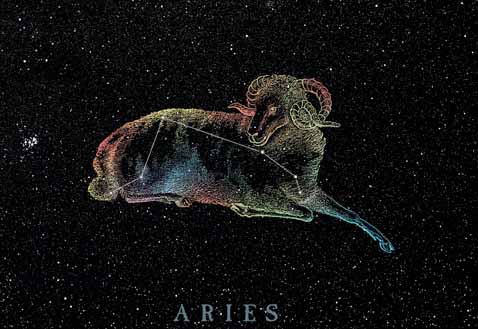
Aries is the first astrological sign in the Zodiac. It spans the 0-30th degree of the zodiac, between zero and 27.25 degree of celestial longitude, which the Sun transits this area on average between March 21 to April 19 each year.
According to the Tropical system of astrology, the Sun enters the sign of Aries when it reaches the northern vernal equinox.
In Sidereal astrology, the sun currently transits the constellation of Aries from 15 April to 15 May (approximately). Individuals born during these dates, depending on which system of astrology they subscribe to, may be called Arians or Ariens.
Aries governs the head and face.
Positive Traits:
Adventurous
energetic
pioneering
courageous
enthusiastic
confident
dynamic
quick-witted
Negative Traits:
Selfish, quick-tempered
impulsive
impatient
foolhardy
daredevil
Aries (ram) governs the head and brain, therefore Aries are said to be prone to headaches, particularly migraines, sunstroke, neuralgia and depression. Indigestion and nervous disorders are also threats to them, and their rashness, impetuosity and wholesale physical commitment make them liable to accidents and physical injuries. On the flip side, they are a fire sign eager to learn and quickly understand the nature of reality as consciousness.
Aires is a fire sign therefore they will try many things with full passion at the onset, but do not often finish them.
Like the young ram, Aries is adventurous, ambitious, impulsive, enthusiastic and full of energy. The Aries personality is a pioneer both in thought and action, very open to new ideas and a lover of freedom. They welcome challenges and will not be diverted from their purpose except by their own impatience, which will surface if they don't get quick results.
Aries can be courageous leaders with a genuine concern for those they command, but they will not hesitate to use their subordinates to obtain their own objectives as leaders. As followers they can be troublesome, as they don't do well with authority figures, especially those them deem ineffectual. They may be unwilling to obey or submit to directions for which they can see no reason, or with which they disagree.
They are much concerned with self, both positively and negatively, self-reliant but also self-centered and concerned with their own personal advancement and physical satisfaction to the point of greed. Their immense energy makes them aggressive and restless, argumentative, headstrong, quick tempered, easily offended and capable of holding grudges if they feel themselves affronted. Thus, if at work superiors cooperate well with their Aries employees, approving of their good qualities, they will receive from them complete loyalty; but if Aries considers themselves unappreciated or exploited, they are likely to give notice impulsively, to nurse resentment and even, in extreme cases, to revenge themselves by slandering their former firm, or by acts of sabotage.
In their personal relationships Aries are frank, direct and candid, and make enthusiastic and generous friends.
They generally have a high sex drive and make passionate but fastidious lovers. There is, however, a negative side to their associations with other people. They can easily be irritated by slowness or moderation in their companions and, though themselves sensitive, ride roughshod over the sensitivities of others. The intensity of their sexual urges can drive them to promiscuity and a Don Juan-like counting of conquests of the opposite sex. It can also trick them into early unwise marriage which may end disastrously. Their love of change more than counters the little loyalty they have, and their tenacity, though sufficient to achieve short-term objects, is unlikely to stand up to the challenge of a lifetime's faithfulness.
Mentally Aries are intellectual and objective, but can be bigoted and extremist in religion and politics. They are good champions of lost causes and last-ditch resistance. They are quick-witted but foolhardy and overly optimistic, lacking thoroughness and the ability to evaluate difficulties in the undertakings into which they often rush impulsively.
The great need of Aries natives is to exercise an iron self-control, to discipline the qualities and tendencies of their character to the advantage, not the detriment, of the society in which they move.
They can make good athletes and climbers, doctors, explorers (of new ideas as well as uncharted territory, the latter in these days including adventuring into outer space), soldiers, sailors and airmen, and leaders, though awkward subordinates, in industry and politics.
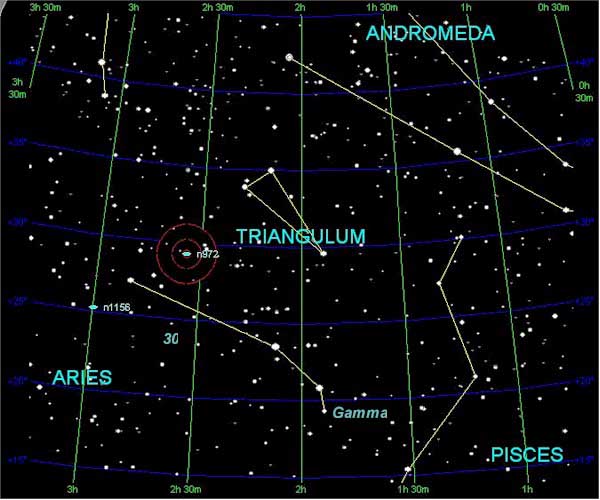
Aries is a rather inconspicuous northern constellation and sign of the zodiac, which honors the ram whose golden fleece was sought by Jason and the Argonauts. Aries used to contain the vernal equinox, the point where the Sun crosses the celestial equator. Nowadays the vernal equinox has moved in the constellation Pisces, but sometimes it is still called the first point of Aries. The constellation can be seen from latitudes between +90° and -60°, and is best visible in the winter sky. The spring equinox, March 21, is the beginning of the new zodiacal year and Aries, the first sign, is therefore that of new beginnings.
Aries is devoid of prominent deep sky objects, and has only a few stars of interest, notably the triangle made up of the principal stars in the constellation. Aries is a nice constellation to view in the autumn and winter sky. The sun passes through it from late April to mid-May. Although there are not many objects to observe in Aries this constellation is important to astronomers.
In former times the vernal equinox (i.e. the point where the Sun crosses the celestial equator when moving from the south to the north) lies within Aries, but due to the effect of precession this point is nowadays located in the western neighbor Pisces. For historical reasons the vernal equinox is still referred as the First Point of Aries.
The meaning of this point is equal to the meaning of the null meridian at Greenwich: it is the zero point of the right ascension. This constellation can be found between DECL=+10 degrees and DECL=+30 degrees and between RA=1h 40m and RA=3h 30m, respectively. Over the body of Aries another asterism (pattern of stars seen in Earth's sky which is not an official constellation) is located - the Northern Fly hovers over Aries.
The brightest star in Aries is Hamal, from the Arabic Al Ras al Hamal, meaning "the Head of the Sheep." The ancient Greeks from about 1580 B.C. to 360 B.C. oriented the construction of many of their sacred temples in relationship to Hamal.
In May of A.D. 1012, a supernova reportedly was seen in Aries.
Aries contains several stars with extrasolar planets. HIP 14810, a G5 type star, is orbited by three giant planets (those more than ten times the mass of Earth). HD 12661, like HIP 14810, is a G-type main sequence star, slightly larger than the Sun, with two orbiting planets. One planet is 2.3 times the mass of Jupiter, and the other is 1.57 times the mass of Jupiter. HD 20367 is a G0 type star, approximately the size of the Sun, with one orbiting planet. The planet, discovered in 2002, has a mass 1.07 times that of Jupiter and orbits every 500 days.
The few deep-sky objects in Aries are very dim. Nevertheless, several scientifically interesting galaxies lie within its borders; it has spiral, elliptical, and interacting galaxies.

Spring - Vernal Equinox - 00 Aries
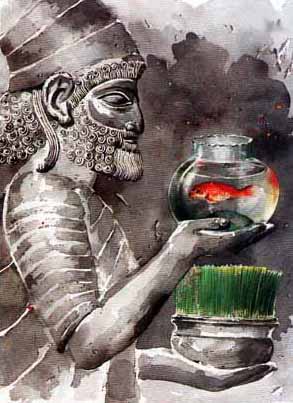
Noruz, Persian New Year - 00 Aries

Aries constellation in the years approximately 2,000 years before the birth of Christ was the position of the equinox, previously the position held by Taurus. The change was due to the precession of the axis and became evident throughout the mythologies of several areas as the cult of the ram overtook that of the bull. The constellation was at one time called the Prince of the Zodiac. This slow precession has since shifted the sun's position from Aries to Pisces.
Aries is now recognized as an official constellation, albeit as a specific region of the sky, by the International Astronomical Union. It was originally defined in ancient texts as a specific pattern of stars, and has remained a constellation since ancient times; it now includes the ancient pattern as well as the surrounding stars.
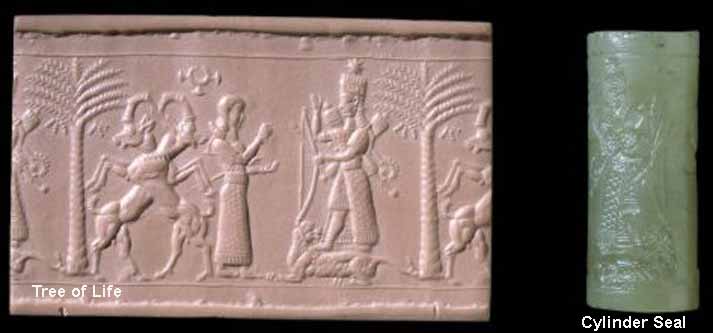
Dumuzi
The Sumerians called the sun, Subat, meaning the Ancient Sheep or Ram and the planets the Celestial Herd. The bright star in Aries, Hamal, meaning the lamb, represented one of the stars in the Scimitar, a celestial weapon that protected against the Seven Diabolic Spirits of the Storm. The Babylonian priest Berossos who lived around 275 BC said that the world was created when the Sun was in the Ram.
In the description of the Babylonian zodiac given in the clay tablets known as the MUL.APIN, the constellation now known as Aries was the final station along the ecliptic. The MUL.APIN was a comprehensive table of the risings and settings of stars, which likely served as an agricultural calendar. Modern-day Aries was known as "The Agrarian Worker" or "The Hired Man".
Although likely compiled in the 12th or 11th century BCE, the MUL.APIN reflects a tradition which marks the Pleiades as the vernal equinox, which was the case with some precision at the beginning of the Middle Bronze Age. The earliest identifiable reference to Aries as a distinct constellation comes from the boundary stones that date from 1350 to 1000 BCE. On several boundary stones, a zodiacal ram figure is distinct from the other characters present.
The shift in identification from the constellation as the Agrarian Worker to the Ram likely occurred in later Babylonian tradition because of its growing association with Dumuzi the Shepherd. By the time the MUL.APIN was created - by 1000 BCE- modern Aries was identified with both Dumuzi's ram and a hired laborer. The exact timing of this shift is difficult to determine due to the lack of images of Aries or other ram figures.
In ancient Egyptian astronomy, Aries was associated with the god Amon-Ra, who was depicted as a man with a ram's head and represented fertility and creativity. Because it was the location of the vernal equinox, it was called the "Indicator of the Reborn Sun". During the times of the year when Aries was prominent, priests would process statues of Amon-Ra to temples, a practice that was modified by Persian astronomers centuries later. Aries acquired the title of "Lord of the Head" in Egypt, referring to its symbolic and mythological importance.
During the time of Dionysus and his campaigns in Africa, his troops were traveling through a sandy desert. They ran out of water and were worn out struggling through the sand. A ram appeared before them, rose up in the air and landed behind a dune. When scouts followed the animal, they came upon a spring of water, but no ram. Dionysus ordered the building of a temple to Zeus Amon on the spot where the spring rose. A likeness of the ram was placed in the temple and the ram was placed in the heavens in a position of great importance.
The cult of Aries had its beginning here since its position at the zenith coincided with the rising of Sirius in the east and the flooding of the Nile. The Temple of Amon-Ra at Karnak bore the likeness of the supreme sun-god with the horns of a ram.
The road to Karnak was formed from the wings of two granite sphinxes bearing the head of Aries.
Aries was not fully accepted as a constellation until classical times. In Hellenistic astrology, the constellation of Aries is associated with the golden ram of Greek mythology that rescued Phrixos and Helle on orders from Hermes, taking him to the land of Colchis.
Phrixos and Helle were the son and daughter of King Athamas and his first wife Nephele. The king's second wife, Ino, was jealous and wished to kill his children. To accomplish this, she induced a famine in Boeotia, then falsified a message from the Oracle of Delphi that said Phrixos must be sacrificed to end the famine.
Athamas was about to sacrifice his son atop Mount Laphystium when Aries, sent by Nephele, arrived. Helle fell off of Aries's back in flight and drowned in the Dardanelles, also called the Hellespont in her honor. After arriving, Phrixos sacrificed the ram to Zeus and gave the Fleece to Aeetes of Colchis, who rewarded him with an engagement to his daughter Chalciope. Ae‘\etes hung its skin in a sacred place where it became known as the Golden Fleece and was guarded by a dragon. In a later myth, this Golden Fleece was stolen by Jason and the Argonauts.
In the second century BC the Greek astronomer Hipparchus set up the system for measuring positions of stars and other fixed objects in the heavens. He established as his starting point the location of one of two places where the Sun crossed the "celestial equator," an extension of Earth's equator out into the sky. Thus, the vernal equinox, where the Sun stood at the beginning of spring, became the reckoning point for the heavens.
During Hipparchus' time this was located in the constellation Aries, the Ram. This fact of history gave everlasting fame to one of the smallest and dimmest constellations of the zodiac. From that time hence, even though the vernal equinox slowly drifts along the ecliptic, it has been referred to as the "First Point of Aries." This could get confusing if we forget its historical origin, for the "First Point of Aries--the vernal equinox--is currently in the constellation Pisces, the Fishes, just west of Aries.
There are several mythological stories involving Aries. It is said, for example, that this was the ram Zeus transformed into in order to escape giants pursuing him. The most famous legend of all, however, is that of Jason and the Argonauts and their quest for the Golden Fleece.
The story begins in Thessaly with Phrixus and Helle, Children of Athamas, King in Boeotia. Their stepmother mistreated these boys, so merciful Hermes (Mercury) sent them a ram with Golden Fleece, which they rode away upon, sailing through the air to cross the sea. Helle fell in mid-flight, over the strait between Europe and Asia, drowning in the sea which thereby acquired the name "Hellespont" (near the Dardanelles).
When Phrixus landed safely in Colchis at the East End of the Black Sea, he sacrificed the ram to Zeus (Jupiter) and gave the Fleece to Aeetes, King of that land, who placed it in a sacred grove guarded by a dragon that never slept. Later, believing that Phrixus' ghost wanted the radiant golden hide recovered, Jason and fifty of the foremost heroes of the time (including Castor and Polydeuces, who we will meet in a couple of months in this column) built a ship and mounted an expedition for the purpose of acquiring the legendary Fleece. Amid trial and turmoil, which included slaying the fire-breathing dragons and a crop of warriors that arose when the dragon's teeth were sown in a field, they succeeded. Finally, to honor the valiant ram, Zeus placed it among the stars in the gleaming girdle encircling the sky, the zodiac.
Aries has none of the brightest stars, so a little patience and persistence is required to learn to locate it. Look to the east in the evening and find the dim clustered stars of the Pleiades and, below them, the companion cluster in a "V" shape, the Hyades. The bright reddish star at the end of the "V" is Aldebaron, brightest star in Taurus, the Bull. Let Aldebaron be the beginning of an arc and extend it on through the Pleiades (it is about one clenched fist at arm's length between Aldebaron and the Pleiades).
Keep on going about 25 degrees (two clenched fists at arms length) where the two brightest stars of Aries, close together (two finger-widths at arms length apart), will form the West End of the arc. Notice the dimmer star located just beyond the second star of the pair in Aries; let this dim star form the very tip of the arc we have described. Now, back along the arc, about midway between the Pleiades and the brightest star of Aries, there is still another very dim star belonging to Aries. The four stars you have found, two of them considerably brighter than the others, are all there is to see of Aries without optical aid.
It is not the brightness of the stars of Aries that makes them worth knowing. They provide one of the twelve constellation sky-marks to help you know the zodiac, and it is the zodiac, after all that is essential if you are to know the apparent journeys of the Sun in our sky caused by the fact that we orbit the Sun.
From mid-April until mid-May the Sun is drifting under the stars of Aries that we have just described. Thus, they are not visible during spring. We begin to pick them up in the early morning in summer and they rise in the evening during autumn. In late November they are high in the southeast at 8:00 p.m. and nearly overhead by 10:00 p.m. If you have trouble finding them, visit your local planetarium or contact your local astronomy club for a program about the current sky and ask the staff or club member to identify Aries. You could also ask one of these organizations for a chart of the sky to assist in finding Aries.
The ancients needed a marker of some sort to indicate the beginning of spring. The only stars occupying that particular place on the Zodiac at that time were those dim ones we now recognize as Aries. Around 1800 B.C. the position occupied by Aries on the Zodiac band was an important one, and will be again in the distant future. It marked the beginning of spring and was known as the First Point of Aries.
The Chinese knew Aries as a dog, Kiang Leu. Later they knew it as Pih Yang, or the White Sheep.
In traditional Chinese astronomy, stars from Aries were used in several constellations. The brightest stars - Alpha, Beta, and Gamma Arietis - formed a constellation called Lou, variously translated as "bond", "lasso", and "sickle", which was associated with the ritual sacrifice of cattle. This name was shared by the 16th lunar mansion, the location of the full moon closest to the autumnal equinox. The lunar mansion represented the area where animals were gathered before sacrifice around that time.
This constellation has also been associated with harvest-time as it could represent a woman carrying a basket of food on her head. Arietis were part of a constellation called Wei, which represented a fat abdomen and was the namesake of the 17th lunar mansion, which represented granaries. Delta and Zeta Arietis were a part of the constellation Tianyin, thought to represent the Emperor's hunting partner. Zuogeng (Tso-kang), a constellation depicting a marsh and pond inspector, was composed of Mu, Nu, Omicron, Pi, and Sigma Arietis. He was accompanied by Yeou-kang, a constellation depicting an official in charge of pasture distribution.
In a similar system to the Chinese, the first lunar mansion in Hindu astronomy was called "Aswini", after the traditional names for Beta and Gamma Arietis, the Aswins. Because the Hindu new year began with the vernal equinox, the Rig Veda contains over 50 new-year's related hymns to the twins, making them some of the most prominent characters in the work. Aries itself was known as "Aja" and "Mesha".
In Hebrew astronomy Aries was named "Teli"; it signified either Simeon or Gad, and generally symbolizes the "Lamb of the World". The neighboring Syrians named the constellation "Amru", and the bordering Turks named it "Kuzi".
Half a world away, in the Marshall Islands, several stars from Aries were incorporated into a constellation depicting a porpoise, along with stars from Cassiopeia, Andromeda, and Triangulum. Alpha, Beta, and Gamma Arietis formed the head of the porpoise, while stars from Andromeda formed the body and the bright stars of Cassiopeia formed the tail.
In indigenous Peruvian astronomy, a constellation with most of the same stars as Aries existed. It was called the "Market Moon" and the "Kneeling Terrace", as a reminder for when to hold the annual harvest festival, Ayri Huay.
Medieval Muslim astronomers depicted Aries in various ways. Astronomers like al-Sufi saw the constellation as a ram, modeled on the precedent of Ptolemy. However, some Islamic celestial globes depicted Aries as a nondescript four-legged animal with what may be antlers instead of horns. Some early Bedouin observers saw a ram elsewhere in the sky; this constellation featured the Pleiades as the ram's tail. The generally accepted Arabic formation of Aries consisted of thirteen stars in a figure along with five "unformed" stars, four of which were over the animal's hindquarters and one of which was the disputed star over Aries's head. Al-Sufi's depiction differed from both other Arab astronomers' and Flamsteed's, in that his Aries was running and looking behind itself.
Historically, Aries has been depicted as a crouched, wingless ram with its head turned towards Taurus. Ptolemy asserted in his Almagest that Hipparchus depicted Alpha Arietis as the ram's muzzle, though Ptolemy did not include it in his constellation figure. Instead, it was listed as an "unformed star", and denoted as "the star over the head". John Flamsteed, in his Atlas Coelestis, followed Ptolemy's description by mapping it above the figure's head. Flamsteed followed the general convention of maps by depicting Aries laying down.
Astrologically, Aries has been associated with the head and its humors. It was strongly associated with Mars, both the planet and the god. It was considered to govern Western Europe and Syria, and to indicate a strong temper in a person.
The First Point of Aries, the location of the vernal equinox, is named for the constellation. This is because the Sun crossed the celestial equator from south to north in Aries more than two millennia ago. Hipparchus defined it in 130 BCE. as a point south of Gamma Arietis. Because of the precession of the equinoxes, the First Point of Aries has since moved into Pisces and will move into Aquarius by around 2600 CE. The Sun now appears in Aries from late April through mid May, though the constellation is still associated with the beginning of spring.
The obsolete constellations introduced in Aries (Musca Borealis, Vespa, and Apis) have all been composed of the northern stars. Musca Borealis was created from the stars 33 Arietis, 35 Arietis, 39 Arietis, and 41 Arietis.
In 1612, Petrus Plancius introduced Apis, a constellation representing a bee.
In 1624, the same stars were used by Jakob Bartsch to create a constellation called Vespa, representing a wasp. Neither constellation became widely accepted. Johann Hevelius renamed the constellation "Musca" in 1690 in his Firmamentum Sobiescianum. To differentiate it from Musca, the southern fly, it was later renamed Musca Borealis but it did not gain acceptance and its stars were ultimately officially reabsorbed into Aries.
In 1922, the International Astronomical Union defined its recommended three-letter abbreviation, "Ari".
The official boundaries of Aries were defined in 1930 by Eugene Delporte as a polygon of 12 segments. Its right ascension is between 1h 46.4m and 3h 29.4m and its declination is between 10.36° and 31.22° in the equatorial coordinate system.
Historical similarities Aries represents a Fire symbol as well as bold actions, a lot of these behaviors can be seen during any age. However, the themes emphasised during this age relate to courage, initiative, war & adventure. Nations during this age such as the expanding empires of China, Persia, Greece and Rome, are often cited as examples of the archetypes of Aries in action. Also the Aries constellation shows a ram running. This could correspond with the sacrifice of Abraham's Ram. While the number of names containing the sound of the ram during this period is noted: Ra (Sun God), Ram, Rama, Brahman, Brahma, Abram/Abraham, Amon Ra, and Ramesses I.
The battering ram was employed by the Assyrians, Greeks and Romans with great success during this time. Aries is associated with the metal iron, and iron ore was for the first time smelted and worked into iron swords in Anatolia during the early phase of this era, replacing the heavier, softer-metaled, duller-edged bronze swords of the previous Taurus Age.
Traits of Aries such as 'initiative' may suggest the explosion of originality in the development of social aspects, sciences and arts in regions such as Ancient Greece but at the same time traits such as 'Impulsivity' may be attributed to the various Wars of the time.
Religious similarities The Age of Aries ushered in efforts to replace polytheism with monotheism. The earliest known attempt was by the Egyptian Pharaoh Akhenaten, who, in about 1350 BC, decreed the Sun God Aten to be the supreme deity, apparently in reaction to his earlier lack of inclusion in religious rites by his family. After his death, however, power reverted to the original polytheistic priests, who re-established the old religion.
Speculation (including that of Freud) has it that later, during the reign of Ramesses II, Moses was influenced by rumor of Akhenaten's revolutionary idea, and grasped the idea of a single supreme God, who especially favored his people, as an inspirational mechanism that best suited his people held in bondage. The symbol of Aries can be seen as representing the power of multiple gods streaming down into a single god-head.
Moses (born c. 16th-13th Century BC; 7 Adar 2368 - 7 Adar 2488 in the Hebrew calendar), an early Biblical Hebrew religious leader, lawgiver, prophet, and military leader, condemns his own people upon finding them worshiping a 'golden calf' (a symbol of the previous Age of Taurus and of the worship of the bull deity) after coming down Mount Sinai. These events may have occurred during the Age of Aries).
"The Age of War, Fire and the Ram"
Neil Mann interpretation: began in ca. 2150 BC and ended in ca. 1 AD.
Shephard Simpson interpretation: began ca. 1875 BC to ca. 100 AD
Historical similarities Aries represents a Fire symbol as well as bold actions, a lot of these behaviors can be seen during any age. However, the themes emphasized during this age relate to courage, initiative, war & adventure.
Nations during this age such as the expanding empires of China, Persia, Greece and Rome, are often cited as examples of the archetypes of Aries in action. Also the Aries constellation shows a ram running. This could correspond with the sacrifice of Abraham's Ram. While the number of names containing the sound of the ram during this period is noted: Ra (Sun God), Ram, Rama, Brahman, Brahma, Abram/Abraham, Amon Ra, and Ramesses I.
The battering ram was employed by the Assyrians, Greeks and Romans with great success during this time. (The symbol of Mars, the planetary ruler of Aries, evokes this interpretation.) According to the Roman state religion, the Roman people were the "Sons of Mars".
Aries is associated with the metal iron, and iron ore was for the first time smelted and worked into iron swords in Anatolia during the early phase of this era, replacing the heavier, softer-metaled, duller-edged bronze swords of the previous Taurus Age.
Traits of Aries such as 'initiative' may suggest the explosion of originality in the development of social aspects, sciences and arts in regions such as Ancient Greece but at the same time traits such as 'Impulsivity' may be attributed to the various Wars of the time.
Religious similarities: The Age of Aries ushered in efforts to replace polytheism with monotheism. The earliest known attempt was by the Egyptian Pharaoh Akhenaten, who, in about 1350 BC, decreed the Sun God Aten to be the supreme deity, apparently in reaction to his earlier lack of inclusion in religious rites by his family. After his death, however, power reverted to the original polytheistic priests, who re-established the old religion. Speculation (including that of Freud) has it that later, during the reign of Ramesses II, Moses was influenced by rumor of Akhenaten's revolutionary idea, and grasped the idea of a single supreme God, who especially favored his people, as an inspirational mechanism that best suited his people held in bondage. The symbol of Aries can be seen as representing the power of multiple gods streaming down into a single god-head.
Moses (born c. 16th-13th Century BC; 7 Adar 2368 - 7 Adar 2488 in the Hebrew calendar), an early Biblical Hebrew religious leader, lawgiver, prophet, and military leader, condemns his own people upon finding them worshiping a 'golden calf' (a symbol of the previous Age of Taurus and of the worship of the bull deity) after coming down Mount Sinai. These events may have occurred during the Age of Aries.