The year 2020 will forever be defined by an unprecedented global crisis, but beneath the shadow of a pandemic, it also emerged as a year of profound resilience and historic breakthroughs led entirely by women. As the world faced unimaginable disruptions, female leaders, scientists, and activists stood firmly at the front lines. They did not just navigate the global storm; they actively reshaped the fields of politics, medicine, and human rights, ensuring that a year of immense hardship would also be remembered as a year of historic progress.
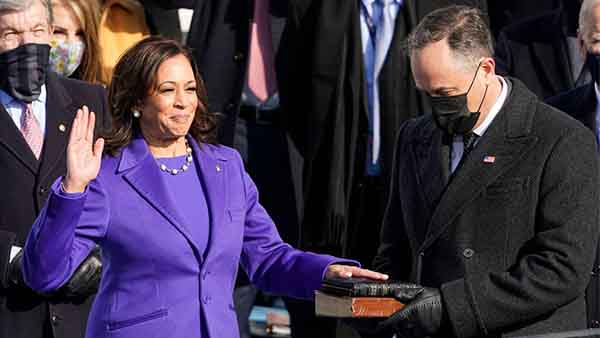
In the political arena, a decades-old glass ceiling was shattered in the United States when Kamala Harris made history by being elected as the first female, first African American, and first South Asian Vice President. Her victory marked a monumental milestone for representation at the highest level of global governance.
Kamala Harris was sworn in as the first female vice president and the highest-ranking female official in U.S. history, as well as the first African American and first Asian American vice president shattering barriers that have kept men entrenched at the highest levels of American politics for many years.. Read more.
Harris joined the ranks of other female vice-presidents around the world, in countries including Bulgaria, Nicaragua, Liberia, Costa Rica, Venezuela, The Gambia, South Sudan, and others. US President-elect Joe Biden created an all women senior communications team, a first for the White House.
Diversity of women in politics grew after the nation was divided by the Trump administration.
Across the world, female executive leadership set a gold standard for governance during a crisis. In New Zealand, Prime Minister Jacinda Ardern won a resounding landslide re-election victory, drawing widespread praise from international observers for her deeply empathetic, transparent, and highly effective management of the coronavirus pandemic.
Simultaneously, the global scientific community witnessed women leading the charge to save millions of lives. Pioneering minds like Dr. Katalin Kariko, whose foundational work on mRNA technology laid the groundwork for rapid vaccine defense, and Dame Sarah Gilbert, who spearheaded the Oxford-AstraZeneca vaccine development, became household names.
This scientific vanguard reached a peak of historical recognition when the Nobel Prize in Chemistry was awarded to Emmanuelle Charpentier and Jennifer Doudna. Their joint honor marked the first time in history that an all-female duo won the prize, celebrating their development of the revolutionary CRISPR gene-editing tool that continues to transform modern medicine.
Cultural landscapes and sports arenas also felt the profound impact of female voices demanding systemic change. Tennis champion Naomi Osaka dominated headlines not only by capturing the US Open title but by intentionally using her immense global platform to spotlight victims of racial injustice, wearing a different commemorative mask for every single round of the tournament.
At the same time, institutional leadership slowly began reflecting this drive for change, as the Fortune 500 reached a record high of thirty-seven female chief executive officers steering major international enterprises through turbulent economic waters.
Through every triumph and defense, the narrative of the year proved that female leadership is an indispensable engine of modern society. From laboratory benches to presidential podiums, the achievements of these trailblazers provided hope and structural change when the world needed it most.
Overall in 2020, women shattered the highest political glass ceiling in U.S. history, swept the Nobel Prize in Chemistry, and led the scientific vanguard to develop life-saving vaccines during a global crisis.
2020 was the year Covid overtook the world with millions of women working as healthcare providers both in and out of medical facilities. It was a year of sacrifice as many women stepped up to the plate to save the lives of others. The plight of minority people especially women was highlighted in terms of social, cultural, and economic equality. It was a year the world changed forever as life became more remote ... both in the sense of technology and doing things from home and in being forced into social isolation.
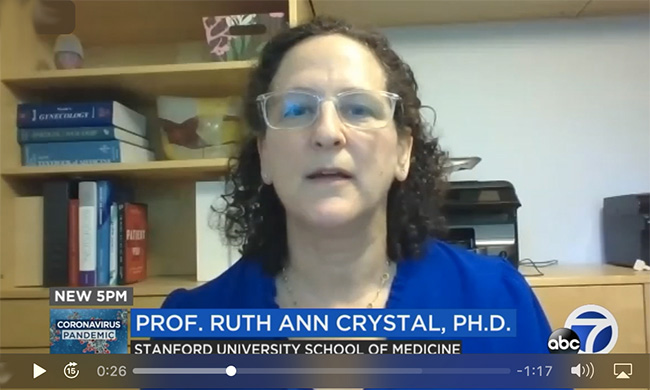
My cousin Dr. Ruth Crystal in San Francisco was
mentioned in several news articles about Covid -19.
ABC Video: Researchers at UCSF, Stanford developing new COVID-19 diagnostic tests
Financial Times July 16, 2020 - At the start of the pandemic, Dr Ruth Ann Crystal at Stanford Medicine in California, set up a WhatsApp group for doctors. After more than 256 signed up - breaching the messaging platform's limit - she switched to Slack, on which she administers a group that numbers more than 1,000 practitioners.
Governments across the world worked to respond to COVID-19, with research suggesting that in countries where women lead, the responses were quicker, more effective and stronger. In countries with women leaders, including New Zealand, Germany, Finland, Bangladesh and more, the quick and decisive actions of the women in charge led to lower cases and lower deaths.
Even though COVID-19 demonstrated the important role of women in leadership and decision-making, as of December 2020, there were only 22 countries with women serving as Heads of State and/or Government worldwide. As we look ahead to building back better in the future, women's leadership is critical to success.
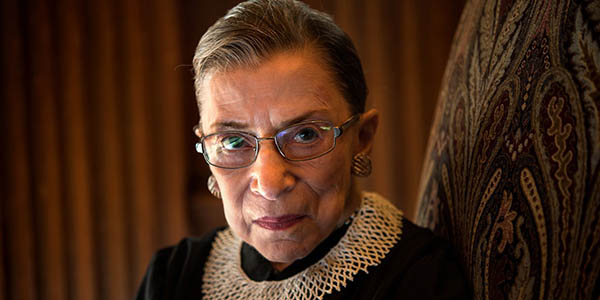
On September 18, 2020, Supreme Court Justice Ruth Bader Ginsburg died at the age of 87 due to complications from metastatic pancreatic cancer.Her passing occurred on a Friday evening, exactly as sundown marked the beginning of Rosh Hashanah, the Jewish New Year. According to Jewish tradition and the Talmud, a person who passes away on the High Holy Days or right as the Sabbath begins is considered a tzaddik - a person of great, exceptional righteousness. This timing held deep spiritual significance for millions mourning the first Jewish woman to ever serve on the United States Supreme Court.