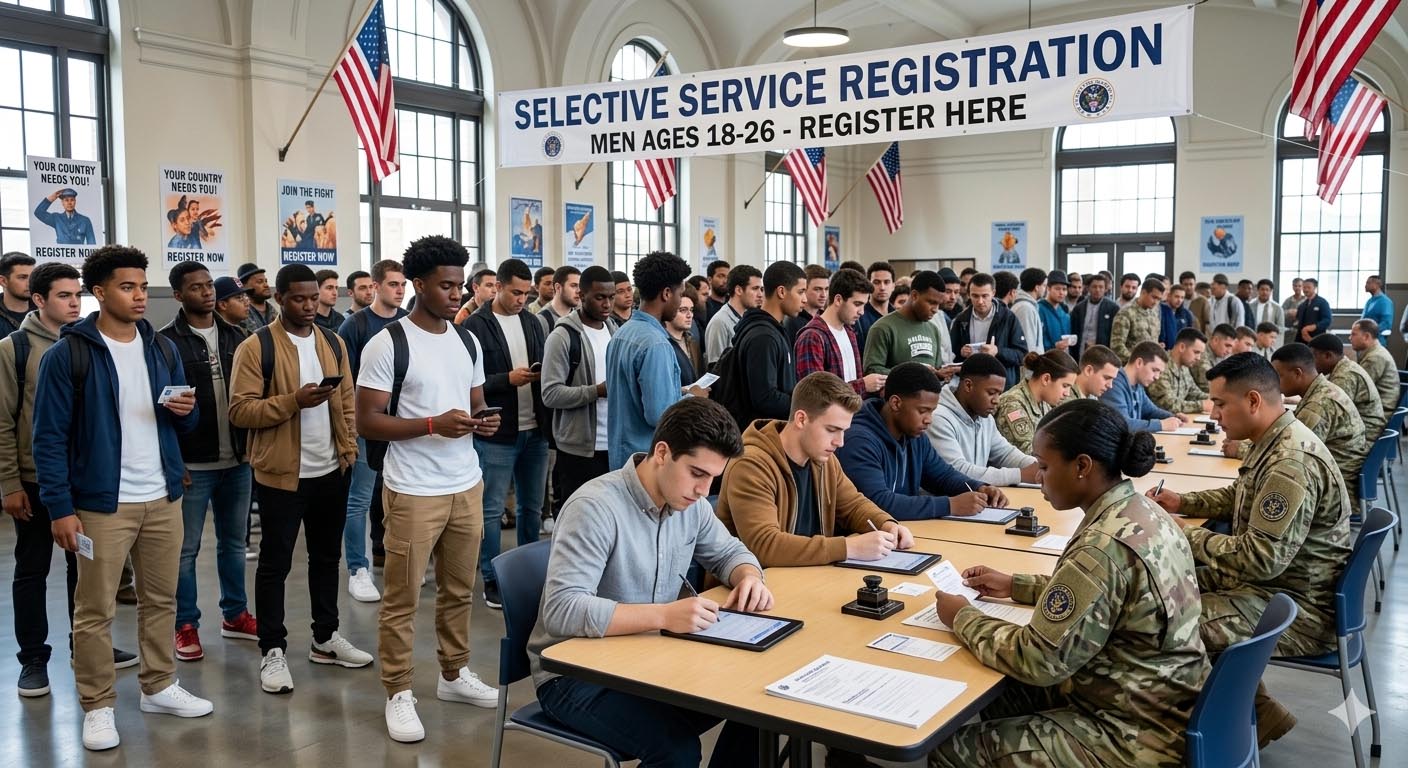
Automatic military draft registration takes effect in December
CNN - April 29, 2026
Automatic military draft registration takes effect in December
CNN - April 29, 2026
Today we are faced with war in Iran, rising global instability, political unrest, cyber warfare, economic uncertainty, and growing fears about how quickly international conflicts can escalate.
As tensions increase across the Middle East and governments strengthen military preparedness, many young Americans and their families are once again discussing something that previous generations hoped would remain part of history - the possibility of a military draft.
Although the United States still operates with an all-volunteer military force, recent changes involving the Selective Service System and automatic registration requirements have intensified public concern and speculation. Discussions surrounding military readiness, troop shortages, and expanding global conflicts have fueled anxiety among many Americans, especially younger generations already facing uncertainty about their future.
For many in my generation, memories of the Vietnam era and the last active draft still carry emotional weight. We remember the fear, the protests, the divisions within families and communities, those killed and others wounded returning with PTSD, and the lengths some young men went to in order to avoid being sent into a deeply controversial war.
One of the most frequently mentioned examples remains Donald Trump and the medical deferment he received for heel spurs during the Vietnam era - something critics and comedians still reference today.
Even decades later, stories from that era continue to shape how Americans react whenever the word 'draft' resurfaces in public discussion. Today's generation faces a different world shaped by artificial intelligence, digital surveillance, drone warfare, and global instability, yet the fear of being called into military service during uncertain times still resonates powerfully.
At the same time, there is currently no official military draft in the United States, and experts note that reinstating one would require major political and congressional action though it should be noted that Trump makes decisions on a whim, and without the consent of Congress.
The recent changes to the draft largely involve automatic Selective Service registration rather than active conscription.
Still, in a world where headlines are increasingly dominated by war, unrest, and geopolitical tension, the topic alone is enough to create anxiety for students, graduates, and young adults already navigating one of the most unpredictable periods in modern history.
Now, with the latest Trump administration policy moving the Selective Service system toward automatic registration beginning in December, anxiety has once again entered the national conversation.
Young men today are already navigating economic uncertainty, rising costs, social pressures, rapid technological change, and concerns about the future. The idea of mandatory military registration - even if only administrative - naturally raises questions and emotions.
At the same time, it is important to separate political rhetoric from legal reality. Automatic registration does not mean an active military draft is coming. Congress would first have to authorize any draft before one could ever take place.
The new policy simply replaces the old self-registration system, where failing to register could technically result in criminal penalties. Under the updated system, eligible men ages 18 to 26 would be registered automatically through existing government records.
Questions have also circulated online about whether this would apply to Trump's youngest son, Barron Trump, 20. Some have joked that his reported height at 6 feet 9 inches tall - would exempt him from service, though military standards and exemptions are far more complex than internet commentary suggests.
Let us hope the latest Trump administration draft advisory does not become a "thing" today's young man have to deal with.
Still, broader concerns remain. Critics question whether increasing military preparedness signals a more aggressive foreign policy direction, while supporters argue it is simply a modernization of an outdated bureaucratic system. In today's polarized climate, even procedural government changes can quickly become symbols of larger fears about war, leadership, and national identity.
For those who lived through Vietnam - the emotional response is understandable. The word 'draft' carries historical weight. It recalls a time when young Americans faced life-altering uncertainty, and when trust in government institutions was deeply tested. Many hope the nation never returns to that point again.
Further let's hope a deranged Trump isn't planning to send troops and start wars around the world in the name of peace - or is he already doing that? We know it's always about money for him so follow the money ...