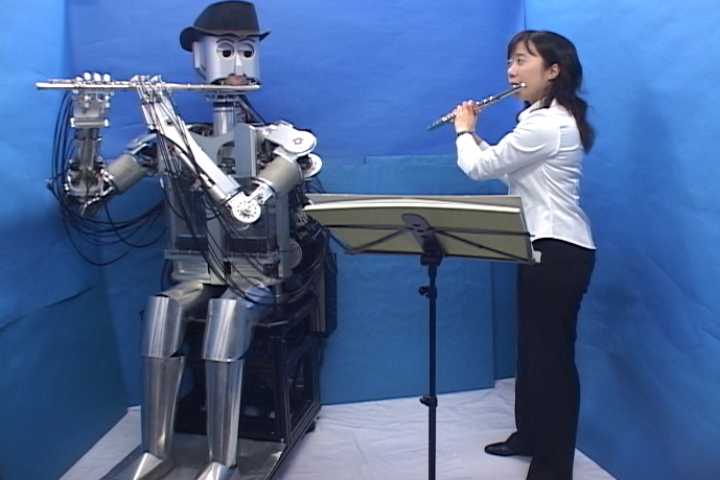
Robotics is the branch of technology that deals with the design, construction, operation, and application of robots, as well as computer systems for their control, sensory feedback, and information processing. These technologies deal with automated machines that can take the place of humans in dangerous environments or manufacturing processes, or resemble humans in appearance, behavior, and/or cognition. Many of today's robots are inspired by nature contributing to the field of bio-inspired robotics.
The concept of creating machines that can operate autonomously dates back to classical times, but research into the functionality and potential uses of robots did not grow substantially until the 20th century. Throughout history, robotics has been often seen to mimic human behavior, and often manage tasks in a similar fashion. Today, robotics is a rapidly growing field, as technological advances continue, research, design, and building new robots serve various practical purposes, whether domestically, commercially, or militarily. Many robots do jobs that are hazardous to people such as defusing bombs, mines and exploring shipwrecks. Read more
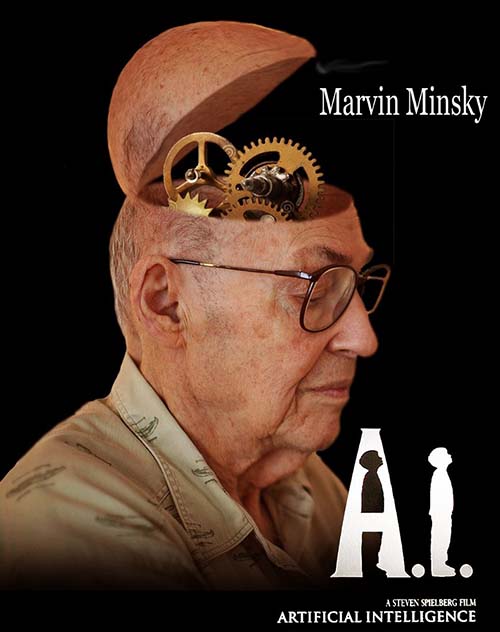
Marvin Minsky was an American cognitive and computer scientist concerned largely with research of artificial intelligence (AI), co-founder of the Massachusetts Institute of Technology's AI laboratory, and author of several texts concerning AI and philosophy. - Videos - I Robot
Artificial intelligence is a discipline that focuses on enabling machines to develop the same intellectual capabilities as humans. Robotics, on the other hand, is the science of designing and building physical robots to improve automation and innovation.
Meet Moya: The World's First Biomimetic Robot That Can Bend, Smile and Holds Eye Contact With Chilling Human-Like Accuracy Daily Galaxy - May 4, 2026
Most robots give themselves away immediately. A mechanical whir, a jerky pivot, a pause before the next motion. Moya does none of that. When Shanghai’s robotics company DroidUp released footage of its new humanoid earlier this year, viewers watched it smile, nod, hold eye contact, and walk with a fluidity that split reactions on Chinese social media almost evenly between fascination and unease.
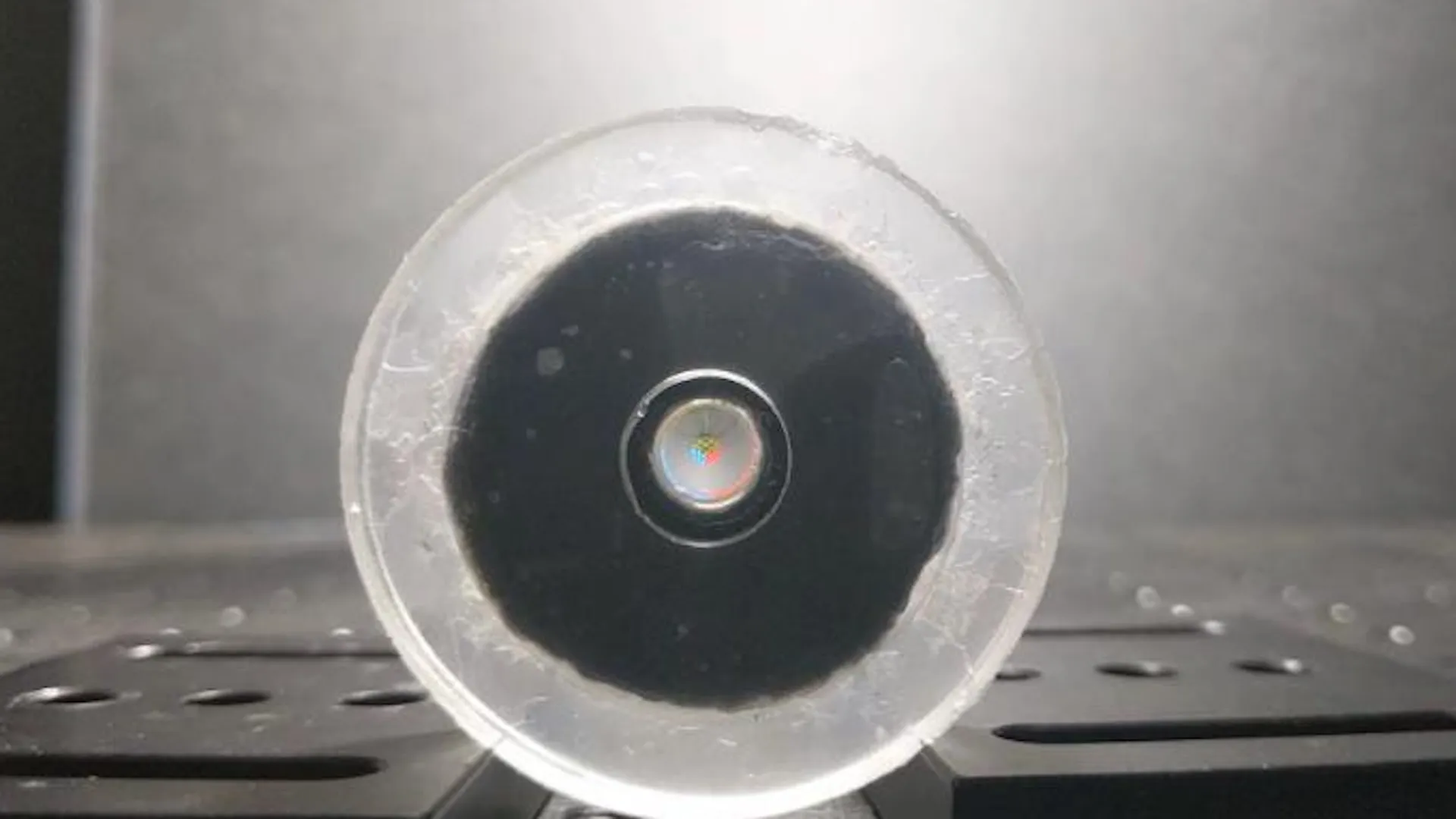
A squishy robotic "eye" can focus automatically in response to light, without any external power. The ultrapowerful robotic lens is sensitive enough to distinguish hairs on an ant's leg or the lobes of a pollen grain.
Robots now grow and repair themselves by consuming parts from other machines TechXplore - July 16, 2025
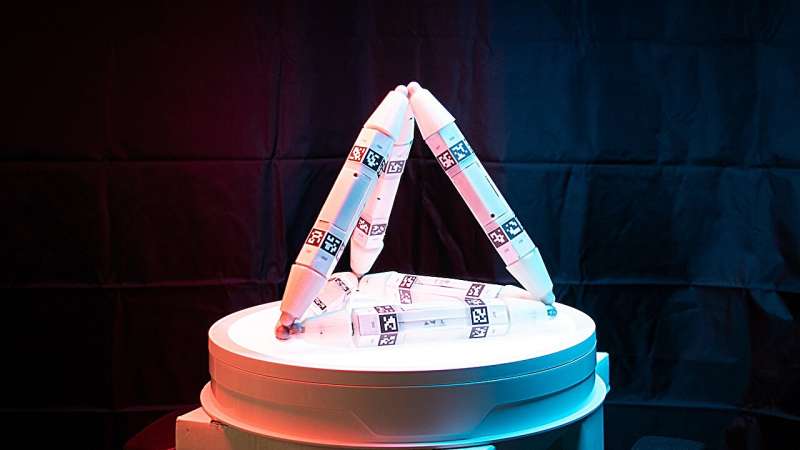
Today's robots are stuck - their bodies are usually closed systems that can neither grow nor self-repair, nor adapt to their environment. Now, scientists at Columbia University have developed robots that can physically "grow," "heal," and improve themselves by integrating material from their environment or from other robots.
Video: Intrepid baby-faced robot dons a jetpack for its next adventure - becoming the first humanoid robot to fly Live Science - June 24, 2025
New footage shows an expressionless iRonCub MK3 robot taking off using four thrusters — two where its arms should be and two in a jetpack on its back.
A marine robot that can swim, crawl and glide untethered in the deepest parts of the ocean TechXplore - March 20, 2025

When a robot becomes the boss: Exploring authority, obedience and relationships with machines Techxplore - March 15, 2025

How does a robot perform as a boss at work? Results suggest that while robots can command obedience, they are not as proficient at it as humans. The level of obedience towards them is generally lower than towards human authority figures, and work efficiency under the supervision of a robot is lower.
Tesla CEO Elon Musk unveiled his vision of an exciting future full self-driving cars and robots that will walk among the population CNN - October 10, 2024
We Robot - Elon Musk - Optimus (robot), Tesla Bot
Is The Future Of Humanity Transhumanism? Live Science - March 5, 2023
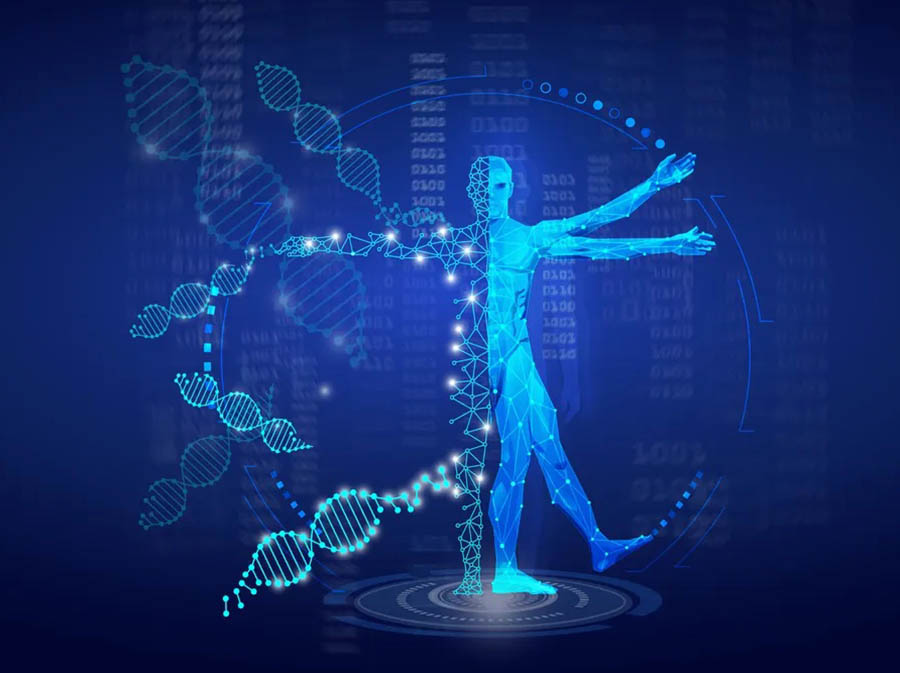
Transhumanism offers humans one of the loftiest goals ever proposed: through science and technology, we hold the power to turbo-charge our senses, edit out our biological frailties, meld minds with computers, and perfect our fleshy bodies to the point where we become something that is beyond human - perhaps something almost God-like. Nietzsche would have a field day.
In decades gone by it was the stuff of science fiction, but we are fast approaching a point where many of these futurist dreams could become reality: CRISPR has made gene editing easier than ever; the gap between the human brain and computers is closing; robotics has never been better; our understanding of biological aging continues to grow. The real question, however, is whether we should embark on such a daring plan?
New AI sees like a human, filling in the blanks Science Daily - May 16, 2019
Computer scientists have taught an artificial intelligence agent how to do something that usually only humans can do -- take a few quick glimpses around and infer its whole environment, a skill necessary for the development of effective search-and-rescue robots that one day can improve the effectiveness of dangerous missions.
S.Korea schools get robot English teachers PhysOrg - December 28, 2010
Almost 30 robots have started teaching English to youngsters in a South Korean city in a pilot project designed to nurture the nascent robot industry. Engkey, a white, egg-shaped robot developed by the Korea Institute of Science of Technology (KIST), began taking classes Monday at 21 elementary schools in the southeastern city of Daegu.
Robot's space debut 'giant leap for tin-mankind' PhysOrg - November 2, 2010
Space is about to get its first humanoid from planet Earth. Robonaut 2 - affectionately known as R2 - is hitching a one-way ride to the International Space Station this week aboard the final flight of space shuttle Discovery. It's the first humanoid robot ever bound for space, a $2.5 million mechanical and electrical marvel that NASA hopes one day will assist flesh-and-bone astronauts in orbit.
Robots get artificial skin PhysOrg - July 1, 2010
Robots are breaking barriers: Long banished behind steel barriers, they are entering new fields of application such as the manufacturing, household and healthcare sectors. The requisite safety can be provided by a tactile sensor system, which can be integrated in a floor or applied directly to robots as an artificial skin. A mobile robot carefully transports a sample through a biotech lab where it is surrounded by the routine hustle and bustle. Lab technicians are conversing with one another and performing tests. One technician inadvertently runs into the robot, which stops moving immediately. An artificial skin covering the robot makes this possible.