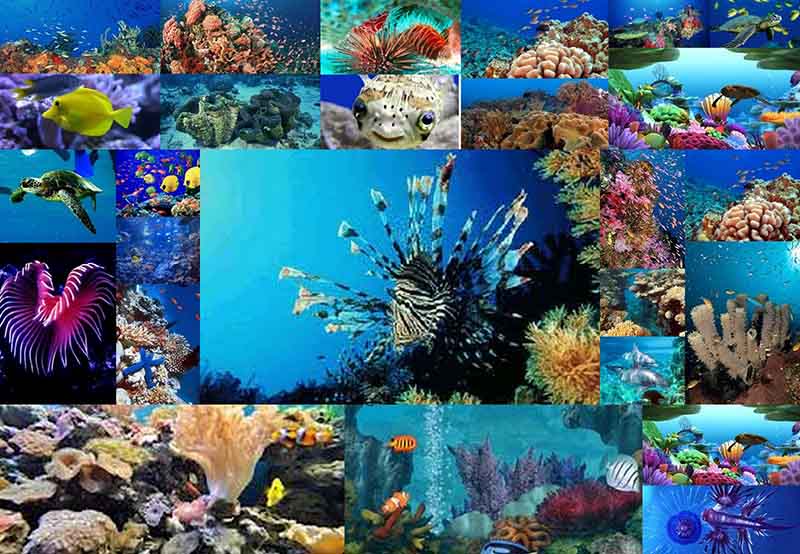
Marine biology is the scientific study of organisms in the ocean or other marine bodies of water. Given that in biology many phyla, families and genera have some species that live in the sea and others that live on land, marine biology classifies species based on the environment rather than on taxonomy. Marine biology differs from marine ecology as marine ecology is focused on how organisms interact with each other and the environment, while biology is the study of the organisms themselves. Read more ...
An Ancient Shark Graveyard Has Been Found in The Egyptian Desert Science Alert - August 22, 2026
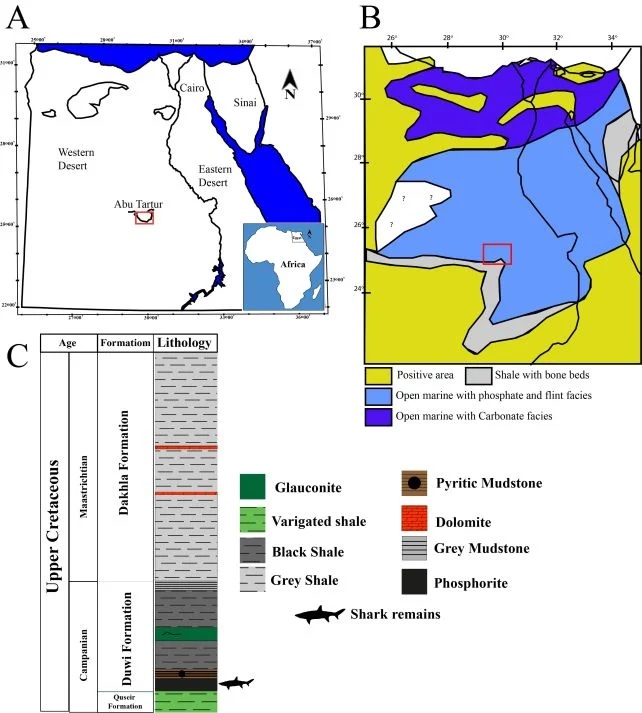
The desert sands of Egypt have been dry for thousands of years. As difficult as it is to picture now, however, much of that desert was once submerged beneath a sea that covered much of the northern perimeter of the African continent. Nor was it a dead sea Š evidence suggests that, during the Cretaceous period, it may have been a tropical wonderland, where rising currents lifted nutrients into the water column to feed a thriving ecosystem. Now, buried in what was once the floor of that long-ago sea, on the Abu-Tartur Plateau, paleontologists have found evidence of its lushness: the teeth of sharks that would have thrived amid the bounty of fish.

Never-before-seen shark that 'walks' on land discovered off Papua New Guinea Live Science - June 22, 2026

Researchers have identified a new species of "walking shark," a rare group of small carpet sharks that use their fins to "walk" along shallow reefs.
Humpback Whale Stuns Scientists With 15,000 Kilometer Journey Across Oceans SciTech Daily - June 8, 2026

A pair of humpback whales stunned researchers by traveling between Australia and Brazil, completing some of the longest migrations ever documented. One whale set a new record with a journey of at least 15,100 kilometers, revealed through photographs taken decades apart.
Unique golden orange shark with white eyes caught off Central America diagnosed with rare condition Science Alert - January 5, 2026

The reason for this, scientists determined, is the rare occurrence of two forms of abnormal pigmentation in the same animal Š a lack of dark pigmentation, known as albinism, and an excess of yellow pigmentation, or xanthism. Even more shockingly, this combined condition - known as albino-xanthochromism - doesn't seem to have hindered the shark's survival. It was living quite happily in the warm summer waters of the Caribbean Sea.
Researchers have identified ginkgo-toothed beaked whales alive at sea for the first time after years of searching, and in doing so solved the mystery of an odd echolocation pulse in the North Pacific. Live Science - November 22, 2025

The newly-sighted cetaceans are ginkgo-toothed beaked whales (Mesoplodon ginkgodens), which were previously only known from dead individuals that had washed ashore and from bycatch. This isn't all that unusual for beaked whales, which are deep divers and notoriously cryptic, spending their lives away from coastlines. Beaked whales are the largest least-known animals left on the planet. IIt is exciting to think that there are still organisms here on earth that weigh over a ton and have never been identified alive in the wild.
Orcas Caught 'Kissing' For Two Minutes With Tongue Science Alert - July 2, 2025
We've recently seen orcas foray into the world of fashion by wearing dead salmon as hats. Now a pair of orcas has been caught 'French kissing', taking their apparent mockery of human habits towards another flavor of gross.
Ancient Blueprint For Human Bodies Discovered in Sea Anemones Science Alert - June 28, 2025

Sea anemones may look alien, but scientists just found out they're hiding an ancient body 'blueprint' Š one that most animals, including humans, still follow. The discovery could shake up the timeline of evolution.
Humpback Whale Bubble Rings May Be an Attempt to Communicate With Us Science Alert - June 13, 2025

Humpback whales caught blowing giant bubble rings underwater may have been attempting some kind of communication with their audience of human onlookers, a new study suggests. Humpback whales (Megaptera novaeangliae) are known for blowing spiral bubble nets to hunt with, but not all bubbles have the same meaning in the world of whales. Some are intended to be playful; some frisky; and others are downright aggressive.
Adorable Sea Lion Can Keep a Beat Better Than Some Humans Science Alert - May 2, 2025

A 16-year-old California sea lion named Ronan blows them all out of the water - even some humans. A new study shows that her ability to bop along to a rhythm isn't just a learned response to some tempos: she can synchronize her movements with new rhythms, suggesting that, once she was trained in what to do, she could adapt and keep a beat to multiple tempos. A feel for the groove isn't restricted to humans, but it does seem pretty limited across the animal kingdom. Chimpanzees can keep a beat, but their ability to do so is low compared to Homo sapiens. One species of lemur is better.
In rare evolutionary event, weird platypus cousin evolved from living in water to living on land Live Science - May 2, 2025

Some of the strangest mammals on the planet just got even stranger. It turns out that echidnas - spine-covered, egg-laying mammals with beaks that shuffle through the undergrowth of Australian forests - probably evolved from a water-dwelling ancestor, a new study finds. The discovery upends scientists' assumptions about the unusual mammals' origins and is a rare evolutionary event, researchers say.
Breaking: Live Colossal Squid Filmed in World First Science Alert - April 16, 2025

Scientists on an icebreaker ship have captured a number of weird and wacky animals from Antarctica's ocean floor, including a bizarre pig-shaped creature. - - Watch the Video
Mysterious Fish Became a Viral Phenomenon. Here's Why. Science Alert - March 16, 2025

In February, researchers from conservation organization Condrik Tenerife were about two kilometers off the coast of Tenerife Island, looking for sharks, when they caught sight of something much stranger. Photographer David Jara Bogu–‡ filmed a humpback anglerfish (Melanocetus johnsonii, a species of black seadevil) swimming near the surface in sunlit waters. These fish have never before been seen alive in daylight, as they normally dwell in the "twilight zone" at depths from 200m to 600m.
Sea Turtles Dance to Orientate With Earth's Magnetic Field, Study Reveals Science Alert - February 14, 2025

Dancing turtles have proved for the first time that some animals use Earth's magnetic field to create a personal map of their favorite spots, scientists. Some animals that migrate across the globe - such as birds, salmon, lobsters and sea turtles - are known to navigate using the magnetic field lines that stretch from Earth's north to south pole.
Whale Song Reveals Eerie Similarities to Human Speech, Scientists Find Science Alert - February 14, 2025

Two new studies have found eerily human-like sophistication in whale songs, challenging notions about our exceptionality and potentially shedding light on the evolution of language.d
Octopus Arms Are Controlled by a Nervous System That's Like No Other Science Alert - January 15, 2025

Octopuses tend to keep secrets, but we've just learnt how they achieve their extraordinary dexterity. The fine control these almost-alien animals have over each of their eight arms is at least partially down to the segmentation of the nervous system circuitry that governs it
First Ever Observation Of Whale Sharks' Mysterious Love Life Caught On Camera IFL Science - January 8, 2025

A humpback whale has made one of the longest and most unusual migrations ever recorded, possibly driven by climate change BBC - December 10, 2024
It was seen in the Pacific Ocean off Colombia in 2017, then popped up several years later near Zanzibar in the Indian Ocean - a distance of at least 13,000 km
Why Do Razorfish Swim Vertically? IFL Science - December 9, 2024

The answer lies in where these characteristically long, razor-thin (hence the name) fish are typically found: in the branches of corals, seagrass beds, and sea urchin spines. Swimming vertically allows the razorfish to hide amongst them, even when moving in large, synchronized schools. Their body color also helps them out here, with those living in different habitats exhibiting different colors that camouflage them; razorfish found in seagrass habitats, for example, often have a greenish-yellow tint to their backs.
Video Captures A Seadragon Dad Carefully Holding 250 Eggs On His Tail in Australia IFL Science - November 14, 2024

These Strange Sea Creatures - Turritopsis Dohrnii, or the Immortal Jellyfish - Can Turn Back Time And Age In Reverse Live Science - November 12, 2024

Surprise Discovery Reveals Animal Life Thriving Under The Seafloor Science Alert - October 15, 2024

In hidden cavities beneath the floor of the deep ocean, in the oases created by hydrothermal activity, whole communities of multicellular animals are living their best lives down in the darkness.
Rare Walking Fish Has Genome Sequenced For First Time - But It's Not Happy About It IFL Science - October 14, 2024

Wonderfully Weird Lifeforms Spotted On A Deepsea Volcano Near American Samoa IFL Science - October 10, 2024
A new crowd of deep-sea weirdos and alien-like lifeforms have been captured on camera by scientists exploring the depths of the ocean around American Samoa.
Scientists Astonished To Discover Two Comb Jellies Can Fuse To Form One Individual IFL Science - October 7, 2024
A chance observation has led to an astonishing discovery for a group of scientists studying the comb jelly, Mnemiopsis leidyi. When injured, it appears these curious ctenophores can fuse together to form one individual and even share some bodily functions.
Alligator gar: The 'living fossil' that has barely evolved for 100 million years Live Science - October 5, 2024
This "living fossil" can grow as large as an alligator, has two rows of needle-sharp teeth, and such strong armor that it survived predatory dinosaurs. It lives in rivers, reservoirs and coastal bays in southwestern U.S. states, down to Veracruz, Mexico. With their long snout, thick armored scales, and two rows of piercing teeth, these huge fish could easily be mistaken for a ferocious gator - hence their common name: alligator gar.
Deep Ocean Sound Confused Scientists For Years. We Finally Know What Makes It Science Alert - September 25, 2024

The "biotwang" is actually the call of the Bryde's whale traveling long distances in the open ocean
Giant oarfish: The 'doomsday' fish of legend that supposedly foreshadows earthquakes Live Science - September 7, 2024
According to Japanese myth, oarfish are harbingers of earthquakes, and their appearance signals a tremor could be about to hit. In traditional Japanese legend, oarfish were known as "ryugu no tsukai" meaning "the messenger from the sea dragon god's palace." People believed oarfish would come up from the deep to warn people when an earthquake was imminent. This myth caused a stir in 2011 when 20 oarfish washed ashore in the months before Japan was struck by the country's most powerful earthquake.
Flying Spaghetti Monsters And 20 Potential New Species Spotted At Sea Mounts IFL Science - August 28, 2024
Gorgeous 'Cotton Candy' Lobster Just Found Is So Rare It's 1-in-100 Million Science Alert - August 8, 2024

In late July, a young fisherman by the name of Joseph Kramer was hauling up his lobster traps off the coast of New Hampshire when he found himself looking at a crustacean positively too beautiful to eat. Scientists found three distinct great-white-shark populations that congregate in different oceans and do not interbreed. Their separation may have implications for conservation.
Great white sharks split into 3 populations 200,000 years ago and never mixed again - except for one hybrid found in the Bermuda Triangle Live Science - August 8, 2024
Great white sharks split into three distinct groups about 100,000 to 200,000 years ago and seldom mingled, a new study shows. The findings suggest that if one of these populations goes extinct, it cannot be replaced, the study authors said.
New 210-Million-Year-Old Lungfish Species Lived When Dinosaurs Were Just Getting Started. These fish have endured for 420 million years, and you can see them alive today IFL Science - August 8, 2024
A fossil hunter has been honored with the most coveted of rewards among nature enthusiasts: getting a shiny new-to-science species in his name. Steve Edwards is also a safari guide in northern Zimbabwe, where he found a fossil of a curious fish that lived when the dinosaurs were just getting started around 210 million years ago.
Pacific geoduck: The large 8 pound phallic looking clam that can live longer than 165 years Live Science - August 4, 2024
Cuttlefish Can Falsely Remember The Past in The Same Way Humans Do Science Alert - July 23, 2024

Thanks to the piecemeal way our brain stores memory information, aspects of our recollections can become jumbled as we reconstruct them, leading to the generation of what are called false memories.
From the sandstone cliffs of continental Europe to the depths of the Atlantic Ocean, something has been leaving its dazzlingly geometric mark since the dawn of complex life IFL Science - July 16, 2024
Despite finding thousands of these perfect honeycomb-shaped fossils, however, scientists are completely baffled as to what type of creature could possibly have been producing the patterns for such an unimaginably long time. Amazingly, the earliest known record of these bizarre shapes can be found in Leonardo Da Vinci's Paris Manuscript I. Amongst a series of sketches of marine fossils sits a drawing of a connected grid of perfect hexagons, which scientists later linked to an ancient creature called Paleodictyon nodosum. The many holes at the surface of its abode link up below in a labyrinth of subsurface tunnels
The first physical traces of this enigmatic organism were discovered in sedimentary rocks that once sat at the bottom of an ocean during the Eocene, some 55 to 35 million years ago. Consisting of a net-like series of tunnels and shafts that link up to form honeycomb arrangements, P. nodosum has now been found in dried-up sediments across Europe, with the oldest specimens having been dated to the Cambrian Period, roughly 500 million years ago.
What scientists canÕt figure out, however, is whether these prehistoric impressions are simply burrows made in the ancient seafloor by some bottom-dwelling creature, or an imprint of the organism itself. As if another layer of intrigue were required, researchers later made the mind-blowing discovery that the creator of these perfect patterns may still exist at the bottom of the Atlantic Ocean.
While exploring an underwater mountain range called the Mid-Atlantic Ridge in the 1970s, scientists started noticing arrangements of small holes in the ocean floor that looked very much like the hexagonal designs associated with Paleodictyon. It took until 2003, however, for researchers to finally look beneath the fine layer of dust and sediment that hid whatever was making the holes.
To their amazement, the researchers found honeycomb-shaped networks of subsurface tunnels that were identical to P. nodosum. However, after retrieving several samples from depths of around 3,500 meters (11,500 feet), scientists were frustrated to find that the hexagonal burrows were completely empty of any organisms, either living or dead. Even more infuriatingly, no traces of DNA could be detected within the tunnels.
What all this means is that we have absolutely no idea what is generating these mesmerizing patterns, which appear to have been in continual production for around 500 million years. We still don 't even know if the net-like arrangements are burrows or the imprint of some sponge-like creature.
With no option but to speculate, researchers have hypothesized that Paleodictyon may represent a cast left behind by organisms similar to glass sponges or giant, single-celled creatures known as xenophyophores. An alternative theory states that the networks are actually the remains of abandoned nests, and that the burrows are produced by hatchlings making their way through the sediment. Yet another explanation posits that the underground burrows may represent a kind of "farm", built by some strange burrowing worm to trap and cultivate the bacteria it feeds on. Ultimately, though, none of these hypotheses are free of holes, which means that whatever it is, Paleodictyon has us completely stumped.
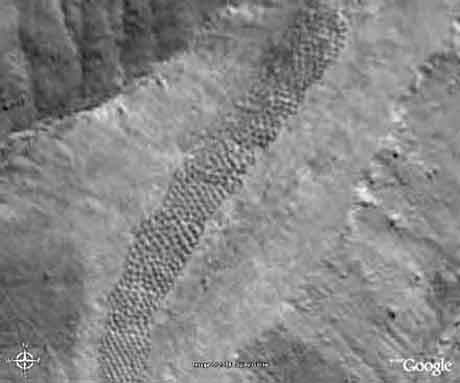
Is there a connection to an ancient site called Band of Holes near Pisco Valley, Peru
Meet The Sei Whales: Speedy And Sizable, But Somehow Forgotten IFL Science - June 17, 2024
In the whale world, a few species get all the glory; the blue whale is the world's largest, and then there are humpbacks, leaping out of the ocean to the delight of film crews and tourists. Beluga whales might be famous for their unusual appearance and killer whales for sinking yachts (and not actually being whales at all), but what about some of the lesser-known species? Have you ever heard of the sei whale?
Antarctic Peninsula: Footage of humpback whales captured by drones has revealed how the animals maneuver their whole bodies when they feed BBC - June 16, 2024

One whale used its four-meter-long fin to sweep a net of bubbles around its prey and trap them, known as "bubble-netting".
Move Over Joro Spiders, Now Furry-Clawed "Mitten Crabs" Are Invading New York Live Science - June 13, 2024
If you were hoping the next invasion of New York would be somewhat less eight-legged, weÕve got bad news: invasive crabs that harass fishers, alter food webs, and even shut down power plants have made it to the stateÕs waters. On the upside, they do have very cute little mittens.
27 Marine Species Discovered That Glow, From Octopus To Boxer Crabs IFL Science - June 12, 2024
Many species in the natural world have a certain little something that goes beyond the striking patterns visible on their fur and feathers. From fungi to wombats, many species have been found to be fluorescent Š and now a whole range of glowing sea creatures from the Banda Sea in Indonesia and the Red Sea in Egypt are joining the party.
16 million years ago a different kind of Dolphin swam in the Amazon, And It Was a Giant Science Alert - March 23, 2024
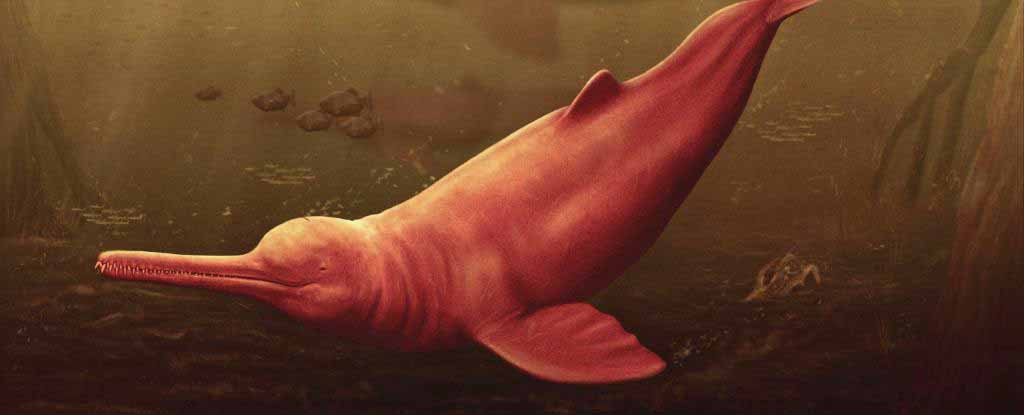
A dolphin that swam the waters of the Amazon basin 16 million years ago is a contender for the largest freshwater toothed whale the world has ever seen. The ancient beastie measured up to 3.5 meters (11.5 feet) in length, a good deal larger than the 2.7-meter (9-foot) pink Amazon river dolphins that feast on piranhas in the habitat today.
The WorldÕs Rarest Fish Is Making A Comeback, One Ridiculous Baby At A Time IFL Science - March 21, 2024
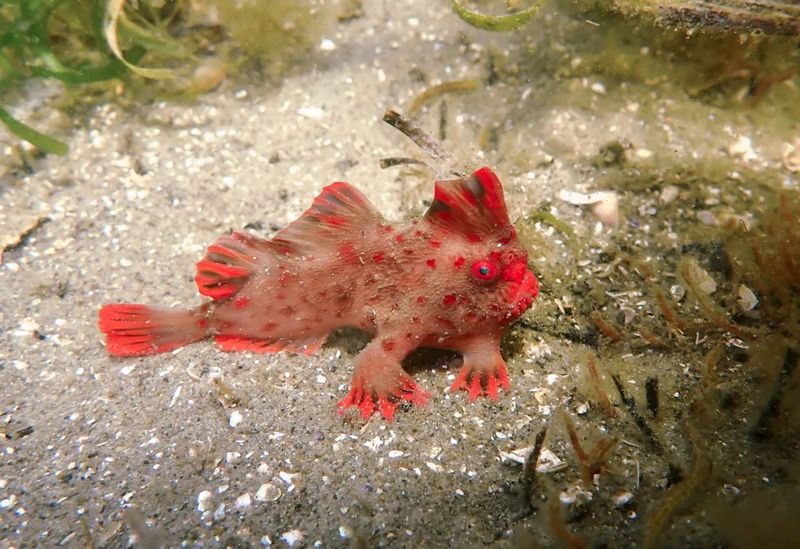
The red handfish, Thymichthys politus, is known from just two small patches of reef off the coast of Tasmania, thought to be home to around 100 adults. Habitat degradation and climate change have threatened them with extinction, but thanks to a breeding program, they welcomed 21 hatchlings in 2023.
It can reach up to 33.6 meters (110 feet) in length and weigh up to 190 tonnes (210 short tons). It has a heart the size of a car and a tongue that weighs as much as an elephant. It feeds mainly on krill, tiny crustaceans that it filters from the water with its baleen plates. It can consume up to 40 million krill per day, equivalent to 1.5% of its body weight.
Octopuses Already Had The Oldest Known Sex Chromosomes 248 Million Years Ago IFL Science - March 7, 2024

The chromosomes in cephalopods that determine whether they will be male or female have been in use for at least 248 million years Š longer than those for any other animal equivalent we have found. The longevity contrasts with other animal classes, which change systems far more frequently.
Bottlenose Dolphins Become One Of Few Known Mammals With A 'Seventh Sense' IFL Science - February 25, 2024
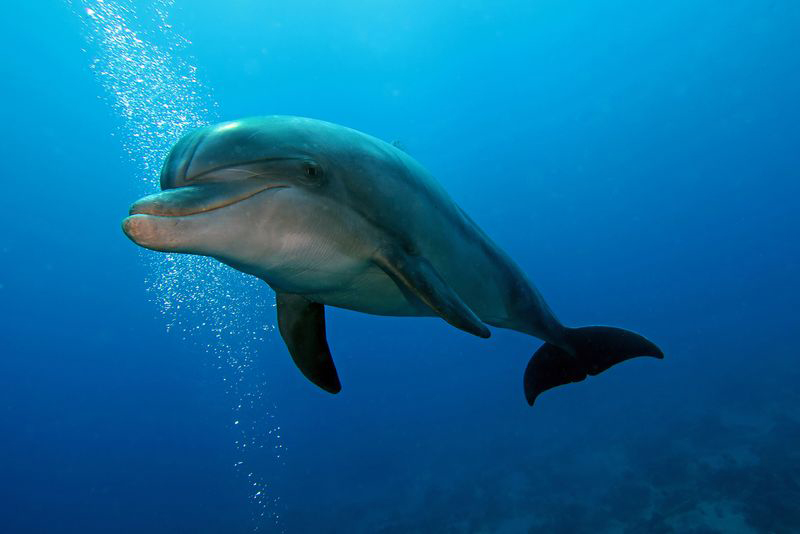
Dolphins have small pits rich in nerve endings on their face, known as vibrissal crypts. A 2022 study confirmed these allow them to detect weak electric fields, but provided no indication on how weak that can be. It makes sense for species that live in murky rivers or estuaries to develop alternatives to seeing underwater, but for those dolphins that inhabit clearer waters such capacities might prove superfluous. However, it seems even in their frequently crystal-clear waters bottlenose dolphins find electrosensitivity useful enough they have maintained it to a considerable degree.
Sharks Are 450 Million Years Old, Meaning They Were Here Before Trees Live Science - February 23, 2024
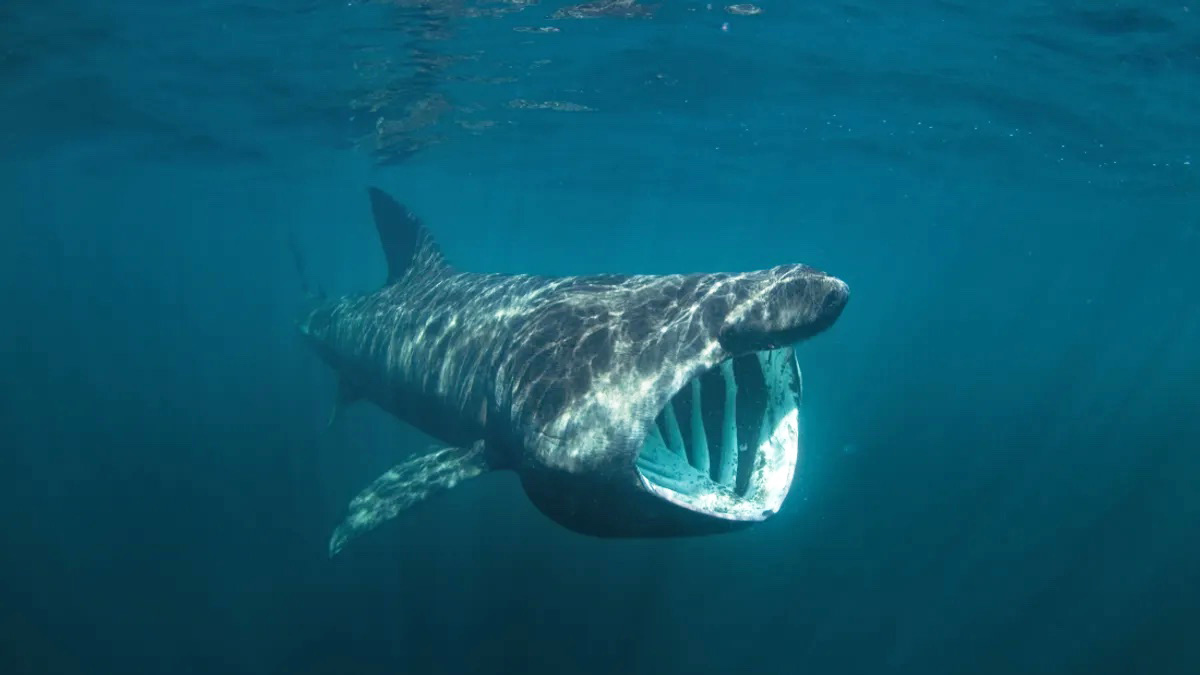
Sharks evolved around 450 million years ago, which means theyÕve hitched a lift on planet Earth around the galaxy twice. If thatÕs not yet given you a fact-induced headache, it may tip you over to hear that it also means sharks were on Earth before trees, at a time when Saturn didnÕt have rings yet.
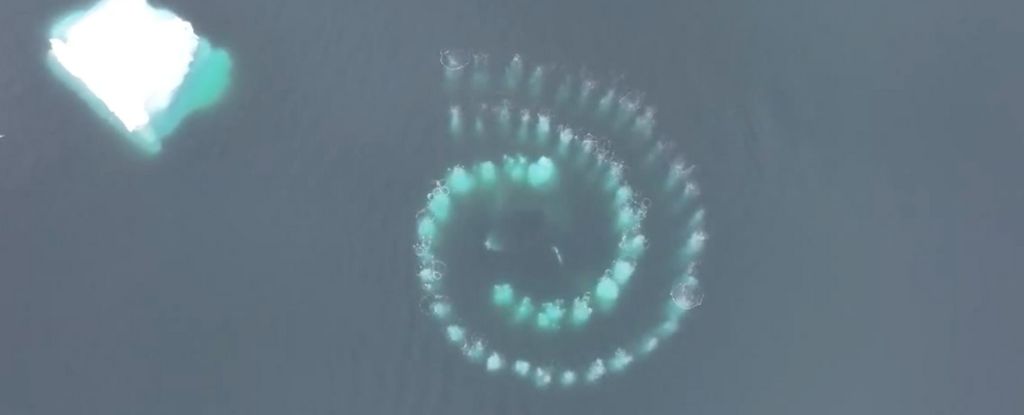
Incredible 'Fibonacci' Spiral Was Made by a Pair of Ocean Whales off Antarctica Science Alert - January 10, 2024
The unfurling coil of light blue bubbles created a shape on the ocean surface that looked remarkably like a Fibonacci spiral - the famous mathematical pattern that often appears in the natural world, from plant to animal life.
Scientists Contact Whales in World-First Communication Experiment Science Alert - December 18, 2023
>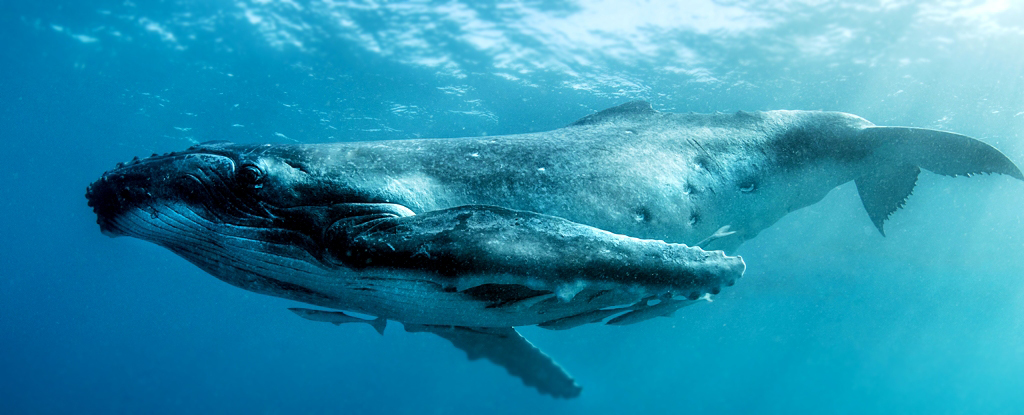
What do whale experts and alien hunters have in common? More than you might expect. For a recent study the Alaska Whale Foundation and SETI (Search for Extraterrestrial Intelligence) teamed up. Their mission: Communicate with whales. And they did just that. In a landmark experiment, the team had a 20-minute conversation with a humpback whale named Twain in her own language. Twain and the scientists didn't talk about the weather or the latest fish gossip - we're still a long way from that level of understanding. What did happen, though, was remarkable.
This 450-Million-Year-Old Bloodsucking Fish Has Been On Earth Longer Than Trees IFL Science - September 27, 2023
An eel-like parasite with no jaw, no bones, and a thirst for blood has been wriggling its way through EarthÕs waterways since before even the dinosaurs walked the Earth. ItÕs older than trees, even, and yet has endured to the modern day where itÕs become the subject of many scientific studies and killed off the odd Medieval monarch. WeÕre talking about the Pacific lamprey.
Ghostly Footage of a Dumbo Octopus Captured 8,000 Feet Below The Ocean Science Alert - September 27, 2023
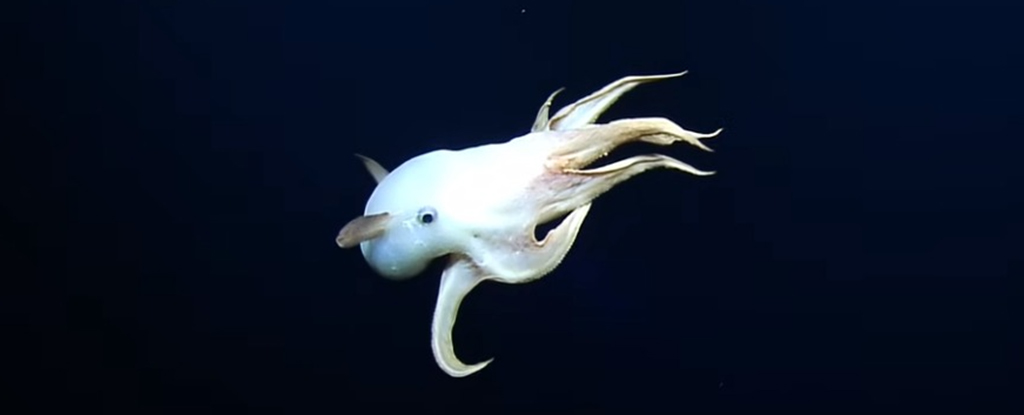
Deep beneath the ocean's waves dwell creatures of pure horror. Sharp of tooth, screaming jowls, and flesh that shimmers with preternatural light, we can only be grateful for the shroud of darkness that hides them.
Incredible Color-Changing Fish Can 'See' With Its Skin Science Alert - August 23, 2023
As if changing color isn't impressive enough, hogfish can 'see' with their skin too. A new US study suggests this bizarre form of visualization is how the reef fish detect their own colors.
Scientists Just Discovered a Strawberry-Like Antarctic Invertebrate With 20 Arms Gizmodo - August 12, 2023
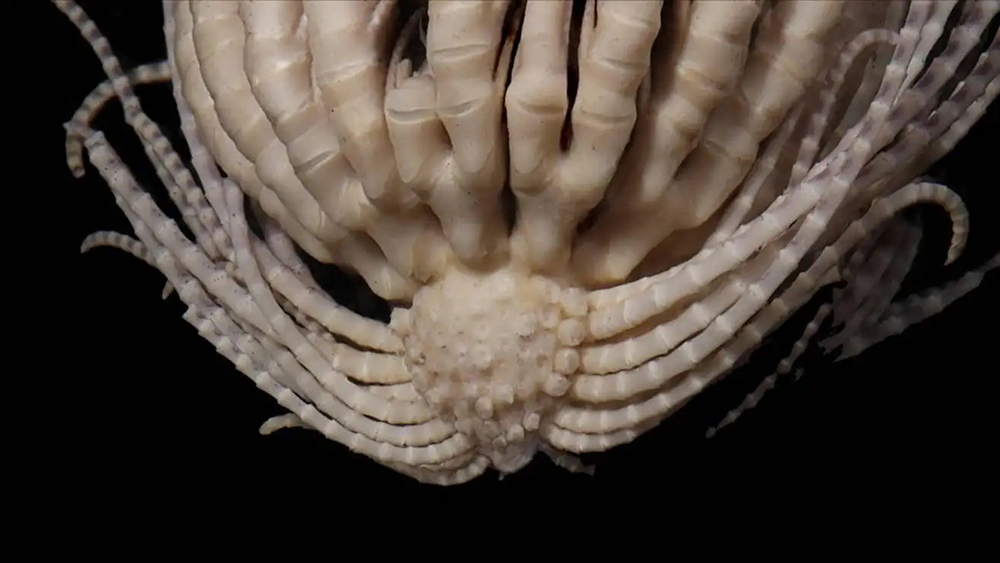
The Antarctic strawberry feather star is one of four new related species believed to have been discovered by a team of marine scientists.
The 'Immortal Jellyfish' Can Age in Reverse And Possibly Live Forever Science Alert - July 23, 2023
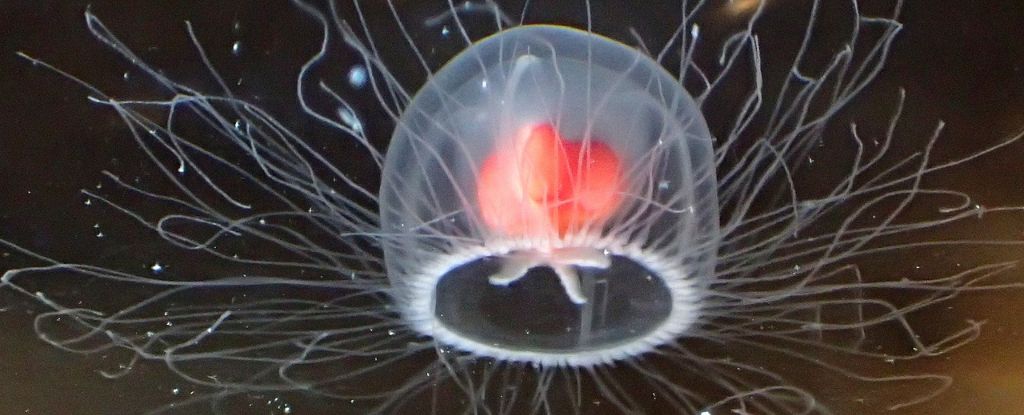
The secret to eternal life has been swimming in Earth's oceans for millions of years. The 'immortal jellyfish' is so named because it can, theoretically, live forever. For all we know, some of these tiny, translucent blobs have been drifting along since well before the demise of the dinosaurs, around 66 million years ago.
Rare Deep-Sea Octopus Nursery Found Off The Coast of Costa Rica Science Alert - July 5, 2023
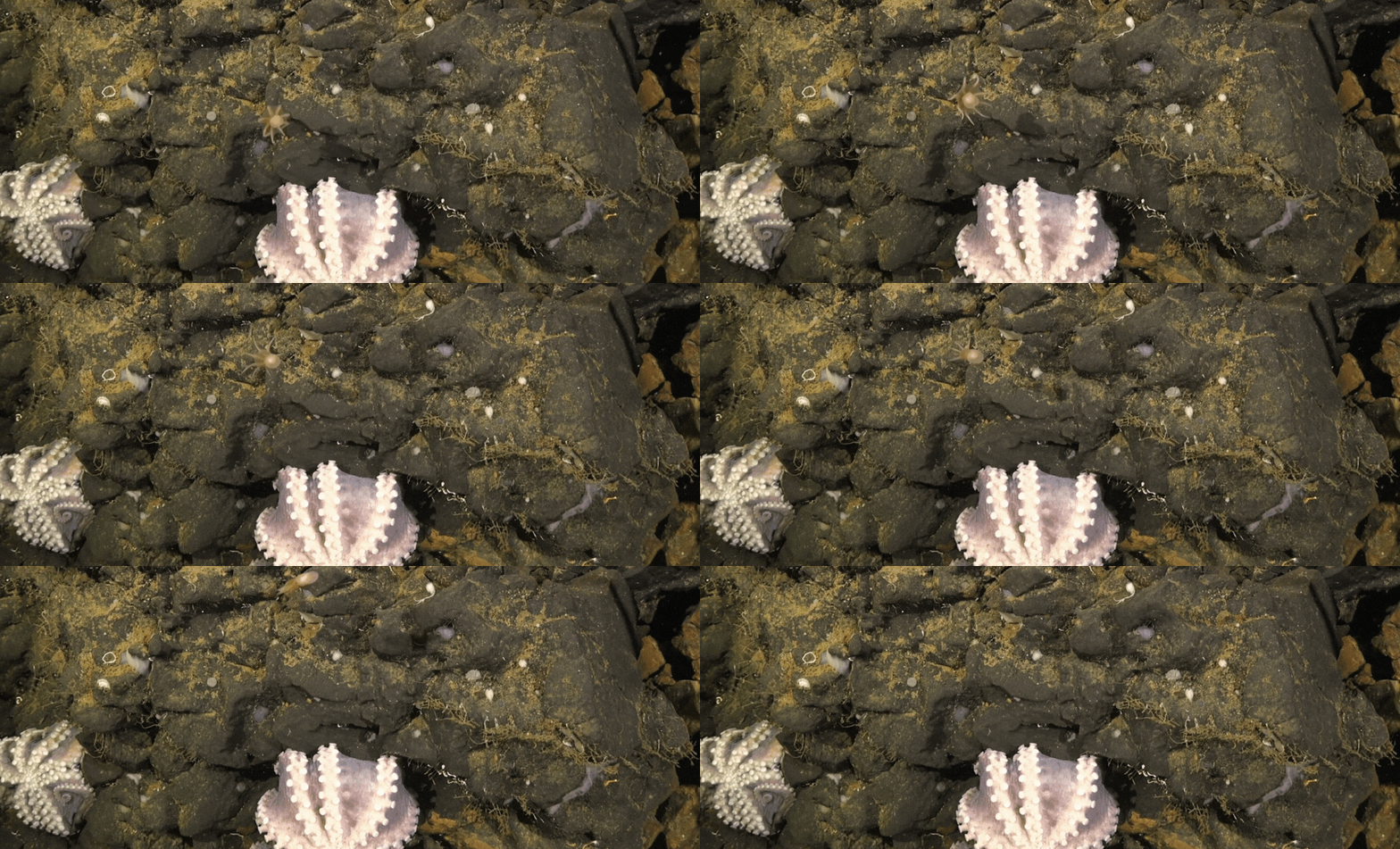
Scientists have found a new octopus nursery in seamounts off the coast of Costa Rica and confirmed a previously discovered one in the area is active, bringing the world's known octopus nurseries to a total of three.
It's Not Just Orcas: Dolphins Are Spreading Behaviors, Too, And It's a Real Problem Science Alert - June 29, 2023

The news that orcas are attacking and sinking ships off Europe's Iberian coast has the world captivated by the strange workings of the creatures' culture. But these aren't the only sleek ocean swimmers that have learned to respond to the presence of humans. Sometime between 2017 and 2020, marine scientists noticed dolphins approaching recreational fishing boats and feeding on the scraps tossed to them by humans on board.
A blinking fish reveals clues to how our ancestors evolved from water to land PhysOrg - April 24, 2023

New research shows that these amphibious fish have evolved a blinking behavior that serves many of the same purposes of our blinking. The results suggest that blinking may be among the suite of traits that evolved to allow the transition to life on land in tetrapods the group of animals that includes mammals, birds, reptiles and amphibians -'some 375 million years ago.
Newly discovered jellyfish is a 24-eyed weirdo related to the world's most venomous marine creature Live Science - April 25, 2023
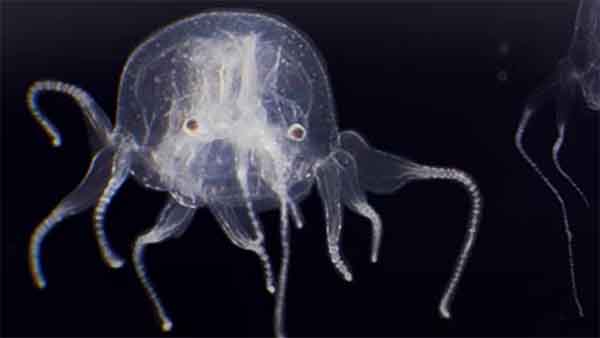
Scientists in Hong Kong have discovered tiny, cube-shaped box jellyfish in a brackish shrimp pond that are completely unknown to science. The diminutive jellies have a completely transparent and colorless body, or bell, as well as 12 tentacles ending in small, paddle-like structures that enable the critters to speed through water faster than most other jellyfish species. Like other box jellies - a group of Cnidarians that includes the Australian box jellyfish (Chironex fleckeri), the worldÕs most venomous marine animal, according to the National Ocean Service (opens in new tab) - the newly described jellies have 24 eyes arranged in clusters of six around its cubic bell.
Scientists photographed a snailfish swimming 8,336 meters below sea level near Japan, making it the deepest recorded fish ever caught on camera Science Alert - April 3, 2023
Previously, the deepest recorded fish was spotted 8,178 meters down in the Mariana Trench. Scientists dropped an autonomous "lander" camera into the Izu-Ogasawara Trench near Japan and filmed the snailfish that they estimated to be at or "very close to" the maximum depth that any fish can survive.
These Sea Creatures Don't Need a Brain to Learn, According to a New Study Science Alert - April 3, 2023
According to recent research, starlet sea anemones (Nematostella vectensis) are capable of surprisingly sophisticated learning, as evidenced by their ability to remember the connection between light and electric pulses.
Blue-ringed octopus, one of the most toxic animals on Earth, bites woman multiple times Live Science - March 25, 2023
On March 16, the woman was bitten twice on her abdomen by an unknown species of blue-ringed octopus at a beach near Sydney in New South Wales (NSW), Australia. She had collected a small shell while swimming, and when she picked it up to look at it, the tiny cephalopod fell out and landed on her stomach,
Watch 2 megamouth sharks caught on video for the 1st time ever Live Science - March 25, 2023
Stunning new footage shows a pair of extremely elusive megamouth sharks (Megachasma pelagios) swimming together off the coast of San Diego.
New virus discovered in whales, dolphins across Pacific PhysOrg - January 27, 2023

A novel virus, potentially fatal to whales and dolphins, has been discovered by researchers at the University of Hawaii. Prior to its discovery in 10 whale and dolphin host species across the Pacific, the virus was found in only a single marine mammal worldwide. The discovery of beaked whale circovirus (BWCV) in whales and dolphins expands the knowledge of marine mammal species that can become infected with the disease. Circoviruses are DNA viruses that cause disease in birds, pigs and dogs, and in severe cases can become fatal. The whales and dolphins that researchers tested came from multiple regions in the Pacific, with the majority of animals that tested positive for the disease being from the Hawaiian Islands.
Octopus Brains Evolved to Share a Surprising Trait in With Our Brains Science Alert - November 26, 2022

Our glorious little blue marble of a planet is filled with an astonishingly diverse array of lifeforms, but some are definitely more peculiar than others. This is particularly true of the octopus, an animal so strange that it regularly invites comparisons to aliens. Indeed, if there is any creature on Earth that's strange enough to have evolved elsewhere it's the octopus. Some fringe theories even propose that octopuses could be aliens. However, there's plenty of evidence to tie octopus evolution firmly to Earth, and a team of scientists has just found a new one.
After a 25-minute battle, UK angler Andy Hackett caught a colossal carp, nicknamed "The Carrot," that weighed in at a staggering 67 pounds, 4 ounces (30 kilograms) CNN - November 23, 2022
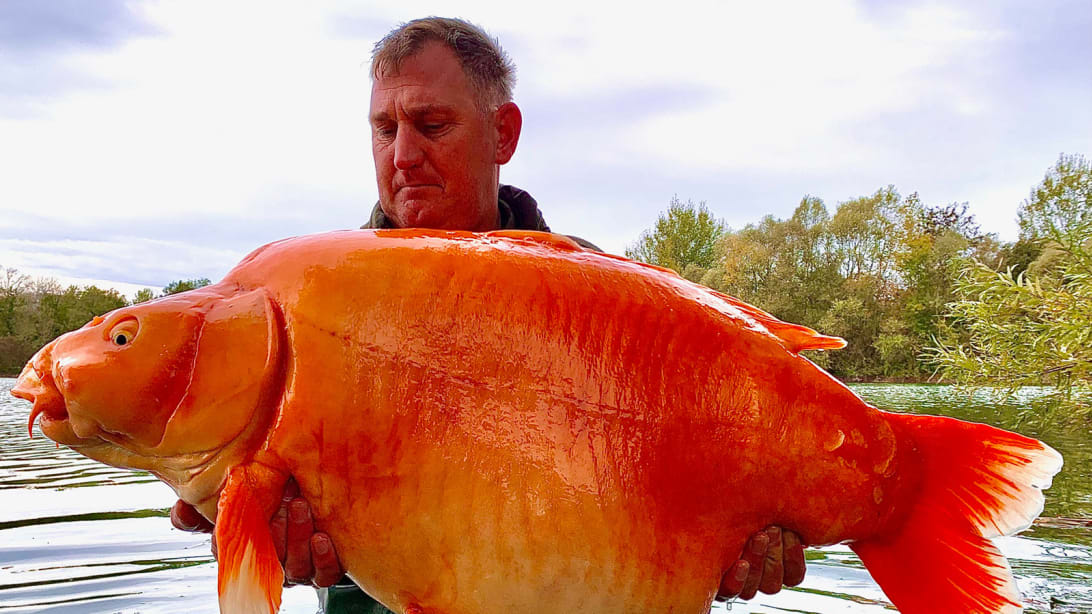
The giant fish is believed to be the second largest of her type ever to be caught, according to BlueWater Lakes, the fishery in France's Champagne region where the giant lives. With its striking orange color, the massive goldfish-like creature easily stands out as it swims below the water's surface. The Carrot, however, has proven to be a challenge to catch. Hackett landed the prized fish, a hybrid of a leather carp and a koi carp, on November 3 while visiting the lake site.
A small clam, previously known only from fossils, has recently been found living at Naples Point, just up the coast from UC Santa Barbara PhysOrg - November 7, 2022
On an afternoon low tide in November 2018, Goddard was turning over rocks searching for nudibranch sea slugs at Naples Point, when a pair of small, translucent bivalves caught his eye.
Humpback Whales Almost 9,000 Miles Apart Have Been Caught Singing The Same Song Science Alert - September 5, 2022
Humpback whales throughout the entire South Pacific Ocean are connected to each other via shared song, according to new research. From the east coast of Australia to French Polynesia to breeding grounds off Ecuador - a total distance of more than 14,000 kilometers (8,700 miles) - researchers have heard humpbacks trading the same viral hits.
Humpback whale songs spread from pod to pod across the Pacific Ocean PhysOrg - August 31, 2022
Prior research has shown that humpback whales sing intricate songs - some of them are quite long, lasting up to 30 minutes. It is not known why the whales sing the songs, but oceanographers suspect they do so likely for the same reason that many birds, humans and other species sing - to attract a mate.
An Ancient Creature Who Could See in The Dark Lies Hidden in The Eyes of Whales Science Alert - August 3, 2022
The first mammals to return to the sea, more than 35 million years ago, had eyes for the deep. According to new research, the visual systems of modern whales, dolphins, and porpoises - collectively known as cetaceans - all derive from a common ancestor with powerful underwater vision.
Sharks are older than the dinosaurs. What's the secret to their success? Live Science - July 25, 2022
Sharks have lived on Earth for at least 450 million years. Sharks are hardly newbies on our planet. As a group, they have existed for at least 450 million years, surviving four of the "big five" mass extinctions, including the catastrophe that wiped out the nonavian dinosaurs 66 million years ago at the end of the Cretaceous period. For context, that makes sharks older than dinosaurs, which emerged roughly 240 million years ago, and even trees, which evolved on Earth around 390 million years ago.
Rare Deep-Sea Video Shows a Squid Mom Carrying Its Eggs For Safety Science Alert - July 10, 2022
It's a big ol' scary ocean out there. When you're just a teeny tiny embryonic squid, there are a lot of things that might like to have you for lunch. One strategy, employed by a variety of squids, is to protect their eggs in a giant ball of gelatinous, slippery mucus. Some deposit their eggs directly on the seafloor. But at least one squid seems to have a different strategy.
Largest ever study of its kind reveals whales evolved in three rapid phases PhysOrg - May 10, 2022
The diversity we see in whale (Cetacea) skulls was achieved through three key periods of rapid evolution.
Scientists Have Figured Out What's Killing The World's Biggest Fish Science Alert - May 10, 2022
Over 80 percent of international trade is carried by sea. Much of what we use and consume everyday either has been or will be transported on huge vessels which plough the global ocean. The courses these container vessels take are fixed shipping routes known as marine highways, which are not unlike motorways on land. These highways, upon which vessels travel back and forth, connect distant ports, often on opposite sides of vast oceans. Marine highways can also cut across the movements and migratory routes of marine animals. Giant plankton-feeding whales and sharks are particularly vulnerable to being struck and killed by large vessels as they spend long periods near the surface. Our new study found that this threat may be a greater cause of death for the world's largest fish, the whale shark, than anyone previously realized.
Rare Videos Show Captive Squid Changing Color to Hide in Plain Sight Gizmodo - April 7, 2022

A team of scientists in Japan captured video of squid camouflaging with their surroundings, much like octopuses and cuttlefish do. While squid in the wild are known to change color, the scientists set up an experiment to confirm this camouflage ability in a laboratory.
Recent studies have detected simple arithmetic abilities beyond mammal and bird brains, from salamanders to bees. Science Alert - April 2, 2022
A new study adds stingrays and cichlids to the small but growing list of animals that can do basic addition and subtraction. Researchers presented Fishes with two gates displaying cards with different numbers of shapes. For example, they were trained that being shown a card with three blue squares meant the correct door with the reward behind it would be the one with four blue squares - they would have to add one. Or, if the card shapes were yellow, they would have to subtract one from the number of shapes to identify the correct door.
10 weird creatures found in the deep sea in 2021 Live Science - December 28, 2021
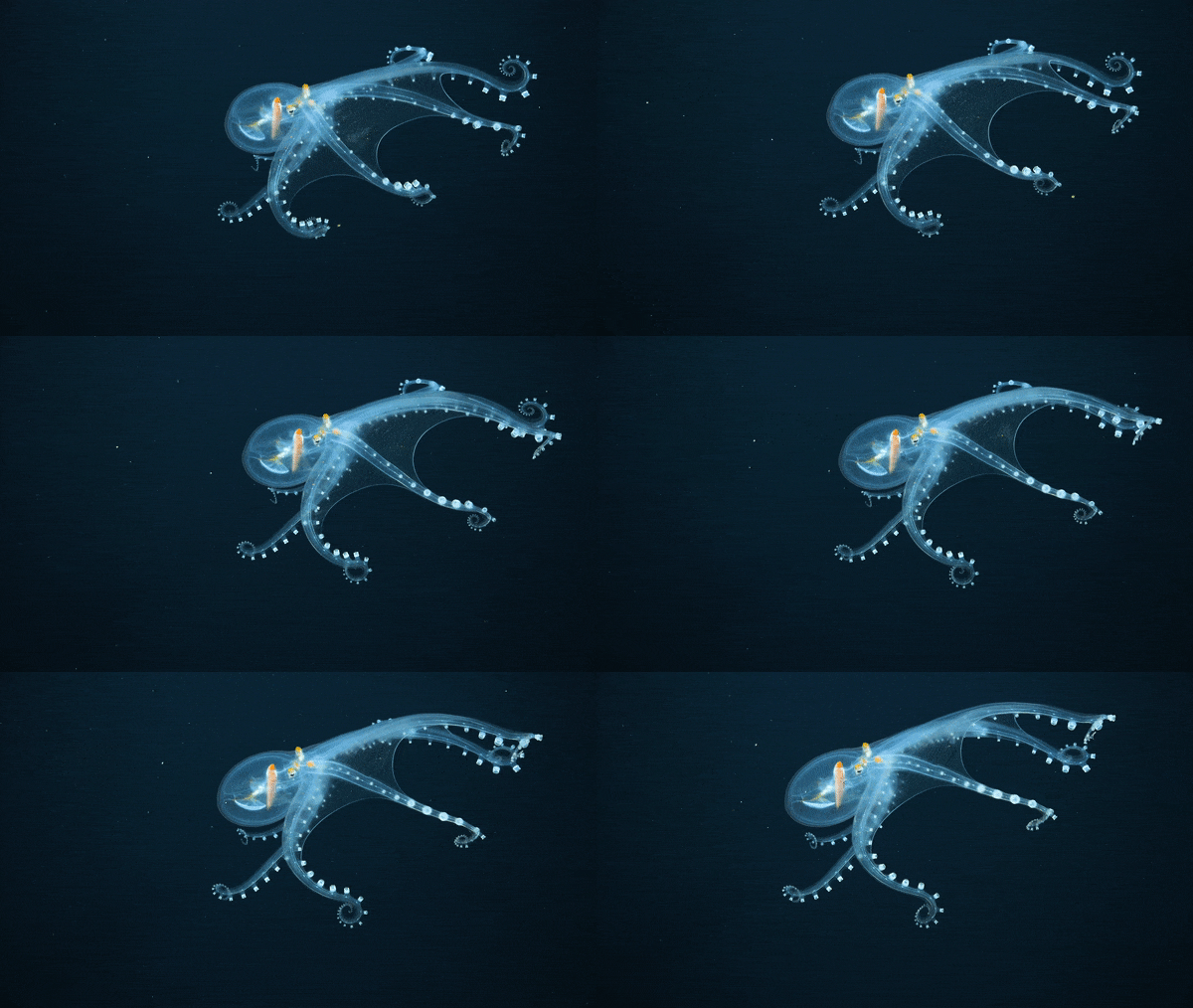
Shapeshifting fish, ghostly jellies, stunning cephalopods and more. If you're looking for bizarre creatures that defy explanation, there is no better place to look than the deep sea. Every year, researchers capture incredible footage of alien-looking animals and strange new species lurking in the deep, and this year was no different. Here is our list of the top 10 weirdest deep-sea creatures seen in 2021.
A rare white sperm whale, like the one depicted in the literary classic "Moby Dick," has been spotted off the coast of Jamaica Live Science - December 3, 2021

Sailors aboard the Dutch oil tanker Coral EnergICE glimpsed the ghostly cetacean on Nov. 29, when Capt. Leo van Toly recorded a short video highlighting a brief look at the white sperm whale near the water's surface. He sent the video to his sailing partner, Annemarie van den Berg, director of the whale conservation charity SOS Dolfijn in the Netherlands. After confirming with experts that the whale was indeed a sperm whale, SOS Dolfijn shared the video on the organization's Facebook page.
Shape-shifting fish that confounded scientists for 100 years spotted off California coast Live Science - August 12, 2021

Scientists piloting a remote submarine have caught a rare glimpse of one of the deep sea's most mysterious and elusive creatures. The bright orange, female whalefish (of the order Cetomimiformes) was spotted half-swimming, half-gliding through the glare of submarine's lights around 6,600 feet (2,013 meters) deep offshore of Monterey Bay, California. The whalefish sighting was one of only 18 made by marine biologists from The Monterey Bay Aquarium Research Institute during 34 years of deep-sea exploration.
In a Fascinating Twist, Beluga Whale Societies Are Almost as Complex as Our Own Science Alert - July 17, 2020

Similar to orcas and pilot whales, the enigmatic beluga whale has long been assumed to live out their lives in pods based around close maternal ties. But new research shows their social structures go far beyond sibling quid-pro-quo. Research led by Florida Atlantic University's Harbor Branch Oceanographic Institute confirms suspicions that belugas regularly interact with their mother's side of the family, not unlike other closely related species of toothed cetacean. Matriarchal lineages are common among families of sperm whale, orca, and pilot whale, which routinely have a female whale leading the way. Analysis of the beluga groupings, both large and small, found they often had more than one matriline. What they didn't expect were the frequent associations with dad's side of the clan. Or the close relationships with cousins. Or, more surprisingly still, the hints of networks involving individuals without any close genetic relationship.
15-foot-long skeleton of extinct dolphin suggests parallel evolution among whales PhysOrg - July 9, 2020

Report offers a detailed description of the first nearly complete skeleton of an extinct large dolphin, discovered in what is now South Carolina. The 15-foot-long dolphin (Ankylorhiza tiedemani comb. n.) lived during the Oligocene - about 25 million years ago - and was previously known only from a partial rostrum (snout) fossil. The researchers say that multiple lines of evidence - from the skull anatomy and teeth, to the flipper and vertebral column - show that this large dolphin (a toothed whale in the group Odontoceti) was a top predator in the community in which it lived. Many features of the dolphin's postcranial skeleton also imply that modern baleen whales and modern toothed whales must have evolved similar features independently, driven by parallel evolution in the very similar aquatic habitats in which they lived.
Unique non-oxygen breathing animal discovered. The tiny relative of the jellyfish is parasitic and dwells in salmon tissue Science Daily - February 25, 2020

The tiny, less than 10-celled parasite Henneguya salminicola lives in salmon muscle. As it evolved, the animal, which is a myxozoan relative of jellyfish and corals, gave up breathing and consuming oxygen to produce energy.
Little, Transparent Fish Show Sleep Is at Least 450 Million Years Old Smithsonian - July 12, 2019

Imaging of sleeping zebrafish reveal their pattern of Zzz's is similar to that of mammals and other animals, meaning snoozing has been around a long time
Attempted Whale Shark Mating Caught on Camera for the First Time in History Live Science - June 24, 2019

Fact: Whale sharks - the largest known fish in the sea and some of the largest creatures on Earth - exist. That means they must be reproducing. Despite this, scientists have never actually seen two whale sharks mating. This is partly because the animals are endangered; whale sharks are so large - averaging about 32 feet (10 meters) long and weighing tens of thousands of pounds - that they are highly susceptible to human threats like drilling, fishing and shipping. Scientists also suspect that the fish migrate enormous distances through the world's tropical seas to reach special whale shark mating grounds, which researchers simply haven't located yet.
First-Ever Beluga-Narwhal Hybrid Found in the Arctic Live Science - June 20, 2019

Thirty years ago, an Inuit man in west Greenland subsistence-hunting for whales shot a trio of strange cetaceans with front fins like belugas and tails like narwhals (the so-called "unicorns of the sea"). He was so flummoxed by the odd creatures that he saved one of the skulls, hanging it on the outside of his shed.
Fish recognize themselves in the mirror UPI - February 8, 2019

Fish Appear to Recognize Themselves in the Mirror Science Daily - February 7, 2019
The cleaner wrasse fish (Labroides dimidiatus), responds to its reflection and attempts to remove marks on its body during the mirror test -- a method considered the gold standard for determining self-awareness in animals. The finding suggests that fish might possess far higher cognitive powers than previously thought, and ignites a high-stakes debate over how we assess the intelligence of animals that are so unlike ourselves.
Scientists rethink co-evolution of marine life, oxygenated oceans PhysOrg - June 2, 2018

A research paper stems from a multi-year, multinational effort that rethinks the causes and impacts of increased oxygenation on the continental shelves during the current Phanerozoic Eon, which began more than 542 million years ago. Most studies of oxygen history focus on the atmosphere and deep oceans, with implications on the evolution of life. Researchers believe the oceanic oxygen level in the water column above the continental shelves [i.e., the upper ocean] may have been a different beast.
How do marine mammals avoid the bends? Study offers new hypothesis, highlights role that sonar plays in strands PhysOrg - April 25, 2018

Deep-diving whales and other marine mammals can get the bends - the same painful and potentially life-threatening decompression sickness that strikes scuba divers who surface too quickly. A new study offers a hypothesis of how marine mammals generally avoid getting the bends and how they can succumb under stressful conditions.
Sea turtles use Earth's magnetic field to navigate back to the same beach where they hatched after traveling thousands of miles, confirm scientists Daily Mail - April 12, 2018

Turtles return to the same place every year to lay their eggs by sensing the specific magnetic field of the beach where they were born, research has found. Each beach has a distinct magnetic pattern which becomes imprinted on a turtle's brain to help them find their way back. The findings explain how loggerhead turtles find their way back to their home nesting spot after travelling hundreds of miles out to sea.
Bizarre, Nessie-Like Creature Washes Ashore in Georgia, and Marine Experts Are Mystified Live Science - March 21, 2018

A bizarre, possibly decapitated sea creature with a long tail that washed ashore in southeastern Georgia has mystified marine experts. Is it a dead frilled shark? Or a decayed whale or an oarfish?
The killer whale that can say 'hello' and 'bye bye' BBC - January 31, 2018

A killer whale that can mimic words such as "hello" and "bye bye" is thought to be the first of its kind to copy human speech. The female learned to "speak" a handful of human words by copying a trainer at a marine park in France. The animal's repertoire includes the name "Amy" and "one, two, three". Whales and dolphins are among the few animals other than humans that can learn to produce a novel sound just by hearing it.
Forget sponges: The earliest animals were marine jellies PhysOrg - April 10, 2017

For the last decade, zoologists have been battling over the question, "What was the oldest branch of the animal family tree?" Was it the sponges, as they had long thought, or was it a distinctly different set of creatures, the delicate marine predators called comb jellies? The answer to this question could have a major impact on scientists' thinking about how the nervous system, digestive tract and other basic organs in modern animals evolved.
New study shows that three quarters of deep-sea animals make their own light PhysOrg - April 10, 2017

You would think it would be easy to count the number of glowing (bioluminescent) animals in the ocean, just by looking at videos or photographs taken at different depths. Unfortunately, very few cameras are sensitive enough to show the pale glow of many marine animals. Below 300 meters (1,000 feet) the ocean is essentially pitch black, so animals don't need to glow very brightly. Also most animals don't glow continuously because making light takes extra energy and can attract predators.
Video: 400-year-old Greenland shark longest-living vertebrate BBC - August 12, 2016
Greenland sharks are now the longest-living vertebrates known on Earth, scientists say. Researchers used radiocarbon dating to determine the ages of 28 of the animals, and estimated that one female was about 400 years old. The team found that the sharks grow at just 1cm a year, and reach sexual maturity at about the age of 150.
Fish out of water are more common than thought Science Daily - June 22, 2016
Fish have evolved the ability to live on land many times, challenging the perception that this extreme lifestyle shift was likely to have been a rare occurrence in ancient times. New research shows 33 different families of fish have at least one species that demonstrates some terrestrial activity and, in many cases, these behaviors are likely to have evolved independently in the different families.
End of the dinosaurs gave rise to the modern 'Age of Fishes,' researchers find PhysOrg - June 30, 2015
A pair of paleobiologists from Scripps Institution of Oceanography, UC San Diego have determined that the world's most numerous and diverse vertebrates - ray-finned fishes - began their ecological dominance of the oceans 66 million years ago, aided by the mass extinction event that killed off dinosaurs. Mammals evolved 250 million years ago but didn't become really important until after the mass extinction. Ray-finned fishes have the same kind of story. The lineage has been around for hundreds of millions of years, but without the mass extinction event 66 million years ago, it is very likely that the oceans wouldn't be dominated by the fish we see today.
Four hundred million year old fish fossil has earliest example of teeth PhysOrg - June 24, 2015
A pair of researchers has found what appears to be the earliest known example of a creature sporting teeth. After much research, scientists have come to believe that modern teeth, regardless of species, originated from scales on fish - this new research appears to confirm that theory and also offers some new insights into how it was that teeth came to exist.
A new beginning for baby mosasaurs PhysOrg - April 11, 2015
A new birth story for a gigantic marine lizard that once roamed the oceans. Thanks to recently identified specimens at the Yale Peabody Museum of Natural History, paleontologists now believe that mighty mosasaurs - which could grow to 50 feet long - gave birth to their young in the open ocean, not on or near shore. The findings answer long-held questions about the initial environment of an iconic predator that lived during the time of the dinosaurs. Mosasaurs populated most waters of the Earth before their extinction 65 million years ago.
Video: Something out of 'Alien': Rare frilled shark caught off Australian coast CNN - January 22, 2015
It looks like something out of "Alien" but has more in common with "Jurassic Park." It's a rare frilled shark that has been caught by a fisherman in Australia, where no one remembers ever seeing one caught before. With a mouth packed full of needle-like teeth and a body like an eel's, the 6-foot-long frilled shark is sometimes described as a fish "fossil" that dates back 80 million years.
Ancient 'Fish Lizard' Graveyard Discovered Beneath Melting Glacier Live Science - May 28, 2014
Dozens of nearly complete skeletons of prehistoric marine reptiles have been uncovered near a melting glacier in southern Chile. Scientists found 46 specimens from four different species of extinct ichthyosaurs. These creatures, whose Greek name means "fish lizards," were a group of large, fast-swimming marine reptiles that lived during the Mesozoic Era, about 245 million to 90 million years ago. The newly discovered skeletons are from both embryos and adults. The creatures, likely killed during a series of catastrophic mudslides, were preserved in deep-sea sediments that were later exposed by the melting glacier, the researchers said in the study.
Sea Anemones Are Half-Plant, Half-Animal, Gene Study Finds Live Science - March 20, 2014
The sea anemone is an oddball: half-plant and half-animal, at least when it comes to its genetic code, new research suggests. The sea creature's genes look more like those of animals, but the regulatory code that determines whether those genes are expressed resembles that in plants
New Genomic Study Provides a Glimpse of How Whales Could Adapt to Ocean Science Daily - November 25, 2013
Whales roam throughout all of the world's oceans, living in the water but breathing air like humans. At the top of the food chain, whales are vital to the health of the marine environment, whereas 7 out of the 13 great whale species are endangered or vulnerable. The minke whale is the most abundant baleen whale. Its wide distribution makes it an ideal candidate for whole reference genome sequencing. In this study, researchers conducted de novo sequencing on a minke whale with 128x average depth of coverage, and re-sequenced three minke whales, a fin whale (Balaenoptera physalus), a bottlenose dolphin, and a finless porpoise (Neophocaena phocaenoides). The yielded data may help to improve scientists' understanding of the evolutionary changes adapted to ocean environment from whole genome level.
How Whales' Ancestors Left Land Behind Live Science - March 21, 2013
By moving into the water full-time, the ancestors of whales paved the way for their descendants to become behemoths, largely free from gravity's constraints. Today, the blue whale is the largest animal ever to live. But even before the move, this lineage was setting size records. One ancient cousin to modern whales and hippos, called Andrewsarchus mongoliensis, ranks as the largest mammal known to have stalked the land as a predator. A skull from this creature - the only fossil found so far from this beast - greets visitors on their way into a new exhibit on whales here at the American Museum of Natural History.
Antarctic's First-Ever Whale Skeleton Found Live Science - March 19, 2013
For the first time ever, scientists say they have discovered a whale skeleton on the ocean floor near Antarctica. Resting nearly a mile below the surface, the boneyard is teeming with strange life, including at least nine new species of tiny of deep-sea creatures, according to a new study. Though whales naturally sink to the ocean floor when they die, it's extremely rare for scientists to come across these final resting places, known as "whale falls." Discovering one typically requires a remote-controlled undersea vehicle and some luck.
Two new species of fish found able to regenerate a lost fin PhysOrg - February 23, 2012
History has shown that many invertebrates are able to regenerate lost limbs. Rare however, are animals with backbones that are able to do so, and when they do exist, they are usually amphibians or a few species of fish that regenerate parts that are mostly made of skin-like material. Thus the discovery of two species of Polypterus bichir, fish found in Africa, that can regenerate a lost side (pectoral) fin in as little as a month has created some excitement in the scientific community.
A new theory emerges for where some fish became four-limbed creatures PhysOrg - December 28, 2011
A small fish crawling on stumpy limbs from a shrinking desert pond is an icon of can-do spirit, emblematic of a leading theory for the evolutionary transition between fish and amphibians. This theorized image of such a drastic adaptation to changing environmental conditions, however, may, itself, be evolving into a new picture.
How plants drove animals to the land PhysOrg - September 30, 2010
A new study of ancient oxygen levels presents the first concrete evidence that after aquatic plants evolved and boosted the levels of oxygen aquatic life exploded, leading to fierce competition that eventually led some fish to try to survive on land.
Whales Evolved in the Blink of an Eye Live Science - June 3, 2010
Whales evolved explosively fast into a spectacular array of shapes and sizes, a new study suggests. Whales' sizes stretch the imagination from the 100-foot (30-meter) long blue whale - the largest animal to have ever existed - to a small species about the size of a dog. Many ideas exist for how whales evolved into different body types, but the new study, published online in the May 19 edition of the journal Proceedings of the Royal Society B, is the first attempt to unravel the mystery.