Linear A: One Of Europe's First Writing Systems Remains Undeciphered To This Day IFL Science - November 20, 2024
Sometimes regarded as the first true European civilization, the Minoan culture rose to prominence on the Greek island of Crete between 3100 to 1100 BCE, during the Bronze Age. It spread and gained influence across parts of the Eastern Mediterranean before completely crumbling amid the late Bronze Age Collapse. The society was a hotbed of creativity and human ingenuity. Minoan Crete is the setting for many ancient Greek legends, most notably the Labyrinth and the Minotaur, indicating it had a clear influence on Greek mythology and culture. It was also a pioneer of grand architecture, the most famous being the Palace of Knossos, as well as artworks and ornate objects of beauty.
Among these relics, archaeologists have found extensive evidence of a writing system composed of around 75 symbols each representing a syllable (as opposed to a letter) or a specific concept (known as an ideogram). Based on the context of the inscriptions, it’s safe to assume that Linear A was used in at least two contexts: the sublime writings of religion and the hum-drum accounting of traded goods.
Language Tree Traces Origin Of Indo-European Languages To 8,100 Years Ago IFL Science - August 1, 2023
Indo-European languages are spoken by almost half of the world’s population, and while dialects as diverse as French and Bengali might seem completely unrelated, it is widely believed that they all share a common ancestor. For centuries, linguists have been arguing over the origins of this group of mother tongues, and researchers have now traced the roots of all Indo-European languages back to over 8,000 years ago.
Cryptic lost Canaanite language decoded on 'Rosetta Stone'-like tablets Live Science - January 30, 2023

Two ancient clay tablets discovered in Iraq and covered from top to bottom in cuneiform writing contain details of a "lost" Canaanite language that has remarkable similarities with ancient Hebrew. The tablets, thought to be nearly 4,000 years old, record phrases in the almost unknown language of the Amorite people, who were originally from Canaan - the area that's roughly now Syria, Israel and Jordan - but who later founded a kingdom in Mesopotamia. These phrases are placed alongside translations in the Akkadian language, which can be read by modern scholars.
In effect, the tablets are similar to the famous Rosetta Stone, which had an inscription in one known language (ancient Greek) in parallel with two unknown written ancient Egyptian scripts (hieroglyphics and demotic.) In this case, the known Akkadian phrases are helping researchers read written Amorite.
Mysterious Symbols Could Represent The Earliest Writing Ever Found Live Science - January 12, 2023
Researchers say they have discovered what they call a "proto-writing system" embedded in 20,000-year-old cave paintings, making it the earliest form of some sort of writing we've ever found. Hunters from the Upper Palaeolithic era would have used the symbols daubed on the walls to pass on essential survival information: The researchers suggest they show a record of animal mating seasons, organized by the lunar months. It's a significant finding because it pushes back the earliest form of Homo sapiens writing by around 14,000 years. Although we're not looking at letters and sentences here, these markings do represent "a complete unit of meaning"
A recently discovered inscription on an ancient ivory comb is claimed to be the earliest example of a sentence written using an alphabet that would eventually evolve into the set of 26 letters you're translating into words right now Science Alert - November 10, 2022
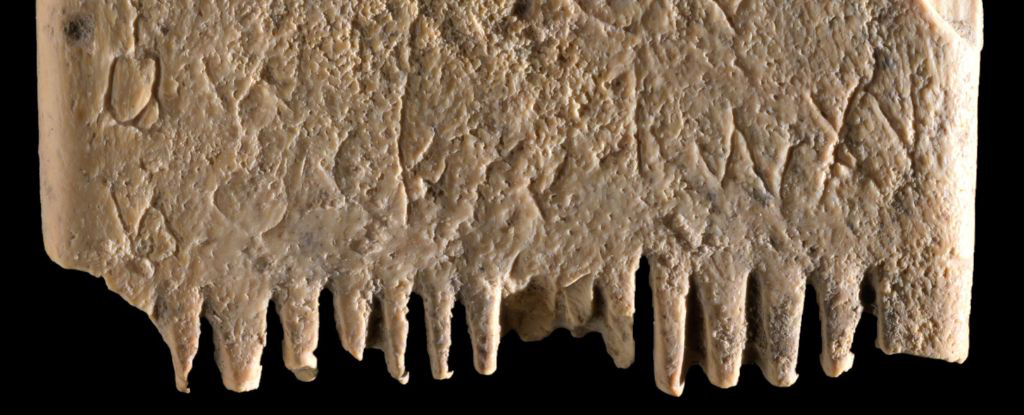
The fine-toothed instrument was unearthed several years ago in Tel Lachish, an old Canaanite city in the foothills of central Israel, but scientists only recently noticed the implement was engraved with 17 tiny letters.
Research team claims to have deciphered ancient Iranian Linear Elamite language PhysOrg - September 1, 2022
A team of researchers, with a member each from the University of Tehran, Eastern Kentucky University and the University of Bologna working with another independent researcher, has claimed to have deciphered most of the ancient Iranian language called Linear Elamite. They group described how they deciphered the examples of the ancient language that have been found and provide some examples of the text translated into English.
A rare Vai script from a language in Liberia has provided some new insights into how written languages evolved Science Alert - January 12, 2022
The Vai script of Liberia was created from scratch in about 1834 by eight completely illiterate men who wrote in ink made from crushed berries. We might all take the written word for granted these days, but researchers still don't know exactly how this early human technology came to develop into the ubiquitous necessity that it is today. As far as we know so far, the invention of writing occurred around 5,000 years ago in the Middle East and has been reinvented over and over again. New writing systems are still being created today, in places like Nigeria and Senegal.
Scientists find 'missing link' behind first human languages Live Science - May 21, 2021
A new study has shown, for the first time, that humans recognize the intended meanings of iconic vocalizations - basic sounds made by people to represent specific objects, entities and actions - regardless of the language they speak. These vocalizations, such as the imitation of snoring to denote sleep, or roaring to denote a tiger, could have played a crucial role in the development of the first human languages, according to the researchers.
Model shows Welsh language in no danger of extinction but 'te reo Maori' is on its way out PhysOrg - January 9, 2020
A team of researchers affiliated with multiple institutions in New Zealand has developed a mathematical model that can be used to predict whether a language is at risk of disappearing. Despite the seeming worldwide popularity of languages such as English and Spanish, there are still thousands of others in use. But experts suggest between a half and one-third of them could be at risk of disappearing as more popular languages take over. In this new effort, the researchers created a mathematical model that can predict whether a given language is at risk of extinction.
New paper links ancient drawings and the origins of language PhysOrg - February 21, 2018
When and where did humans develop language? To find out, look deep inside caves, suggests an MIT professor. More precisely, some specific features of cave art may provide clues about how our symbolic, multifaceted language capabilities evolved. A key to this idea is that cave art is often located in acoustic "hot spots," where sound echoes strongly, as some scholars have observed. Those drawings are located in deeper, harder-to-access parts of caves, indicating that acoustics was a principal reason for the placement of drawings within caves. The drawings, in turn, may represent the sounds that early humans generated in those spots. In the new paper, this convergence of sound and drawing is what the authors call a "cross-modality information transfer," a convergence of auditory information and visual art that, the authors write, "allowed early humans to enhance their ability to convey symbolic thinking." The combination of sounds and images is one of the things that characterizes human language today, along with its symbolic aspect and its ability to generate infinite new sentences. Sacred Caves
Language is learned in brain circuits that predate humans Science Daily - February 1, 2018
It has often been claimed that humans learn language using brain components that are specifically dedicated to this purpose. Now, new evidence strongly suggests that language is in fact learned in brain systems that are also used for many other purposes and even pre-existed humans.
The 'myth' of language history: Languages do not share a single history PhysOrg - October 3, 2017
The 'myth' of language history: languages do not share a single history but different components evolve along different trajectories and at different rates.A large-scale study of Pacific languages reveals that forces driving grammatical change are different to those driving lexical change. Grammar changes more rapidly and is especially influenced by contact with unrelated languages, while words are more resistant to change.
Language development starts in the womb Science Daily - July 18, 2017
A month before they are born, fetuses carried by American mothers-to-be can distinguish between someone speaking to them in English and Japanese. Using non-invasive sensing technology for the first time for this purpose, a group of researchers has shown this in-utero language discrimination. Their study has implications for fetal research in other fields.
F-bombs notwithstanding, all languages skew toward happiness: Universal human bias for positive words Science Daily - February 10, 2015
Arabic movie subtitles, Korean tweets, Russian novels, Chinese websites, English lyrics, and even the war-torn pages of the New York Times -- research examining billions of words, shows that these sources -- and all human language -- skews toward the use of happy words. This Big Data study confirms the 1969 Pollyanna Hypothesis that there is a universal human tendency to "look on and talk about the bright side of life."
The Last Hieroglyphic Language on Earth and an Ancient Culture Fighting to Survive Epoch Times - October 22, 2014
The Dongba symbols are an ancient system of pictographic glyphs created by the founder of the Bon religious tradition of Tibet and used by the Naxi people in southern China. Historical records show that this unique script was used as early as the 7th century, during the early Tang Dynasty, however, research conducted last year showed that its origins may date back as far as 7,000 years ago. Incredibly, the Dongba symbols continue to be used by the elders of the Naxi people, making it the only hieroglyphic language still used in the world today. The Naxi people lived in the beautiful mountain province of Yunnan (south of the clouds) for thousands of years, where they developed their own rich and enduring culture. Today, most of the 270,000 Naxi people live in the county of Lijiang where they retain many of their ancient traditions.
Naxi Language Wikipedia
Naxi People Wikipedia
Talking Neanderthals challenge the origins of speech Science Daily - March 3, 2014
We humans like to think of ourselves as unique for many reasons, not least of which being our ability to communicate with words. But ground-breaking research shows that our 'misunderstood cousins,' the Neanderthals, may well have spoken in languages not dissimilar to the ones we use today. Pinpointing the origin and evolution of speech and human language is one of the longest running and most hotly debated topics in the scientific world. It has long been believed that other beings, including the Neanderthals with whom our ancestors shared Earth for thousands of years, simply lacked the necessary cognitive capacity and vocal hardware for speech.
Language and Tool-Making Skills Evolved at the Same Time Live Science - September 3, 2013
Research by the University of Liverpool has found that the same brain activity is used for language production and making complex tools, supporting the theory that they evolved at the same time. Language and stone tool-making are considered to be unique features of humankind that evolved over millions of years.
Inscriptions found in Shanghai pre-date 'oldest Chinese language by 1,400 years' The Guardian - July 10, 2013
Markings on artifacts from Zhuangqiao relics site date to 5,000 years ago and include string of words, says archaeologist. A stone axe from near the Zhuangqiao relics site, in east China, shows a newly discovered form of primitive writing, archaeologists say. Primitive inscriptions dating back about 5,000 years - and believed to be 1,400 years older than the most ancient written Chinese language - have been discovered in Shanghai, archaeologists report. Chinese scholars are divided over whether the markings, found on artIfacts at the Zhuangqiao relics site south of the modern city, are words or something simpler. But they believe the discovery will shed light on the origins of Chinese language and culture. The oldest writing in the world is believed to be from Mesopotamia (now Iraq), dating back slightly more than 5,000 years. Chinese characters are believed to have been developed independently. The Chinese inscriptions were found on more than 200 pieces dug out from the neolithic Liangzhu relics site. The pieces are among thousands of fragments of ceramic, stone, jade, wood, ivory and bone excavated from the site between 2003 and 2006, Xu Xinmin, the lead archaeologist, said.
Ancient Inscription From King Solomon's Time Unearthed Live Science - July 10, 2013
A shard of pottery unearthed near the Temple Mount in Jerusalem bears an inscription that dates to the 10th century B.C. The inscription is the oldest alphabetic text found in Jerusalem and predates the earliest found Hebrew inscription in the region by 250 years. The enigmatic letters, which wrap around the top of a neck-less ceramic jar, were written around the time of King David or King Solomon's reign in an early form of Canaanite, not Hebrew. As a result, archaeologists believe a Jebusite or some other non-Israelite tribe member wrote the inscription. At that time, the Israelites hadn't yet conquered the region, and Hebrew was not the dominant language of the day. The area around Jerusalem is teeming with archaeological relics. An 11th century B.C. temple found near Jerusalem reveals evidence of fighting between Canaanites, Israelites and Philistines.
Before Babel? Ancient Mother Tongue Reconstructed Live Science - May 6, 2013
The ancestors of people from across Europe and Asia may have spoken a common language about 15,000 years ago, new research suggests. Now, researchers have reconstructed words, such as "mother," "to pull" and "man," which would have been spoken by ancient hunter-gatherers, possibly in an area such as the Caucusus. The word list, detailed today (May 6) in the journal Proceedings of the National Academy of Sciences, could help researchers retrace the history of ancient migrations and contacts between prehistoric cultures.
Survival of the fittest: Linguistic evolution in practice PhysOrg - December 9, 2011
A new study of how compound word formation is influenced by subtle forms of linguistic pressure demonstrates that words which "sound better" to the speakers of a language have a higher chance of being created, suggesting that, like biological organisms, words are subject to selection pressures that play a role in deciding which words become part of a language over time.
Language universality idea tested with biology method BBC - April 15, 2011
A long-standing idea that human languages share universal features that are dictated by human brain structure has been cast into doubt. A study has borrowed methods from evolutionary biology to trace the development of grammar in several language families. The results suggest that features shared across language families evolved independently in each lineage.
Indian language is new to science BBC - October 5, 2010
Researchers have identified a language new to science in a remote region of India. Known as Koro, it appears to be distinct from other languages in the family to which it belongs; but it is also under threat. Koro was discovered by a team of linguists on an expedition to Arunachal Pradesh, in north-eastern India.
Ancient language mystery deepens BBC - August 11, 2010
A linguistic mystery has arisen surrounding symbol-inscribed stones in Scotland that predate the formation of the country itself. The stones are believed to have been carved by members of an ancient people known as the Picts, who thrived in what is now Scotland from the 4th to the 9th Centuries. These symbols, researchers say, are probably "words" rather than images.
Tip-of-the-Tongue Moments Explained Live Science - February 25, 2010
It's one of the most frustrating feelings: You know the word exists, and you know what it means, but you just can't spit it out. New research suggests the forgetfulness may have to do with how frequently we use certain words. The findings could help scientists understand more about how the brain organizes and remembers language.For insight into the phenomenon, researchers tested people who speak two languages, as well as deaf people who use American Sign Language (ASL) to communicate.
Nouns and verbs are learned in different parts of the brain PhysOrg - February 25, 2010
Two Spanish psychologists and a German neurologist have recently shown that the brain that activates when a person learns a new noun is different from the part used when a verb is learnt. The scientists observed this using brain images taken using functional magnetic resonance, according to an article they have published this month in the journal Neuroimage.
Human Speech Gene Found Live Science - November 11, 2009
Researchers have found a gene that could explain why we developed language and speech while our closest living relatives, the chimps, did not. The gene called FOXP2 is a transcription factor, meaning it regulates other genes. Past research has suggested this gene remained relatively unchanged along mammal evolution until after humans and chimps diverged. And about 200,000 years ago, when modern humans appeared on the scene, scientists think two amino acids (building blocks of proteins) changed in FOXP2. But whether that amino-acid modification had any real effect on us wasn't known. To find out, a team of researchers expressed the chimp and human forms of this speech gene in neuronal cells that essentially didn't express the gene, or make proteins that carry out that gene's instructions. They found 116 genes that were expressed differently in humans compared with chimps, suggesting FOXP2 is responsible for those differences, the researchers say.
'Oldest English words' identified BBC - February 26, 2009
Some of the oldest words in English have been identified, scientists say.
Reading University researchers claim "I", "we", "two" and "three" are among the most ancient, dating back tens of thousands of years. Their computer model analyses the rate of change of words in English and the languages that share a common heritage. The team says it can predict which words are likely to become extinct - citing "squeeze", "guts", "stick" and "bad" as probable first casualties.
Language Feature Unique To Human Brain Identified Science Daily - March 24, 2008
To explore the evolution of human language, Yerkes researcher James Rilling, PhD, and his colleagues studied the arcuate fasciculus, a pathway that connects brain regions known to be involved in human language, such as Broca's area in the frontal lobe and Wernicke's area in the temporal lobe. Using DTI, researchers compared the size and trajectory of the arcuate fasciculus in humans, rhesus macaques and chimpanzees.
English sounds like one language, but it's really not PhysOrg - July 12, 2005
Americans need to realize that English as they know it is not what the rest of the world knows, says a Purdue University English language expert.
New Language Points To Foundations Of Human Grammar Science Daily - February 1, 2005
How is a language born? What are its essential elements? Linguists are gaining new insights into these age-old conundrums from a language created in a small village in Israel's Negev Desert. The Al-Sayyid Bedouin Sign Language (ABSL), which serves as an alternative language of a community of about 3,500 deaf and hearing people, has developed a distinct grammatical structure early in its evolution, researchers report, and the structure favors a particular word order: verbs after objects.
Learning languages 'boosts brain' BBC - October 2004
Learning a second language "boosts" brain-power, scientists believe.
Researchers from University College London studied the brains of 105 people - 80 of whom were bilingual. They found learning other languages altered grey matter - the area of the brain which processes information - in the same way exercise builds muscles.
Children create new sign language BBC - September 16, 2004
A new sign language created over the last 30 years by deaf children in Nicaragua has given experts a unique insight into how languages evolve. The language follows many basic rules common to all tongues, even though the children were not taught them. It indicates some language traits are not passed on by culture, but instead arise due to the innate way human beings process language, experts claim.
First language gene discovered BBC - August 14, 2002
Scientists think they have found the first of many genes that gave humans speech.
Without it, language and human culture may never have developed. Key changes to a gene in the last 200,000 years of human evolution appear to be the driving force.