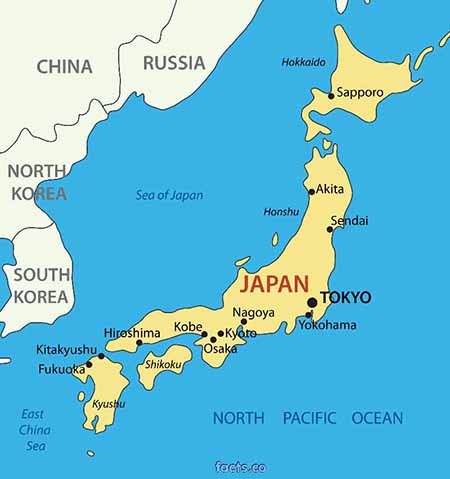

Who are the Japanese? Huge DNA discovery rewrites history Science Daily - May 15, 2026
Scientists analyzing the genomes of thousands of people across Japan discovered evidence for a previously overlooked third ancestral group, challenging the long-accepted 'dual origins' theory. The newly identified ancestry appears linked to the ancient Emishi people of northeastern Japan. Researchers also uncovered inherited Neanderthal and Denisovan DNA connected to conditions like diabetes, heart disease, and cancer.
The history of Japan encompasses the history of the islands of Japan and the Japanese people, spanning the ancient history of the region to the modern history of Japan as a nation state. Following the last ice age, around 12,000 BC, the rich ecosystem of the Japanese Archipelago fostered human development. The earliest-known pottery belongs to the Jomon period. The first known written reference to Japan is in the brief information given in Twenty-Four Histories in the 1st century AD. The main cultural and religious influences came from China.
The first permanent capital was founded at Nara in 710 AD, which became a center of Buddhist art, religion and culture. The current imperial family emerged about 700 AD, but until 1868 (with few exceptions) had high prestige but little power.
By 1550 or so political power was subdivided into several hundred local units, or "domains" controlled by local "daimyo" (lords), each with his own force of samurai warriors. Tokugawa Ieyasu came to power in 1600, gave land to his supporters, set up his "bakufu" (military government) at Edo (modern Tokyo). The "Tokugawa period" was prosperous and peaceful, but Japan deliberately terminated the Christian missions and cut off almost all contact with the outside world.
In the 1860s the Meiji Period began, and the new national leadership systematically ended feudalism and transformed an isolated, underdeveloped island country into a world power that closely followed Western models. Democracy was problematic, because Japan's powerful military was semi-independent and overruled - or assassinate - civilians in the 1920s and 1930s.
The military moved into China starting in 1931 and declared all-out war on China in 1937. Japan controlled the coast and major cities and set up puppet regimes, but was unable to defeat China. Its attack on Pearl Harbor in December 1941 led to war with the United States and its allies.
After a series of naval victories by mid-1942, Japan's military forces were overextended and its industrial base was unable to provide the needed ships, armaments and oil. Even with his navy sunk and his main cities destroyed by air, the Emperor held out until August 1945 when two atomic bombs and a Soviet invasion forced a surrender. Occupied by the U.S. after the war and stripped of its entire empire, Japan was transformed into a peaceful and democratic nation.
After 1950 it enjoyed very high economic growth rates, and became a world economic powerhouse, especially in engineering, automobiles and electronics. Since the 1990s economic stagnation has been a major issue, with an earthquake and tsunami in 2011 causing massive economic dislocations and loss of the nuclear power supply.
The Japanese Paleolithic age covers a period starting from around 100,000 to 30,000 BC, when the earliest stone tool implements have been found, and ending around 12,000 BC, at the end of the last ice age, corresponding with the beginning of the Mesolithic Jomon period. A start date of around 35,000 BC is most generally accepted. The Japanese archipelago was disconnected from the continent after the last ice age, around 11,000 BC. After a hoax by an amateur researcher, Shinichi Fujimura, had been exposed, the Lower and Middle Paleolithic evidence reported by Fujimura and his associates has been rejected after thorough reinvestigation. Only some Upper Paleolithic evidence not associated with Fujimura can be considered well established.
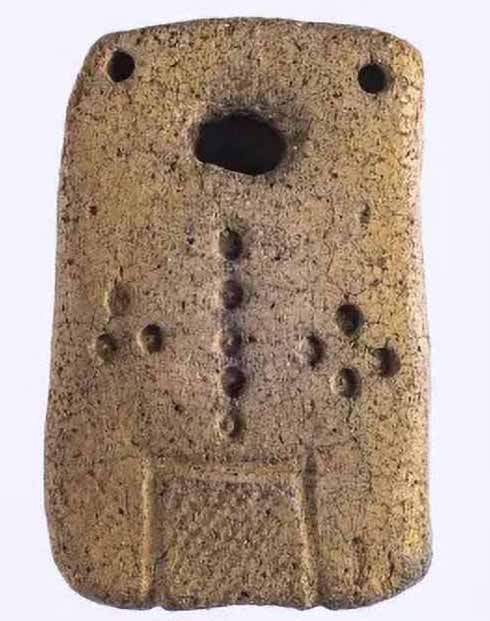
Doban-kun: A 'cute' human-shaped counting tool from prehistoric Japan
Live Science - January 14, 2025
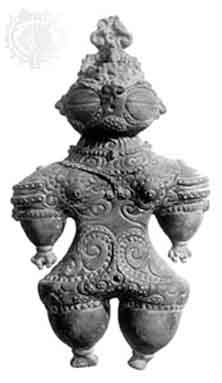
The Jomon Period lasted from about 14,000 BC to 300 BC. The first signs of civilization and stable living patterns appeared around 14,000 BC with the Jomon culture, characterized by a mesolithic to neolithic semi-sedentary hunter-gatherer lifestyle of wood stilt house and pit dwelling and a rudimentary form of agriculture. Weaving was still unknown and clothes were often made of fur. The Jomon people started to make clay vessels, decorated with patterns made by impressing the wet clay with braided or unbraided cord and sticks.
Some of the oldest surviving examples of pottery in the world may be found in Japan, based on radio-carbon dating, along with daggers, jade, combs made of shells, and other household items dated to the 11th millennium BC, although the specific dating is disputed. Clay figures known as dogu were also excavated. The household items suggest trade routes existed with places as far away as Okinawa. DNA analysis suggests that the Ainu, an indigenous people that lived in Hokkaido and the northern part of Honshu are descended from the Jomon and thus represent descendants of the first inhabitants of Japan.
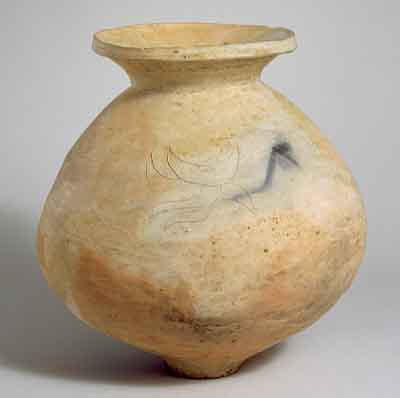
The Yayoi Period lasted from about 400 or 300 BC to 250 AD. It is named after Yayoi town, the subsection of Bunkyo, Tokyo where archaeological investigations uncovered its first recognized traces.
The start of the Yayoi period marked the influx of new practices such as weaving, rice farming, shamanism and iron and bronze-making brought from Korea or China. For example, some paleo-ethnobotany studies show that wet-rice cultivation began about 8000 BC in the Yangtze River Delta and spread to Japan about 1000 BC.
Japan first appeared in written records in AD 57 with the following mention in China's Book of the Later Han: Across the ocean from Lelang are the people of Wa. Formed from more than one hundred tribes, they come and pay tribute frequently. The Sanguo Zhi written in the 3rd century noted the country was the unification of some 30 small tribes or states and ruled by a shaman queen named Himiko of Yamataikoku.
During the Han Dynasty and Wei Dynasty, Chinese travelers to Kyushu recorded its inhabitants and claimed that they were the descendants of the Grand Count (Taibo) of the Wu. The inhabitants also show traits of the pre-sinicized Wu people with tattooing, teeth-pulling and baby-carrying. The Sanguo Zhi records the physical descriptions which are similar to ones on Haniwa statues, such men with braided hair, tattooing and women wearing large, single-piece clothing.
The Yoshinogari site is the most famous archaeological site in the Yayoi period and reveals a large, continuously inhabited settlement in Kyushu for several hundreds of years. Excavation has shown the most ancient parts to be around 400 BC. Among the artifacts are iron and bronze objects, including those from China. It appears the inhabitants had frequent communication with the mainland and trade relations. Today some reconstructed buildings stand in the park on the archaeological site.
The Kofun Period is an era in the history of Japan from around 250 to 538. The word kofun is Japanese for the type of burial mounds dating from this era. The Kofun period follows the Yayoi period. The Kofun and the subsequent Asuka periods are sometimes referred to collectively as the Yamato period.
Generally, the Kofun period is divided from the Asuka period for its cultural differences. The Kofun period is illustrated by an animistic culture which existed prior to the introduction of Buddhism. Politically, the establishment of the Yamato court, and its expansion as allied states from Kyushu to the Kanto are key factors in defining the period. Also, the Kofun period is the oldest era of recorded history in Japan. However, as the chronology of the historical sources are very much distorted, studies of this age require deliberate criticism and the aid of archaeology.
The archaeological record, and ancient Chinese sources, indicate that the various tribes and chiefdoms of Japan did not begin to coalesce into states until 300 AD, when large tombs began to appear while there were no contacts between western Japan and Korea or China. Some describe the "mysterious century" as a time of internecine warfare as various chiefdoms competed for hegemony on Kyushu and Honshu.

Japan: Haniwa Dancers: 1,500-year-old ghostly figurines thought to hold the souls of the dead Live Science - September 1, 2025
Two cylindrical clay sculptures may represent dancers who performed at a funeral 1,500 years ago. During the Kofun period (300 to 710) of Japanese history, people buried the dead in large mounds with many grave goods. Scattered around the mounds were objects called "haniwa" - clay cylinders topped with clay figures, used in offerings for the dead.
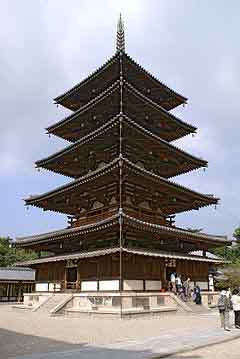
The Asuka Period, 538 to 710, is when the proto-Japanese Yamato polity gradually became a clearly centralized state, defining and applying a code of governing laws, such as the Taika Reform and Taiho Code. The introduction of Buddhism led to the discontinuing of the practice of large kofun.
Buddhism was introduced to Japan in 538 by Baekje, to which Japan provided military support, and it was promoted by the ruling class. Prince Shotoku devoted his efforts to the spread of Buddhism and Chinese culture in Japan. He is credited with bringing relative peace to Japan through the proclamation of the Seventeen-article constitution, a Confucian style document that focused on the kinds of morals and virtues that were to be expected of government officials and the emperor's subjects.
A letter brought to the Emperor of China by an emissary from Japan in 607 stated that the Emperor of the Land where the Sun rises (Japan) sends a letter to the Emperor of the land where Sun sets (China), thereby implying an equal footing with China which angered the Chinese emperor.
Starting with the Taika Reform Edicts of 645, Japanese intensified the adoption of Chinese cultural practices and reorganized the government and the penal code in accordance with the Chinese administrative structure (Ritsuryo) of the time. This paved the way for the influential Confucian philosophy in Japan until the 19th century. This period also saw the first uses of the word Nihon as a name for the emerging state.
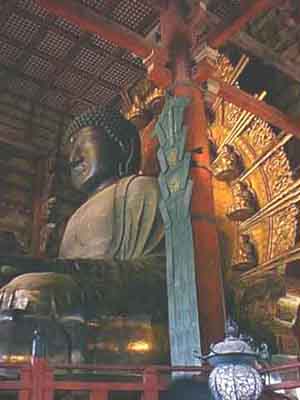
The Nara Period of the 8th century marked the first emergence of a strong Japanese state. Following an Imperial rescript by Empress Gemmei the move of the capital to Heijo-kyo, present-day Nara, took place in 710. The city was modeled on the capital of the Chinese Tang Dynasty, Chang'an (now Xi'an).
During the Nara Period, political development was quite limited, since members of the imperial family struggled for power with the Buddhist clergy as well as the regents, the Fujiwara clan. Japan did enjoy friendly relations with Silla as well as formal relationships with Tang China. In 784, the capital was moved again to Nagaoka to escape the Buddhist priests and then in 794 to Heian-kyo, present-day Kyoto.
Historical writing in Japan culminated in the early 8th century with the massive chronicles, the Kojiki (The Record of Ancient Matters, 712) and the Nihon Shoki (Chronicles of Japan, 720). These chronicles give a legendary account of Japan's beginnings, today known as the Japanese mythology. According to the myths contained in these 2 chronicles, Japan was founded in 660 BC by the ancestral Emperor Jimmu, a direct descendant of the Shinto deity Amaterasu, or the Sun Goddess. The myths recorded that Jimmu started a line of emperors that remains to this day. Historians assume the myths partly describe historical facts but the first emperor who actually existed was Emperor Ojin, though the date of his reign is uncertain. Since the Nara period, actual political power has not been in the hands of the emperor, but in the hands of the court nobility, the shoguns, the military and, more recently, the prime minister.1336-1392
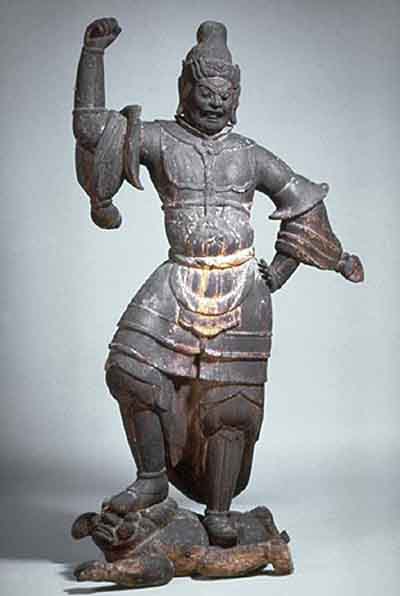
The Heian Period, (794 to 1185), is the final period of classical Japanese history. It is considered the peak of the Japanese imperial court and noted for its art, especially in poetry and literature. In the early 11th century, Lady Murasaki wrote Japan's, and one of the world's, oldest surviving novel, The Tale of Genji. The Man'yoshu and Kokin Wakashu, the oldest existing collections of Japanese poetry, were compiled in the period.
Strong differences from mainland Asian cultures emerged (such as an indigenous writing system, the kana). Chinese influence had reached its peak, and then effectively ended with the last Imperial-sanctioned mission to Tang China in 838, due to the decline of the Tang Dynasty, although trade expeditions and Buddhist pilgrimages to China continued.
Political power in the Imperial court was in the hands of powerful aristocratic families, especially the Fujiwara clan, who ruled under the titles Sessho and Kampaku (regents).
The end of the period saw the rise of various military clans. The four most powerful clans were the Minamoto clan, the Taira clan, the Fujiwara clan, and the Tachibana clan. Towards the end of the 12th century, conflicts between these clans turned into civil war, such as the Hogen and Heiji Rebellions, followed by the Genpei War, from which emerged a society led by samurai clans, under the political rule of the shogun.
The "feudal" period of Japanese history, dominated by the powerful regional families (daimyo) and the military rule of warlords (shogun), stretched from the 12th through the 19th centuries. The Emperor remained but was mostly kept to a de jure figurehead ruling position. This time is usually divided into periods following the reigning family of the shogun.
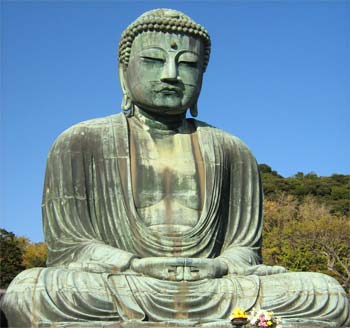
The Kamakura Period, 1185 to 1333, is a period that marks the governance of the Kamakura shogunate and the transition to the Japanese "medieval" era, a nearly 700-year period in which the emperor, the court, and the traditional central government were left intact but were largely relegated to ceremonial functions. Civil, military, and judicial matters were controlled by the bushi (samurai) class, the most powerful of whom was the de facto national ruler, the shogun. This period in Japan differed from the old shoen system in its pervasive military emphasis.
In 1185, Minamoto no Yoritomo defeated the rival Taira clan, and in 1192, Yoritomo was appointed Seii Tai-Shogun by the emperor; he established a base of power in Kamakura. Yoritomo ruled as the first in a line of Kamakura shoguns. However, after Yoritomo's death, another warrior clan, the Hojo, came to rule as regents for the shoguns.
A traumatic event of the period was the Mongol invasions of Japan between 1272 and 1281, in which massive Mongol forces with superior naval technology and weaponry attempted a full-scale invasion of the Japanese islands. A famous typhoon referred to as kamikaze, translating as divine wind in Japanese, is credited with devastating both Mongol invasion forces, although some scholars assert that the defensive measures the Japanese built on the island of Kyushu may have been adequate to repel the invaders. Although the Japanese were successful in stopping the Mongols, the invasion attempt had devastating domestic repercussions, leading to the extinction of the Kamakura shogunate.
The Kamakura period ended in 1333 with the destruction of the shogunate and the short reestablishment of imperial rule (the Kenmu restoration) under the Emperor Go-Daigo by Ashikaga Takauji, Nitta Yoshisada, and Kusunoki Masashige.
Thus, the "Japanese Middle Ages", which also include the Muromachi period and lasted until the Meiji Restoration, started with the Kamakura period.
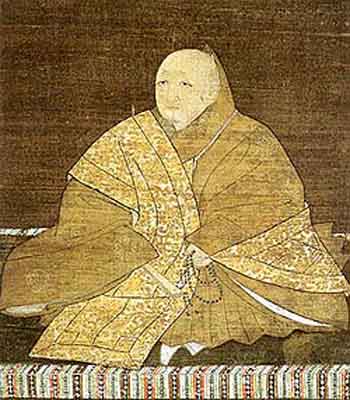
The Kenmu Restoration and the dual dynasties
The Kenmu (or Kemmu) restoration is the three year period of Japanese history between the Kamakura period and the Muromachi period and the political events that took place in it. The restoration was an effort made by Emperor Go-Daigo to bring the Imperial House and the nobility it represented back into power, thus restoring a civilian government after almost a century and a half of military rule.
The attempted restoration ultimately failed and was replaced by the Ashikaga shogunate (1336 - 1575). This was to be the last time the Emperor had any power until the Meiji restoration of 1867. The many and serious political errors made by the Imperial House during this three year period were to have important repercussions in the following decades and end with the rise of the Ashikaga dynasty.
The Muromachi Period is a division of Japanese history running from approximately 1336 to 1573. The period marks the governance of the Ashikaga shogunate, also called Muromachi shogunate, which was officially established in 1336 by the first Muromachi shogun Ashikaga Takauji, who seized political power from Emperor Go-Daigo, ending the Kemmu restoration. The period ended in 1573 when the 15th and last shogun Ashikaga Yoshiaki was driven out of the capital in Kyoto by Oda Nobunaga.
The early years of 1336 to 1392 of the Muromachi period is also known as the Nanboku-cho or Northern and Southern Court period, as the Imperial court was split in two.
The later years of 1467 to the end of the Muromachi period is also known as the Sengoku period, the "Warring States period", a time of intense internal warfare, and corresponds with the period of the first contacts with the West, with the arrival of Portuguese "Nanban" traders.
In 1543, a Portuguese ship, blown off its course to China, landed on Tanegashima Island Japan. Firearms introduced by Portuguese would bring the major innovation to Sengoku period culminating in the Battle of Nagashino where reportedly 3,000 arquebuses (the actual number is believed to be around 2,000) cut down charging ranks of samurai. During the following years, traders from Portugal, the Netherlands, England, and Spain arrived, as did Jesuit, Dominican, and Franciscan missionaries.
The Nanboku-cho period ("South and North courts period", also known as the Northern and Southern Courts period), spanning from 1336 to 1392, was a period that occurred during the formative years of the Muromachi bakufu of Japan's history. During this period, there existed a Northern Imperial Court, established by Ashikaga Takauji in Kyoto, and a Southern Imperial Court, established by Emperor Go-Daigo in Yoshino.
Ideologically, the two courts fought for fifty years, with the South giving up to the North in 1392. However, in reality the Northern line was under the power of the Ashikaga shoguns and had little real independence. Partly because of this, since the 19th century, the Emperors of the Southern Imperial Court have been considered the legitimate Emperors of Japan. Also the Southern Court controlled the Japanese imperial regalia, and Kitabatake Chikafusa's Jinno Shotoki legitimized the South's imperial rule despite their defeat. The effects of this period are still influential in Modern Japan's view of the tenno seika (Emperor system).
The destruction of the Kamakura shogunate and the failure of the Kemmu Restoration opened up a crisis in ideological legitimacy. Furthermore, institutional changes in the estate system (shoen) that formed the bedrock of the income of nobles and warriors alike altered the status of social groups decisively. What emerged out of the exigencies of the Nanboku-cho (Southern and Northern Court) War was the Muromachi regime that broadened the economic base of the warriors, further undercutting the noble proprietors, a trend that had started with the Kamakura bakufu.
The Warring States period was a time of social upheaval, political intrigue, and nearly constant military conflict in Japan that lasted roughly from the middle of the 15th century to the beginning of the 17th century.
Although the Ashikaga shogunate had retained the structure of the Kamakura bakufu and instituted a warrior government based on the same social economic rights and obligations established by the Hojo with the Joei Code in 1232, it failed to win the loyalty of many daimyo, especially those whose domains were far from Kyoto.
As trade with China grew, the economy developed, and the use of money became widespread as markets and commercial cities appeared. This, combined with developments in agriculture and small-scale trading, led to the desire for greater local autonomy throughout all levels of the social hierarchy.
As early as the beginning of the 15th century, suffering and misery caused by natural disasters such as earthquakes and famines often served to trigger armed uprisings by farmers weary of debt and taxes.
The Sengoku period is best understood by comparison to the "Dark Ages" of Europe; which was a transition period transferring power from Rome to what would become the kings of Europe. In Japan it was a decentralization of the Japanese government from Kyoto to the many daimyo that would come to power during this period of unrest.
The Onin War (1467-1477), a conflict rooted in economic distress and brought on by a dispute over shogunal succession, is generally regarded as the onset of the Sengoku-jidai. The "eastern" army of the Hosokawa family and its allies clashed with the "western" army of the Yamana, and fighting in and around Kyoto lasted for nearly 11 years, after which it spread to outlying provinces
The Azuchi-Momoyama Period runs from approximately 1568 to 1600. The period marks the military reunification and stabilization of the country under a single political ruler, first by the campaigns of Oda Nobunaga who almost united Japan, achieved later by one of his generals, Toyotomi Hideyoshi. The name Azuchi-Momoyama comes from the names of their respective castles, Azuchi Castle and Momoyama castle.
After having united Japan, Hideyoshi invaded Korea in an attempt to conquer Korea, China, and even India. However, after two unsuccessful campaigns toward the allied forces of Korea and China and his death, his forces retreated from the Korean peninsula in 1598.
The short period of succession conflict to Hideyoshi was ended when Tokugawa Ieyasu, one of the regents for Hideyoshi's young heir, emerged victorious at the Battle of Sekigahara and seized political power.
The Nanban trade - "Southern barbarian trade" or the Nanban trade period Nanban boeki jidai, "Southern barbarian trade period" in Japanese history extends from the arrival of the first Europeans to Japan in 1543, to their near-total exclusion from the archipelago in 1641, under the promulgation of the "Sakoku" Seclusion Edicts.
During the Edo Period, also called the premodern era, the administration of the country was shared by over two hundred daimyo. The Tokugawa clan, leader of the victorious eastern army in the Battle of Sekigahara, was the most powerful of them, and for fifteen generations monopolized the title of Sei-i Taishogun (often shortened to shogun). With their headquarters at Edo (present-day Tokyo), the Tokugawa commanded the allegiance of the other daimyo, who in turn ruled their domains with a rather high degree of autonomy.
The shogunate carried out a number of significant policies. They placed the samurai class above the commoners: the agriculturists, artisans, and merchants. They enacted sumptuary laws limiting hair style, dress, and accessories. They organized commoners into groups of five, and held all responsible for the acts of each individual. To prevent daimyo from rebelling, the shoguns required them to maintain lavish residences in Edo and live at these residences on a rotating schedule; carry out expensive processions to and from their domains; contribute to the upkeep of shrines, temples, and roads; and seek permission before repairing their castles.
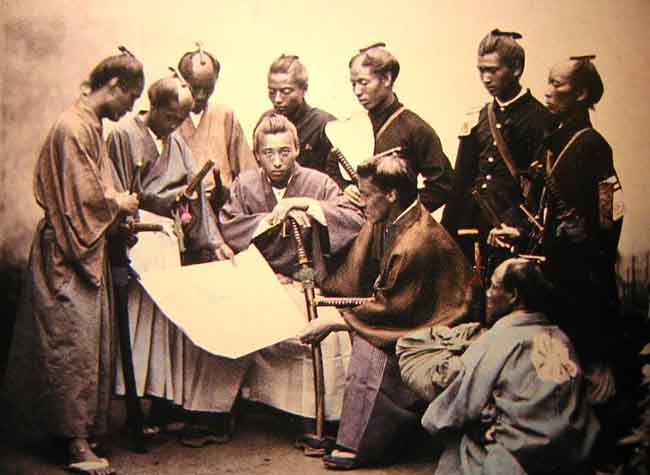
Bakumatsu are the final years of the Edo period when the Tokugawa shogunate came to an end. It is characterized by major events occurring between 1853 and 1867 during which Japan ended its isolationist foreign policy known as sakoku and transitioned from a feudal shogunate to the Meiji government. The major ideological/political divide during this period was between the pro-imperialist ishin shishi (nationalist patriots) and the shogunate forces, including the elite Shinsengumi (newly selected corps) swordsmen.
Although these two groups were the most visible powers, many other factions attempted to use the chaos of Bakumatsu to seize personal power. Furthermore there were two other main driving forces for dissent: first, growing resentment on the part of the tozama daimyo (or outside lords), and second, growing anti-western sentiment following the arrival of Matthew C. Perry.
The first related to those lords who had fought against Tokugawa forces at the Battle of Sekigahara (in 1600) and had from that point on been excluded permanently from all powerful positions within the shogunate. The second was to be expressed in the phrase sonno joi, or "revere the Emperor, expel the barbarians". The turning point of the Bakumatsu was during the Boshin War and the Battle of Toba-Fushimi when pro-shogunate forces were defeated.
During the early part of the 17th century, the shogunate suspected that the traders and missionaries were actually forerunners of a military conquest by European powers. Christianity spread in Japan, especially among peasants. The shogunate suspected the loyalty of Christian peasants towards their daimyos and severely persecuted them. This led to a revolt by persecuted peasants and Christians in 1637 known as the Shimabara Rebellion which saw 30,000 Christians, samurai, and peasants facing a massive samurai army of more than 100,000 sent from Edo.
The rebellion was crushed at a high cost to the shogun's army. After the eradication of the rebels at Shimabara, the shogunate placed foreigners under progressively tighter restrictions. It monopolized foreign policy, and expelled traders, missionaries, and foreigners, with the exception of the Dutch and Chinese merchants restricted to the man-made island of Dejima in Nagasaki Bay and several small trading outposts outside the country. However, during this period of isolation (Sakoku) that began in 1635, Japan was much less cut off from the rest of the world than is commonly assumed, and some acquisition of western knowledge occurred under the Rangaku system.
Russian encroachments from the north led the shogunate to extend direct rule to Hokkaido, Sakhalin and the Kuriles in 1807, but the policy of exclusion continued. Read more ...
The policy of isolation lasted for more than 200 years. In 1844, William II of the Netherlands sent a message urging Japan to open her doors, which resulted in Tokugawa shogunate's rejection.
On July 8, 1853, Commodore Matthew Perry of the U.S. Navy with four warships - the Mississippi, Plymouth, Saratoga, and Susquehanna - steamed into the bay at Edo, old Tokyo, and displayed the threatening power of his ships' cannons during a Christian burial, which the Japanese observed. He requested that Japan open to trade with the West. These ships became known as the kurofune, the Black Ships.
The following year, at the Convention of Kanagawa on March 31, 1854, Perry returned with seven ships and requested that the Shogun sign the "Treaty of Peace and Amity," establishing formal diplomatic relations between Japan and the United States. Within five years Japan had signed similar treaties with other western countries. The Harris Treaty was signed with the United States on July 29, 1858.
These treaties were widely regarded by Japanese intellectuals as unequal, having been forced on Japan through gunboat diplomacy, and as a sign of the West's desire to incorporate Japan into the imperialism that had been taking hold of the rest of the Asian continent. Among other measures, they gave the Western nations unequivocal control of tariffs on imports and the right of extraterritoriality to all their visiting nationals. They would remain a sticking point in Japan's relations with the West up to the turn of the century.
The Meiji Period, or Meiji Era, denotes the 45-year reign of the Meiji Emperor, running, in the Gregorian calendar, from October 23, 1868 to 30 July 30, 1912. During this time, Japan started its modernization and rose to world power status. This era name means "Enlightened Rule". After the death of the Meiji Emperor in 1912, the Taisho Emperor took the throne, thus beginning the Taisho period.
The Meiji Restoration, also known as the Meiji Ishin, Revolution, or Renewal, was a chain of events that led to enormous changes in Japan's political and social structure. It occurred in the latter half of the 19th century, a period that spans both the late Edo period (often called Late Tokugawa shogunate) and the beginning of the Meiji Era.
Probably the most important foreign account of the events between 1862-1869 is contained in A Diplomat in Japan by Sir Ernest Satow. The restoration was a direct response to the opening of Japan by the arrival of the Black Ships of Commodore Matthew Perry and made Imperial Japan a great power.
The Taisho Period ("period of great righteousness"), or Taisho Era, is a period in the history of Japan dating from July 30, 1912 to December 25, 1926, coinciding with the reign of the Taisho Emperor.
The health of the new emperor was weak, which prompted the shift in political power from the old oligarchic group of elder statesmen (or genro) to the Diet of Japan and the democratic parties. Thus, the era is considered the time of the liberal movement known as the "Taisho democracy" in Japan; it is usually distinguished from the preceding chaotic Meiji period and the following militarism-driven first half of the Showa period.
The Showa Period "period of enlightened peace"), or Showa Era, is the period of Japanese history corresponding to the reign of Emperor Showa (Hirohito), from December 25, 1926 to January 7, 1989. In his coronation message which was read to the people and to the army, the newly enthroned emperor referenced this Japanese era name or nengo: "I have visited the battlefields of the Great War in France. In the presence of such devastation, I understand the blessing of peace and the necessity of concord among nations. However, the early-mid Showa period was to be anything but peaceful.
The Showa period was the longest reign of all Japanese emperors. During this era, Japan descended into political totalitarism as the momentary collapse of capitalism and looming threat of communism gave rise to ultranationalism. In 1937, it engaged in war with China for a second time and in 1941, launched the invasion of Far east Asia by attacking the United States at Pearl Harbor, thus entering the world-wide conflict of the Second World War. In early August 1945, it suffered the only two atomic bomb attacks in history.
Defeat in the Second World War brought about cataclysmic change. For the first and only time in its history, Japan was occupied by foreign powers - an occupation that lasted seven years. Allied occupation brought forth sweeping democratic reforms and in 1952, Japan became a sovereign nation once more (and a more peaceful one than before the Occupation).
The 1960s and '70s brought about an economic miracle similar to that of West Germany's. Japan became the second largest economy in the world and it seemed for a time that Japan would ultimately overtake the United States as an economic superpower.
Due to the nature of Japan's culture, landscape, and history during this period, it is useful to divide the period into at least three parts: the militarist period, the Allied occupation, and the post-occupation era. One might add to those three distinctive eras the period in which the Taisho democracy declined and fell, as well as the period in which Japan fought the Second Sino-Japanese and Pacific wars (which, however, can be considered part of the militarist period).
Heisei is the current era name in Japan. The Heisei era started on January 8, 1989, the first day after the death of the reigning Emperor, Hirohito. His son, Akihito, succeeded to the throne. In accordance with Japanese customs, Hirohito was posthumously renamed "Emperor Showa" on January 31, just as were Mutsuhito (Emperor Meiji) and Yoshihito (Emperor Taisho).