Bears are mammals of the family Ursidae. Bears are classified as caniforms, or doglike carnivorans, with the pinnipeds being their closest living relatives. Although only eight species of bears are extant, they are widespread, appearing in a wide variety of habitats throughout the Northern Hemisphere and partially in the Southern Hemisphere. Bears are found on the continents of North America, South America, Europe, and Asia. The earliest members of Ursidae belong to the extinct subfamily Amphicynodontinae, including Parictis (late Eocene to early middle Miocene, 38-18 Mya) and the slightly younger Allocyon (early Oligocene, 34-30 Mya), both from North America. These animals looked very different from today's bears, being small and raccoon-like in overall appearance, and diets perhaps more similar to that of a badger. Read more ...
Ancient brown bear genomes shed light on Ice Age losses and survival PhysOrg - January 24, 2024
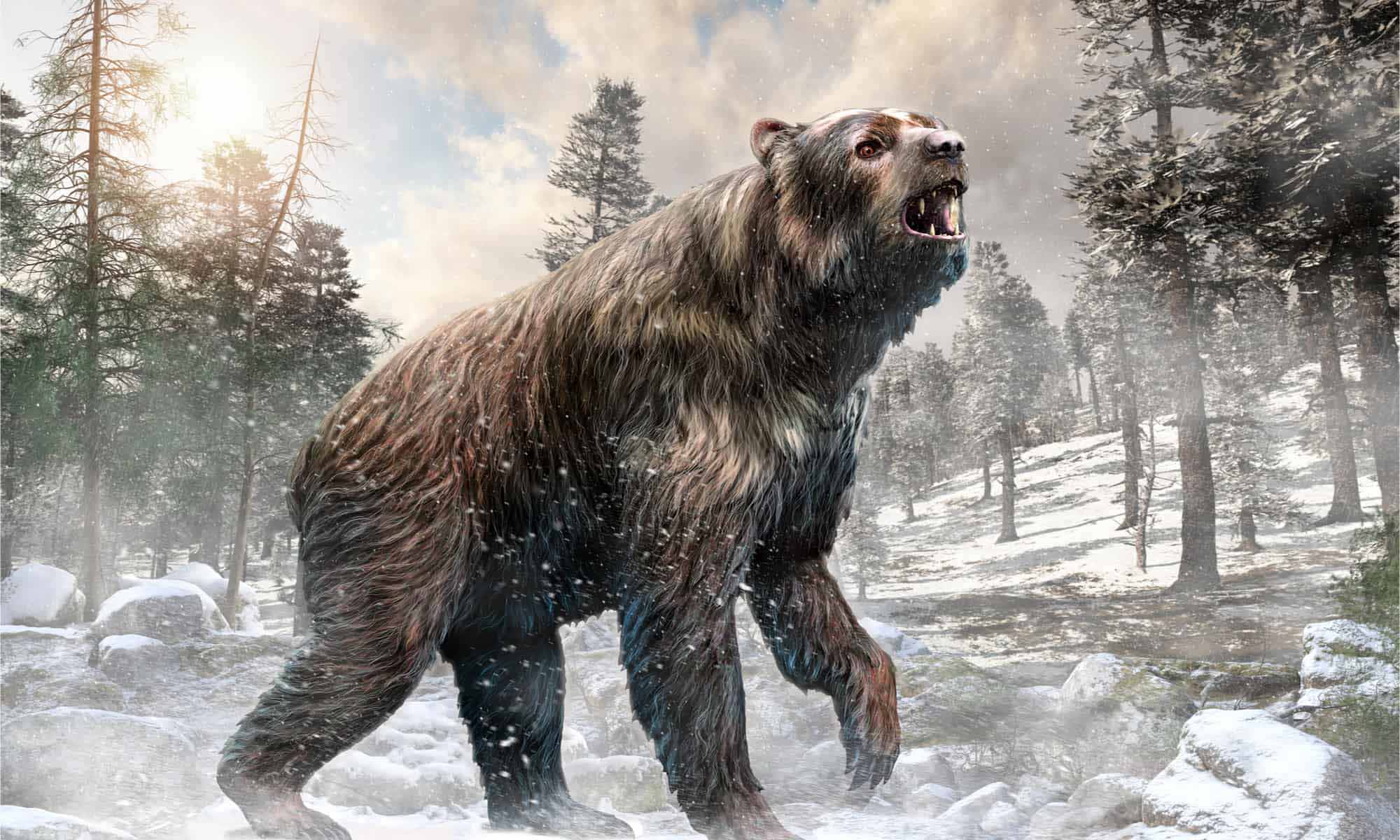
The brown bear is one of the largest living terrestrial carnivores, and is widely distributed across the Northern Hemisphere. Unlike many other large carnivores that went extinct at the end of the last Ice Age (cave bear, sabretoothed cats, cave hyena), the brown bear is one of the lucky survivors that made it through to the present. The question has puzzled biologists for close to a century: How was this so?
'Prehistoric' mummified bear discovered in Siberian permafrost isn't what we thought Live Science - March 5, 2023
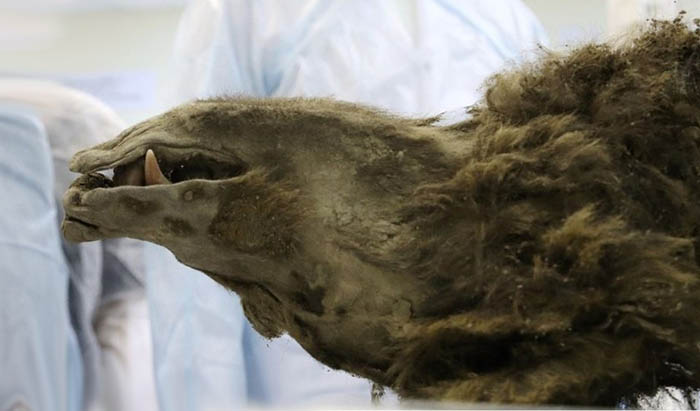
A perfectly preserved, mummified bear found entombed in the Siberian permafrost in 2020 isn't what scientists thought it was, a new analysis reveals. It turns out that the eerily intact carcass is much younger than first assumed and belongs to an entirely different species. Reindeer herders unearthed the remains, which include the bear's intact skin, fur, teeth, nose, claws, body fat and internal organs, on Bolshoy Lyakhovsky Island, a remote Russian island located in the East Siberian Sea. Researchers named it the Etherican bear, after the nearby Bolshoy Etherican River.
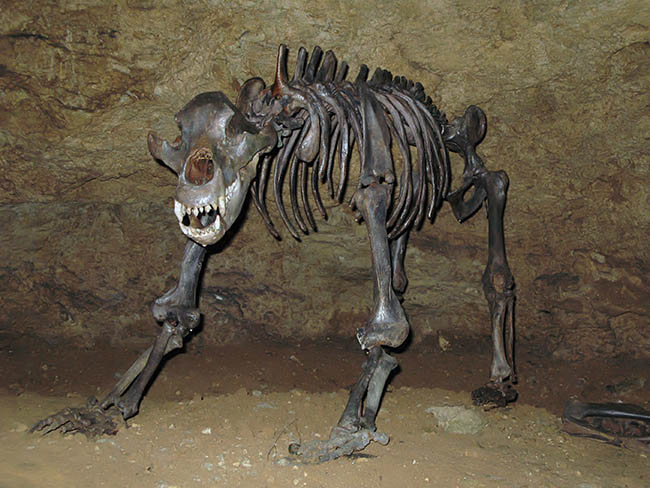
When the Etherican bear was first uncovered, researchers at the Lazarev Mammoth Museum Laboratory at North-Eastern Federal University (NEFU) in Yakutsk, who have led the analysis of the remains, thought that the mummy was an extinct cave bear (Ursus spelaeus). Fossils of this long-lost species suggest that the enormous ancient bears, which are closely related to brown bears (Ursus arctos) and polar bears (Ursus maritimus), grew to around 11.5 feet (3.5 meters) tall and weighed a whopping 3,300 pounds (1,500 kilograms). U. spelaeus went extinct around 22,000 years ago, toward the end of the Last Glacial Maximum, the coldest part of the last ice age, so the researchers believed that the mummy was at least this old.
22,000-year-old panda from cave in Southern China belongs to distinct, long-lost lineage Science Daily - June 18, 2018
Researchers who've analyzed ancient mitochondrial (mt)DNA isolated from a 22,000-year-old panda found in Cizhutuo Cave in the Guangxi Province of China -- a place where no pandas live today -- have revealed a new lineage of giant panda. The report, published in Current Biology on June 18, shows that the ancient panda separated from present-day pandas 144,000 to 227,000 years ago, suggesting that it belonged to a distinct group not found today.
The primitive bear with a sweet tooth: Scientists discover the 3.5 million-year-old remains of an ancient creature with severe cavities in Canada Daily Mail - December 18, 2017
Paddington's prehistoric ancestor, a primitive bear with a sweet tooth, has been discovered in the Arctic. Researchers identified the remains of a 3.5-million-year-old bear from a fossil-rich site in Canada's High Arctic. The findings show that the animal is a close relative of the ancestor of modern bears, and that it also had a taste for sweet treats - shown by cavities in its teeth. They say the ancient bear may have got his bad teeth from munching on berries, rather than Paddington's preferred sweet treat of marmalade sandwiches.
True causes for extinction of cave bear revealed PhysOrg - August 24, 2010
The cave bear started to become extinct in Europe 24,000 years ago, but until now the cause was unknown. An international team of scientists has analysed mitochondrial DNA sequences from 17 new fossil samples, and compared these with the modern brown bear. The results show that the decline of the cave bear started 50,000 years ago, and was caused more by human expansion than by climate change.
Ancient polar bear jawbone found BBC - December 10, 2007
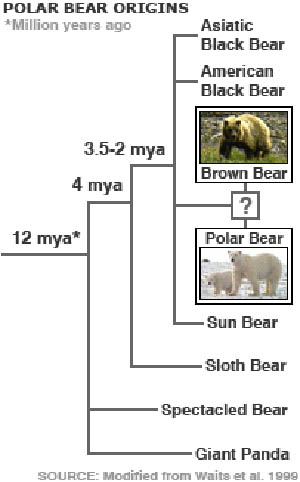
What may be the oldest known remains of a polar bear have been uncovered on the Svalbard archipelago in the Arctic. The jawbone was pulled from sediments that suggest the specimen is perhaps 110,000 or 130,000 years old. Tests show it was an adult, possibly a female. The find is a surprise because polar bears are a relatively new species, with one study claiming they evolved less than 100,000 years ago. If the Svalbard jawbone's status is confirmed, and further discoveries can show the iconic Arctic beasts have a deeper evolutionary heritage, then the outlook for the animals may be more positive than some believe.
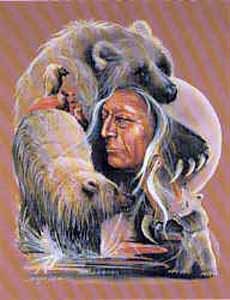
All About Bears
Facts, Symbolism, Mythology, Shamanism, Medicine, Constellation, Fat Bear Week
ANCIENT AND LOST CIVILIZATIONS