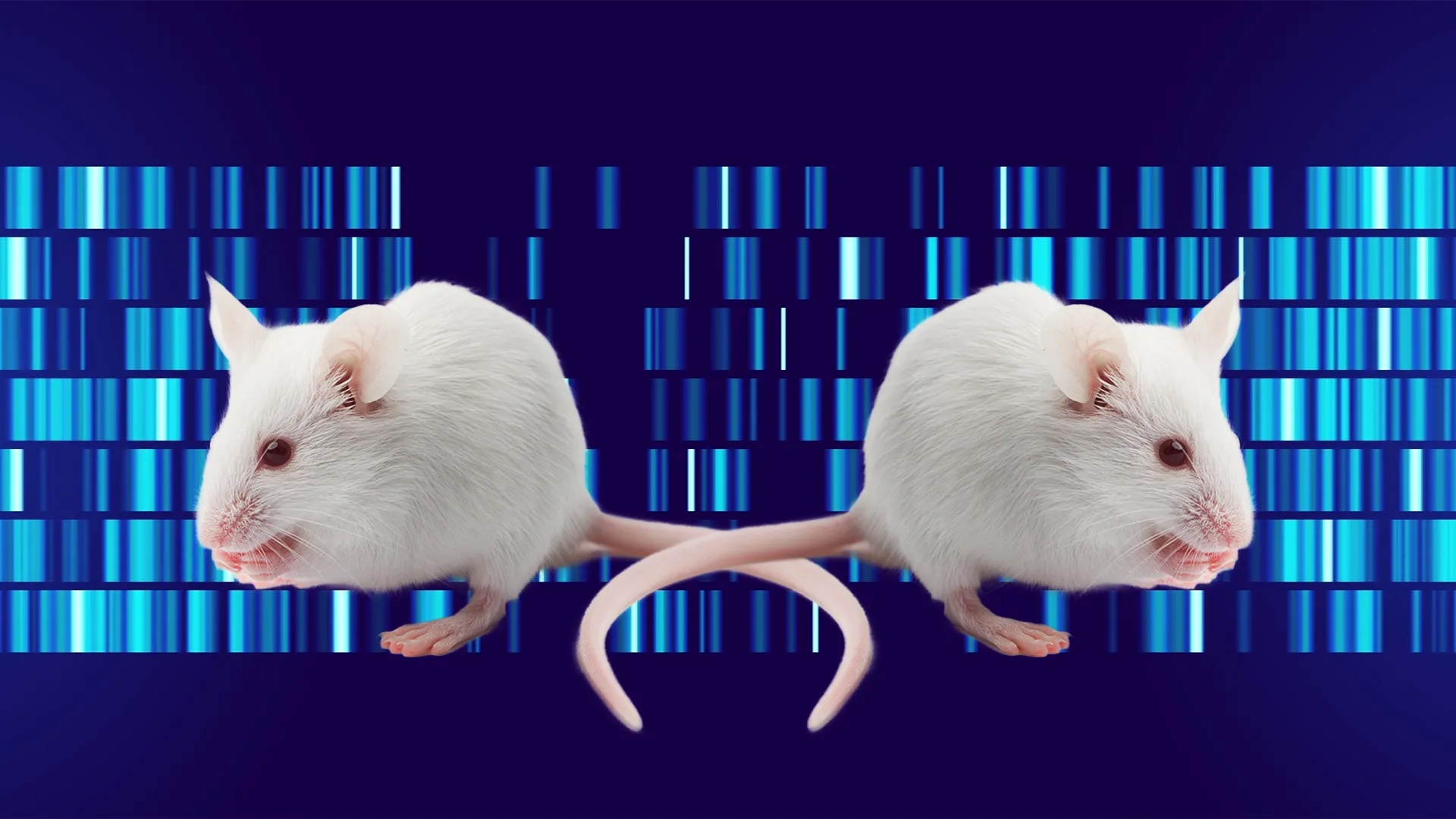
First artificial parthenogenesis in mammals: (2022) Viable mice offspring was born from unfertilized eggs via targeted DNA methylation editing of seven imprinting control regions.
Cloning mice has advanced from basic laboratory experiments to decades-long studies that expose the fundamental genetic boundaries of mammalian life. Scientists use mice to study mammalian development, disease modeling, and the long-term viability of asexual reproduction.
The 58-Generation Limit
For a long time, researchers wondered if a cloned mammal could be cloned indefinitely. A groundbreaking 20-year study published in Nature Communications finally provided an answer.
The Experiment: Led by Teruhiko Wakayama at the University of Yamanashi, scientists produced over 1,200 mice by cloning a clone, then cloning that clone, repeatedly.
The Decline: The cloned mice lived normal lifespans and appeared healthy for the first 25 generations. However, birth rates began dropping noticeably by the 27th generation.
The Dead End: The entire lineage utterly collapsed at the 58th generation. The final generation of mice suffered from severe genetic flaws and failed to survive past their first day.
Why Serial Cloning Collapses
The downfall of the 58-generation lineage provided crucial insights into mammalian biology:
Mutation Accumulation: Re-cloning acts like photocopying a photocopy. By generation 57, the mice acquired over 3,400 single-base DNA mutations - more than triple the rate of naturally reproducing mice.
Sexual Indispensability: The study proved that sexual reproduction is biologically mandatory for mammals. Mixing genes from two parents filters out lethal, recessive genetic defects that otherwise pile up during cloning.How Mice are Cloned
How Mice are Cloned
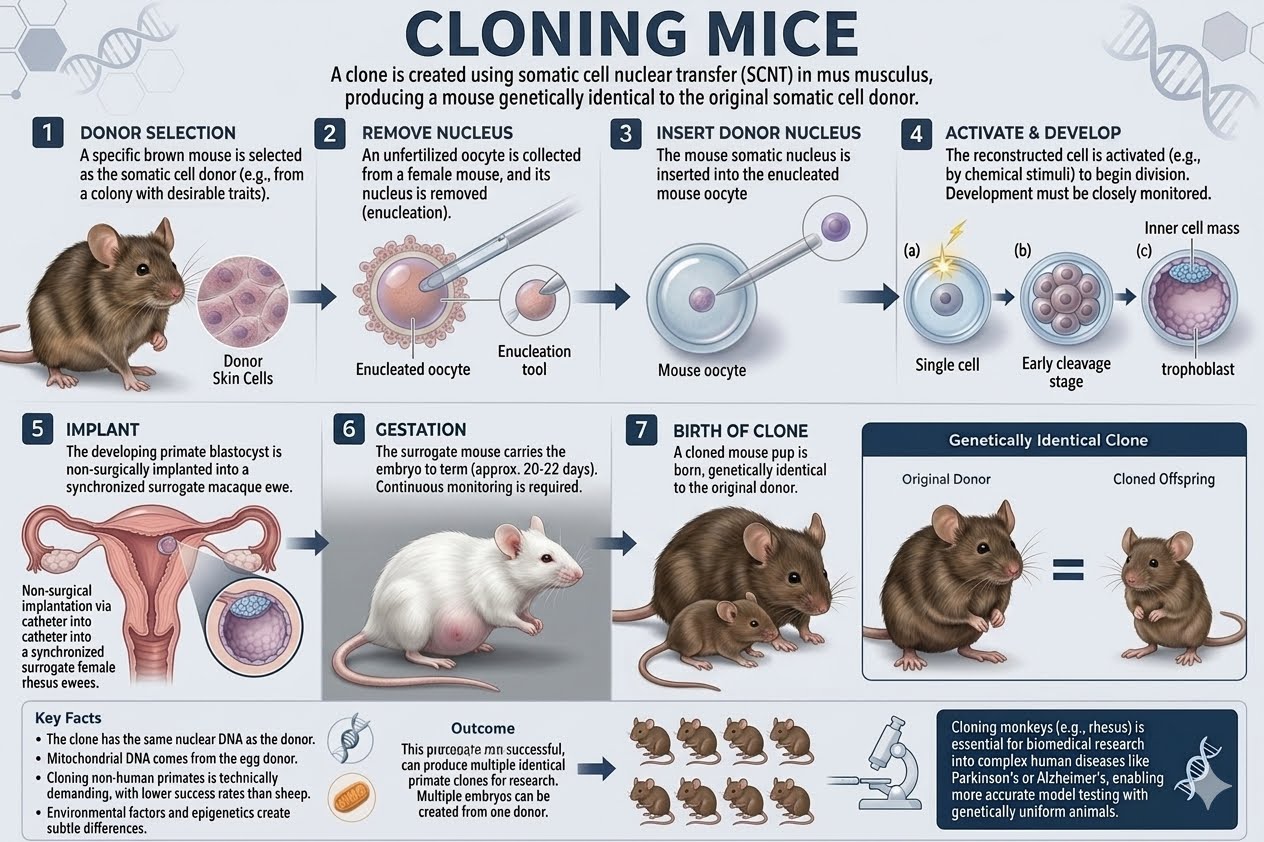
Scientists primary rely on a technique called Somatic Cell Nuclear Transfer (SCNT):
1. Extraction: A researcher extracts an unfertilized egg cell from a female mouse and removes its nucleus.
2. Insertion: The nucleus of a donor somatic cell (such as a skin cell, blood drop, or cumulus cell) is inserted into the empty egg.
3. Activation: Chemical or electrical shocks stimulate the egg to begin dividing into an embryo.
4. Implantation: The embryo is placed into a surrogate mother mouse to grow to term.
Why Cloned Mice Matter
Cloning mice is a vital tool for medical and genetic breakthroughs. Because mice share highly similar genomes with humans, researchers use them to test new pharmaceuticals and map genetic diseases. By introducing specific mutations into mouse stem cells and cloning them, scientists can create precise animal models for studying human conditions like diabetes, cancer, and heart disease.
Scientists have succeeded in cloning a rat named Ralph BBC - September 25, 2003

The researchers from China and France say they managed to create several rodent copies - both male and female. The rat joins a lengthening list of animals that have been cloned from an adult cell. These include sheep, mice, cattle, goats, pigs, cats, mules and horses.
The rat has come later than the others because of unique difficulties in controlling the development of its eggs in the early stages of the cloning process. Rat eggs activate almost immediately they leave the ovaries, making it difficult to introduce the genetic material of the animal to be copied. In a paper published online by the journal Science, Qi Zhou and colleagues describe how the use of a chemical at a key moment can stabilize the eggs, so leading to successful embryos that will implant in a surrogate mother.