
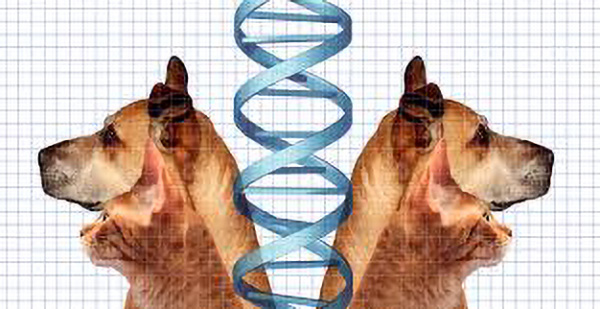
Commercial pet cloning has transitioned from sci-fi novelty into a high-stakes, real-world industry primarily driven by wealthy pet owners, working-dog institutions, and celebrity interest. While it provides a controversial comforting lifeline for those dealing with intense pet loss, it faces sharp criticism regarding animal welfare, biological realities, and ethical boundaries
The Commercial Landscape and Cost
The High Price Tag: As of 2026, the baseline cost to clone a dog is $50,000 USD.
The Leading Provider: ViaGen Pets & Equine is the prominent biotechnology firm managing the majority of commercial canine and feline cloning worldwide.
Celebrity Spotlight: High-profile figures like Barbra Streisand, Paris Hilton, and Tom Brady have utilized these services to preserve the lineages of their beloved companions.
DNA Insurance: For owners who are undecided, companies offer Genetic Preservation (GP) services. A vet takes a small skin biopsy to culture and freeze millions of cells for roughly $1,600, storing the DNA indefinitely until cloning is requested.
How Canine Cloning Works
Dog cloning relies on Somatic Cell Nuclear Transfer (SCNT), the same basic science used to clone Dolly the Sheep in 1996
The surrogate mother carries the pregnancy to term and gives birth to a puppy that is the genetic twin of the original dog, born at a later date.
Twin Dynamics: Genes vs. Reality
A common misconception among grieving owners is that a clone is a literal resurrection of their deceased pet. Biologists highlight three distinct differences:
Appearance Variance: While they share identical DNA, clones may have slightly different fur patterns, asymmetric coat markings, or minor physical variations due to early epigenetic factors in the womb.
Different Personalities: Behavior and temperament are heavily dictated by environment, socialization, training, and life experiences. A cloned puppy will not share the memories, bond, or inherent learned behaviors of the original dog.
The "Multiple" Factor: Because the lab transfers multiple embryos to ensure a successful pregnancy, cloning attempts frequently result in a litter of two or three identical puppies rather than just one.
Working and Elite Canine Programs
Beyond household pets, cloning serves practical utility in specialized working canine sectors:
Duplicating Elite Sniffers: Public safety agencies use cloning to reproduce highly successful explosive, narcotic, and cancer-sniffing service dogs.
High Success Rates: Studies show cloned working dogs carry over the same structural, neurological, and physiological baselines as their donor cells, maintaining a high success rate in rigorous service training.
Ethical Concerns and Criticisms
Animal rights organizations, including PETA and the Humane Society, actively oppose the commercialization of pet cloning based on several points:
The "Hidden Dogs": The process requires a massive supply of donor eggs and surrogate mothers. Multiple surgical egg extractions and failed embryo implantations are often required before a viable pregnancy takes hold.
High Failure Rates: Many cloned embryos fail to develop, and early iterations of the science resulted in higher risks of birth defects or late-stage miscarriages.
Shelter Demographics: Critics argue that spending $50,000 to manufacture a dog ignores the millions of perfectly healthy shelter animals that are euthanized yearly due to lack of homes.
Science moves on from dog clone BBC - March 8, 2006
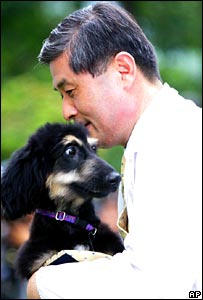
Snuppy, the cloned dog created by disgraced South Korean scientist Hwang Woo-suk, has been formally confirmed as an authentic genetic copy. The journal Nature has released details of an independent analysis showing the Afghan hound is a genuine clone. The check was ordered following allegations that Hwang's landmark studies on human cloning were faked. The fall-out from the case means future, high-profile scientific claims will be subjected to greater scrutiny.
Journals are likely to ask for more supporting data on papers which purport to be major breakthroughs; and in some cases, scientists may even open up their work to independent experimental analysis before they submit a paper for publication. Fraud is rare/
Peer review is the process scientific journals use to assess research before it is published; but it is not fail-safe. Peer review is supposed to ensure that any study's methodology is sound, and that interpretation of data does not go beyond what can be reasonably justified. Journals ask other "experts in the field" to undertake the review but it does not involve these referees either repeating experiments or testing samples resulting from a research project.
South Korea unveils first dog clone BBC - August 3, 2005
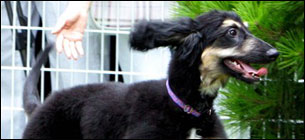
Scientists in South Korea have produced the first dog clones, they report in Nature magazine this week. One of the puppies died soon after birth but the other, an Afghan hound named Snuppy, is still doing well after 16 weeks, the researchers say. Snuppy joins a host of other cloned animals including Dolly the sheep, CC the cat and Ralph the rat. Scientists hope dog clones will help them understand and treat a range of serious human diseases.