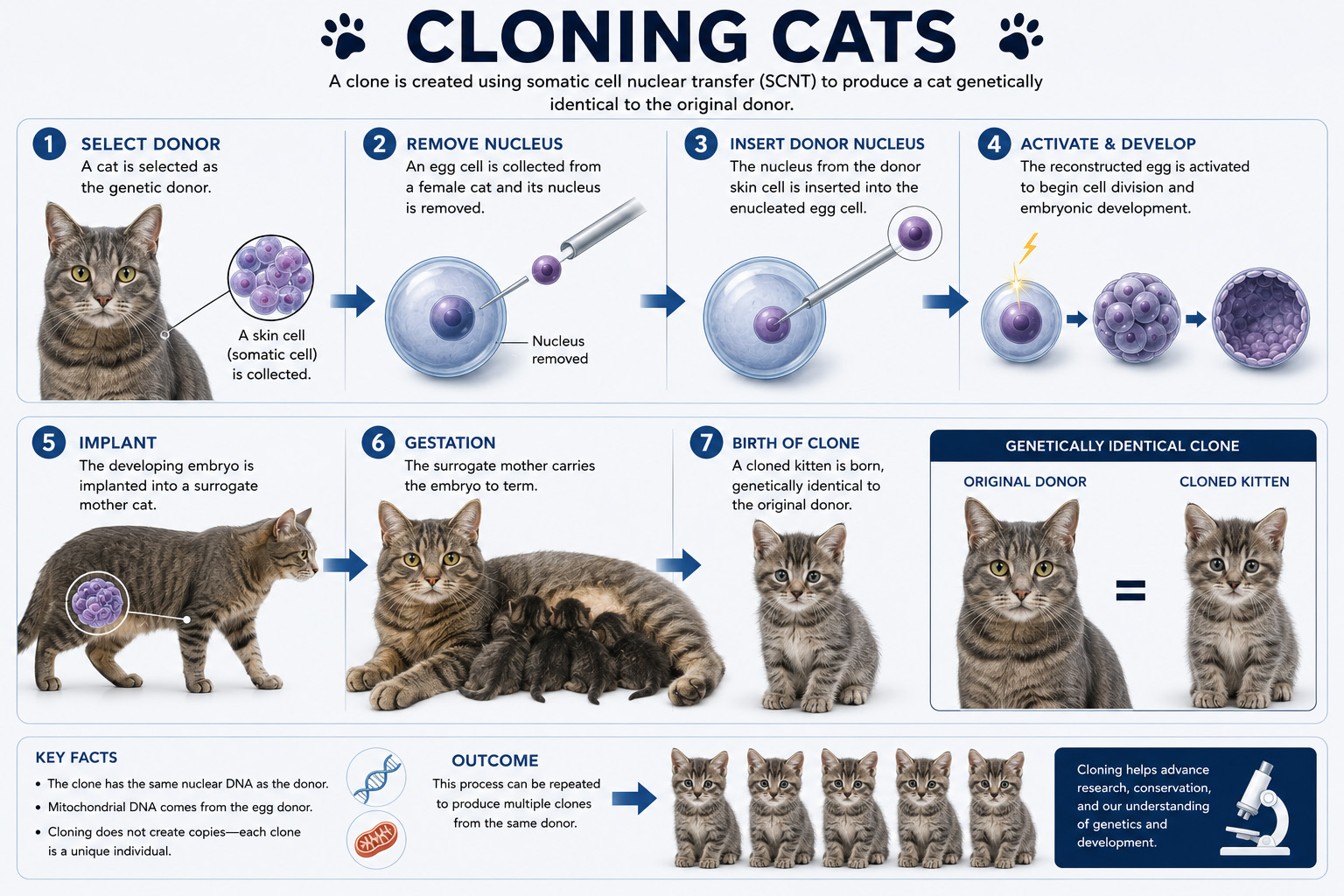
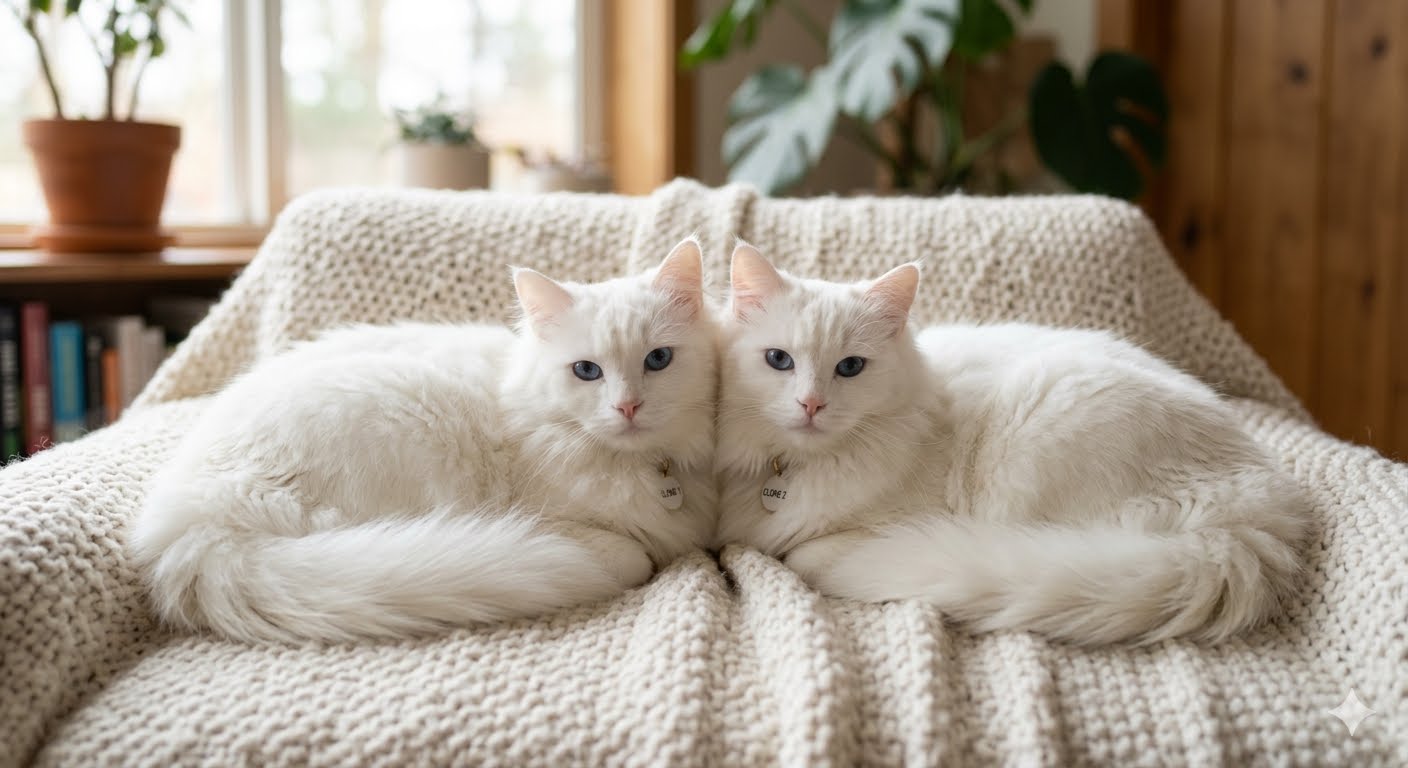
Cat cloning creates a genetic twin of an existing cat, but it does not resurrect your exact pet. While a cloned kitten shares 100% of the original animal's DNA, environmental factors, womb development, and unique life experiences mean the new cat may have a different personality and even different physical markings.
The Process: Scientists use a method called somatic cell nuclear transfer. They remove the nucleus from a donor egg cell and replace it with DNA from the original cat's skin tissue. The embryo is then grown in a lab and transferred to a surrogate mother cat.
The Commercial Reality: Commercial pet cloning has moved from science fiction into the mainstream. In the United States, companies like ViaGen Pets charge approximately $50,000 to clone a cat.
The Pioneer: The very first successfully cloned pet was a domestic shorthair named CC (short for CopyCat), born at Texas A&M University in late 2001. CC lived a normal, healthy life and passed away in 2020 at the age of 18.
Appearance Shifts: Even with identical DNA, coat patterns (especially in Calico or Ragdoll cats) can vary due to how genes are randomly turned on or off during embryonic development in the womb.
Personality Differences: A clone is born as a brand-new kitten, not an adult pet with existing memories. While baseline traits like activity levels can be similar, unique behaviors, phobias, and bonds are shaped entirely by how the new kitten is raised.
Animal Welfare: Critics point out that the cloning process has a low success rate, requiring multiple surrogate mothers and donor eggs, which can lead to miscarriages and early-term failures.
Ethics and Shelters: Major animal organizations urge people to adopt instead of clone. They argue that spending tens of thousands of dollars to replicate a pet is a missed opportunity to save shelter animals in need of homes.
First kittens for cloned wildcats BBC - August 22, 2005
A conservation institute in the United States has produced wildcat kittens by cross-breeding cloned adults.
The Audubon Center for Research of Endangered Species says this is the first time that clones of a wild species have bred. Eight kittens have been born in two litters over the last month, and all are apparently doing well. The researchers say this development holds enormous potential for preserving a range of endangered species.
Texas researchers clone cat -Copy Cat' BBC - February 2002
Researchers in Texas have cloned a domestic cat, producing a two-month-old kitten called CopyCat. The work is described in the scientific journal Nature and is the first time anyone has cloned a pet.