
Record Discovery: Impact Crater in Australia's Outback Oldest by a Billion Years Science Alert - March 7, 2025
We have discovered the oldest meteorite impact crater on Earth, in the very heart of the Pilbara region of Western Australia. The crater formed more than 3.5 billion years ago, making it the oldest known by more than a billion years.
Mysterious Pink Sands in Australia Reveal Hidden Antarctic Mountains Science Alert - June 22, 2024
Joining the dots with ice-flow indicators in the South Australian glacial sedimentary rocks that garnet-rich glacial sands were ground out of the Antarctic mountains - which are yet to see the light of day - by an ice sheet moving north-west during the Late Palaeozoic Ice Age, when Australia and Antarctica were connected in supercontinent Gondwana.
Mysterious Fragments of Glass in Australian Outback Have Cosmic Origins in 5,000 Year Old Meteorite Science Alert - April 7, 2024
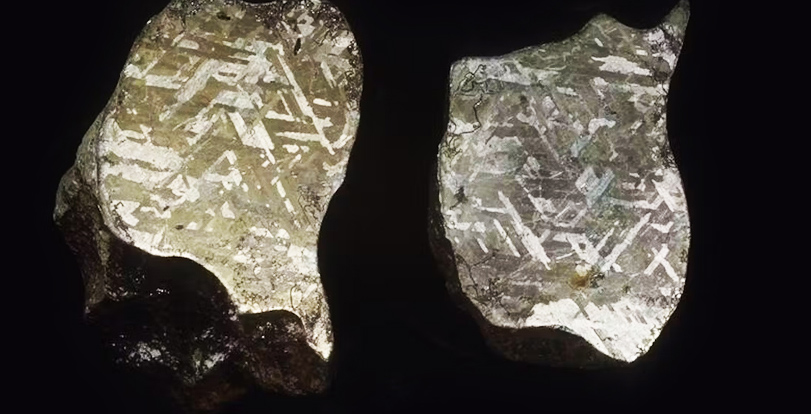
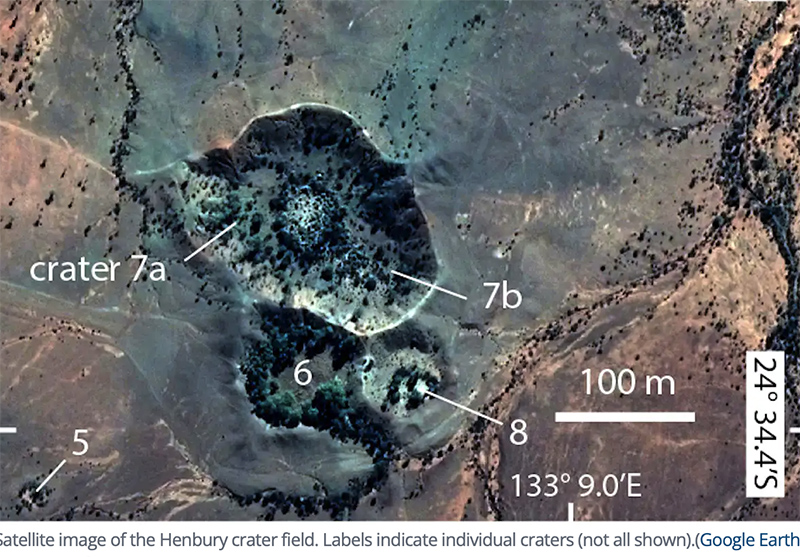
Glass occurs in nature, too. Most of it is obsidian, the glass produced in volcanoes which has been known since ancient times. When the space rock struck at Henbury, the heat of the impact melted the meteorite along with rock from the ground. Some of this fused material formed molten droplets which was thrown from the craters and cooled to form thumb-sized lumps that look a lot like volcanic glass.
Eerie Figures With Giant Heads Found Painted in a Rock Shelter in Tanzania Science Alert - June 29, 2022
In 2018, archaeologists made a staggering discovery in Swaga Swaga Game Reserve in central Tanzania: 52 previously undocumented rock shelters, deliberately painted with rock art. Weathering had mostly destroyed all but a handful; but of those that were preserved, one was an absolute enigma. The site, named Amak'hee 4, was elaborately painted with a frieze of figurative art Š including three mysterious, anthropomorphic figures with extremely oversized heads. These could be a clue to figuring out what other, similar trios of figures found in other rock art panels might be. The Amak'hee 4 panel is difficult to date, but in 2021 Grzelczyk was able to gauge that it's at least a few hundred years old. It's painted almost entirely in red pigment, except for five figures in white. The weathering on this pigment, and the absence of domestic animals, suggests that it's fairly old, dating back to the time of hunter-gatherer societies in the region.
Machine-learning model can detect hidden Aussie rock art PhysOrg - June 29, 2022
Researchers have developed a way to detect the presence of rock art in remote, hard-to-reach areas in Australia's rugged landscapes using Machine Learning (ML) methods - to detect whether painted rock art was present within the image..
Australia: How climate is making Australia more unliveable BBC - May 22, 2022
"It's devastating. The amount of time and effort you put in your home and then to see it go under water." Sam Bowstead is an architect who specializes in preparing houses to withstand natural disasters. But when floods engulfed his Brisbane home in February, he felt helpless.
Climate Change Has Been Killing Rainforest Trees For Longer Than We Realized Science Alert - May 21, 2022
Scientists have documented a worrying trend in the rainforests of Australia: Tree lifespans have halved in the last 35 years, and it appears to be due to the effects of climate change on the ecosystems. With these forests acting as significant carbon sinks, the consequences for the planet could be devastating, creating a feedback loop that's both caused by global warming and which then contributes to it.
Fossil site discovery tells of Australia's 'origin story' CNN - January 8, 2022
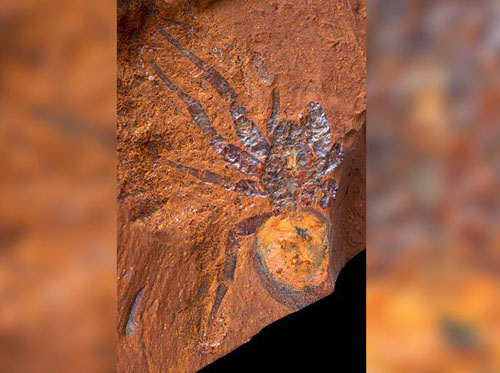
This is a fossilized mygalomorph spider found at McGraths Flat, a newly discovered fossil site in New South Wales, Australia. The arid deserts and shrub lands in Australia weren't always that way, according to a newly discovered and extraordinarily well-preserved fossil site in New South Wales. The fossilized spiders, cicadas, wasps, plants and fish, which date back to between 11 million and 16 million years ago during the Miocene Epoch, are painting a vivid picture of Australia's once abundant rainforest ecosystems. It is an extremely important fossil site with exceptionally well-preserved fossils from a time that we don't know a lot about.
Mind-Blowing New Fossil Site Found in The 'Dead' Heart of Australia Science Alert - January 7, 2022
A new fossil site that can most aptly be described as "exceptional" has turned up fossils of spiders, insects, fish, plants and even a bird feather, dating to the Miocene 11 to 16 million years ago.
Jurassic world of volcanoes found in central Australia PhysOrg - August 13, 2019
An international team of subsurface explorers from the University of Adelaide in Australia and the University of Aberdeen in Scotland has uncovered a previously not described Jurassic world of around 100 ancient volcanoes buried deep within the Cooper-Eromanga Basins of central Australia.
Research finds Aboriginals lived in Western Desert 50,000 years ago PhysOrg - September 20, 2018
Archaeologists from The University of Western Australia working with Traditional Custodians from the Birriliburru Indigenous Protected Area (IPA) have recovered evidence that people lived in the Australian arid zone 50,000 years ago. This is 10,000 years earlier than previously understood for the interior deserts of Australia, and among some of the earliest known evidence for people living in deserts anywhere in the world. The remote Carnarvon Ranges are near the Canning Stock Route. Evidence from the Karnatukul site (previously known as Serpents Glen) indicates that people lived in this interior desert from very early in the settlement of Australia and that they remained in these ranges during the last Ice Age.
Tasmanian Treasure: Rare 17th-Century Map of Australia Resurfaces Live Science - November 7, 2017
A rare map of Australia from the 17th century - before Europeans had fully explored the continent - resurfaced after 350 years. Now, it's finally been restored and put on public display in Australia's capital, Canberra.Dutch cartographer Joan Blaeu created the map called "Archipelagus Orientalis," or "Eastern Archipelago," in 1659. (This newfound copy was printed in 1663.) Much of the eastern coastline of the continent is missing in this vision of Australia. But the map is notable for including the earliest details of the sighting of Tasmania by the seafarer Abel Tasman, who planted a Dutch flag on the island during his expedition aboard the Zeehaen in 1642.
Rare surviving 17th-Century wall map of Australia discovered, is one of two News.com.au - November 8, 2017
A priceless rare map of Australia that was understood to be lost forever has been discovered in an attic and returned to its permanent home. Unearthed in 2010 in storage in Sweden where it spent most of its life, the 350-year-old map, Archipelagus Orientalis (Eastern Archipelago), was created by renowned cartographer, Joan Blaeu, in 1659. An Antiquarian bookseller is believed to have owned a pile of maps and books and after going out of business in the 1950s the treasure was buried away. When the map was discovered again in 2010, the owners werenÕt aware of the map's rarity. They only realized when it went for sale at auction.
Australia human history 'rewritten by rock find' BBC - July 20, 2017
Archaeologists have found the first evidence to suggest that #Aboriginal people have been in Australia for at least 65,000 years. The discovery indicates their arrival on the continent was up to 18,000 years earlier than previously thought. It was made after sophisticated #artifacts were excavated from a rock shelter in the Northern Territory. Researchers unearthed what they say are the world's oldest stone axes and ochre crayons, thought to be used for art.
Aboriginal hair shows 50,000 year connection to Australia Science Daily - March 9, 2017
DNA in hair samples collected from Aboriginal people across Australia in the early to mid-1900s has revealed that populations have been continuously present in the same regions for up to 50,000 years -- soon after the peopling of Australia.
Rock shelter used by speedy early Australians BBC - November 3, 2016
The speed at which the first Aboriginal settlers spread across Australia has been underlined by the discovery of an ancient rock shelter north of Adelaide. The rock fissure in the Flinders Ranges contains tools and other artifacts that date back to around 49,000 years ago. That means Aboriginal people must have colonized large parts of the continent within a few millennia of their arrival. Dating of the sediments and objects in the cave, which include not just tools, but animal bones, charcoal, ash, egg shells and plant material, reveal that humans were using the site in sporadic fashion over thousands of years. The research team sees periods of frequent use interspersed with what may have been times of abandonment. But what was left on the ground is certainly a boon now to those trying to piece together the chronology and scope of Aboriginal settlement, which likely started in the northwest of the continent more than 50,000 years ago.
a year (northward and with a slight clockwise rotation).
Underground formations reveal wet past of Australia's Nullarbor Plain PhysOrg - February 9, 2016
A team of researchers affiliated with several institutions in Australia has found evidence that suggests that a desert region in Australia experienced a relatively short burst of wetter weather approximately five million years ago. Their study of stalagmites and stalactites in caves in the area and why they believe what they found might give a hint of what the future holds for Australia.
Looking to the Stars of Australian Aboriginal Astronomy Ancient Origins - December 30, 2015
Astronomy played an important role in many ancient societies. Through this natural science, the ancients were able to make calendars, navigate during the night, and even explore the nature of the universe through mythology and philosophy. Some civilizations well-known for their astronomical developments include the Babylonians, the ancient Egyptians, and the ancient Greeks. The astronomy of many other cultures, however, has been side-lined, as a result of the prevailing Euro-centric view of astronomy, and civilization, in general. One of these is the astronomy of the Australian Aboriginal people, considered by some to be the oldest in the world.
Aboriginal legends reveal ancient secrets to science BBC - May 19, 2015
Scientists are beginning to tap into a wellspring of knowledge buried in the ancient stories of Australia's Aboriginal peoples. But the loss of indigenous languages could mean it is too late to learn from them. The Luritja people, native to the remote deserts of central Australia, once told stories about a fire devil coming down from the Sun, crashing into Earth and killing everything in the vicinity. The local people feared if they strayed too close to this land they might reignite some otherworldly creature. The legend describes the crash landing of a meteor in Australia's Central Desert about 4,700 years ago, says University of New South Wales (UNSW) astrophysicist Duane Hamacher. It would have been a dramatic and fiery event, with the meteor blazing across the sky. As it broke apart, large fragments of metal-rich rock would have crashed to Earth with explosive force, creating a dozen giant craters.
'Largest ever asteroid impact' found in Australia BBC - March 24, 2015
The 400-kilometre (250-mile) wide area is buried deep in the earth's crust and consists of two separate impact scars. The team behind the discovery, from the Australian National University (ANU), said the asteroid broke into two before it hit, with each fragment more than 10km across. The impact is thought to have occurred at least 300 million years ago. The surface crater has long since disappeared from central Australia's Warburton Basin but geophysical modeling below the surface found evidence of two massive impacts.
Ancient Sea Rise Tale Told Accurately for 10,000 Years Scientific American - January 26, 2015
Without using written languages, Australian tribes passed memories of life before, and during, post-glacial shoreline inundations through hundreds of generations as high-fidelity oral history. Some tribes can still point to islands that no longer exist - and provide their original names. That's the conclusion of linguists and a geographer, who have together identified 18 Aboriginal stories - many of which were transcribed by early settlers before the tribes that told them succumbed to murderous and disease-spreading immigrants from afar - that they say accurately described geographical features that predated the last post-ice age rising of the seas.
Scientists uncover "God's bathtub" Yahoo - June 5, 2013
Blue Lake -- Imagine a lake that's never been affected by climate change or any other man-made influences. Australian scientists say they have found just that - a remote lake whose crystal-clear waters seem to be in the same chemical state as they were about 7,500 years ago. Several other nearby former lakes have dried up over the past 40 years due to climate change. The lake's water has remained unchanged because its waters drain into a nearby swamp and are replaced by an aquifer every 35 days or so.
Original Australians numbered 1,000-3,000, study finds PhysOrg - April 23, 2013
This undated University of Southern Queensland photo shows a 28,000-year-old charcoal rock art fragment excavated from Arnhem land in Australia's Northern Territory. Australia was first settled by between 1,000 and 3,000 humans around 50,000 years ago, but the population crashed during the Ice Age before recovering to a peak of some 1.2 million people around five centuries ago, a study said.
Did Mega-Drought Kill Ancient Aboriginal Culture? Live Science - January 10, 2013
A 1,500-year drought in Australia may have led to the demise of an ancient aboriginal culture, a new study suggests. The results, published Nov. 28 in the journal Geophysical Research Letters, show that geological traces of a mega-drought in the northwest Kimberley region of Western Australia coincide with a gap and transition in the region's rock art style. The finding suggests that the people who lived prior to the drought, called the Gwion, either left the region or dramatically altered their culture as a result of the drought, and a new culture called the Wanjinda eventually took its place.'
Ancient migration: Genes link Australia with India BBC - January 15, 2013
Australia experienced a wave of migration from India about 4,000 years ago, a genetic study suggests. It was thought the continent had been largely isolated after the first humans arrived about 40,000 years ago until the Europeans moved in in the 1800s.
Gene flow from India to Australia about 4,000 years ago PhysOrg - January 14, 2013
Long before Europeans settled in Australia humans had migrated from the Indian subcontinent to Australia and mixed with Australian aborigines.
Secret of Dingo's Down-Under Origin Revealed Live Science - January 14, 2013
Indians migrating to Australia more than 4,000 years ago may have introduced dingoes to the island continent, along with novel stone tools and new ways to remove toxins from edible plants, researchers say. Australia was thought to have remained largely isolated from the rest of the world between its initial colonization about 40,000 years ago by the ancestors of aboriginal Australians and the arrival of Europeans in the late 1800s.
Archaeologist finds oldest rock art in Australia PhysOrg - June 18, 2012
An archaeologist says he found the oldest piece of rock art in Australia and one of the oldest in the world: an Aboriginal work created 28,000 years ago in an Outback cave.
Lock of hair pins down early migration of Aborigines BBC - September 22, 2011
A lock of hair has helped scientists to piece together the genome of Australian Aborigines and rewrite the history of human dispersal around the world. DNA from the hair demonstrates that indigenous Aboriginal Australians were the first to separate from other modern humans, around 70,000 years ago. This challenges current theories of a single phase of dispersal from Africa.
Ancient rock art's colors come from microbes BBC - December 28, 2010
A particular type of ancient rock art in Western Australia maintains its vivid colors because it is alive, researchers have found. While some rock art fades in hundreds of years, the "Bradshaw art" remains colorful after at least 40,000 years. Jack Pettigrew of the University of Queensland in Australia has shown that the paintings have been colonized by colorful bacteria and fungi. These "biofilms" may explain previous difficulties in dating such rock art.
Australia's earliest contact rock art discovered PhysOrg - July 24, 2010
Researchers have discovered evidence of Southeast Asian sailing vessels visiting Australia in the mid-1600s -- the oldest contact rock art in Australia. Rock engravings from the Copper Age found all over Europe in remote, hidden locations, indicate the artwork was more than mere images, researchers from Cambridge University and Sankt Poelten's university of applied sciences (FH) in Austria believe.
Prehistoric man enjoyed a primitive version of cinema PhysOrg - June 29, 2010
The ancient Aboriginal rock carving known as 'Climbing Man' is shown in this photo taken on the Burrup Peninsula in Australia in 2008.
Australian archaeologists uncover 40,000-year-old site PhysOrg - March 10, 2010
Australian archaeologists have uncovered what they believe to be the world's southernmost site of early human life, a 40,000-year-old tribal meeting ground, an Aboriginal leader said Wednesday.
Early Aussie Tattoos Match Rock Art Discovery - June 2, 2008
Body art was all the rage in early Australia, as it was in many other parts of the ancient world, and now a new study reports that elaborate and distinctive designs on the skin of indigenous Aussies repeated characters and motifs found on rock art and all sorts of portable objects, ranging from toys to pipes.
The study not only illustrates the link between body art, such as tattoos and intentional scarring, with cultural identity, but it also suggests that study of this imagery may help to unravel mysteries about where certain groups traveled in the past, what their values and rituals were, and how they related to other cultures.
ANCIENT AND LOST CIVILIZATIONS