
Scientists Identify The World's Biggest Known Scorpion, The Size of a Dog Science Alert - June 10, 2026
After years of delays, the world's largest wildlife crossing is nearing its debut, offering mountain lions and other animals a new path over one of California's most dangerous freeways. Daily Galaxy - May 25, 2026

Above the constant hum of the 101 Freeway in Agoura Hills, an ecosystem is taking root. Crews are layering specialized soils and planting native vegetation across a span that stretches over ten lanes of traffic. The Wallis Annenberg Wildlife Crossing, built to reconnect fractured habitat, now has a firm opening date after significant cost increases and timeline shifts.
Scientists found a lost world of animals that shouldn't exist yet Science Daily - April 7, 2026

A remarkable fossil discovery in southwest China is rewriting the story of how complex animal life began, showing that many key animal groups appeared millions of years earlier than scientists once believed. Dating back over 540 million years, the fossils reveal a surprisingly diverse and advanced ecosystem from the late Ediacaran period before the famous Cambrian explosion. Among the finds are early relatives of starfish, worm-like creatures, and even ancestors of animals with backbones, suggesting that the roots of modern life were already taking shape.
Adorable Sea Lion Can Keep a Beat Better Than Some Humans Science Alert - May 2, 2025

In rare evolutionary event, weird platypus cousin evolved from living in water to living on land Live Science - May 2, 2025

Did Dire Wolves Just Come Back From Extinction? Here's The Truth. Science Alert - April 8, 2025
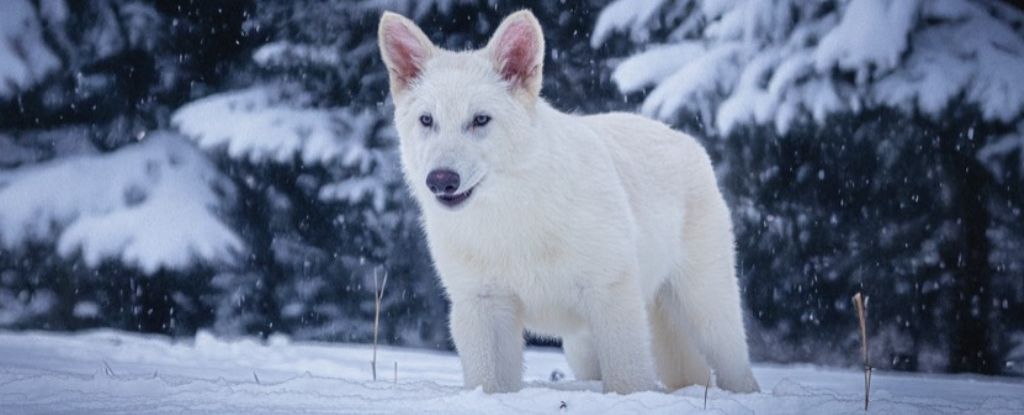
The internet is currently abuzz with talk of dire wolves Ð an extinct species of prehistoric wolf that used to roam North America and that was famously featured in the HBO fantasy series, Game of Thrones. A Dallas-based biotech company, Colossal Biosciences, claims to have resurrected the prehistoric Ice Age species (Aenocyon dirus) in the form of three genetically engineered grey wolf pups named Romulus, Remus, and Kaleesi.
Video: Scientists say they have resurrected the dire wolf. First new cubs born in over 12,000 years CNN - April 8, 2025
Adorable dire wolf pups mark 'world's first de-extinction,' Colossal Biosciences says Live Science - April 8, 2025
Yellowstone's iconic bison herds have merged into a single entity after 100 years of wandering the park Live Science - March 21, 2025

Bison in Yellowstone National Park spent over 100 years as two genetically distinct herds. But now they're roaming as one interbreeding population, a new study suggests. Herds of wild bison have meandered through Yellowstone's vibrant landscape since prehistoric times. Grazing freely in the expansive grasslands of the park, these are the last free-range bison in the United States.
Why Do Sheep Have Rectangular Pupils? IFL Scienc - December 31, 2024

The horizontal pupil - with only one exception we could find - is associated with prey animals.
This Worm Can Regrow Its Body by Reversing to a Stem Cell-Like State Science Alert - December 28, 2024

We're way behind several species when it comes to regeneration, and scientists are keen to discover the secrets of these other animals so we can learn from them Ð including, in a new study, the marine worm Platynereis dumerilii.
The World's Smallest Reindeer Are Fluffy Cutie Pies IFL Science - December 24, 2024

Introducing the Svalbard Reindeer (Rangifer tarandus platyrhynchus), which are around 1.5-1.6 meters (4.9-5.2 feet) long. These cuties are wild, non-domesticated reindeer endemic to the Norwegian Svalbard archipelago in the Arctic Ocean. In winter, they look adorable with thick fluffy light grey or yellow-white fur. In the summer, they look darker, and their fur is less thick. These reindeer have short legs, and relatively small, rounded heads.
Henry the giant crocodile, who has sired 10,000 babies, celebrates 124th birthday Live Science - December 16, 2024
The Nile crocodile (Crocodylus niloticus) has lived at the Crocworld Conservation Centre in Scottburgh, South Africa since 1985. He was originally captured in the Okavango Delta in Botswana in 1903. Henry, now a vigorous senior resident at the Crocworld Conservation Center, is said to have fathered over 10,000 offspring with numerous partners since he arrived there almost 40 years ago.
Scientists Discover a Mysterious 'Sixth Sense' Hidden in Geckos Science Alert - October 11, 2024

Animals have come up with a variety of extraordinary senses worthy of superheroes. Scientists have now discovered that geckos boast a hidden 'sixth sense' that lets them pick up deep, low vibrations. Like other lizards, tokay geckos (Gekko gecko) have hearing that's specialized towards higher frequency sounds - they're most sensitive between 1,600 and 2,000 Hertz, but can hear beyond 5,000 Hertz. That's just using their regular old ears, though. Two researchers have found that tokay geckos can also use a different structure, not normally associated with hearing, to sense much lower frequency vibrations, in the range of 50 to 200 Hertz.
World-First Evidence Shows Butterflies Can Fly Over 4,000 Kilometers Across The Atlantic Ocean Live Science - June 26, 2024
NASA Is Using Powerful Satellites to Watch Over Endangered Species Science Alert - June 12, 2024
By shifting a little focus from space to Earth, NASA is helping ecologists protect endangered species like tigers and elephants with its powerful satellites.
Scientists have traced the origin of the modern horse to a lineage that emerged 4,200 years ago PhysOrg - June10, 2024
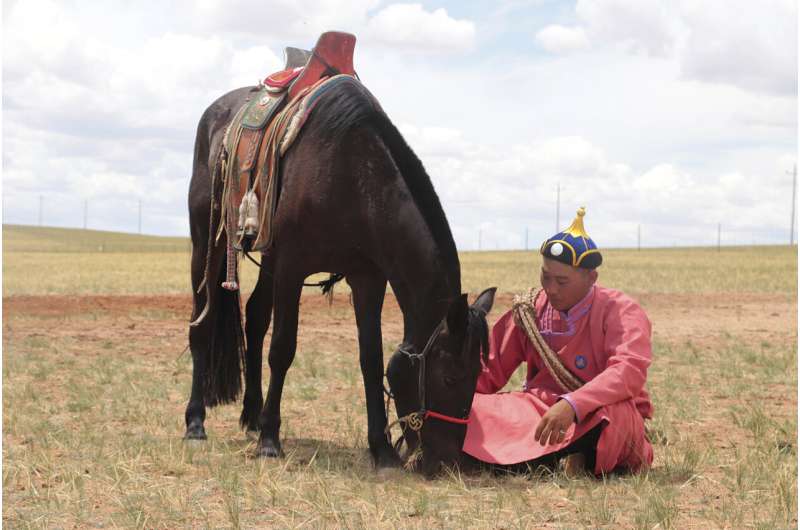
The horse transformed human history - and now scientists have a clearer idea of when humans began to transform the horse.
40 Przewalski wild horse species return to the Kazakh steppes in this vast Central Asian country PhysOrg - June 9, 2024
After a few hesitant steps following a long flight from Prague, three Przewalski horses galloped off for the first time into the Kazakh steppe sthe native habitat of this endangered species.
See 15 Amazing Wildlife Images From the Sony World Photography Awards Smithsonian - March 16, 2023
The animal subjects in the 2023 Sony World Photography Awards are captivating. This year's winning photographers captured creatures in Svalbard, Norway; Bangladesh; Brazil and the depths of the Indo-Pacific.
Incredible Discovery Has Finally Revealed The First Animals to Grow a Skeleton Science Alert - November 7, 2022
Before life on Earth exploded in diversity some 540 million years ago, the first primitive animal skeletons were already starting to form. Squishy-looking marine sponges from this time have been found in tubular thimble-like shapes, structured by hard, mineralized threads - specimens that are thought to be among the earliest assemblages of skeletal fossils.
The Incredible Colors of Animals Mean Different Things, But We Just Found a Pattern Science Alert - October 24, 2022
Dazzling as it often appears, fashion in the animal kingdom can be frightfully repetitive. There are only so many color templates that scream 'look at me' amid the greys and greens of foliage and muck.
1st bioengineered hybrid animals discovered - in ancient Mesopotamia Live Science - January 14, 2022
Mesopotamians were using hybrids of domesticated donkeys and wild asses to pull their war wagons 4,500 years ago at least 500 years before horses were bred for the purpose, a new study reveals. The analysis of ancient DNA from animal bones unearthed in northern Syria resolves a long-standing question of just what type of animals were the "kungas" described in ancient sources as pulling war wagons.
Genetic Tracing Reveals Where The Powerful Ancestor of Modern Horses Came From Science Alert - October 21, 2021
The ancestral homeland of all modern domestic horses was likely located along the steppes of Western Eurasia around 4,200 years ago, according to new genetic research. 'Within just 1,000 years, the powerful and docile horses raised here, in what is now modern Russia, seem to have replaced all the other breeds in Europe and Asia.
Killing of White Spirit Moose Brings Warnings of Bad Luck Mysterious Universe - November 18, 2020
Being an albino in this world is a tough life - and that's not just for humans. Animals with albinism or other forms of pigment problems are generally weaker and more prone to being preyed upon because they have a much harder time hiding. Being white has also made them mystical to many cultures, which should help to protect them but often does not. That's the sad story from Timmins, in northern Ontario, where residents found a rare white 'spirit' moose slaughtered and dumped on a deserted road. Animal rights people are outraged, authorities are hunting for the poachers and local indigenous people are warning that the killers are facing a rash of bad luck or worse.
World's only known white giraffe fitted with tracker to deter poachers BBC - November 18, 2020
The world's only known white giraffe has been fitted with a GPS tracking device to keep poachers at bay in north-east Kenya, conservationists say. A conservation group said rangers could monitor the lone male giraffe's movements in real time. The giraffe has a rare genetic condition called leucism, which causes the loss of skin pigmentation. He is thought to be the last of his kind, after poachers killed two of his family members in March.
Was Same-Sex Behavior Hardwired in Animals from the Beginning? Live Science - November 21, 2019
Evolutionary scientists have been thinking about same-sex sexual behavior all wrong. That's the implication of a new study on same-sex behavior in animals. Instead of asking why animals engage in same-sex behavior (SSB), researchers should be asking, "Why not?" the authors said. If they're right, same-sex sex may not have evolved independently in different animals for adpative reasons. Instead, same-sex sex may have emerged very early in time and could persist simply because engaging in it doesn't cost animals much, evolutionarily speaking.
How animals stand together in times of trouble Ð just like humans: Threat of 'war' from rival packs unites dwarf moongooses Daily Mail - June 20, 2019
Animals band together in response to potential threats like humans, a study into dwarf mongoose groups has suggested. Scientists from the University of Bristol wanted to study the idea that human societies co-operate more at times of war in the animal kingdom.
World's oldest spider discovered in Australian outback PhysOrg - April 27, 2018
Australian researchers have discovered what is thought to be the world's oldest recorded spider, unlocking key information about the mysterious eight-legged creature. he 43-year-old Giaus Villosus trapdoor matriarch, who recently died during a long-term population study, had outlived the previous world record holder, a 28-year old tarantula found in Mexico.
Archaeologists on ancient horse find in Nile River Valley PhysOrg - April 25, 2018
An ancient horse burial at Tombos along the Nile River Valley shows that a member of the horse family thousands of years ago was more important to the culture than previously thought, which provides a window into human-animal relationships more than 3,000 years ago.
How the horse became the only living animal with a single toe The Guardian - August 23, 2017
They can reach speeds of more than 40km an hour, clear hurdles more than eight feet high and even pirouette Ð and they manage it all with just one toe on each foot. Now researchers say they have unpicked how and why horses ended up with their unusual extremities.
The only living animals with a single toe, equines (such as horses and zebras) had ancestors with multiple digits on their feet, with early relatives having four on their front feet and three on their back. While it has long been thought that the shift was linked to horses moving from forest to grassland environments, it was unclear how this anatomical change happened. Now researchers say they have cracked the conundrum.
Meet Granddad: Weird, Ancient Reptile Gave Rise to Mammals Live Science - October 5, 2016
Two weird, mammal-like reptiles that sort of looked like scaly rats, each smaller than a loaf of bread, roamed ancient Brazil about 235 million years ago, likely dining on insects the predators snagged with their pointy teeth, a new study finds. The analysis of two newfound species of cynodont, a group that gave rise to all living mammals, sheds light on how mammals developed from these late Triassic creatures, the researchers said.
Horses can communicate with us - scientists BBC - September 24, 2016
Horses have joined a select group of animals that can communicate by pointing at symbols. Scientists trained horses, by offering slices of carrot as an incentive, to touch a board with their muzzle to indicate if they wanted to wear a rug. The horses' requests matched the weather, suggesting it wasn't a random choice. A few other animals, including apes and dolphins, appear, like us, to express preferences by pointing at things.
Lizards share sleep patterns with humans BBC - April 29, 2016
Until now, it was thought features of human sleep such as rapid eye movements were seen only in mammals and birds. Now, a study of the bearded dragon - a popular pet - suggests these distinctive sleep rhythms emerged hundreds of million of years ago in a distant ancestor.
Horses can read human emotions, study shows PhysOrg - February 10, 2016
For the first time horses have been shown to be able to distinguish between angry and happy human facial expressions. Psychologists studied how 28 horses reacted to seeing photographs of positive versus negative human facial expressions. When viewing angry faces, horses looked more with their left eye, a behavior associated with perceiving negative stimuli. Their heart rate also increased more quickly and they showed more stress-related behaviors.
Zebra cousin went extinct 100 years ago. Now, it's back CNN - January 27, 2016
Never heard of the quagga? You're not alone. The animal, a relative of the zebra, went extinct over 100 years ago. Now, a group of scientists outside of Cape Town are bringing it back. Like zebras, the quagga has stripes, though these only appear on the front half of their bodies. Unlike the zebra, they are brown along the rear half of their body. These animals used to roam South Africa in vast herds, but European settlers fixed the beasts in their sights, killing them at an alarming rate. By the 1880s, the last known example had died. Now, however, scientists have bred an animal that looks strikingly similar with the help of DNA and selective breeding.
Researchers discover first sensor of Earth's magnetic field in an animal PhysOrg - June 17, 2015
A team of scientists and engineers at The University of Texas at Austin has identified the first sensor of the Earth's magnetic field in an animal, finding in the brain of a tiny worm a big clue to a long-held mystery about how animals' internal compasses work. Animals as diverse as migrating geese, sea turtles and wolves are known to navigate using the Earth's magnetic field. But until now, no one has pinpointed quite how they do it. The sensor, found in worms called C. elegans, is a microscopic structure at the end of a neuron that other animals probably share, given similarities in brain structure across species. The sensor looks like a nano-scale TV antenna, and the worms use it to navigate underground.
Intact Ottoman 'war camel' found in Austrian cellar CNN - April 1, 2015
A complete camel skeleton dug up from a 17th-century Austrian cellar shows tell-tale signs that it was a valuable riding animal in the Ottoman army. It was probably left behind or traded in the town of Tulln following the Ottoman siege of nearby Vienna in 1683. DNA analysis shows that the beast - the first intact camel skeleton found in central Europe - was a Bactrian-dromedary hybrid, popular in the army. It also has bone defects that suggest it wore a harness and was ridden.
The lion hugger BBC - March 26, 2015
In 2012 Valentin Gruener rescued a young lion cub and raised it himself at a wildlife park in Botswana. It was the start of an extraordinary relationship. Now an astonishing scene is repeated each time they meet - the young lion leaps on Gruener and holds him in an affectionate embrace. "Since the lion arrived, which is three years now, I haven't really left the camp," says Gruener.
"Sometimes for one night I go into the town here to organize something for the business, but other than that I've been here with the lion." The lion he has devoted himself to is Sirga - a female cub he rescued from a holding pen established by a farmer who was fed up with shooting animals that preyed on his cattle. "The lions had killed the other two or three cubs inside the cage, and the mother abandoned the remaining cub. She was very tiny, maybe 10 days old," Gruener says. "I don't believe we have to teach the lion to hunt. They have this instinct like a domestic cat or even a dog that will try to hunt. Any cat will catch a bird or a mouse. The lion will catch an antelope when it gets big enough," Gruener says.
Chameleon colors 'switched by crystals' BBC - March 11, 2015
Swiss researchers have discovered how chameleons accomplish their vivid color changes: they rearrange the crystals inside specialized skin cells. It was previously suggested that the reptiles' famous ability came from gathering or dispersing colored pigments inside different cells. But the new results put it down to a "selective mirror" made of crystals. They also reveal a second layer of the cells that reflect near-infrared light and might help the animals keep cool.
Explanation for Why Zebras Have Stripes Just Got More Complicated NBC - January 14, 2015
Researchers found that striping patterns were most highly correlated with temperature: Generally, the warmer the climate, the more stripes found on the zebra.
Reshaping the horse through millennia: Sequencing reveals genes selected by humans in domestication Science Daily - December 15, 2014
Whole genome sequencing of modern and ancient horses unveils the genes that have been selected by humans in the process of domestication through the last 5,500 years, but also reveals the cost of this domestication. An international research group reports that a significant part of the genetic variation in modern domesticated horses could be attributed to interbreeding with the descendants of a now extinct population of wild horses. This population was distinct from the only surviving wild horse population.
Biologists map crocodilian genomes Science Daily - December 11, 2014
Understanding the crocodilian genome can help scientists better understand birds. The DNA in alligators, crocodiles and gharials is about 93 percent identical across the genome. By comparison, a human shares about 93 percent of his or her DNA with a macaque.
Horses' mobile ears are 'communication tool' BBC - August 5, 2014
Very mobile ears help many animals direct their attention to the rustle of a possible predator. But a study in horses suggests they also pay close attention to the direction another's ears are pointing in order to work out what they are thinking. Researchers from the University of Sussex say these swiveling ears have become a useful communication tool.
Dog People vs. Cat People: Who's More Outgoing? More Intelligent? Live Science - May 27, 2014
"Dog people" and "cat people" really do have different personalities, according to a new study. People who said they were dog lovers in the study tended to be more lively - meaning they were more energetic and outgoing - and also tended to follow rules closely. Cat lovers, on the other hand, were more introverted, more open-minded and more sensitive than dog lovers. Cat people also tended to be non-conformists, preferring to be expedient rather than follow the rules. And in a finding that's sure to spark rivalries among pet owners, cat lovers scored higher on intelligence than dog lovers.
Modern lions' origin revealed by genetic analysis BBC - April 2, 2014
The origin and history of modern lions have been revealed by scientists. A genetic analysis of living lions and museum specimens confirms modern lions' most recent common ancestor lived around 124,000 years ago. Modern lions evolved into two groups; one lives in Eastern and Southern Africa, the other includes lions in Central and West Africa, and in India. This second group is now endangered, meaning half the genetic diversity of modern lions is at risk of extinction.
Scientists solve the riddle of zebras' stripes: Those pesky bugs Science Daily - April 1, 2014
Why zebras have black and white stripes is a question that has intrigued scientists and spectators for centuries. The scientists found that biting flies, including horseflies and tsetse flies, are the evolutionary driver for zebra's stripes. Experimental work had previously shown that such flies tend to avoid black-and-white striped surfaces, but many other hypotheses for zebra stripes have been proposed since Alfred Russel Wallace and Charles Darwin debated the problem 120 years ago.