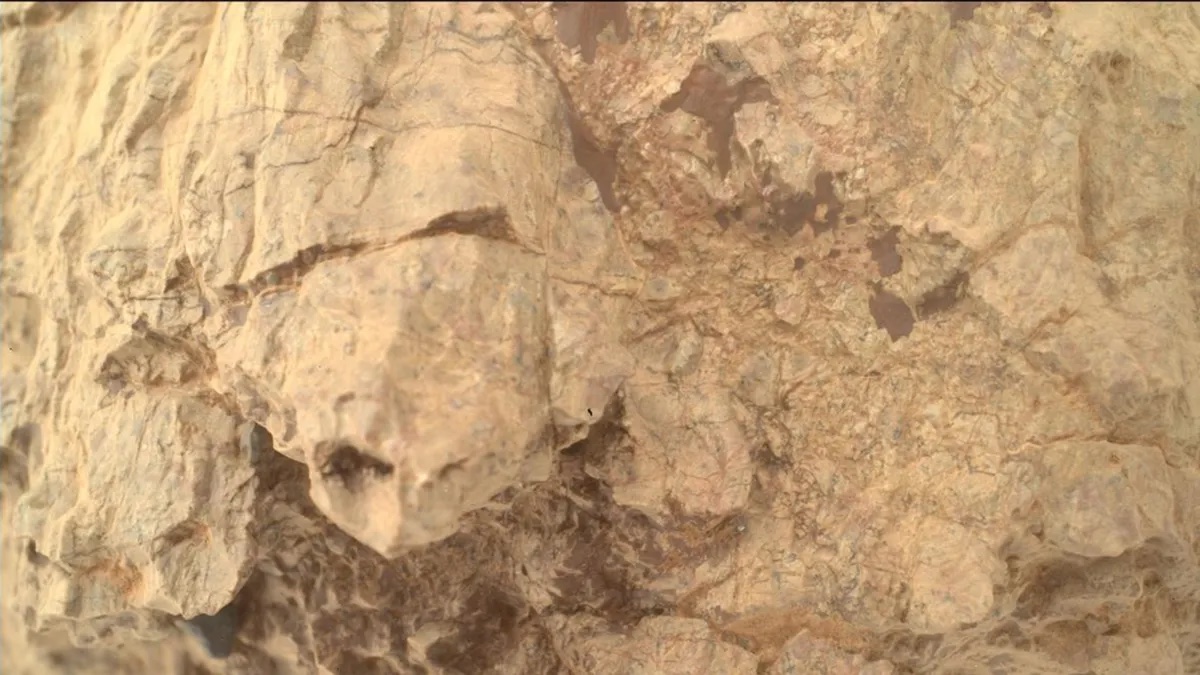
NASA's Perseverance rover has photographed a peculiar rock formation that looks eerily like a turtle poking its head out from its protective shell Live Science - September 10, 2025
NASA's Perseverance rover has snapped an intriguing photo of a "turtle" appearing to poke its head out of its shell on the surface of Mars. The reptile-like structure is the latest in a long list of Martian rocks that look similar to living creatures or other Earth objects.
Perseverance captured the new image on Aug. 31, on what was its 1,610th Sol, or Martian day, on the Red Planet. The wandering, car-sized robot snapped the shot somewhere in the Jezero Crater - a 28-mile-wide (45 kilometers) depression where the rover touched down in 2021, which is thought to have previously contained a large lake.
The photo was taken using the rover's Scanning Habitable Environments with Raman & Luminescence for Organics and Chemicals (SHERLOC) and Wide Angle Topographic Sensor for Operations and eNgineering (WATSON) instruments, which combined to scan the rock in visible and ultraviolet wavelengths of light, according to Live Science's sister site Space.com. Both instruments are mounted on the rover's robotic-arm turret.
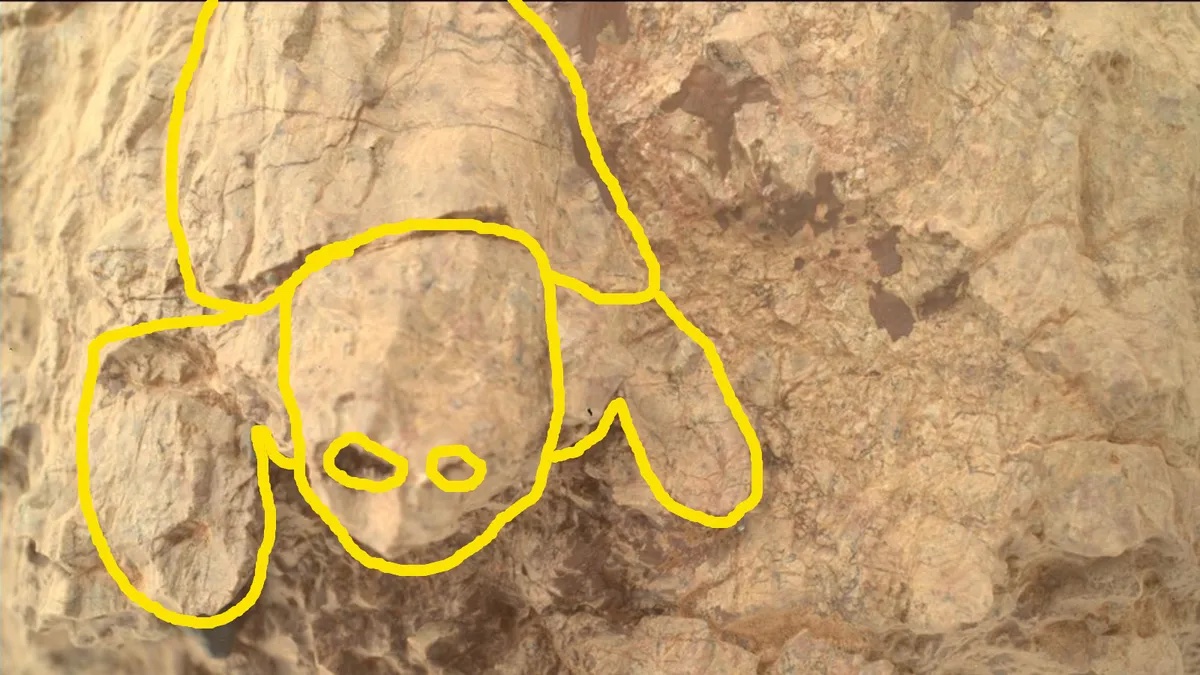
The featured rock has garnered comparisons to a turtle, thanks to a head with two eyes that look as if it has protruded from a protective "shell" with a pair of "front legs" on either side.
It is currently unclear which geological processes have shaped the rock into this unusual shape.
The Mars rovers have collectively captured tens of thousands of photos of Mars' surface, most of which feature multiple different rocks or other geological features that have been sculpted into unique shapes by ancient water sources or millennia of strong winds. Every once in a while, one of these rocks bears a resemblance to something we can see on Earth, such as blueberries, human-like fingerprints, a mysterious doorway and even a "Star Trek" symbol, to name a few.
Turtle Rock on Mars APOD - July 24, 2026
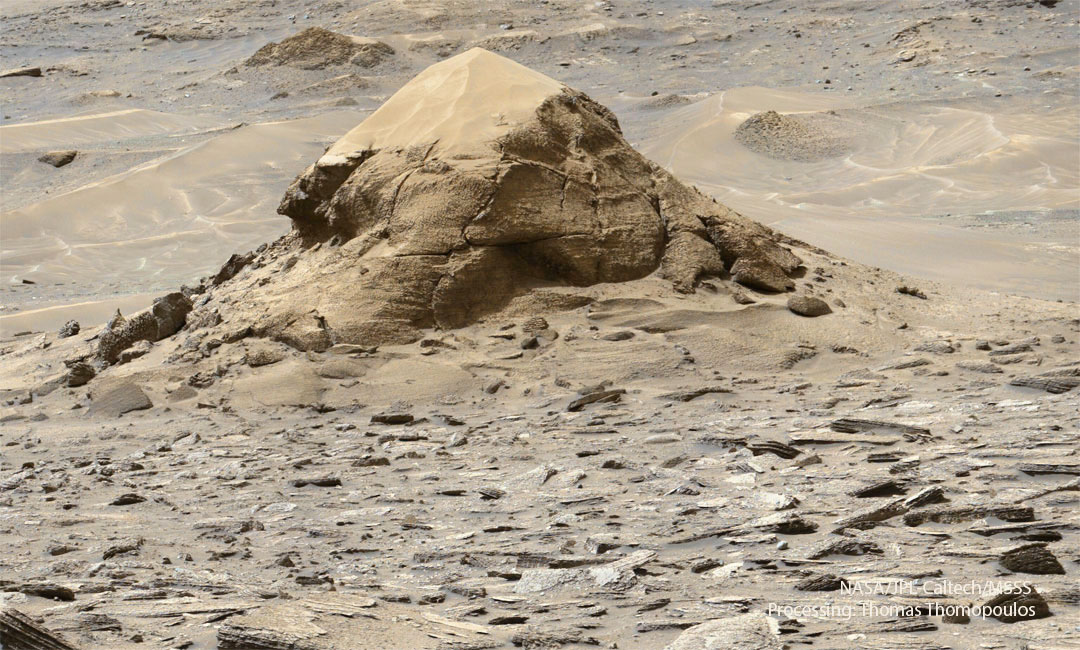
Is this a fossilized turtle on Mars? No. Although resembling a large Earth tortoise, this is a layered rock outcrop on Mars that is estimated to span about 15 meters, making it much larger than turtles on Earth. NASA’s robotic Curiosity rover came across this unusual mound, dubbed Miraflores, last month during its 4922nd Martian day exploring Mars. The small butte may survive because it was somehow more resistant to erosion than surrounding rock. More recent wind has now covered its top with orange Martian sand. Below the top shell, many layers of stratified rock are visible, possibly indicating a long history of intermittent wind-blown sand being deposited and then hardened by ground water. Similar wind-eroded layered landforms, such as yardangs in the Qaidam Desert of China, exist here on Earth. Curiosity and its companion rover Perseverance continue to investigate the ancient history of Mars as well as searching for signs of primeval life.